
When the River Reverses
by Chu Hao Pei, Hsu Chia-Wei, Piyarat Piyapongwiwat, and Than Sok
Curated by Vuth Lyno
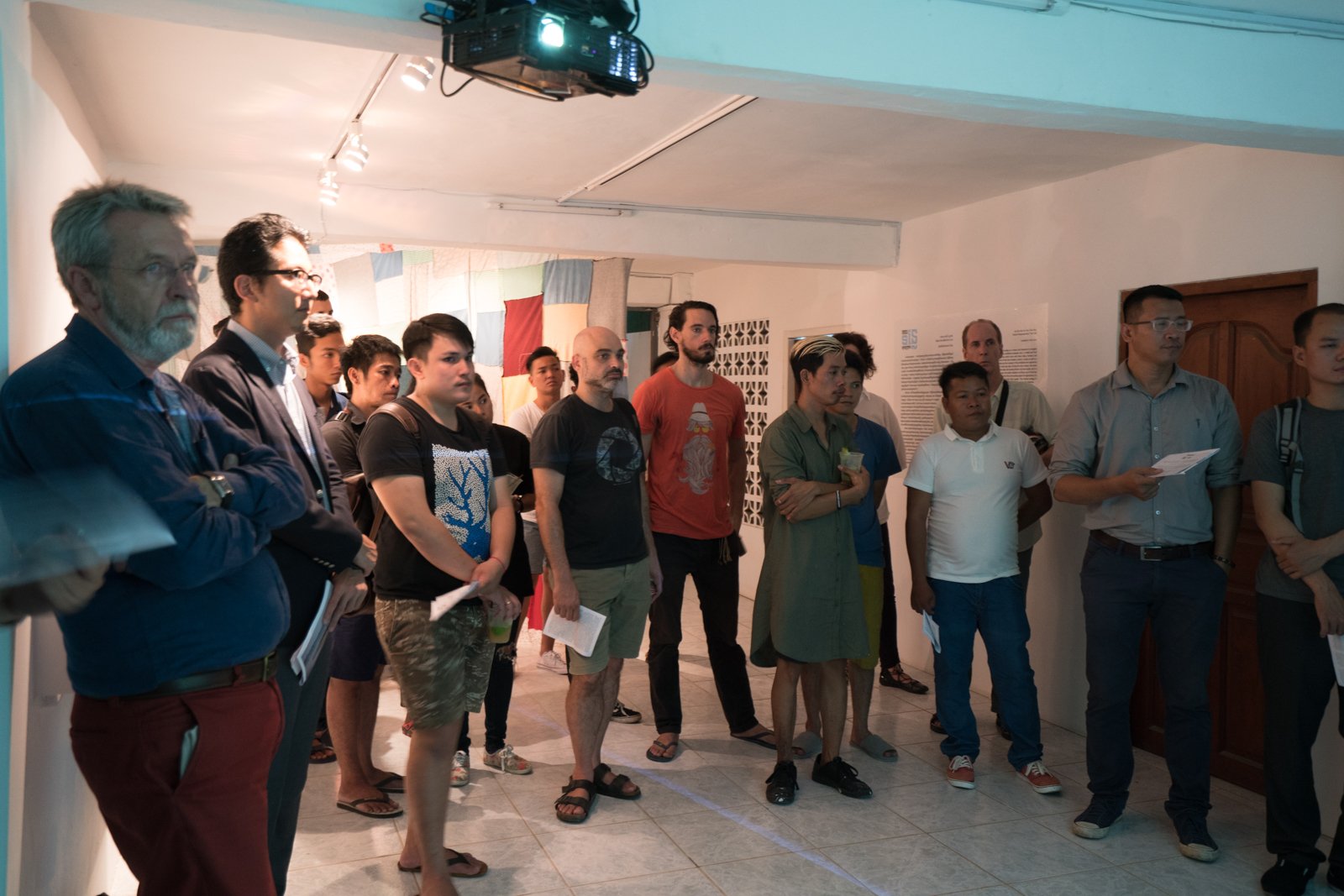
14 September 2017, 6:00-7:30pm
In English with Khmer translation
Sa Sa Art Projects
When the River Reverses takes environmental ecology as a means and metaphor to navigate and explore intersections of various forces. The exhibition proposes river, a mobile and fluid body, to raise issues of mobility of such forces which carry with them ideas, humans, and different kinds of resources. Yet, the reversal of the river invokes a return, a cycle, as well as a sense of contradiction of that flow. The title and the concept of the exhibition are inspired by the unique seasonal forces of Cambodia’s Tonle Sap Lake. During the rainy season, the water rises and flows into Tonle Sap, expanding the lake and causing floods and destruction; yet it is a time when fish lay eggs. During the dry season, the water subsides and flows out of Tonle Sap in the opposite direction, leaving behind rich soil to the surrounding region for agriculture; it is also a time when new fish are born regenerating the food supply. This natural ecology of violence and fertility is a necessary condition for sustaining lives in the region for millennia.
The exhibition takes this unique and complex phenomenon to consider a range of contemporary artistic practices that address today’s concerns in a manner that emphasises complexity and contradiction. Robert Venturi’s theorisation of complexity and contradiction (1966) also offers a guiding principle for the project. Venturi writes that he favours “richness of meaning rather than clarity of meaning; the implicit function as well as the explicit function.” The diverse artistic practices in the exhibition are, therefore, curatorially framed in a similar vein: drawing out their paradoxes and challenges, their suggestions as well as their demands. Taking up the example of the Tonle Sap Lake which floods and then recedes, flows one way and then the other, the exhibition explores multiple forces that are at once productive yet aggressive, natural and human-made ecologies that are set in motion through competing powers, and processes of confrontation and mediation.

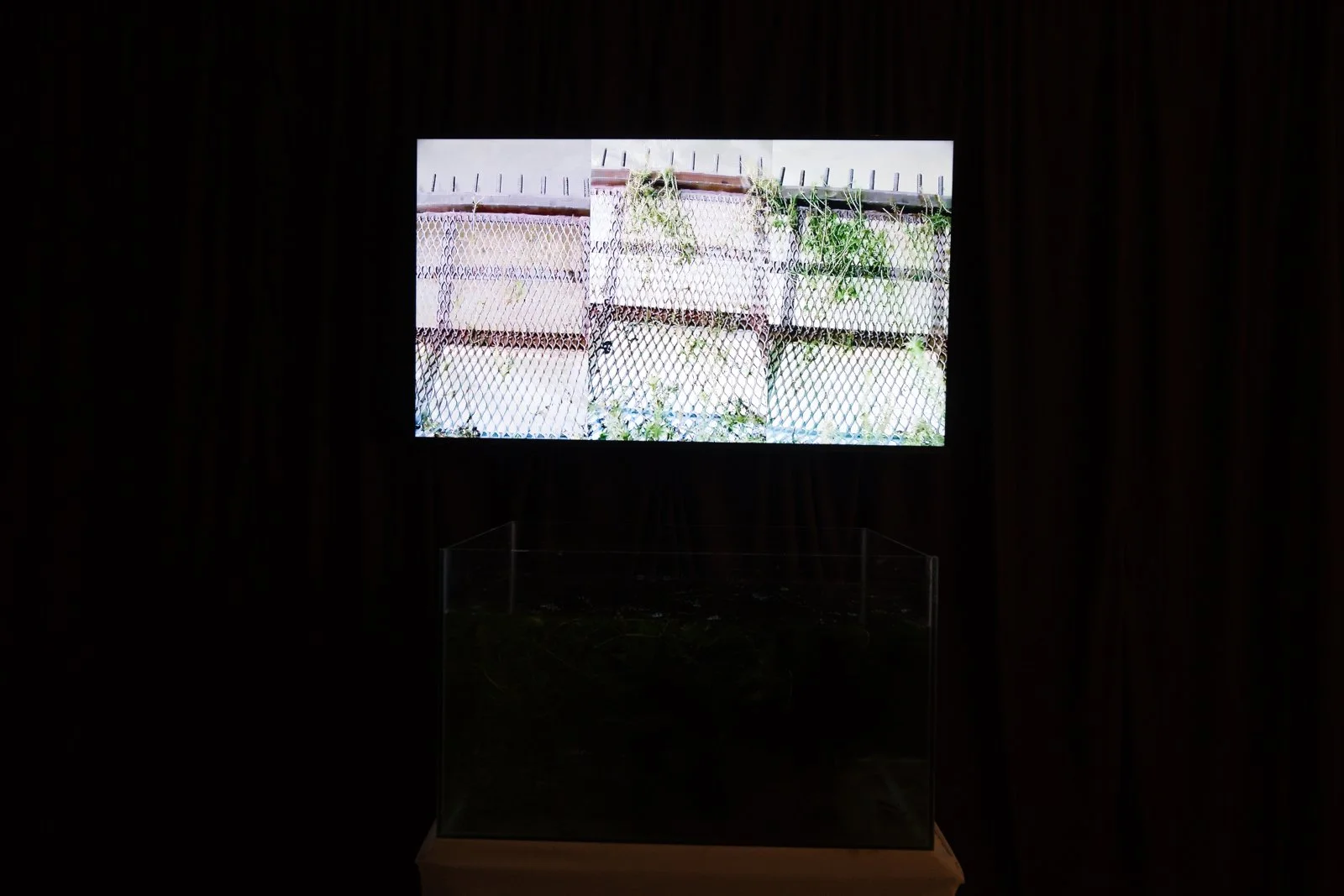
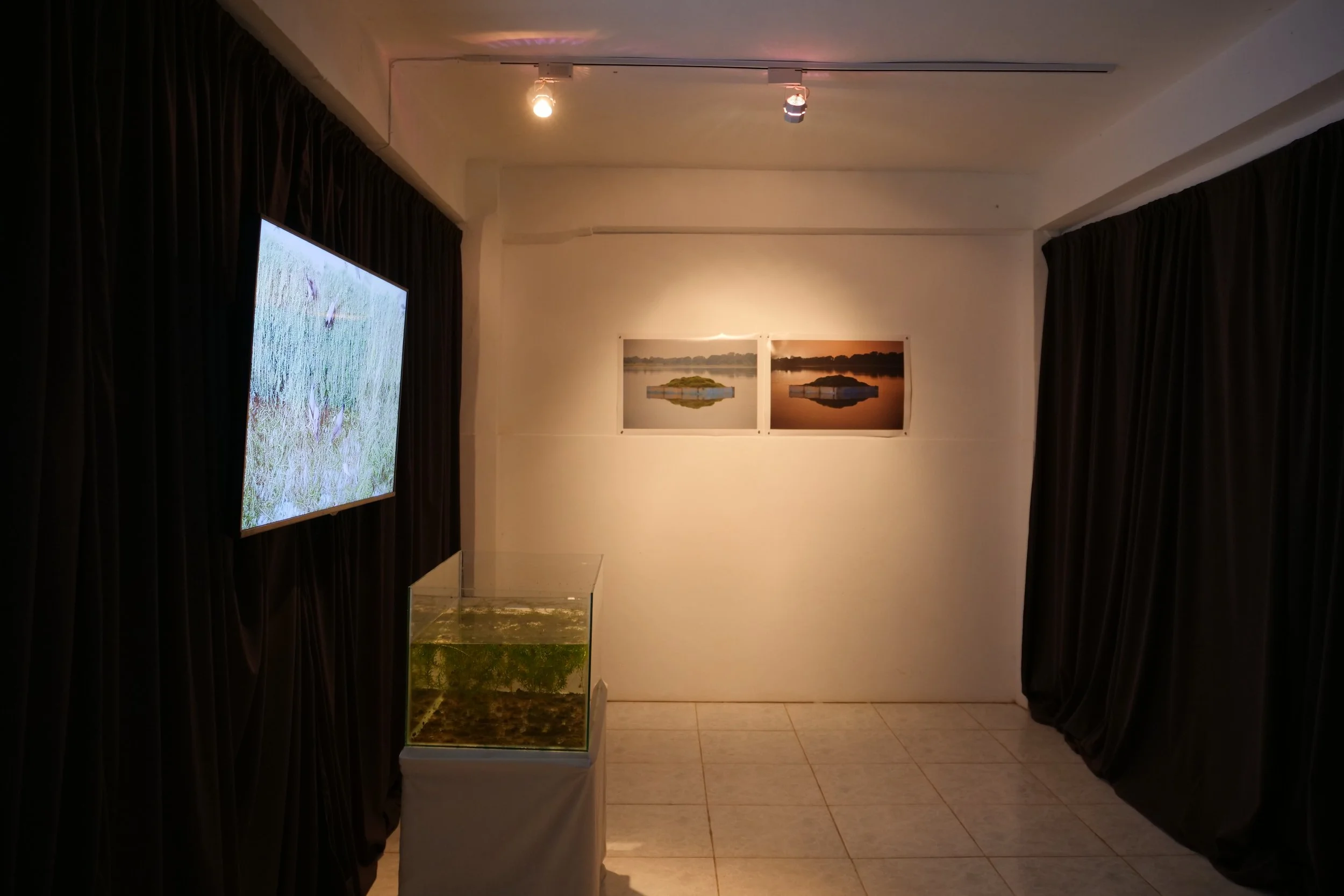
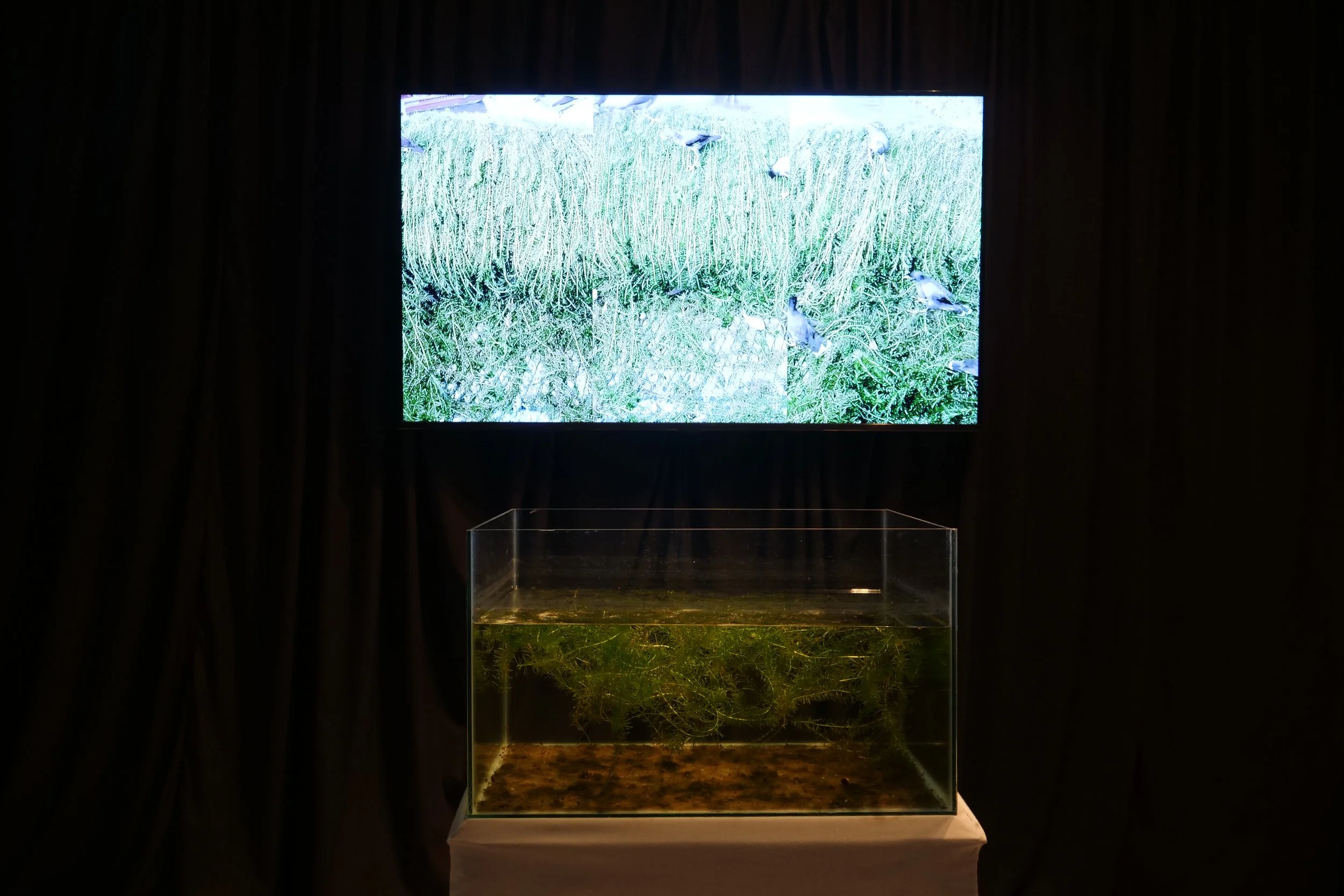
Chu Hao Pei presents two photographs and one video as part of his Island series, which observe the process of Singapore’s relentless effort in maintaining a “balance” of fresh water supply for its residents. The photographs, Island IX: Kaleidoscope (2016), depict a mysterious mount of apparently green vegetation calmly floating on a water body. This green plant is Hydrilla Verticillata, a kind of aquatic plant that was likely introduced into Singapore through the aquarium trade. This hydrilla is a natural water purifying agent, yet extremely invasive. In order to maintain Singapore’s fresh water supply, therefore, this hydrilla needs to be continuously removed yet not completely extracted from the reservoir. Consequently, this human process of nature’s control produces a new ecology: bird species feed on small fish that are caught with the uprooted, dying plants. This new biological chain is brought to life in Hao Pei’s video, Island X: Feast (2016), which apparently is a view from the reservoir’s controlling machinery. Hao Pei’s work not only raises doubts but also suggests an irony of the desired natural “balance” that heavily relies upon a process of artificiality.


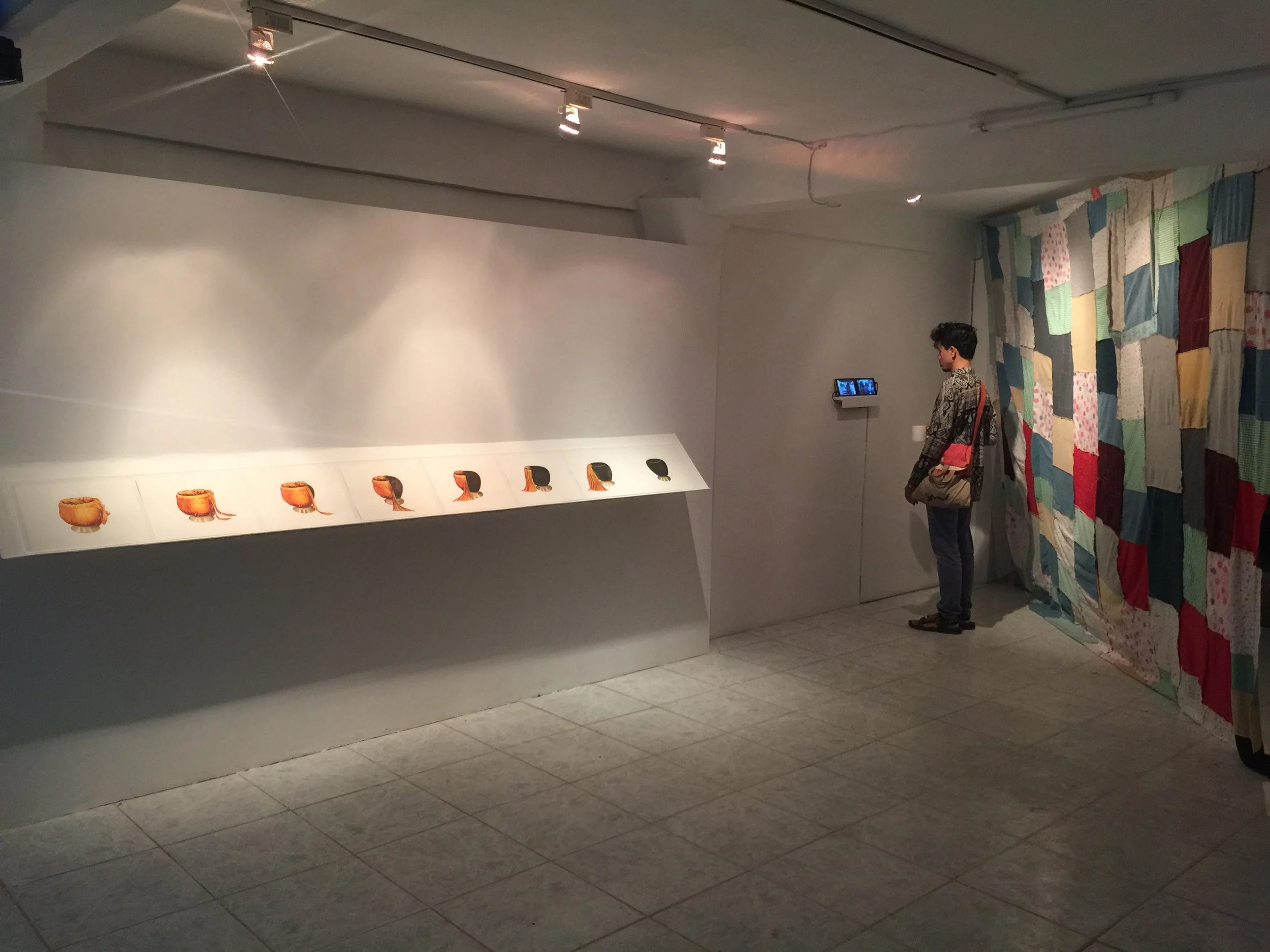
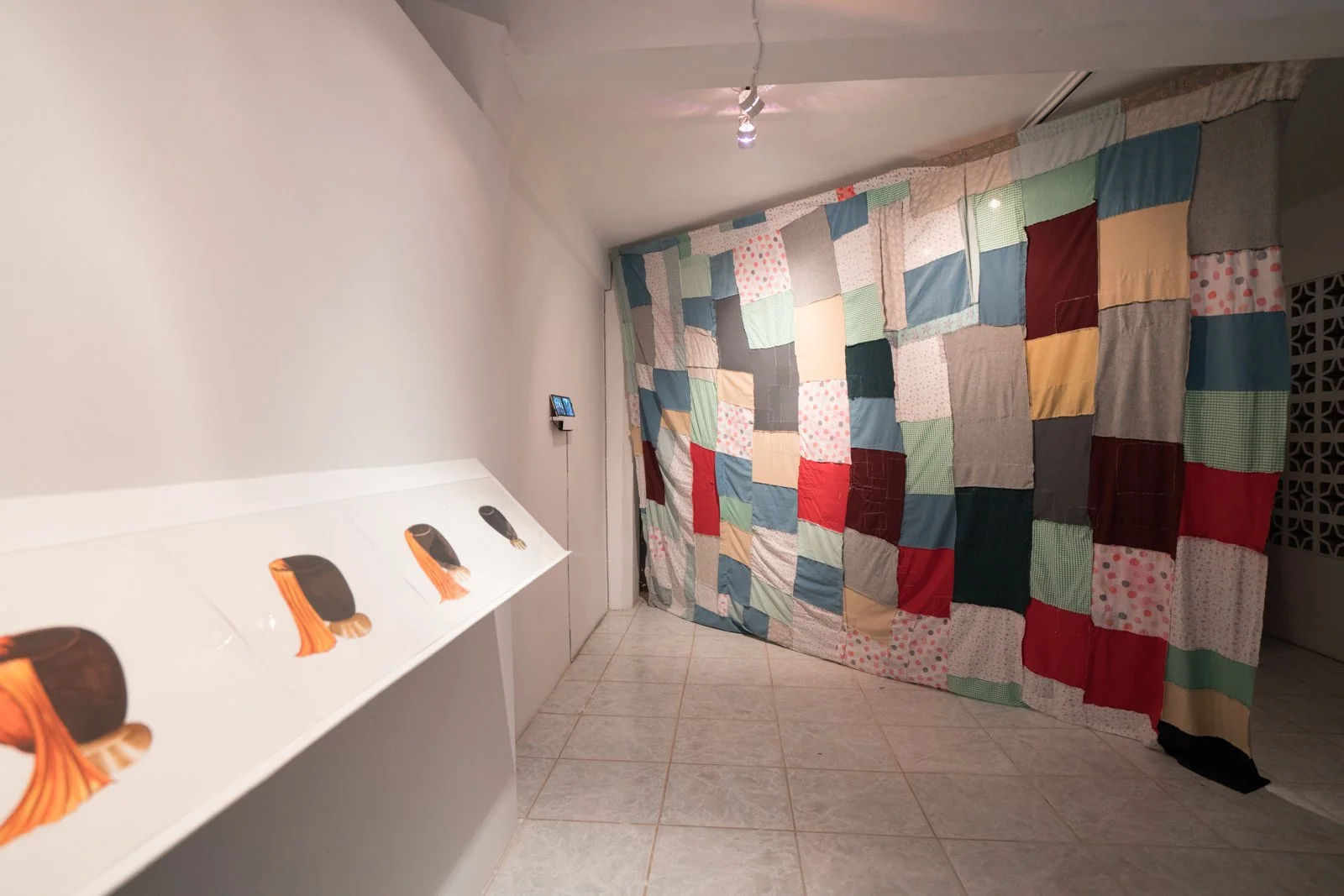
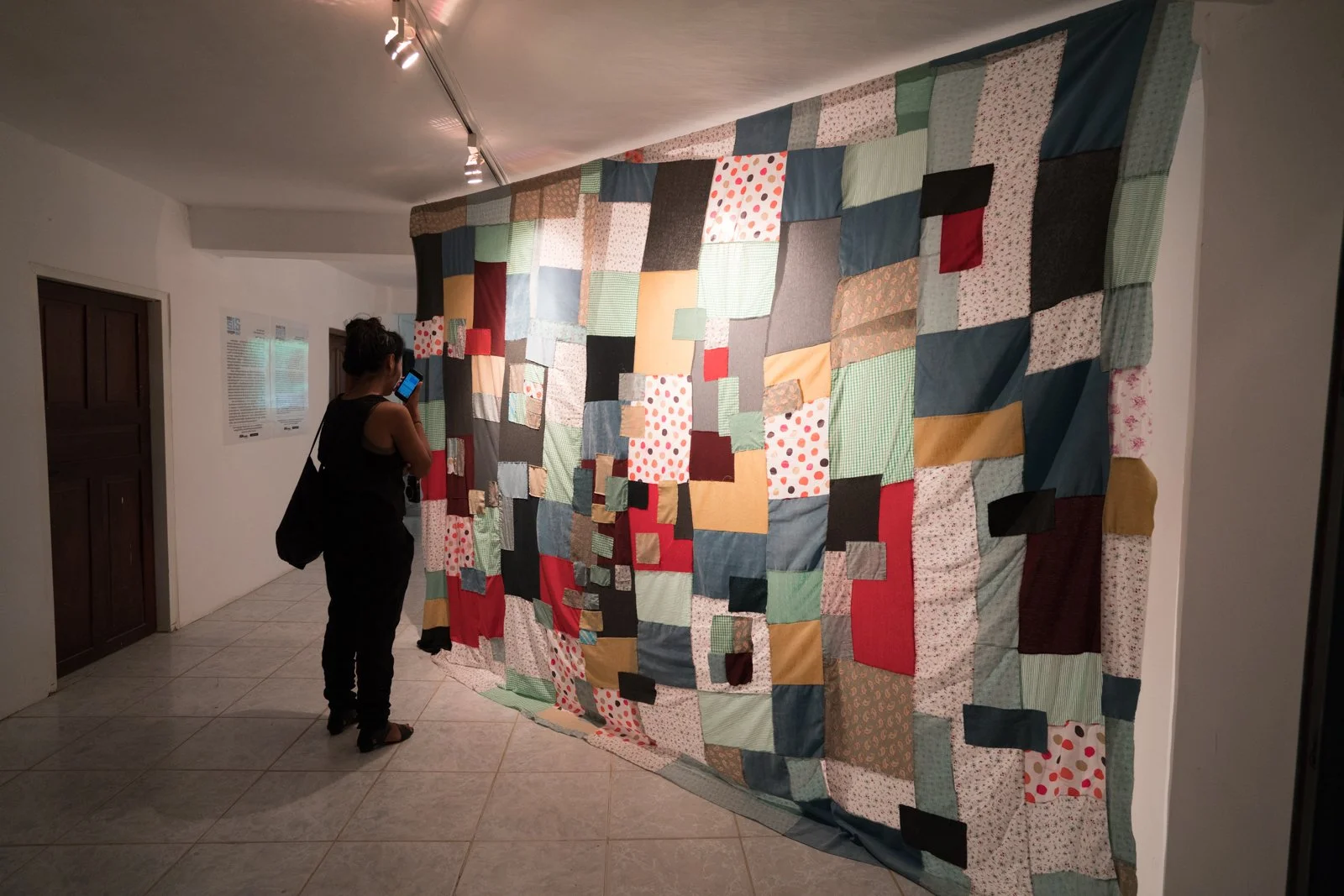
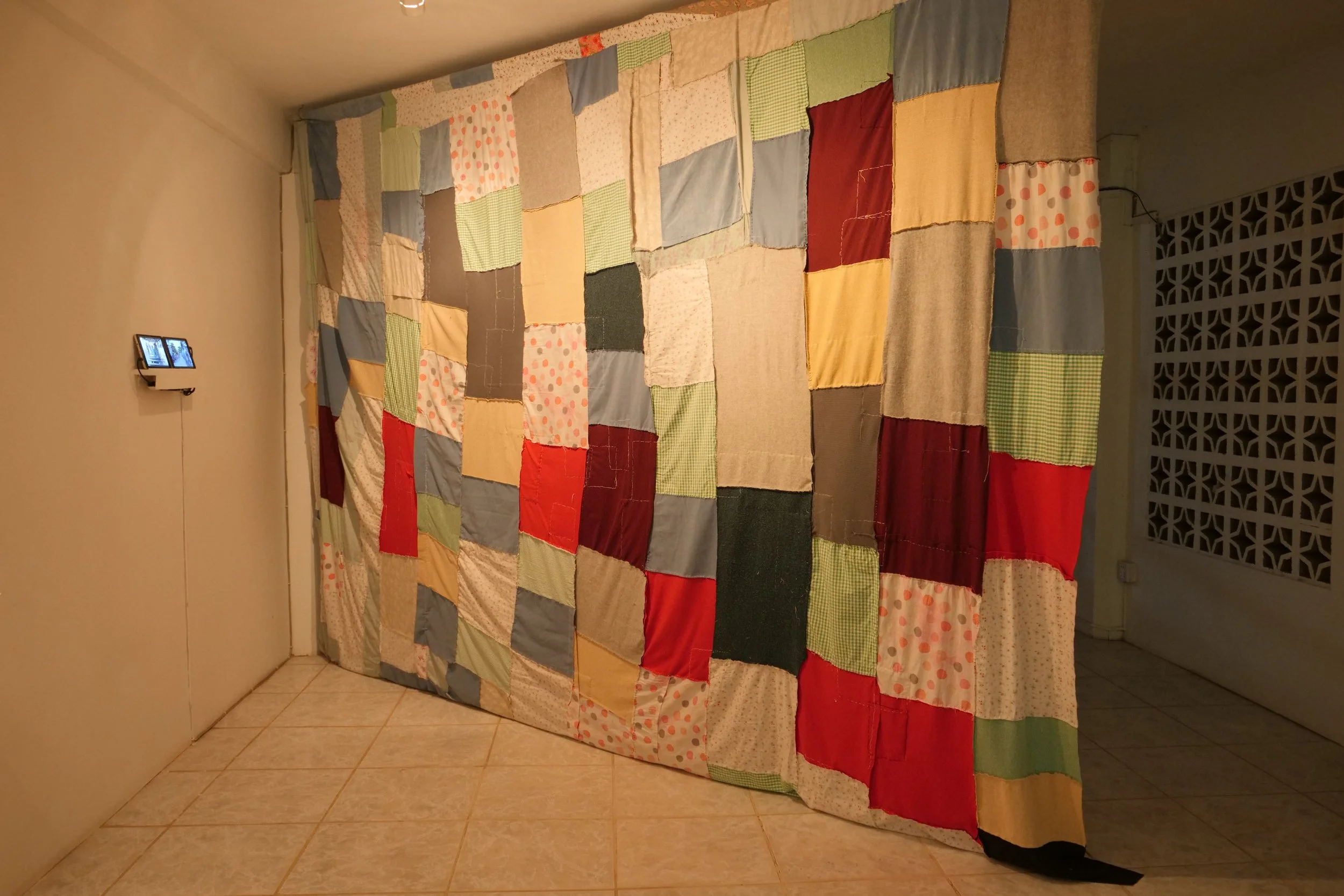
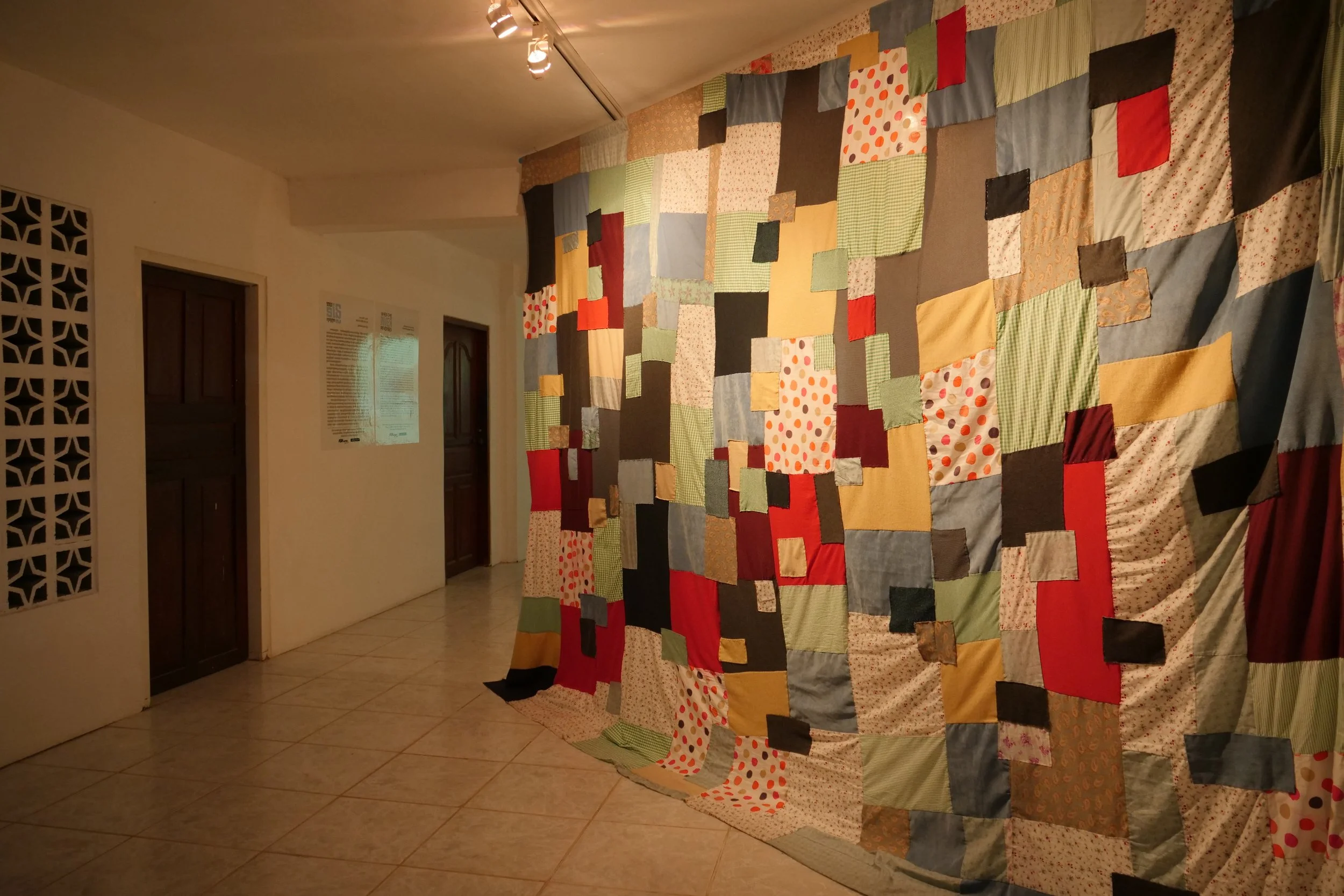
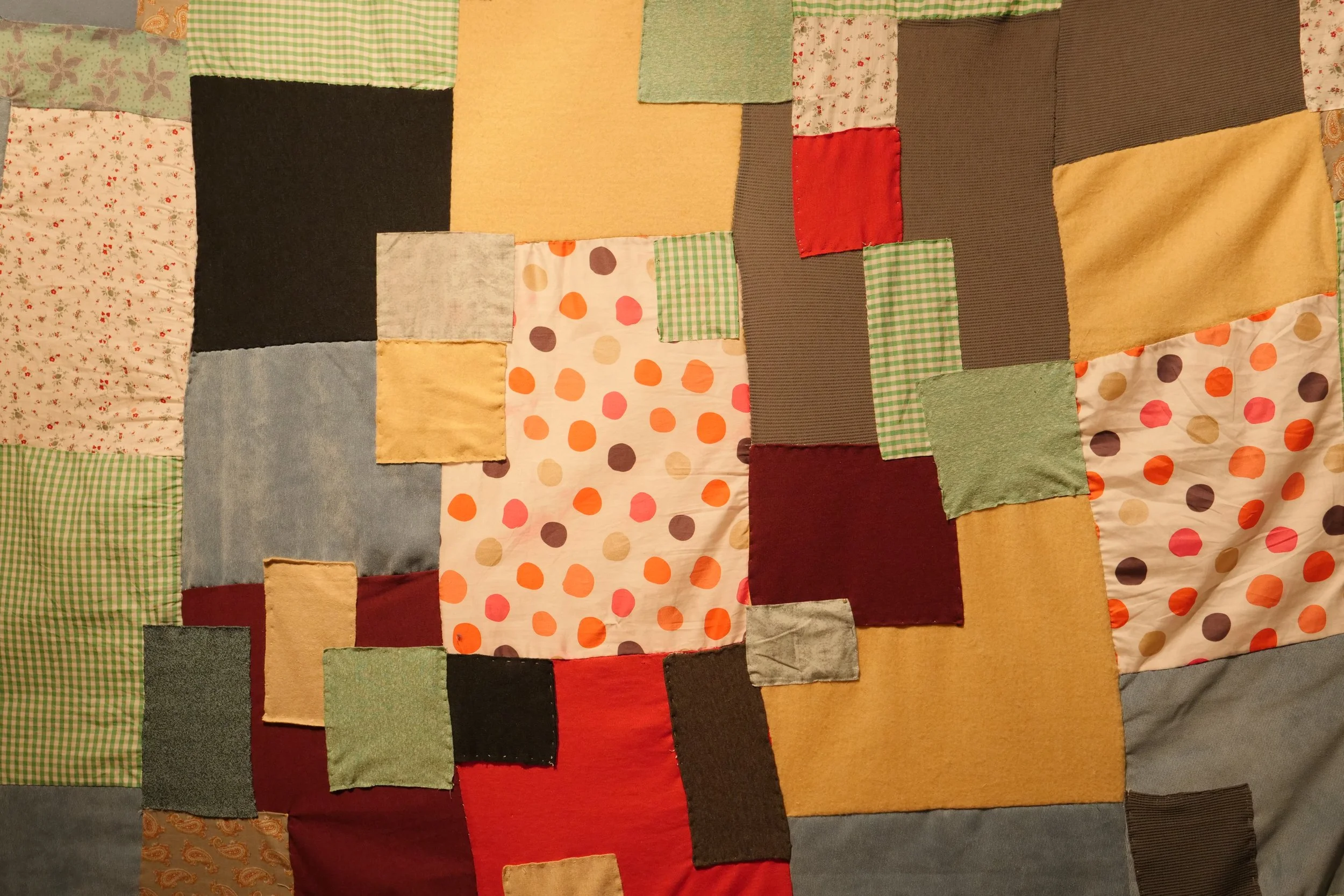
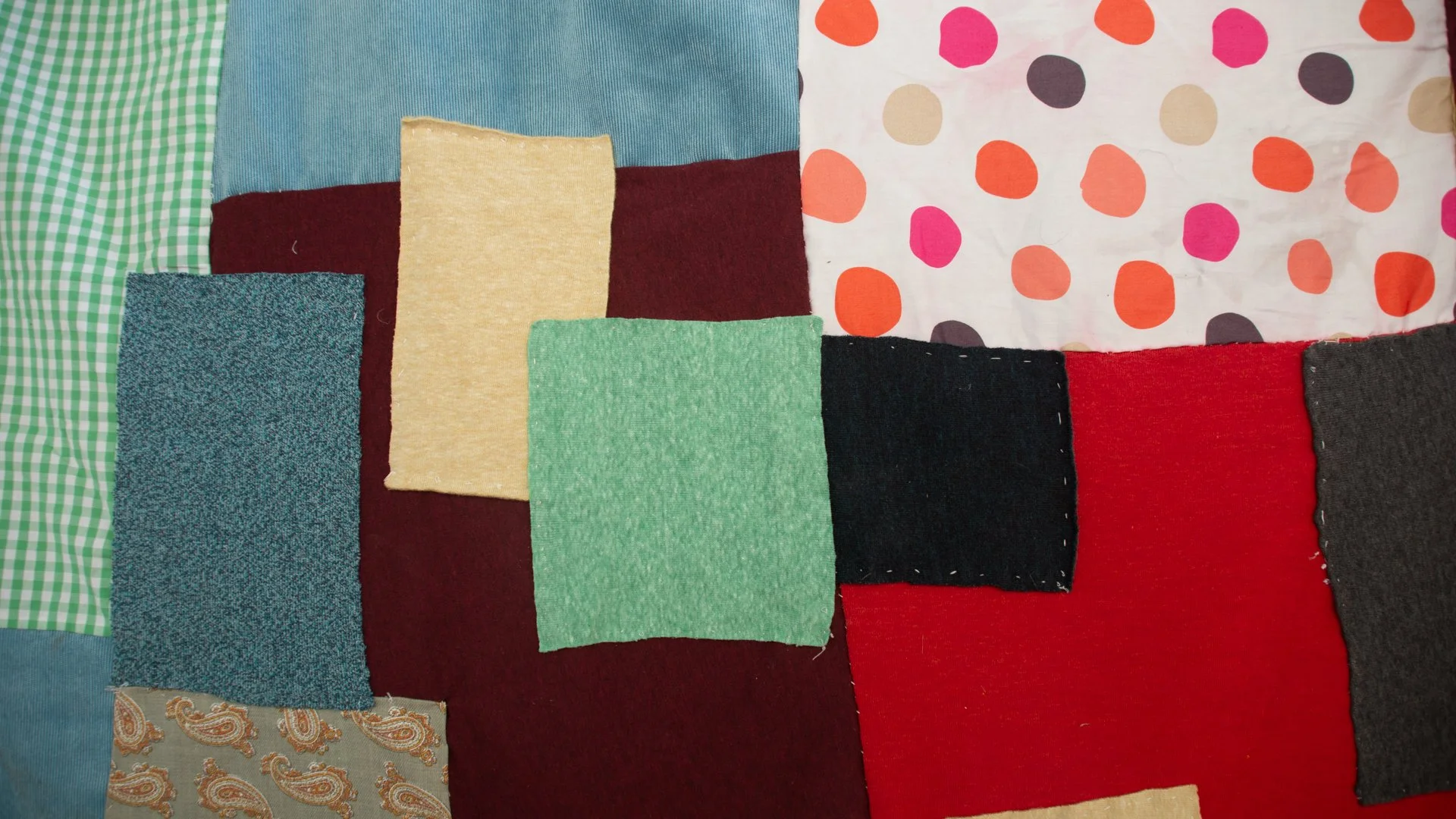
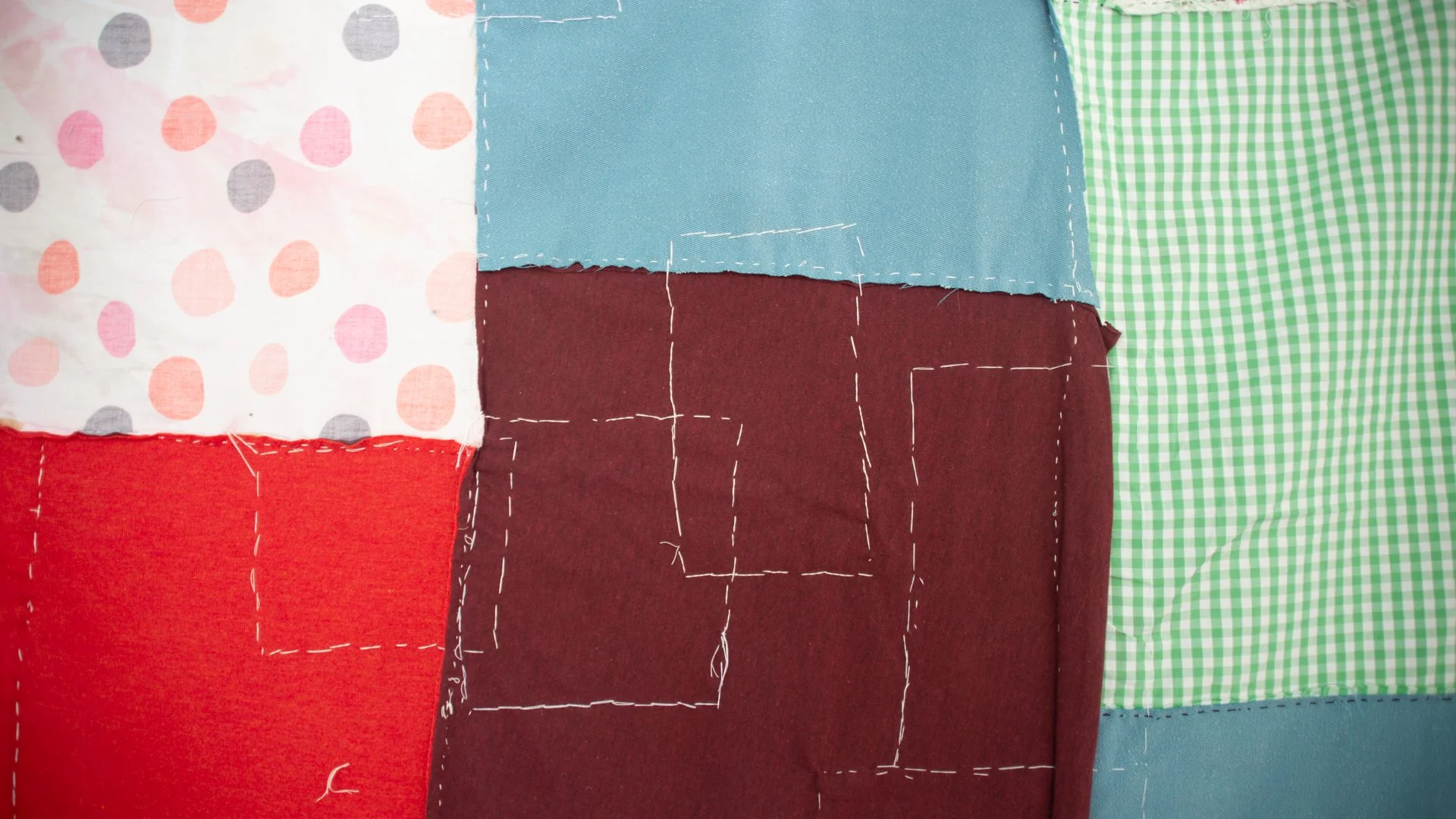
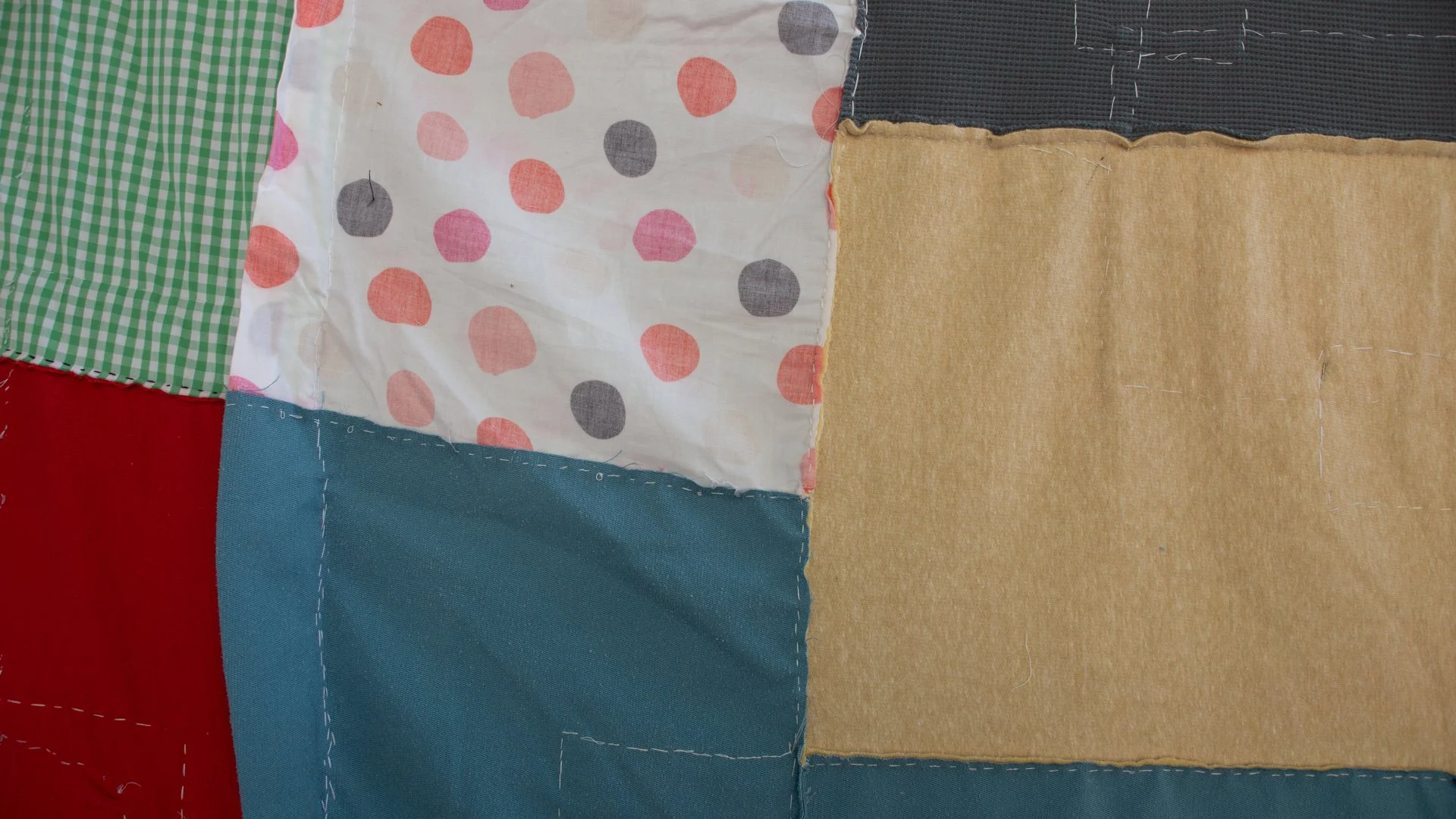
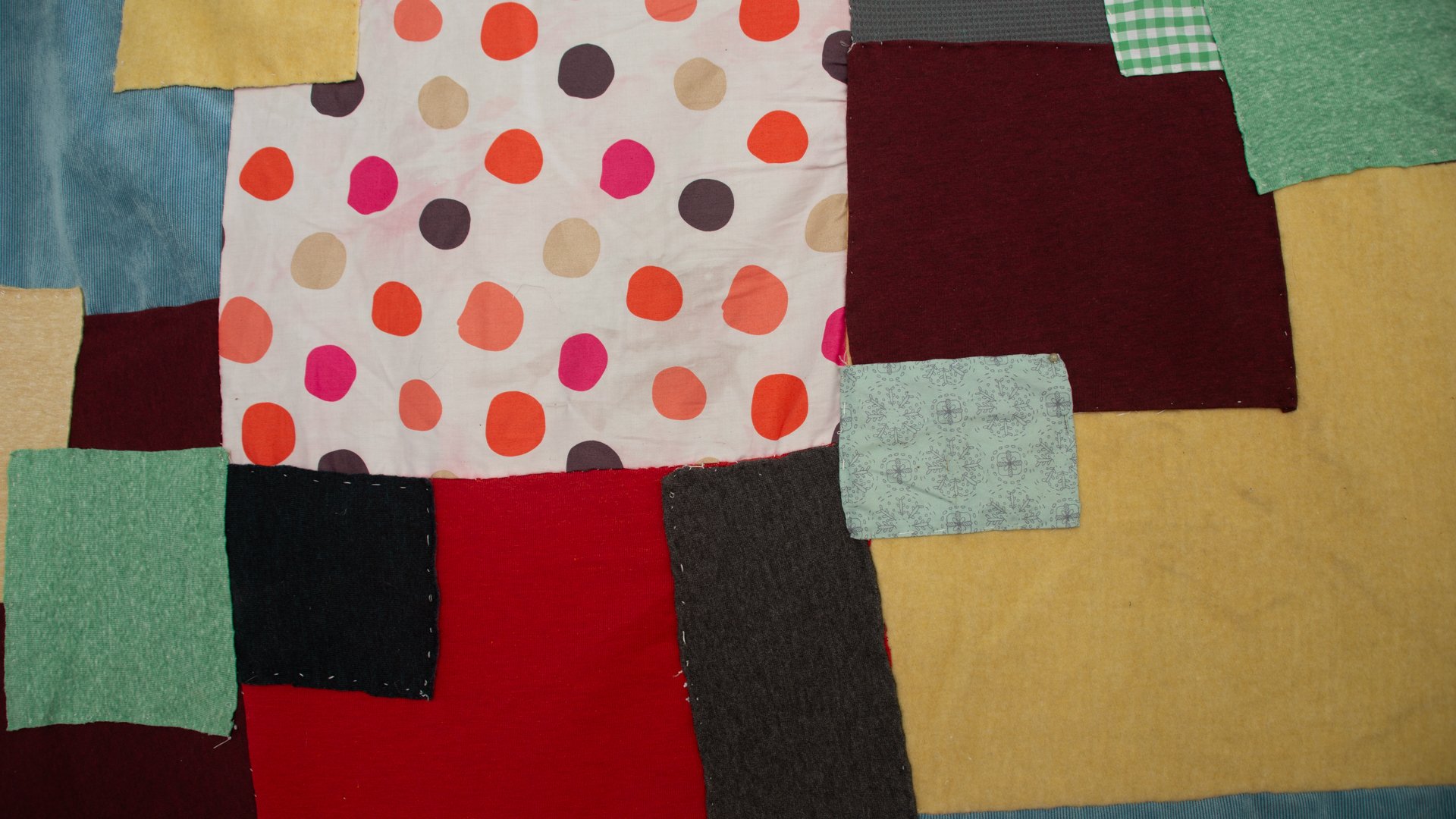
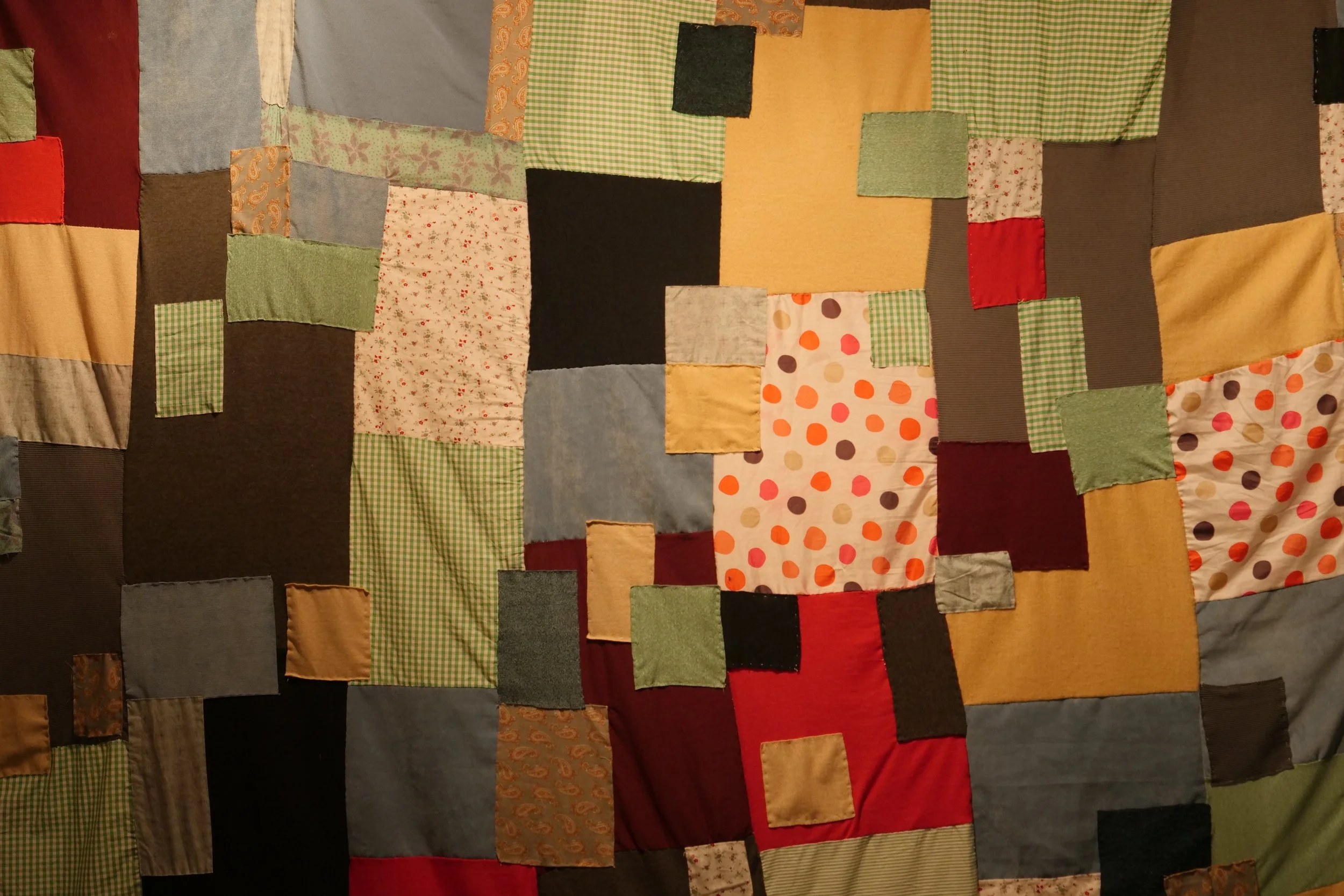
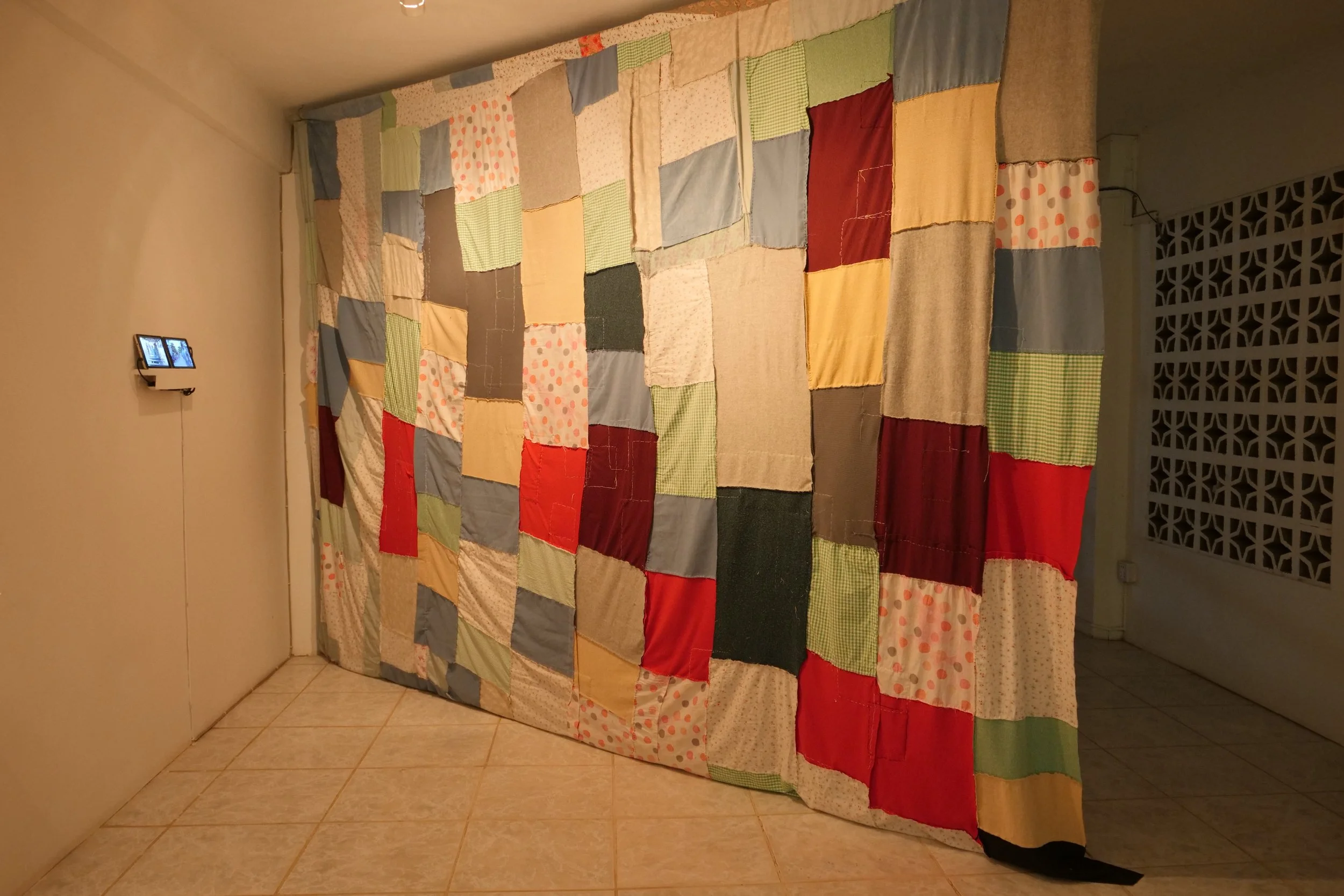
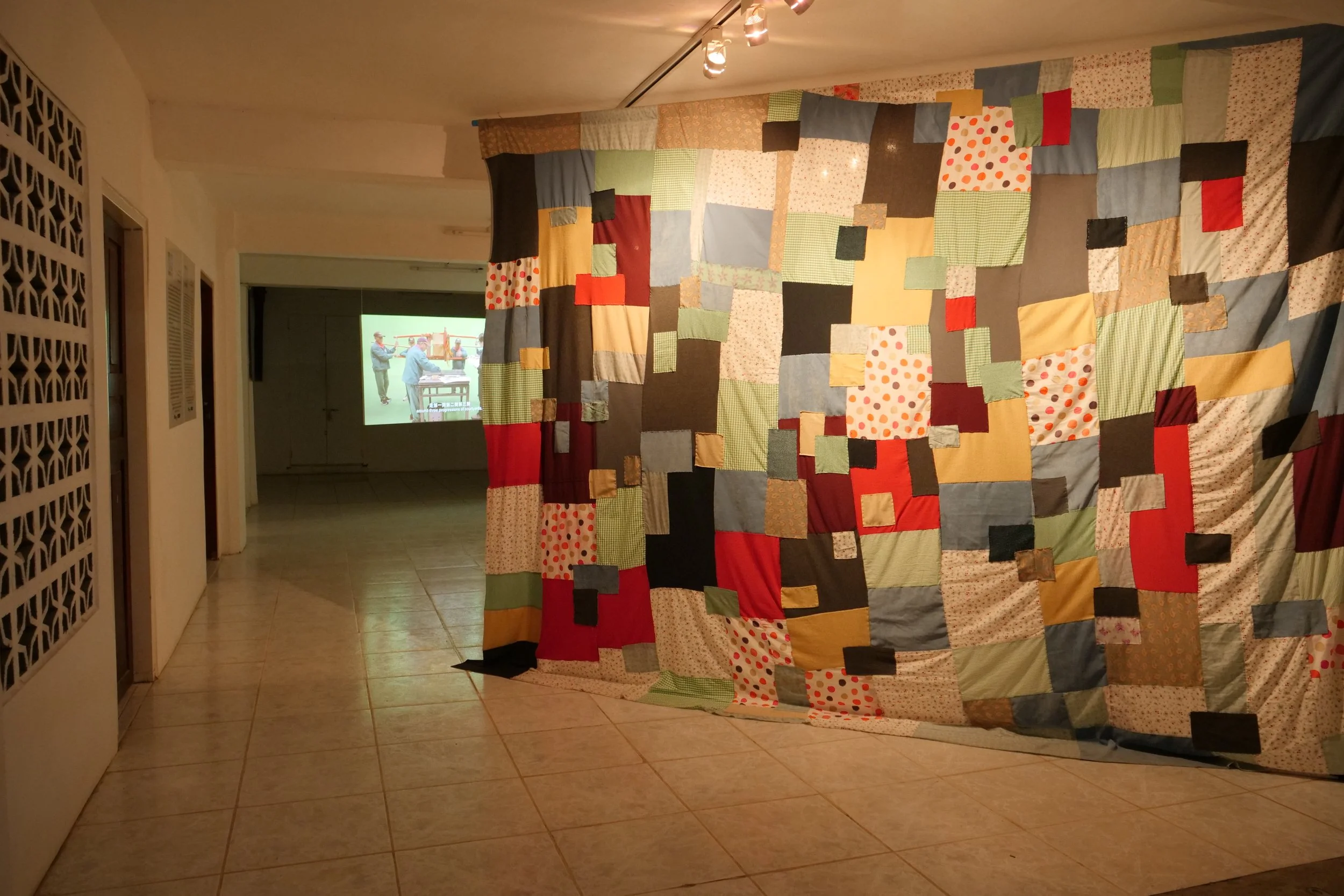
Piyarat Piyapongwiwat’s Untitled (2015) is a large piece of cloth made of joined fabric strips of various colors and patterns, hung vertically from the ceiling. It resembles textile patchwork commonly found in cultural and ritual practices throughout Southeast Asia, in particular, the curtains or backdrops made of fabric scraps that are usually donated to Buddhist temples or Wat. The work recalls the folklore tradition of make-use aesthetics born from the spirit of collective contribution. In fact, Piyarat’s textile work was made
of cloth fragments she collected from a Special Economic Zone in Thailand next to Myanmar’s border, and was stitched together by Phnom Penh’s garment workers, the majority of whom migrated from provinces. Piyarat paid the workers an agreed living wage to join these disposable fabrics into a quilt. This humble gesture comments on the working conditions in the garment industry and its “disposable” nature of workforce in Southeast Asia that caters to mostly consumers in the West. Next to the quilt are two small videos: one depicts a view from behind of women workers riding Rermork to work, and the other presents hundreds of workers pouring out from the factory at the end of a day shift. The absence of what happens in between these daily routines seems to suggest an uncertainty, an unknown, but also what is probably already known too well.
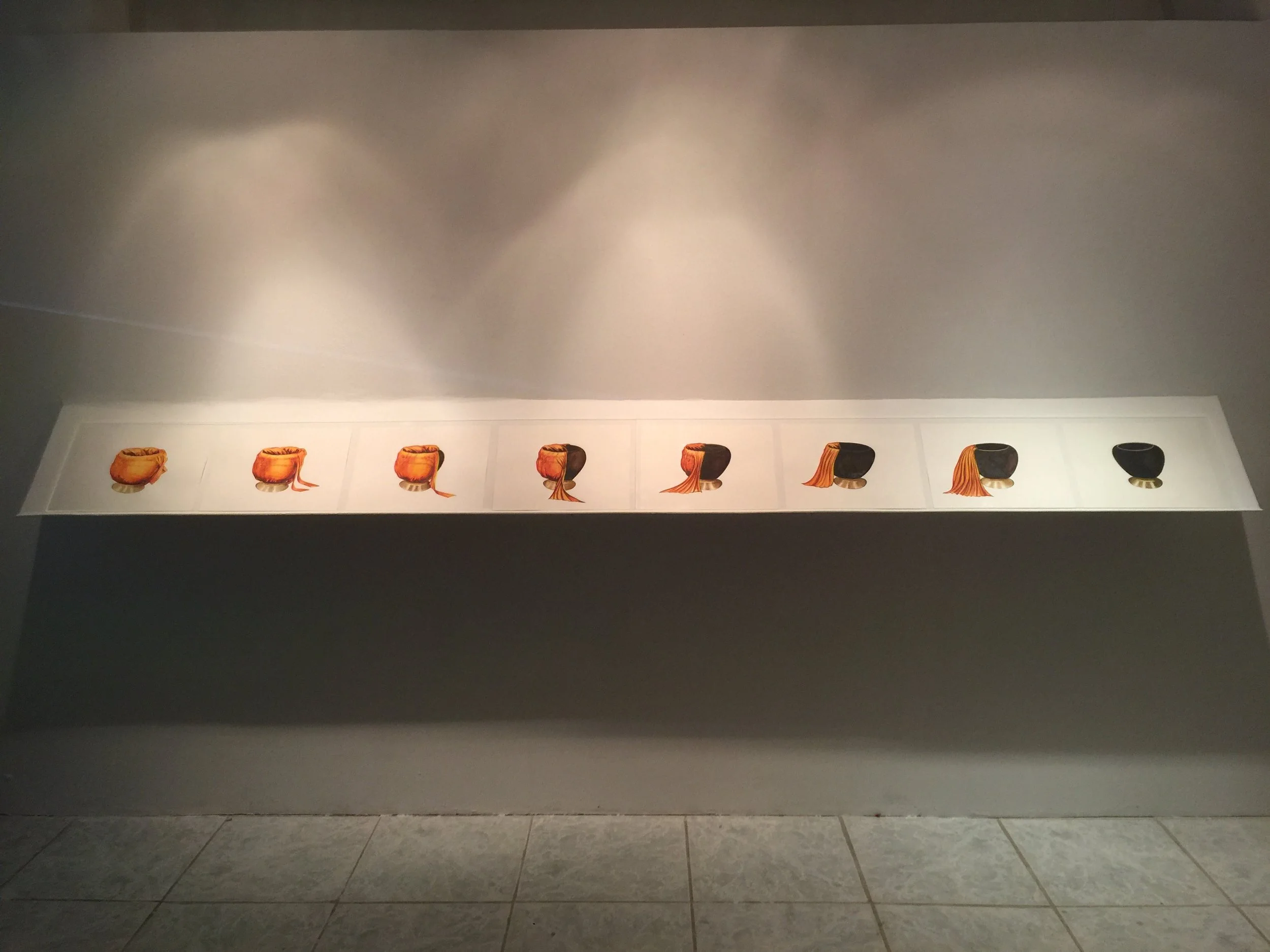
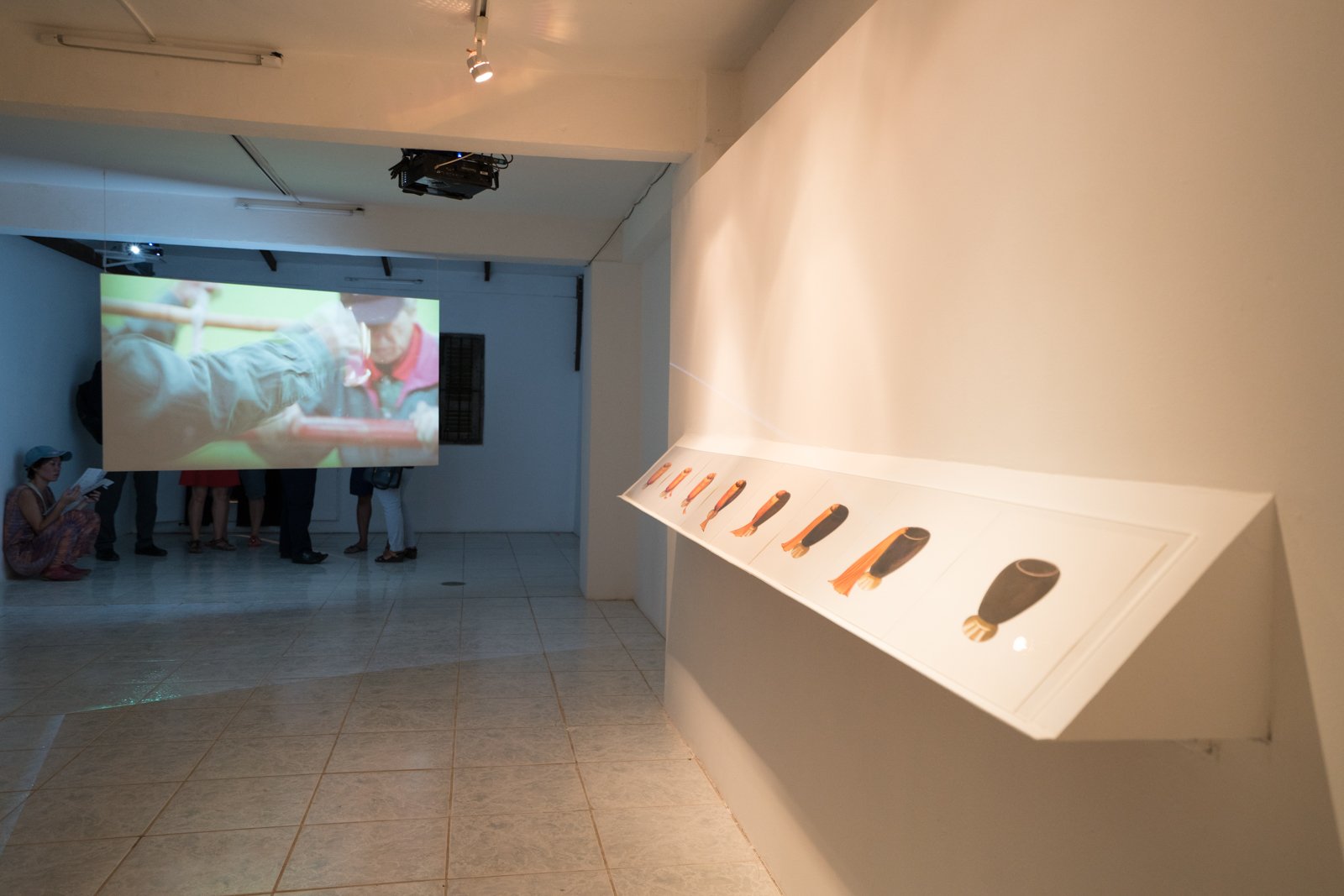
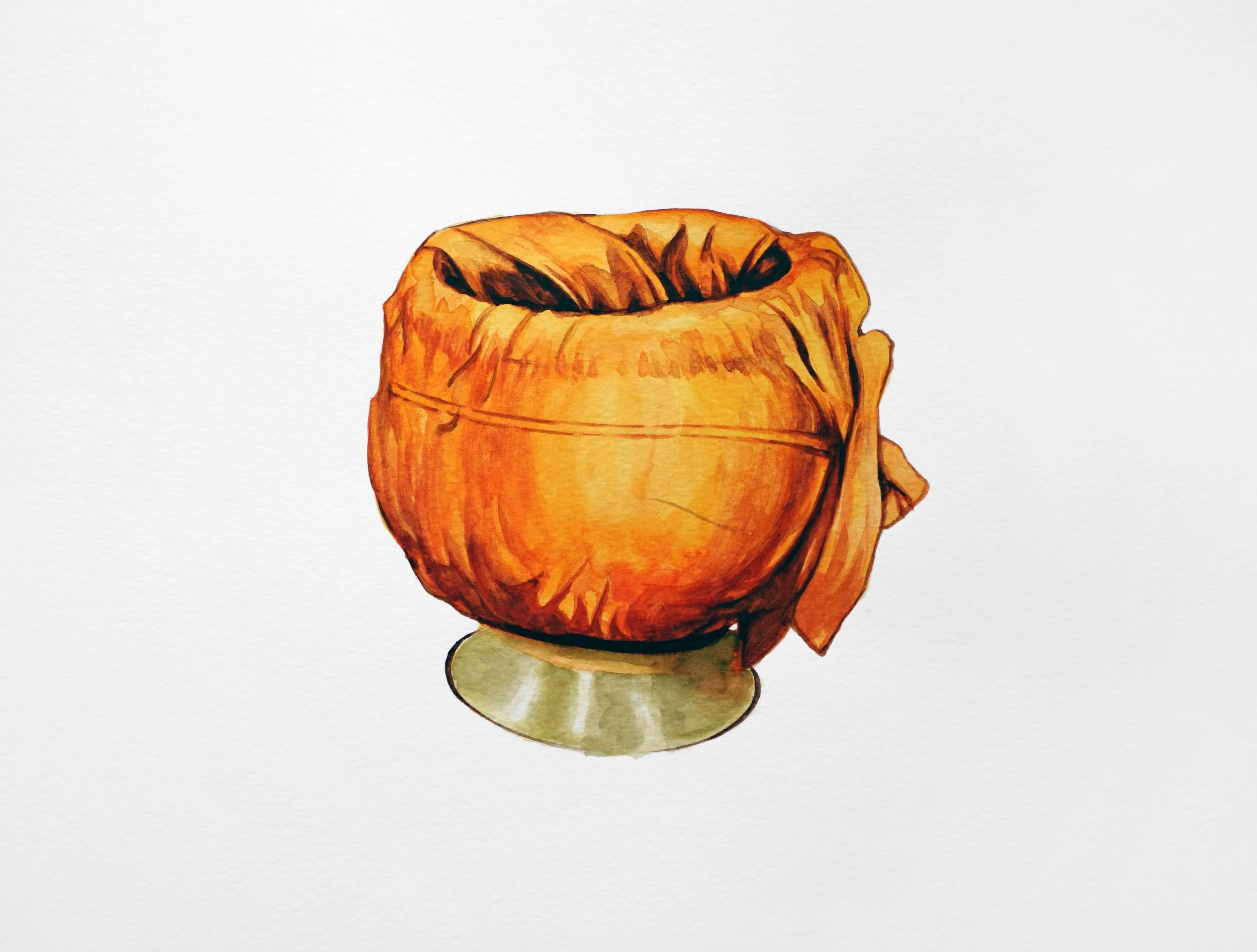
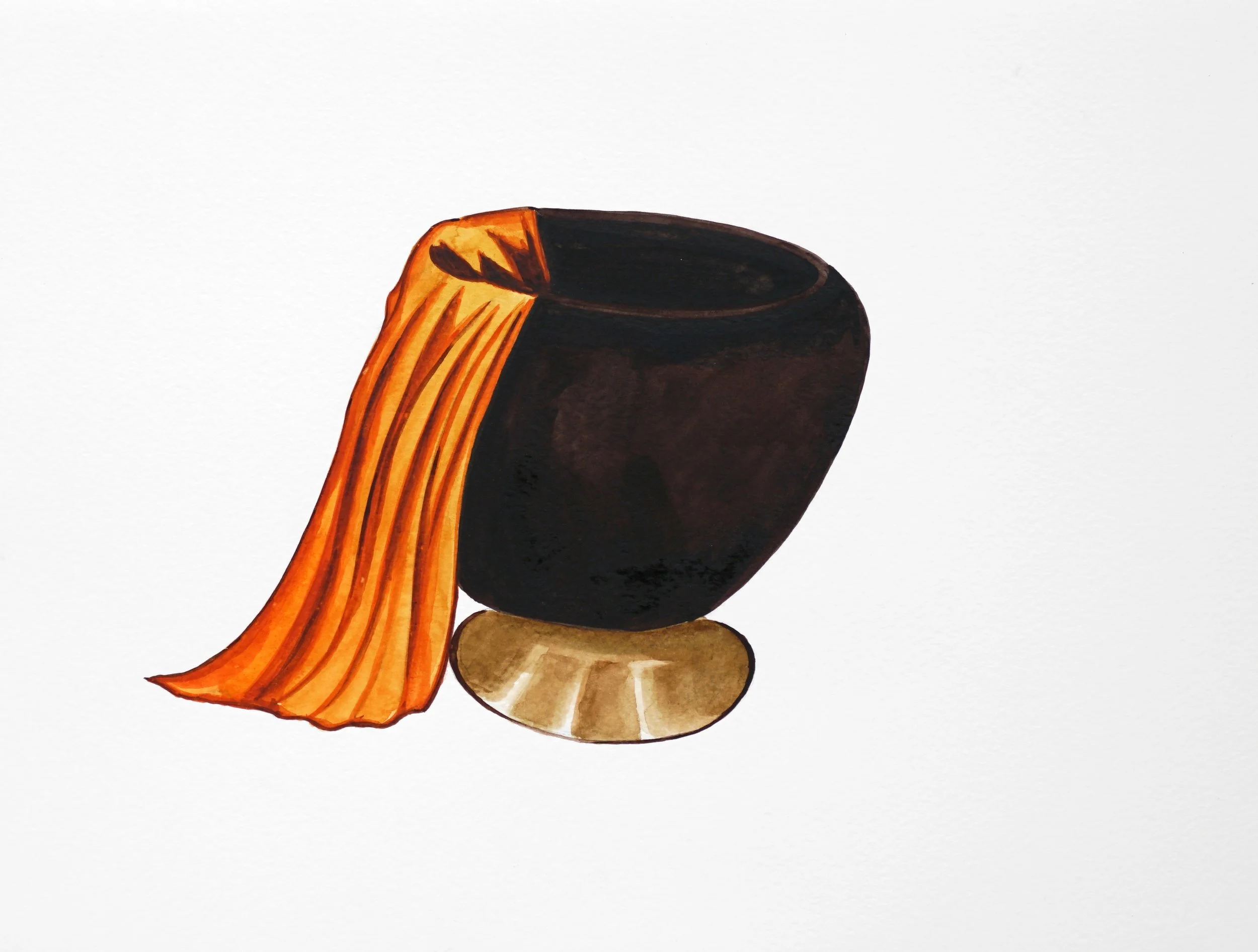
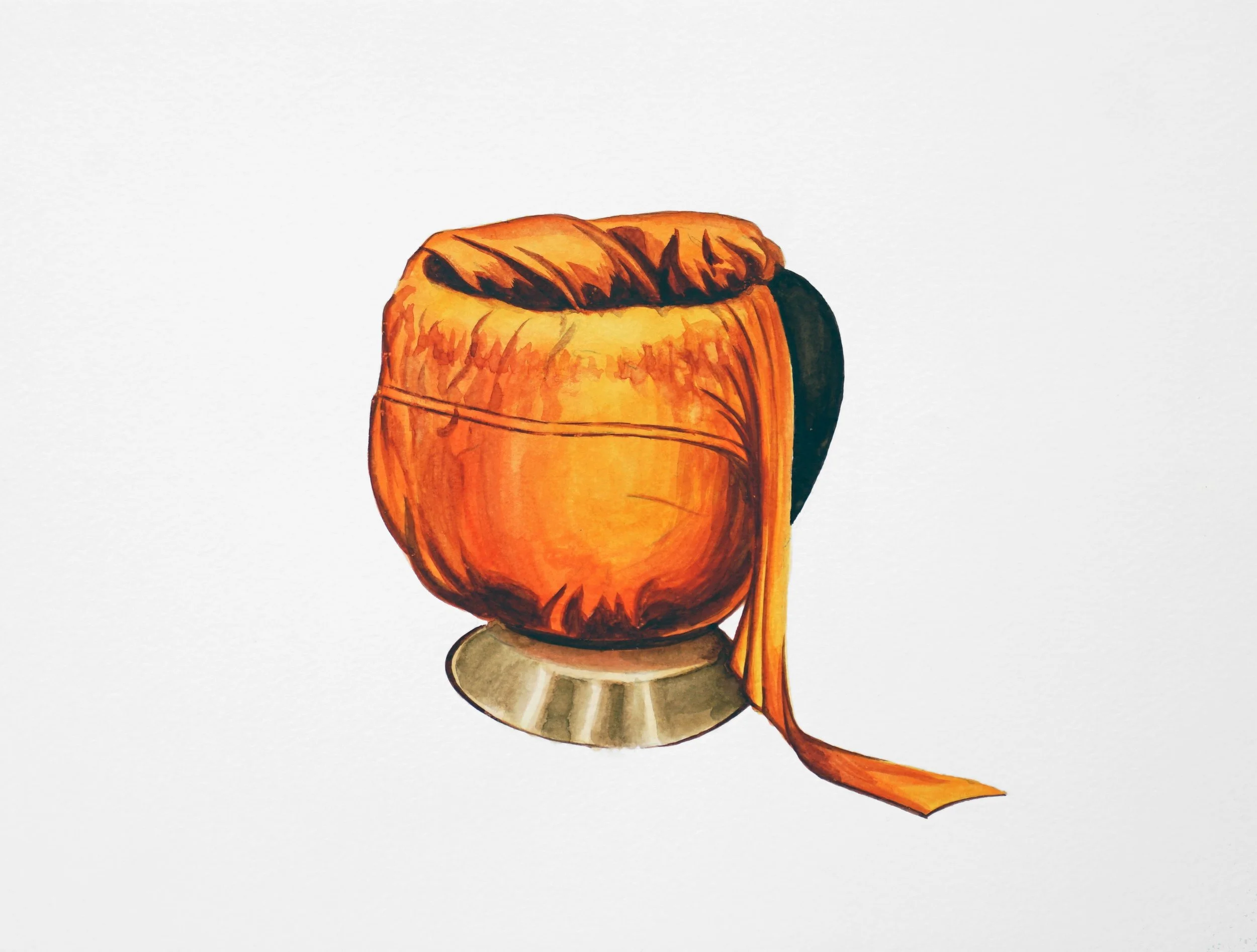
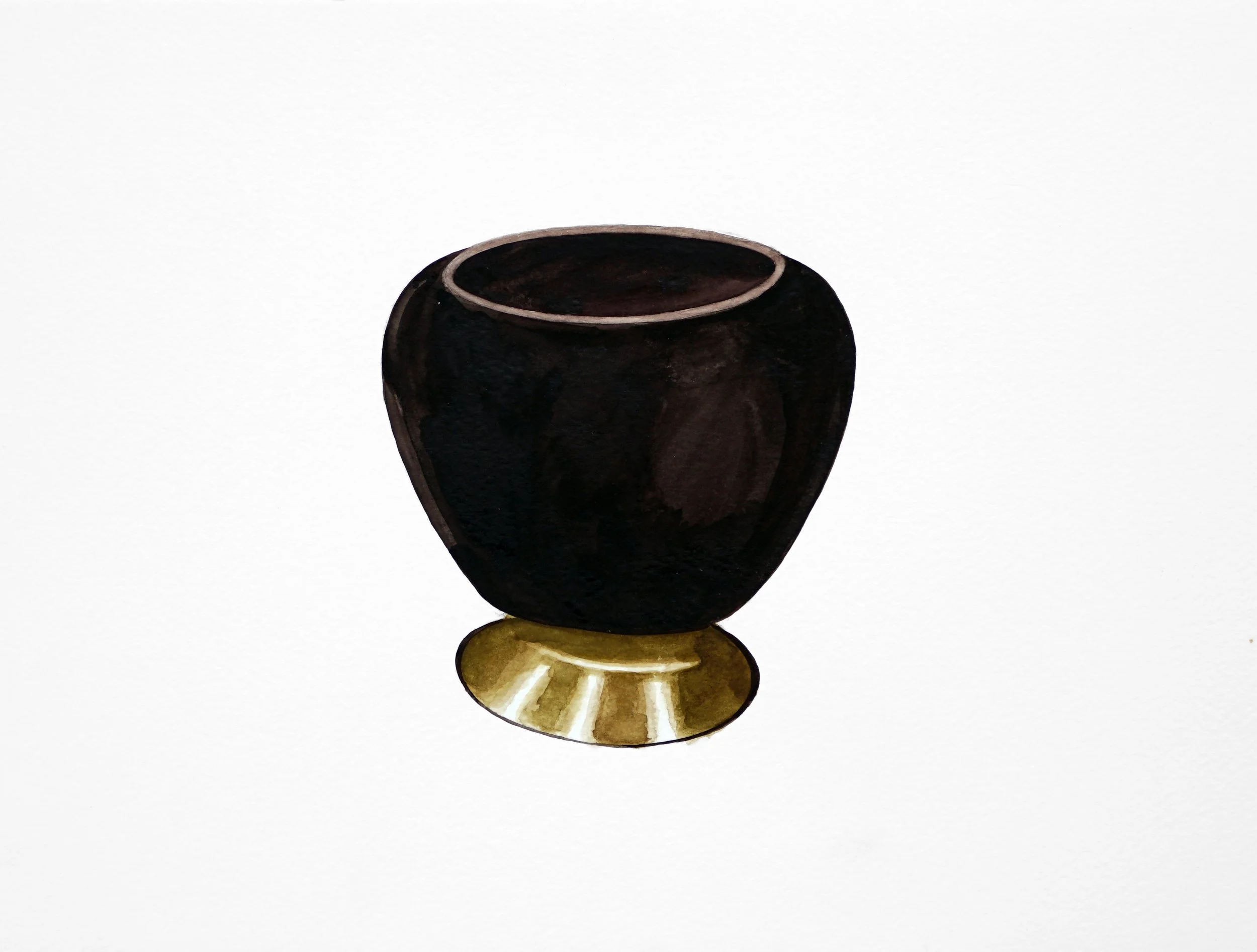
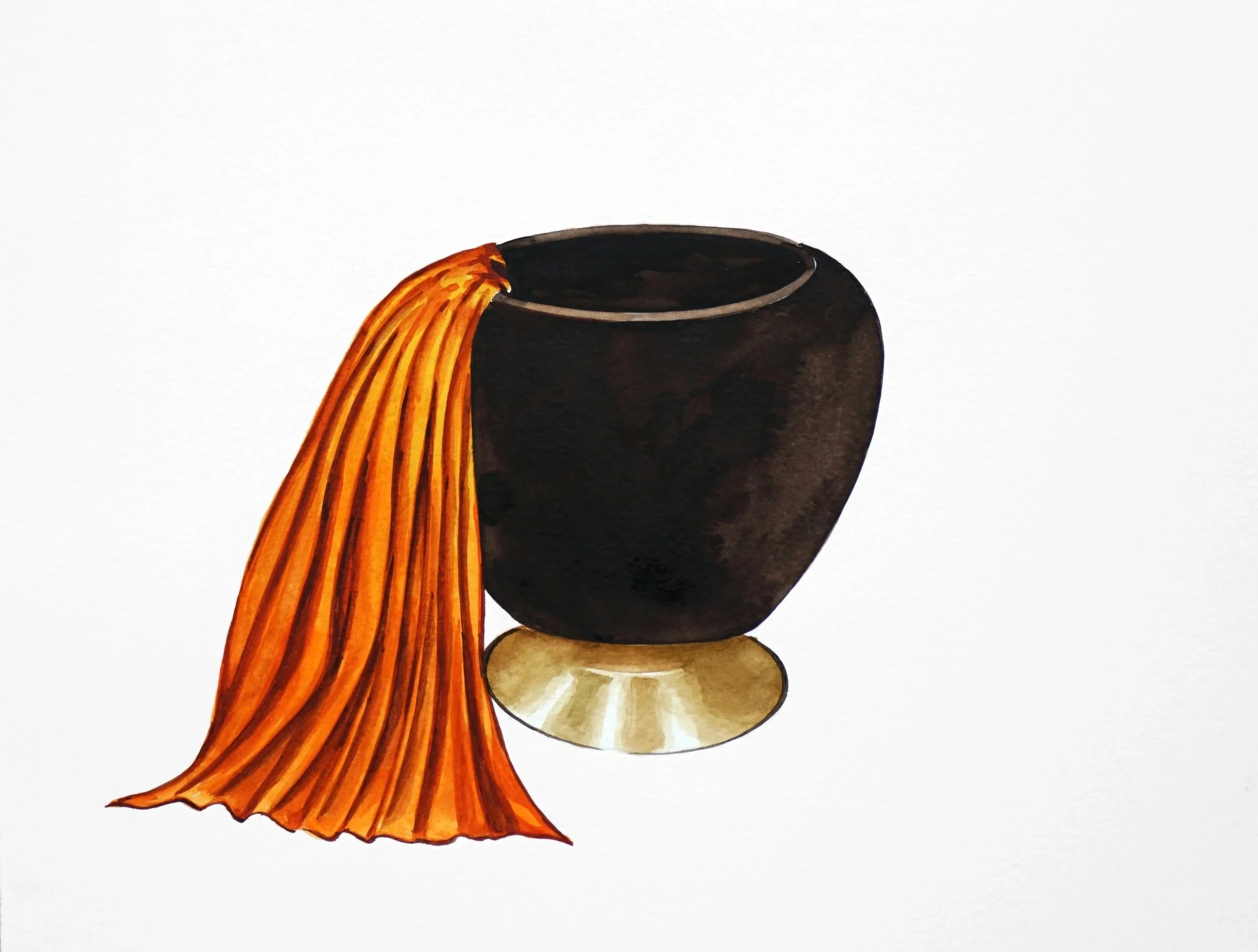
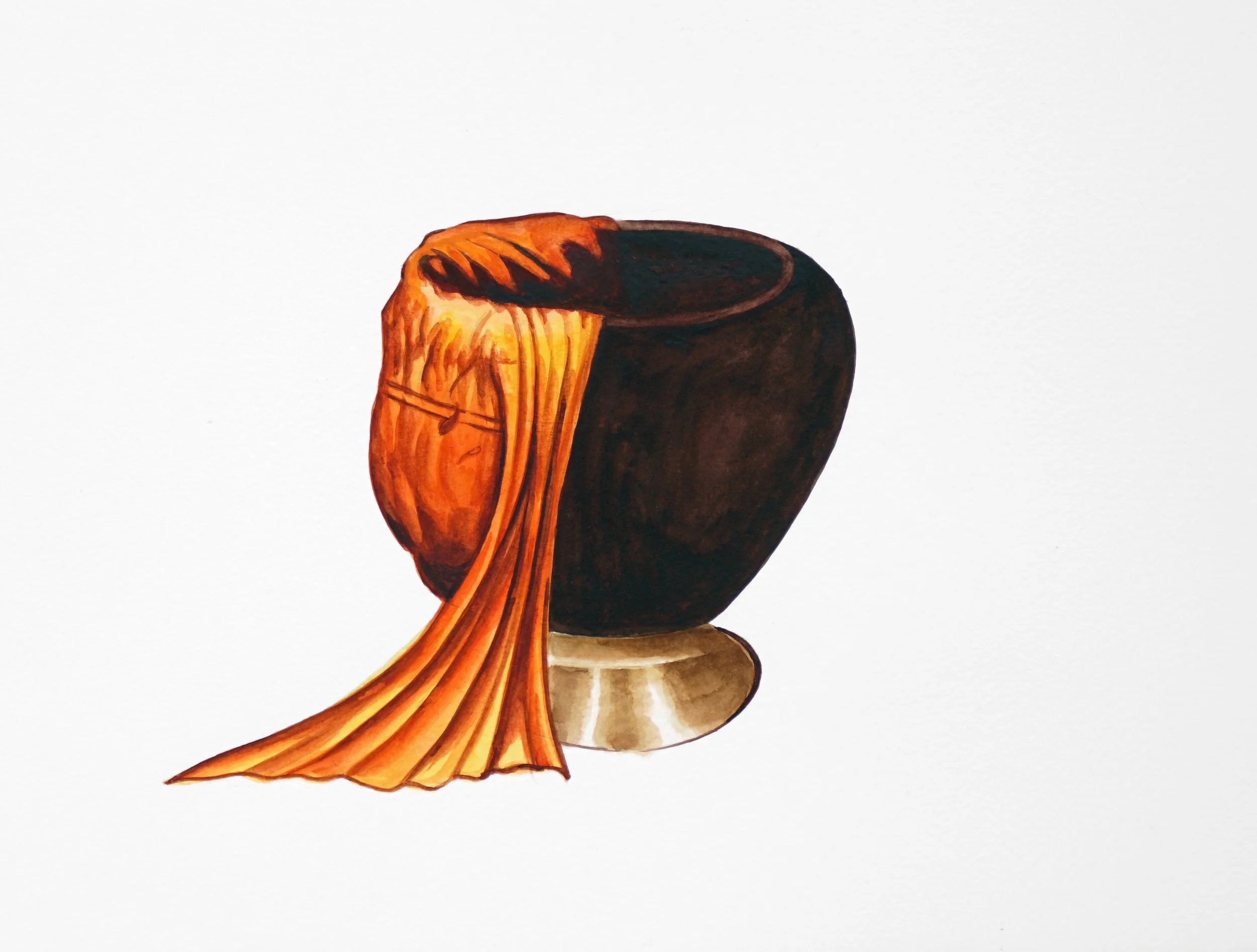
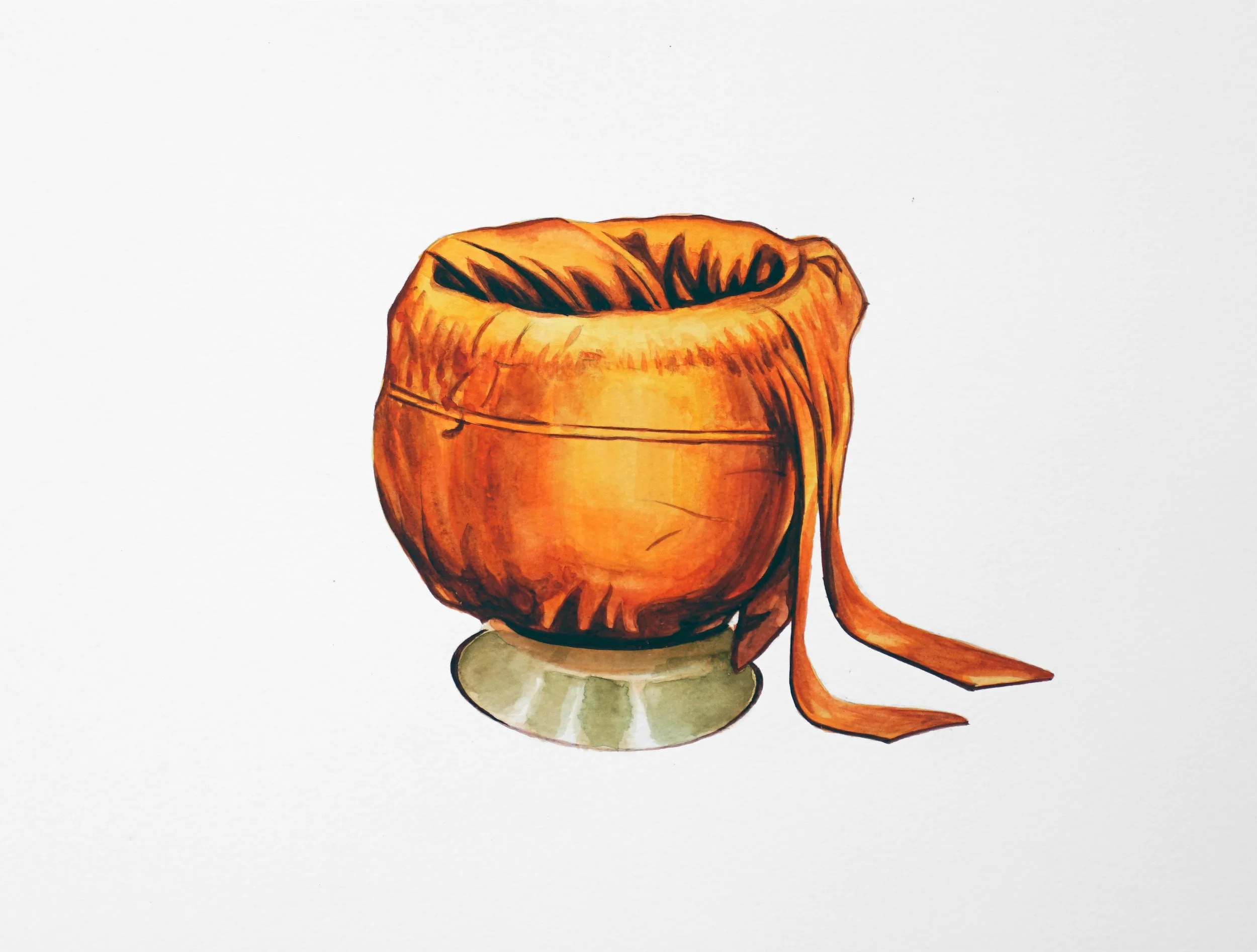
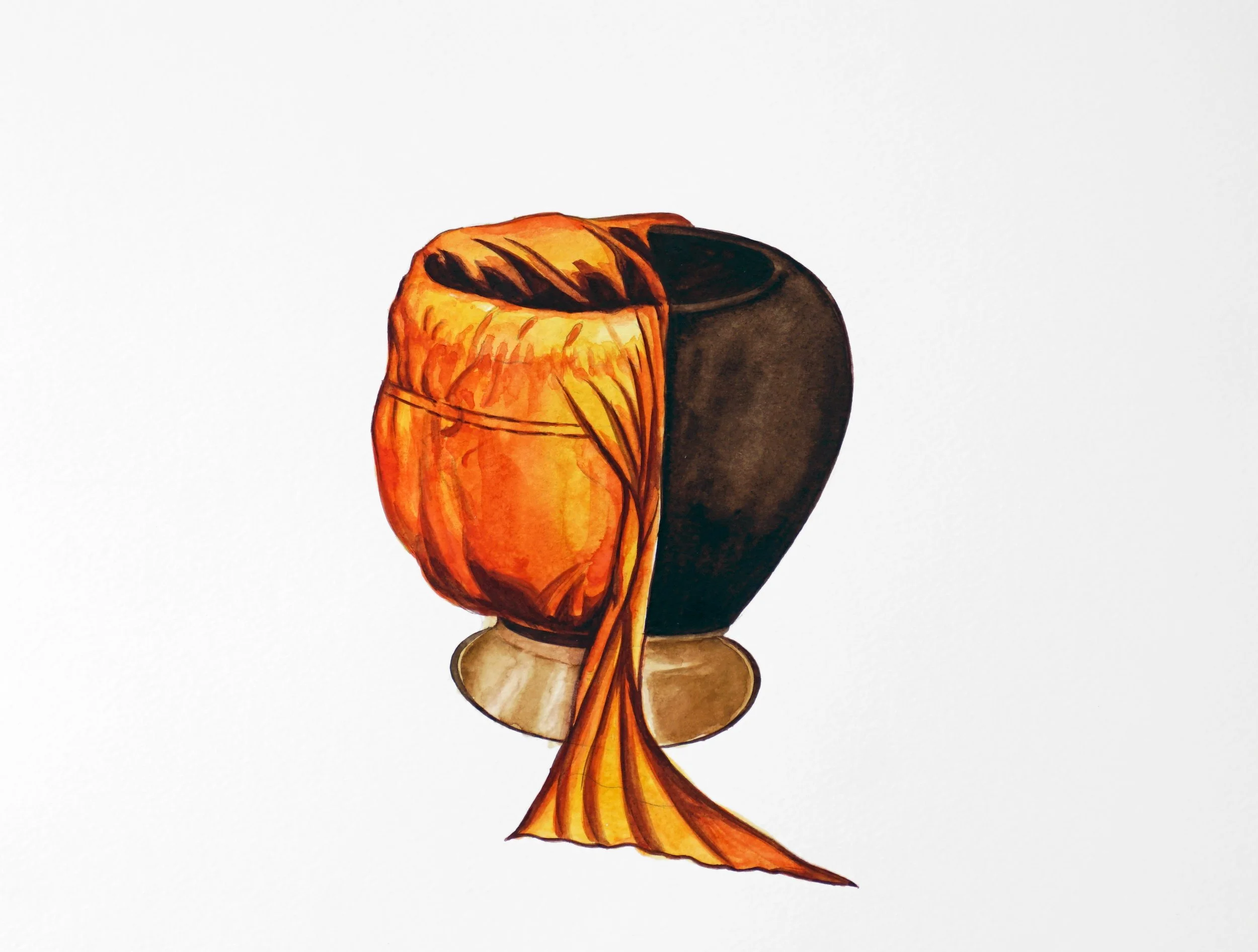
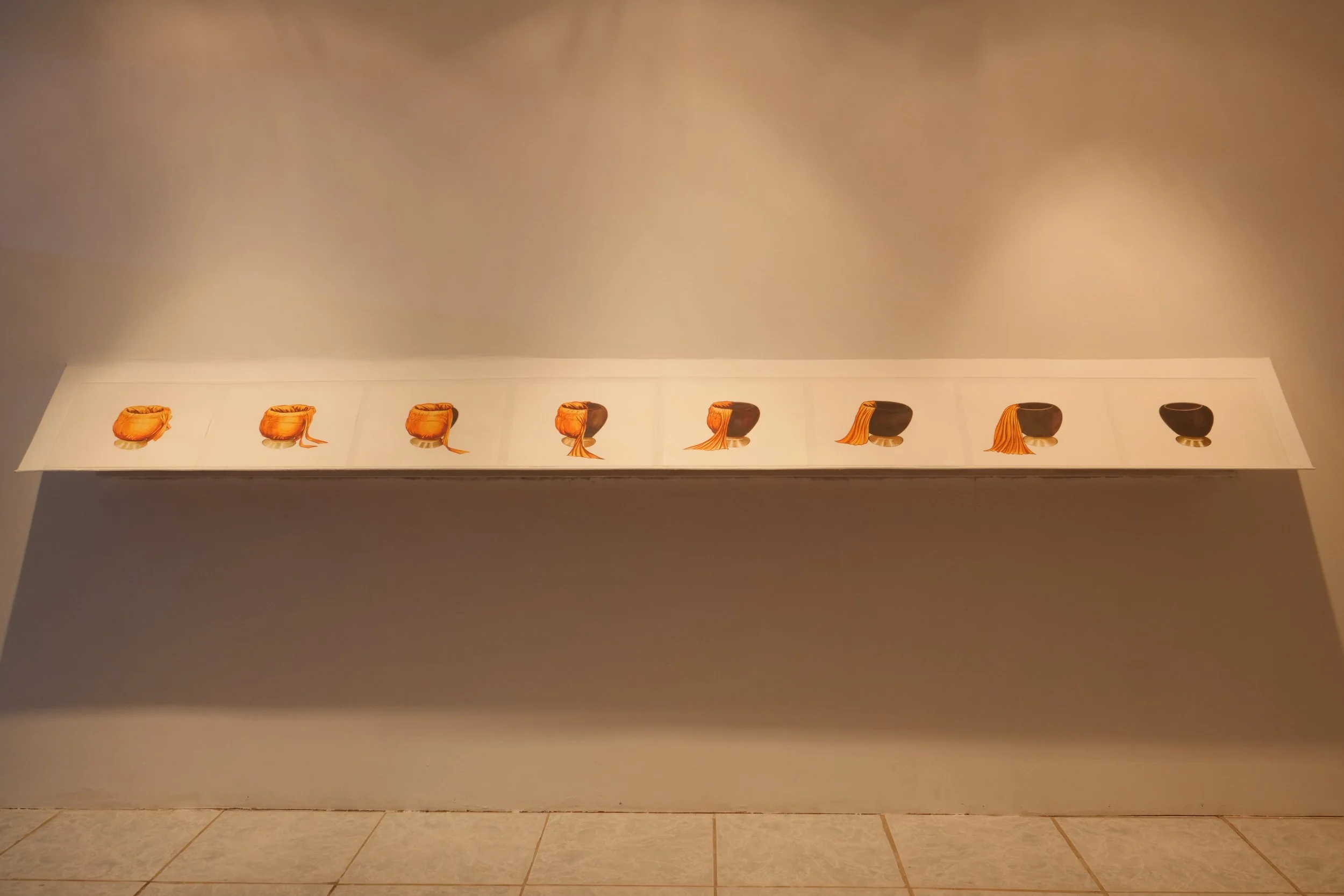
A series of eight watercolor paintings, Untitled (2017), by Than Sok illustrates step by step a Buddhist monk’s alms bowl with its orange robe being taken off or put on, depending on the viewing direction. The orange robe is a symbolising uniform used in Buddhism, that differentiates identifications between monks and laypeople. Anyone can easily find and buy an orange robe readily available at the market. According to Sok, who has a long-standing interest in the politics of spiritual beliefs and their relationship with materials, buying an orange robe is even easier than buying a SIM card which sometimes would require an ID card from the buyer. By at once freezing yet animating the unwrapping and wrapping process of the alms bowl, on the one hand, the artist poetically allures us to the material aesthetics of the revered object being exposed.
On the other hand, however, the artist brings to our attention the politics of legitimacy making of meaning and ultimately of power status that is conditioned by easily adoptable, external appearance.
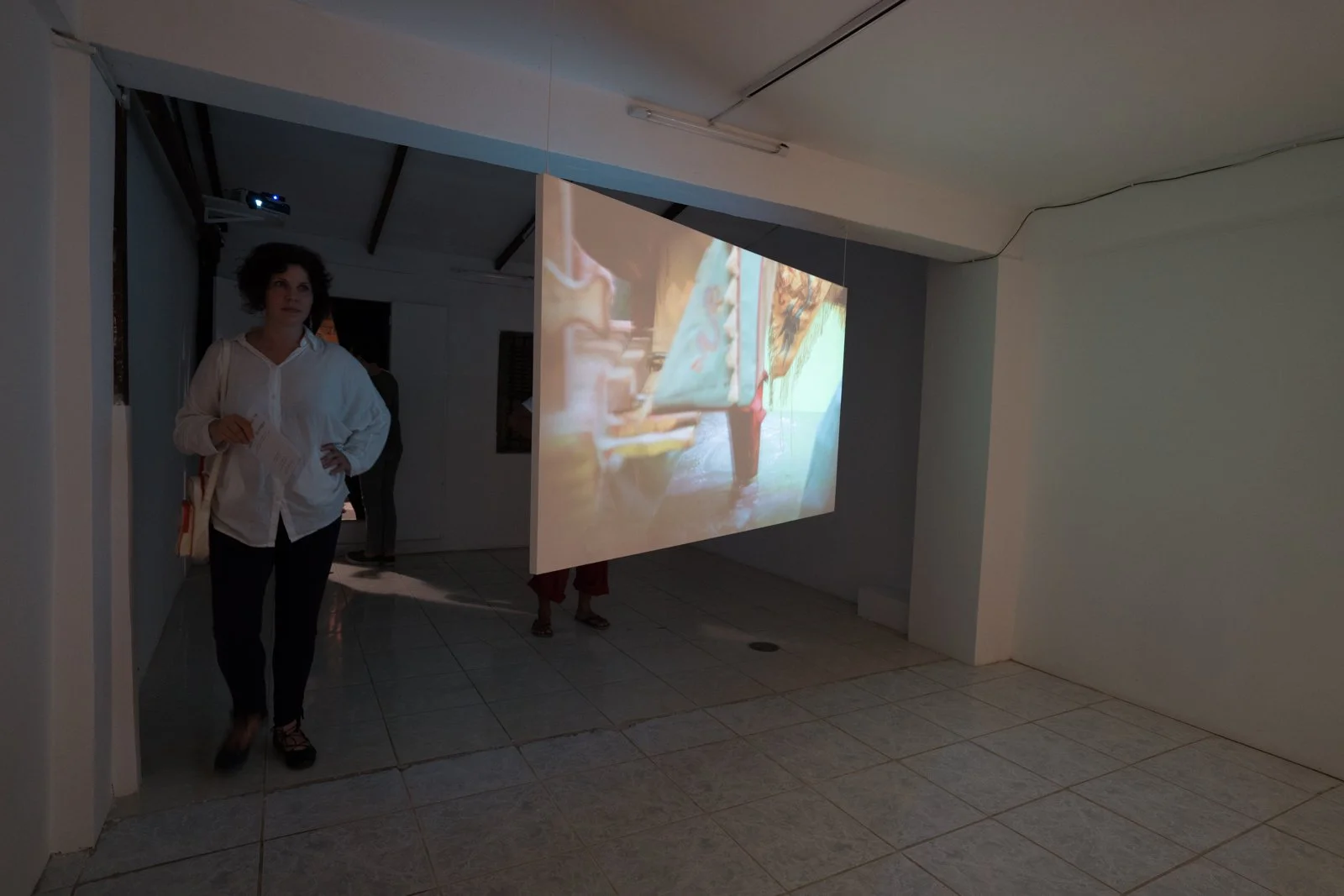
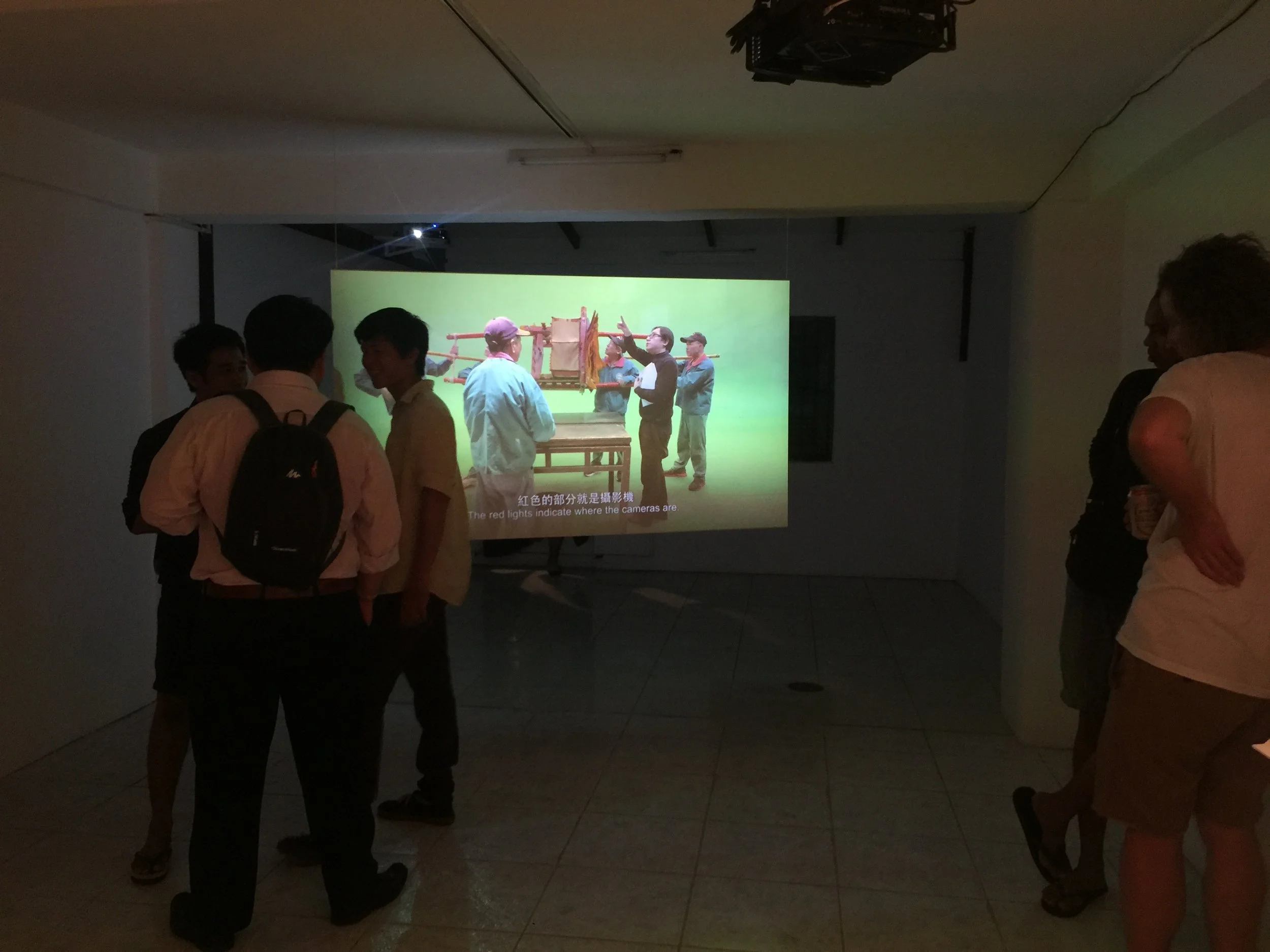
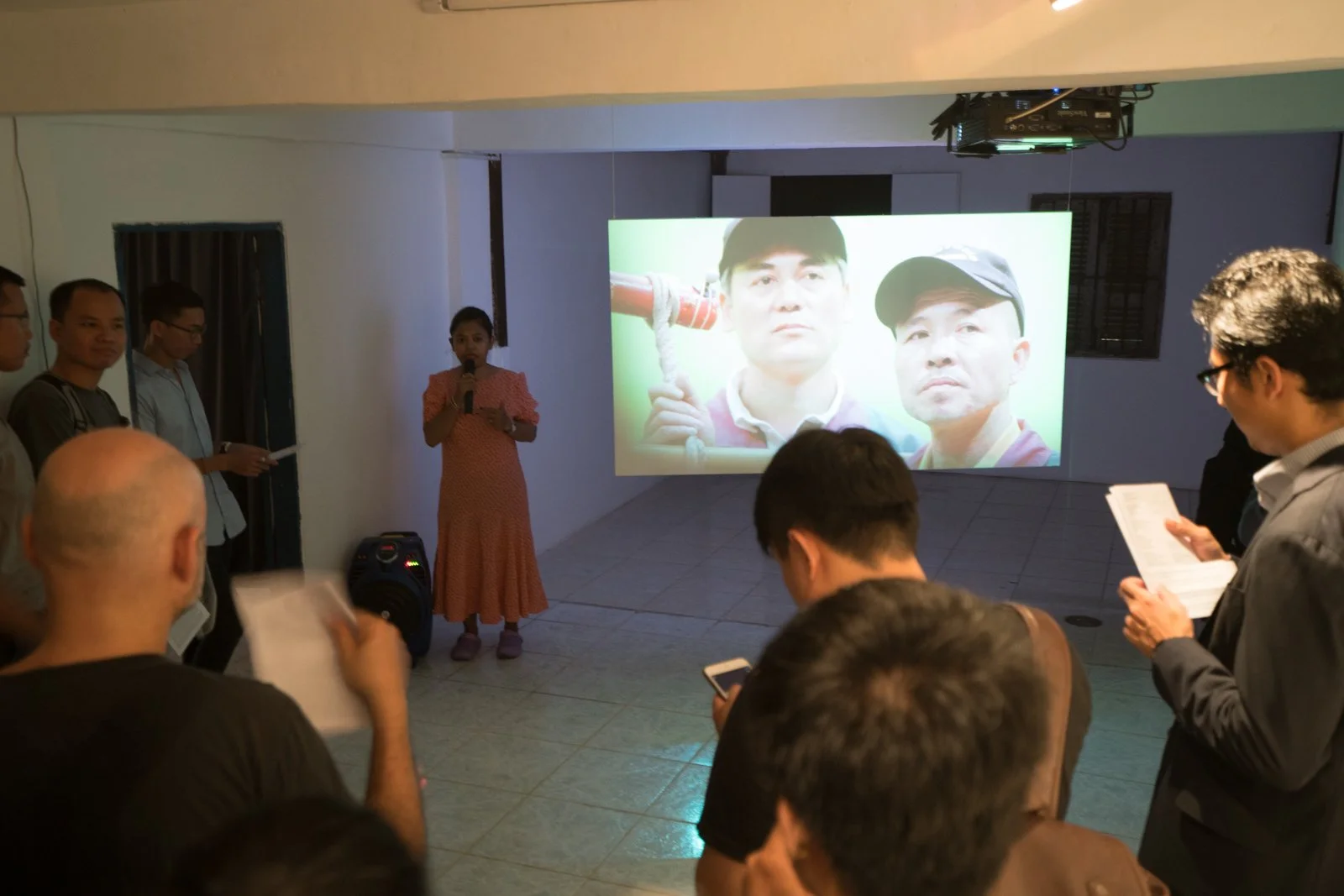
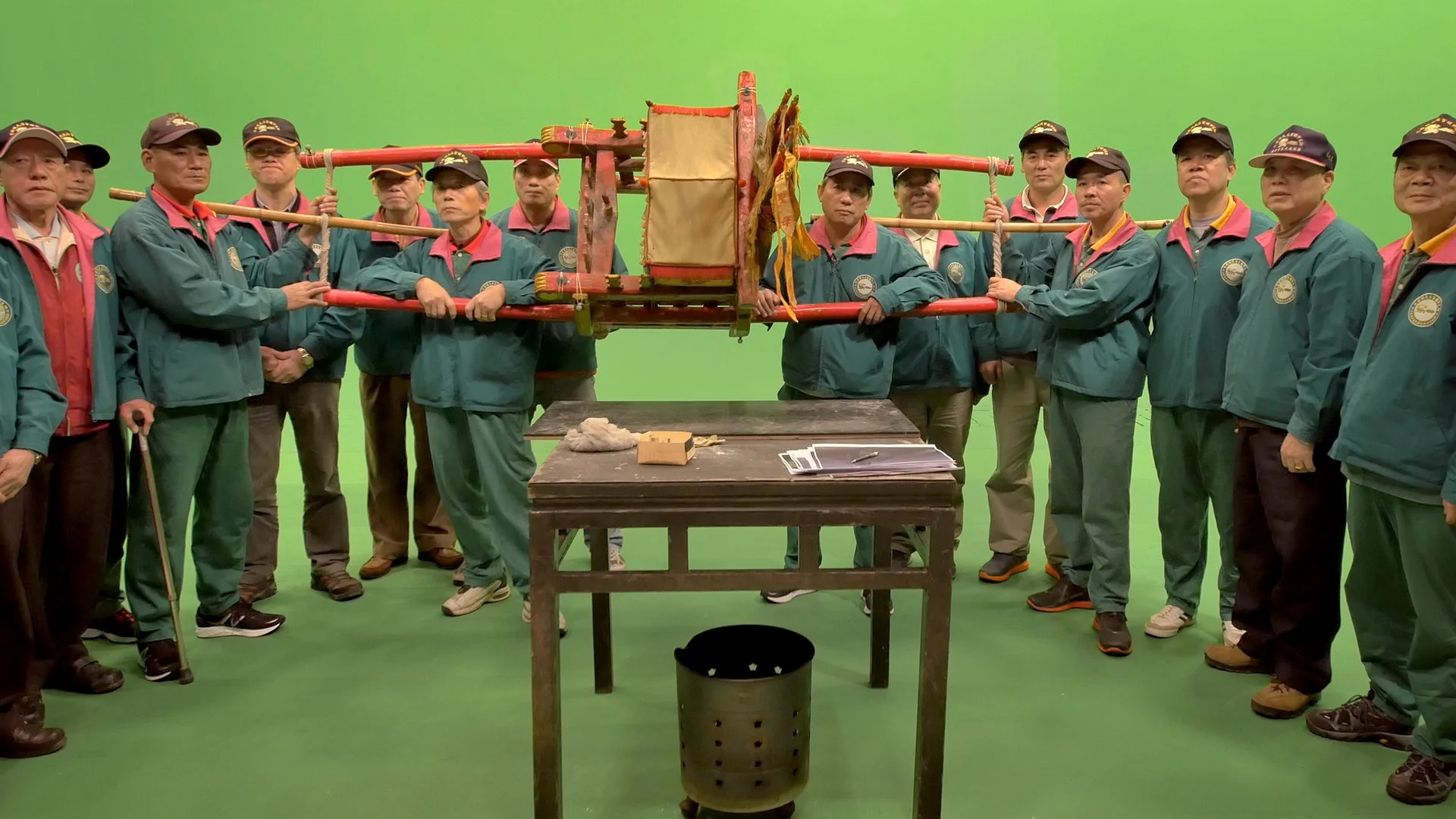
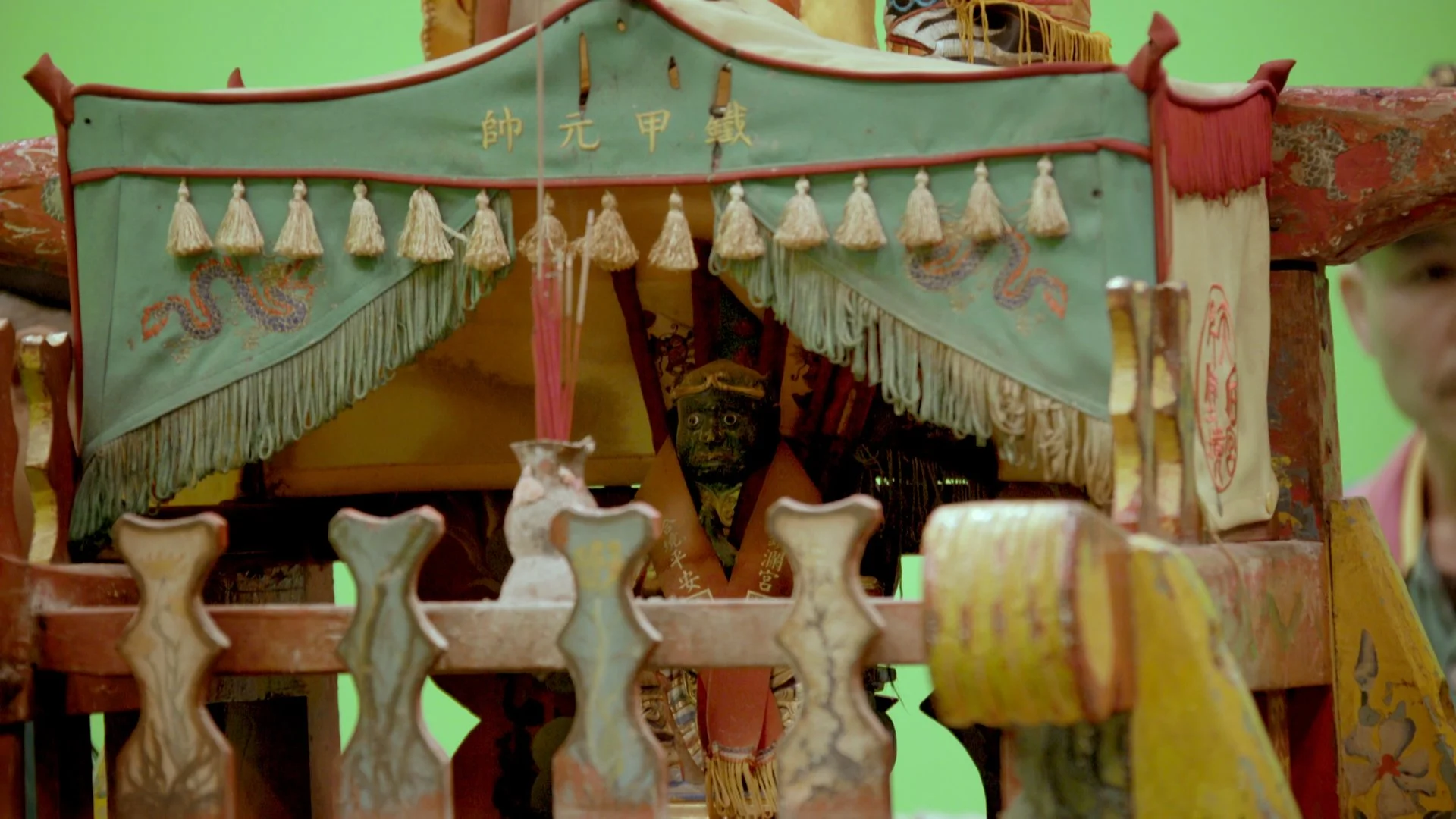
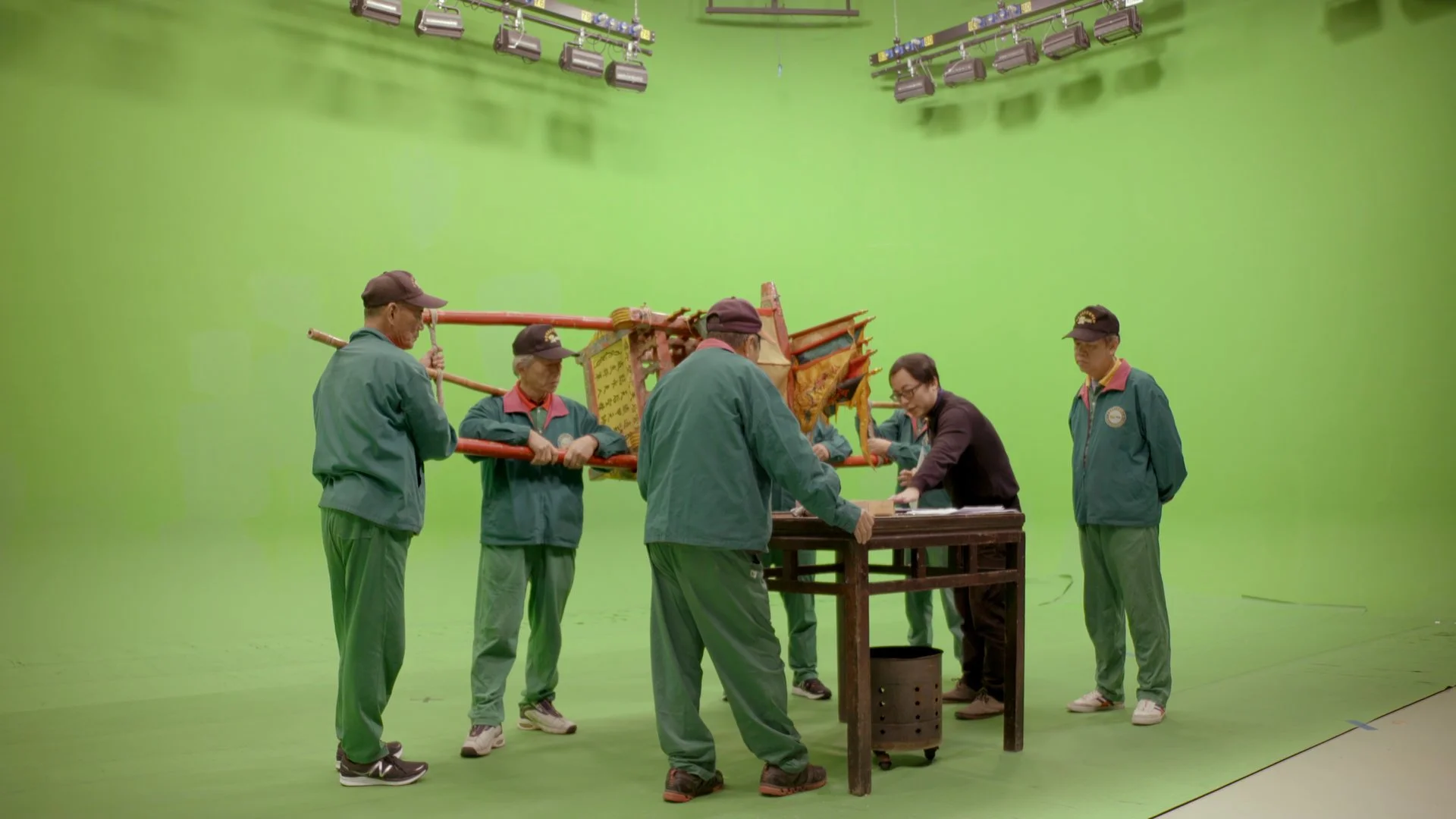
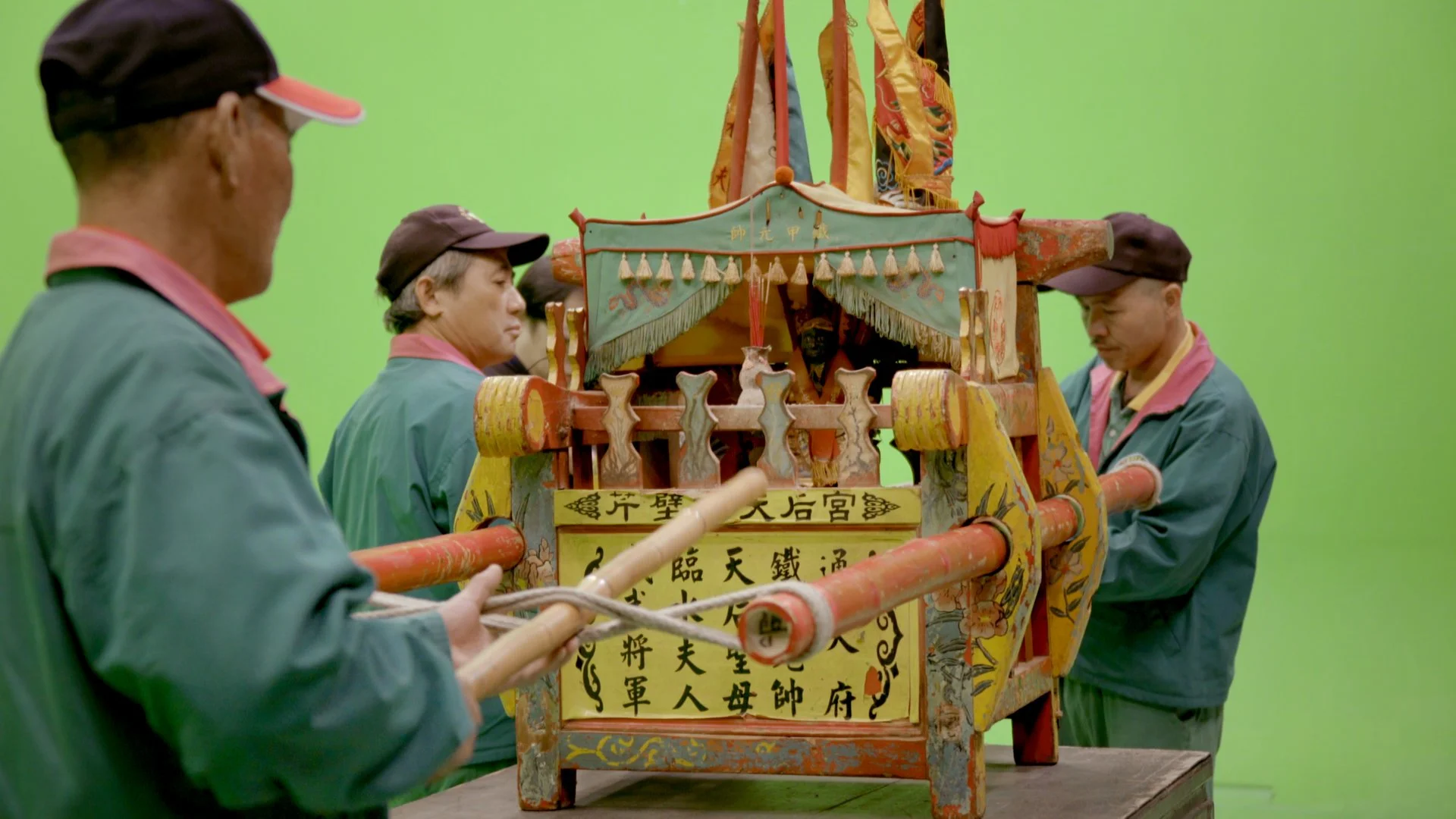
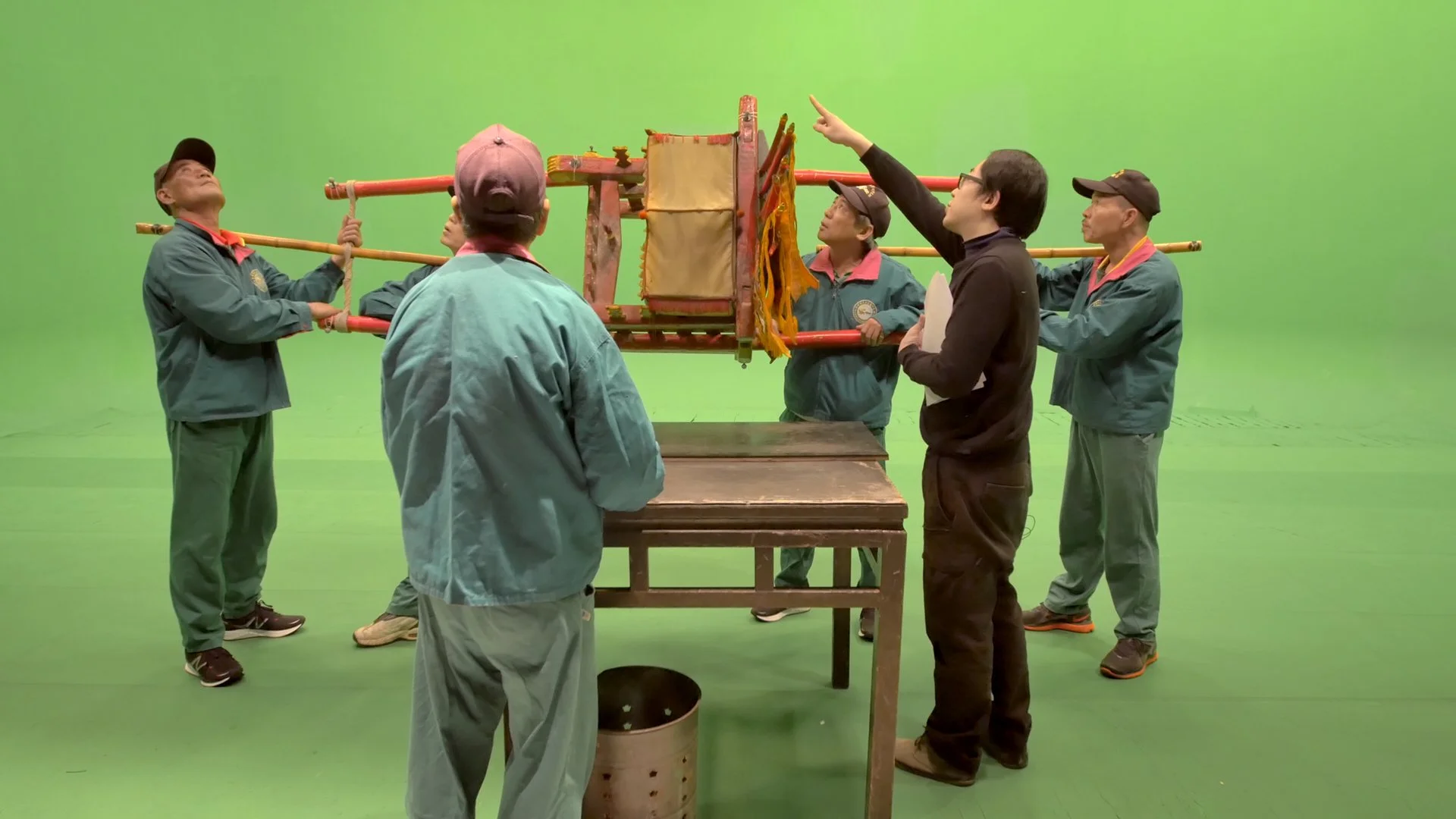
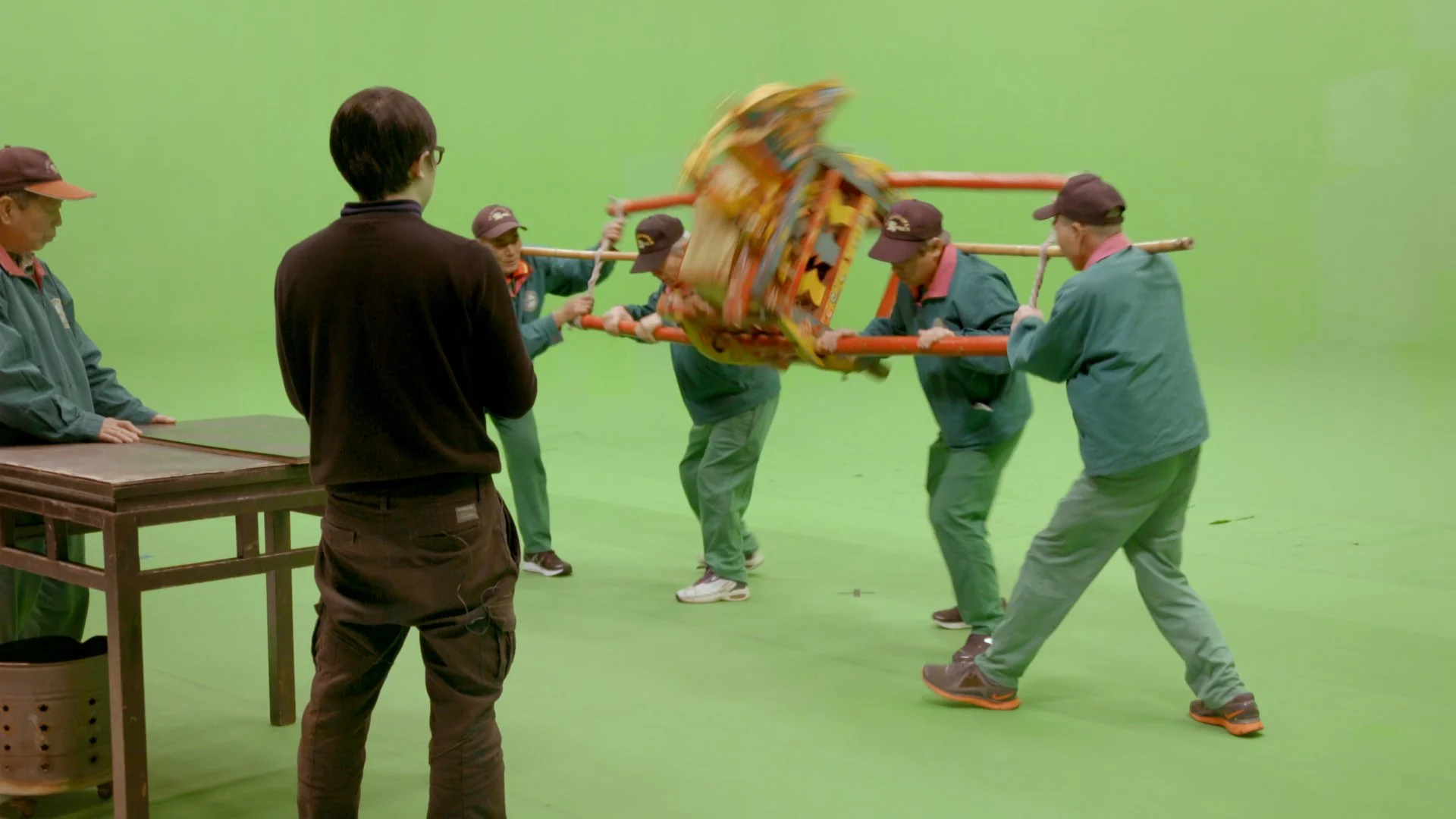
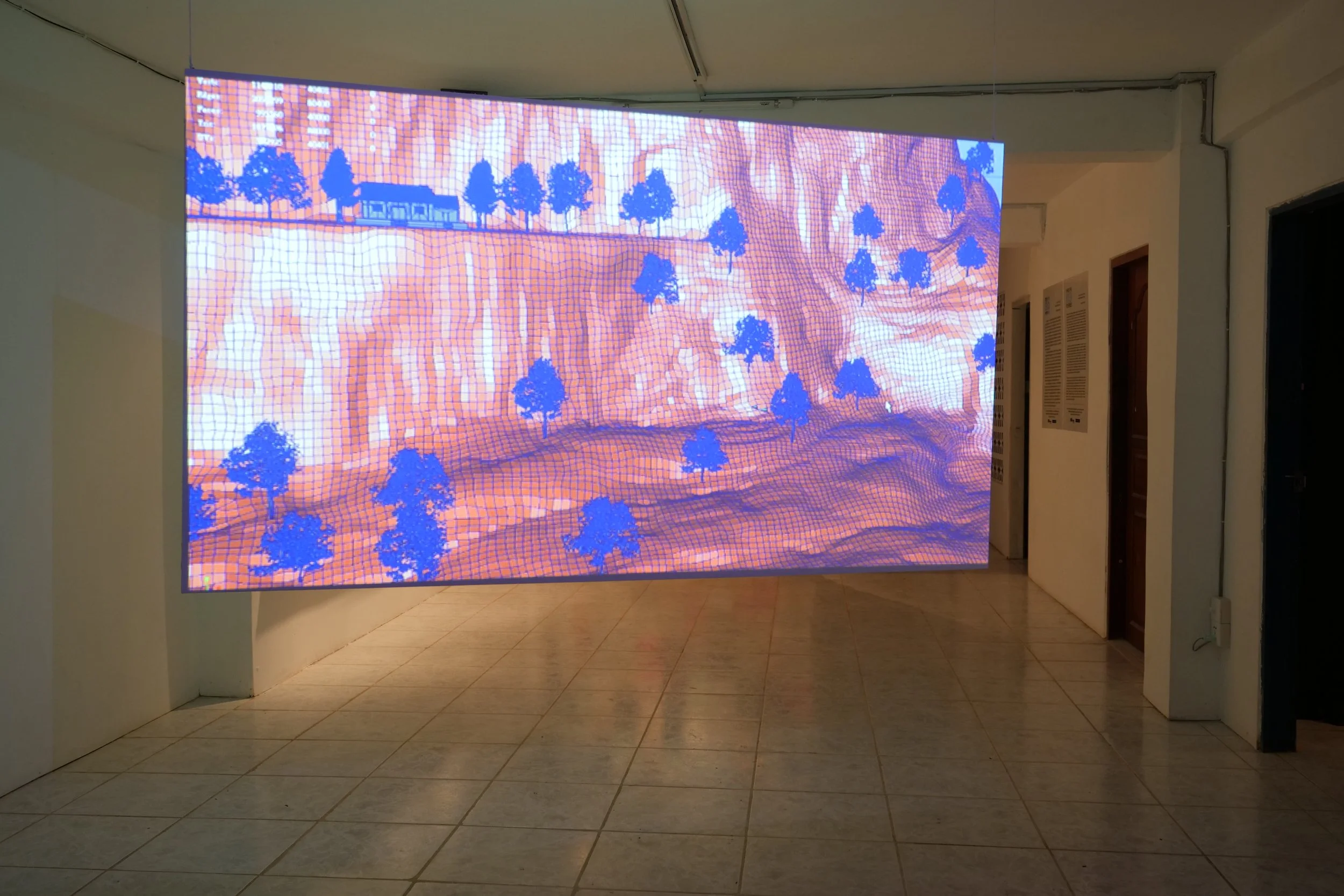
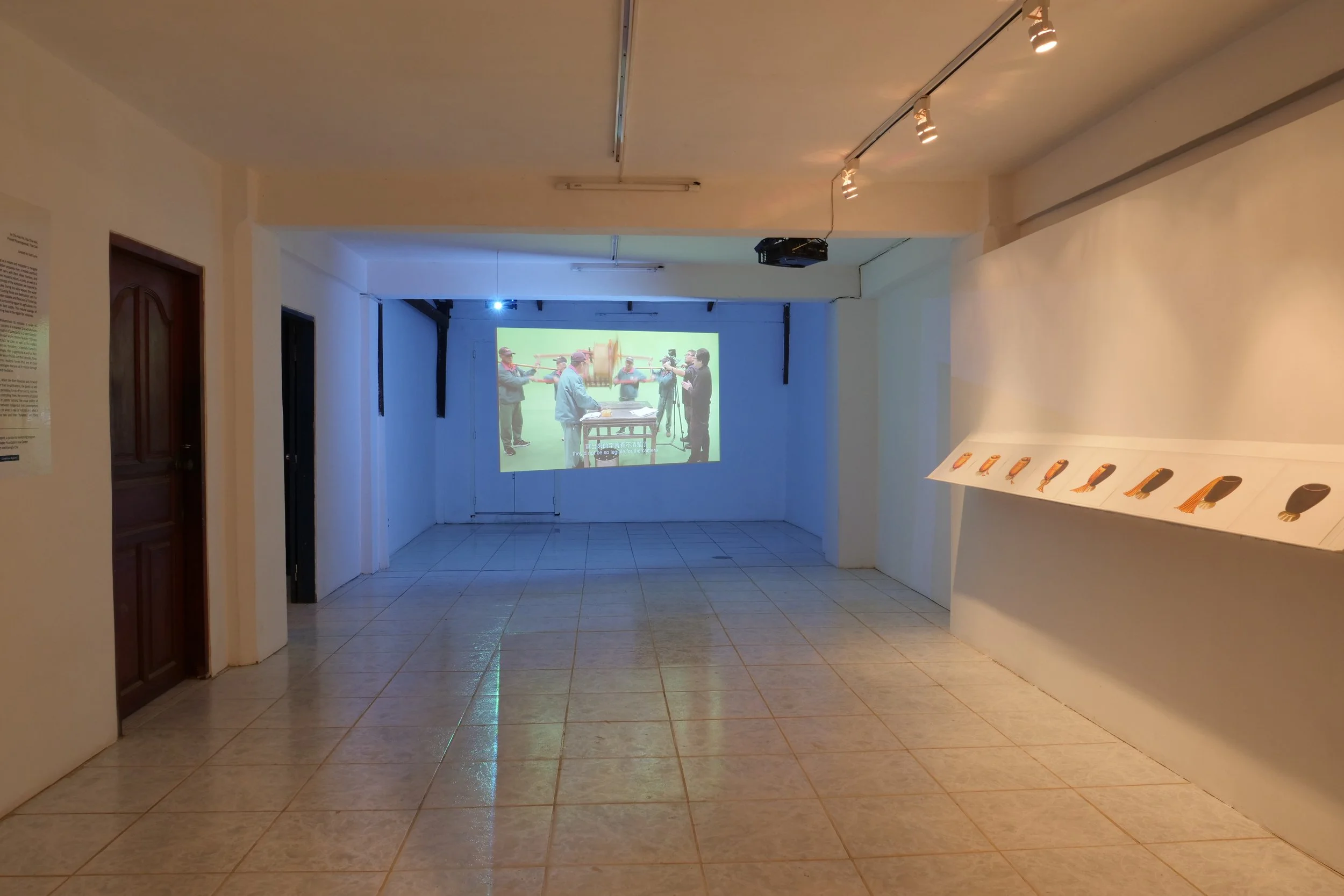
Hsu Chia-Wei’s two-channel video installation, Spirit-Writing (2016), presents a dialogue between the artist and the frog god Marshal Tie Jia who believed to be born in a small pond in Jiangxi, China, more than 1,400 years ago. According to legend, Marshal Tie Jia’s temple in the Wuyi Mountains was destroyed during the Cultural Revolution, and the frog god has since taken refuge on an island. Villagers contact Marshal Tie Jia through
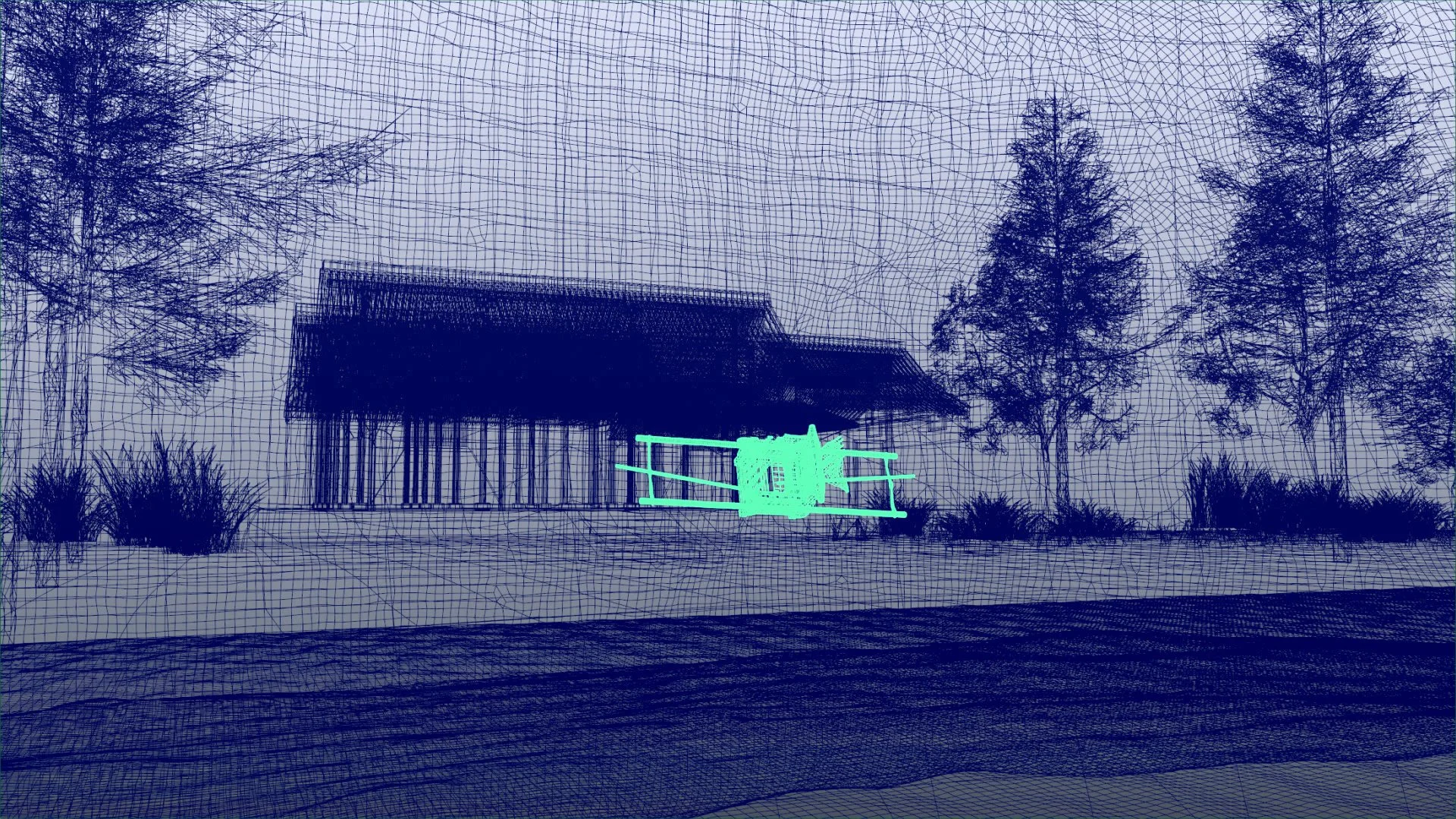
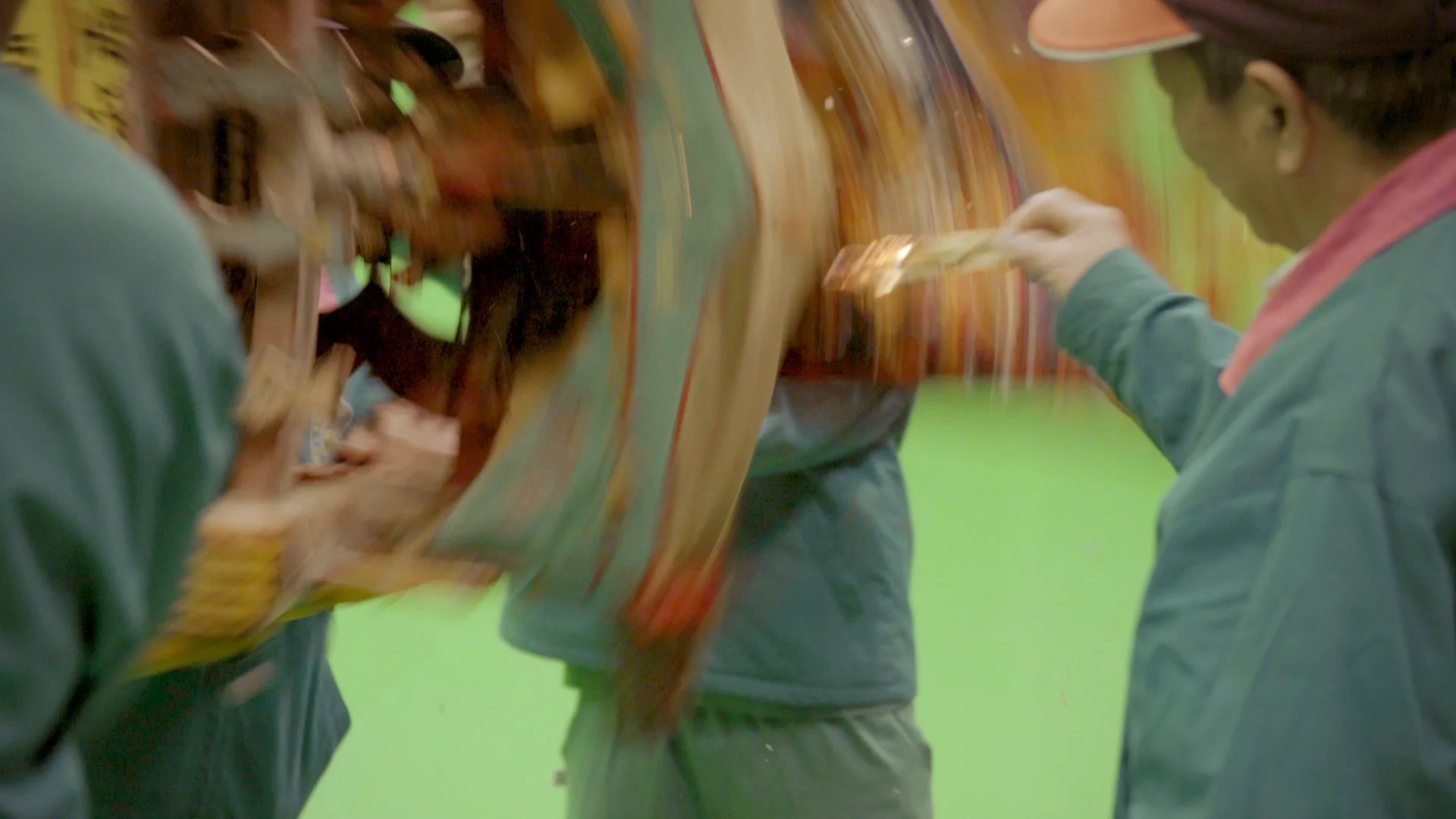
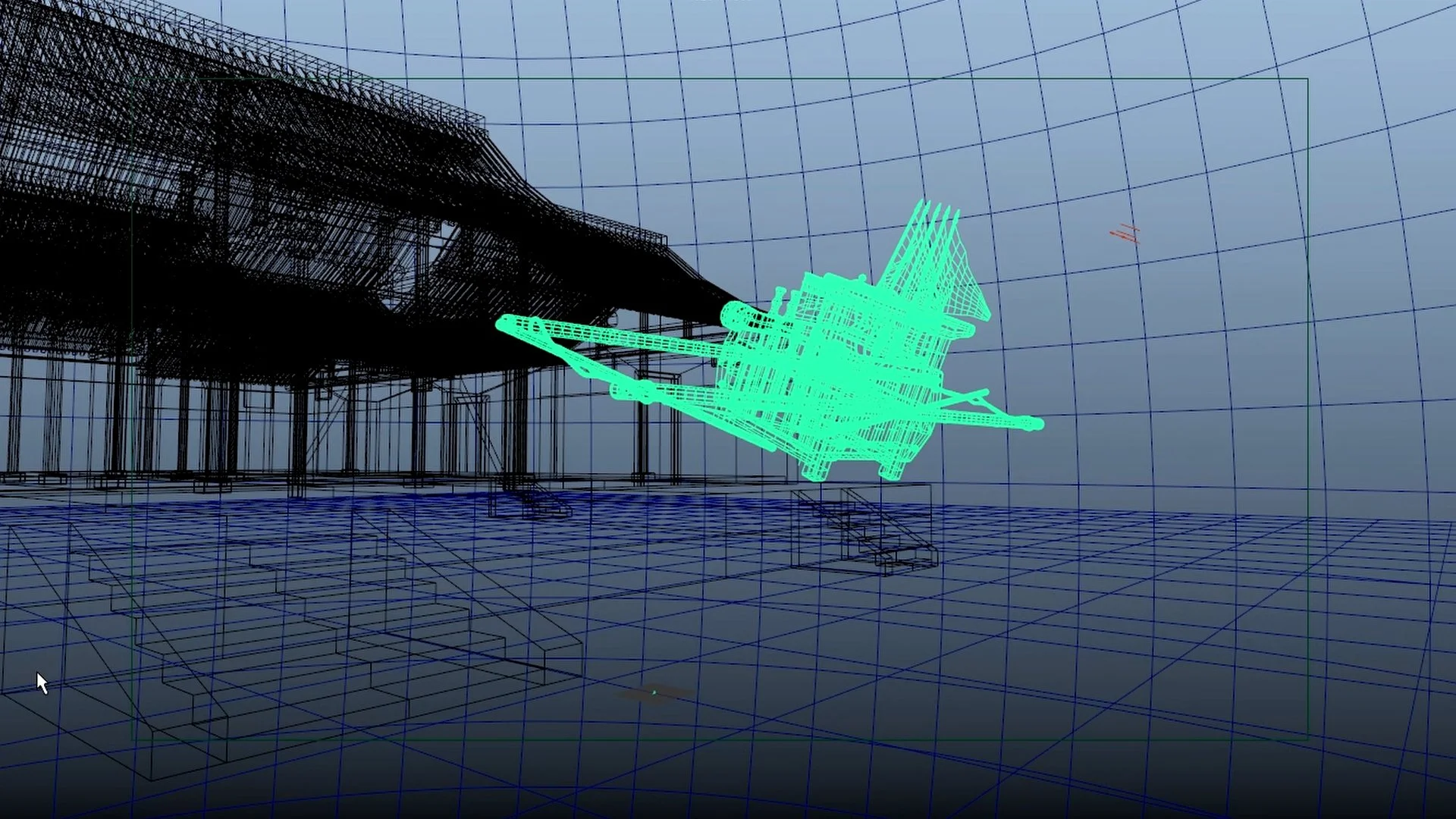
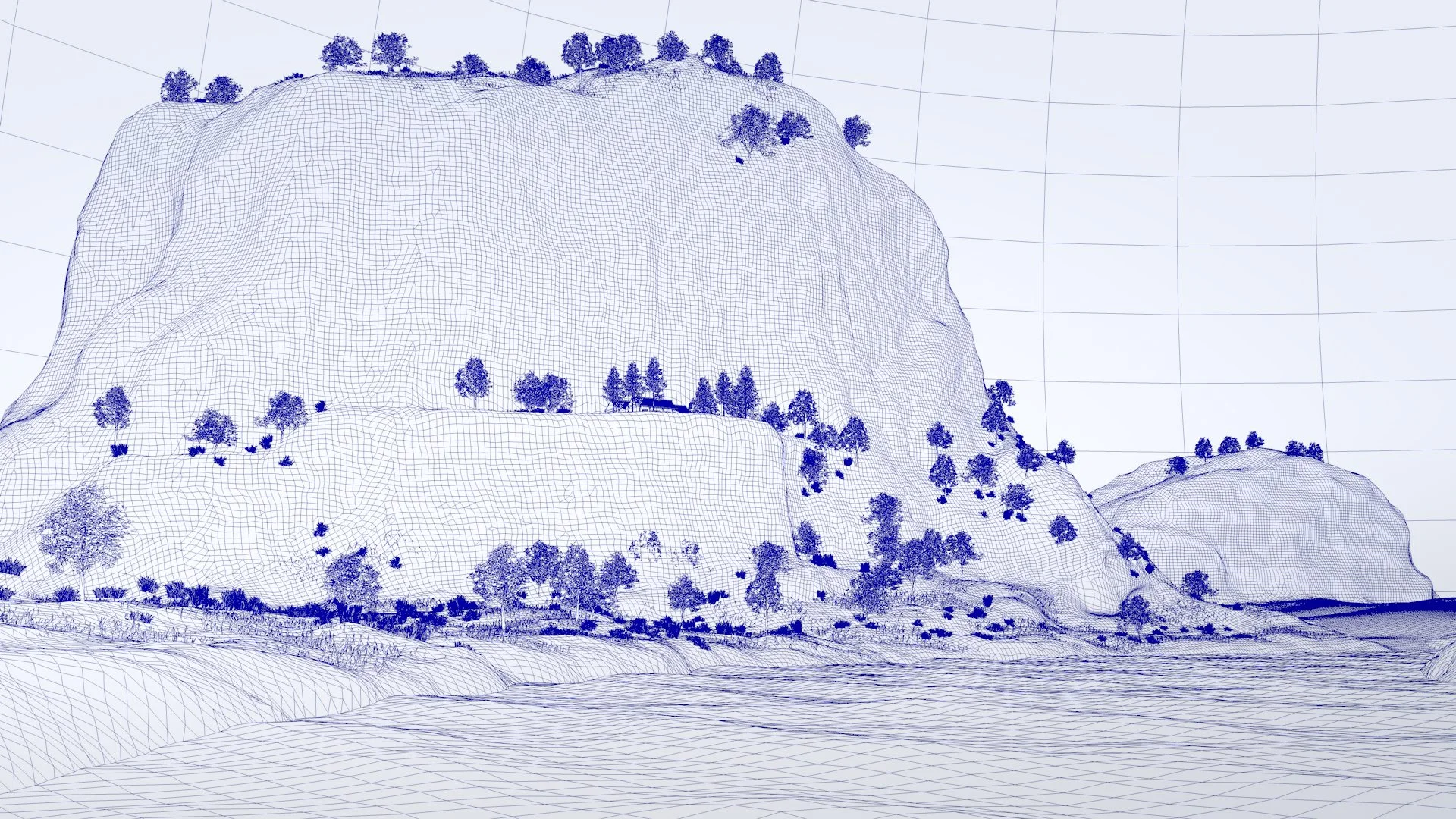
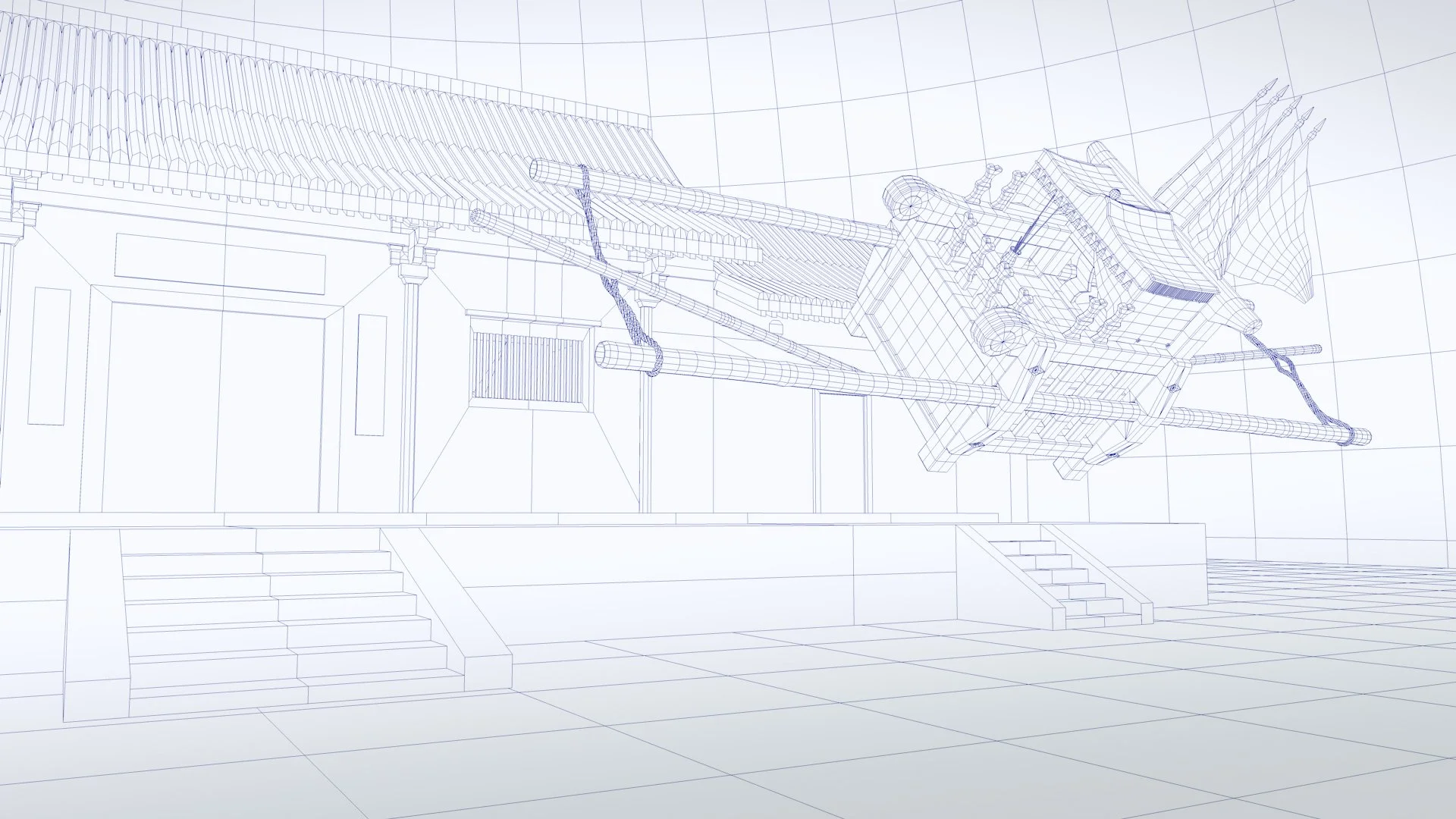
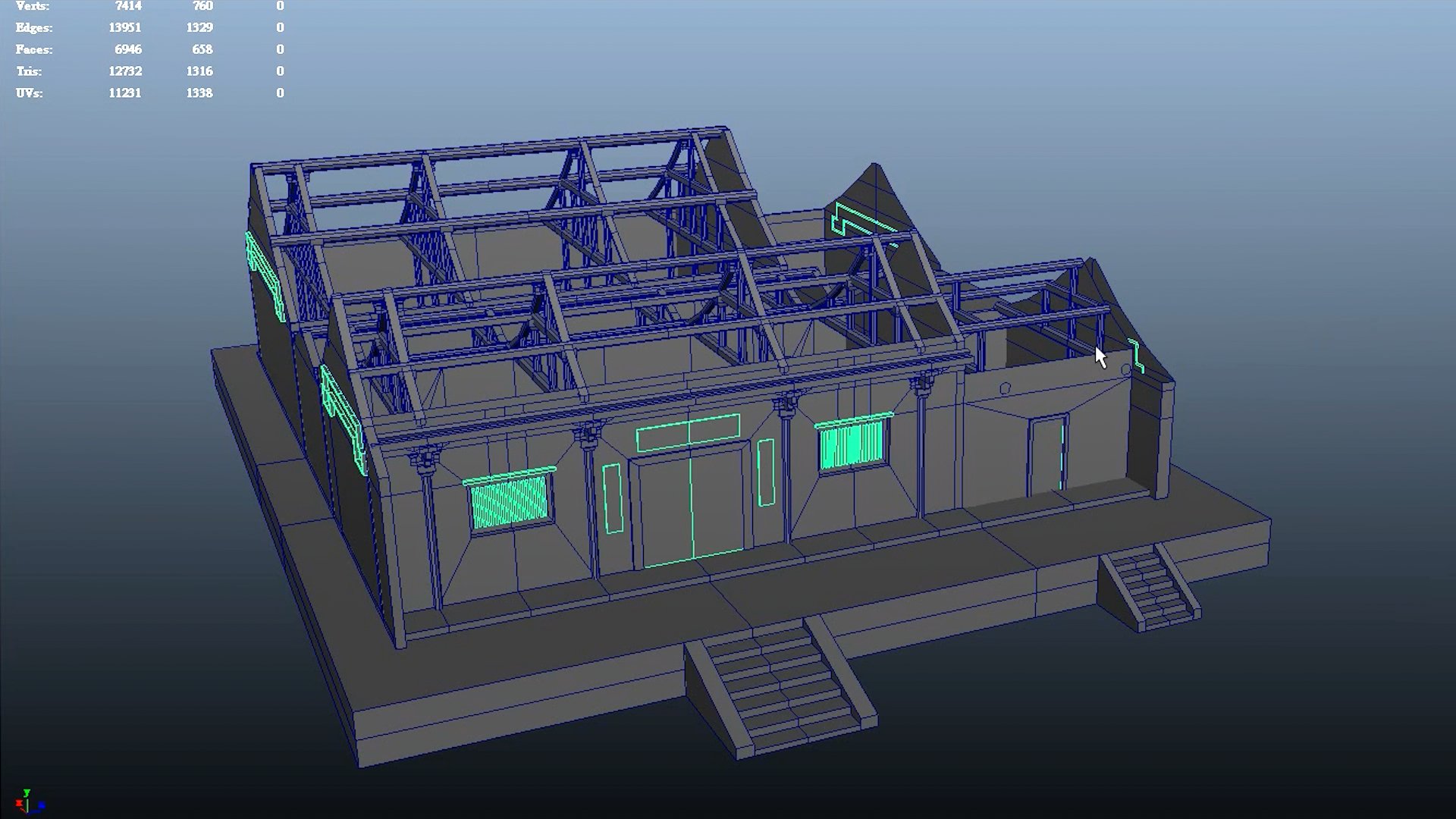
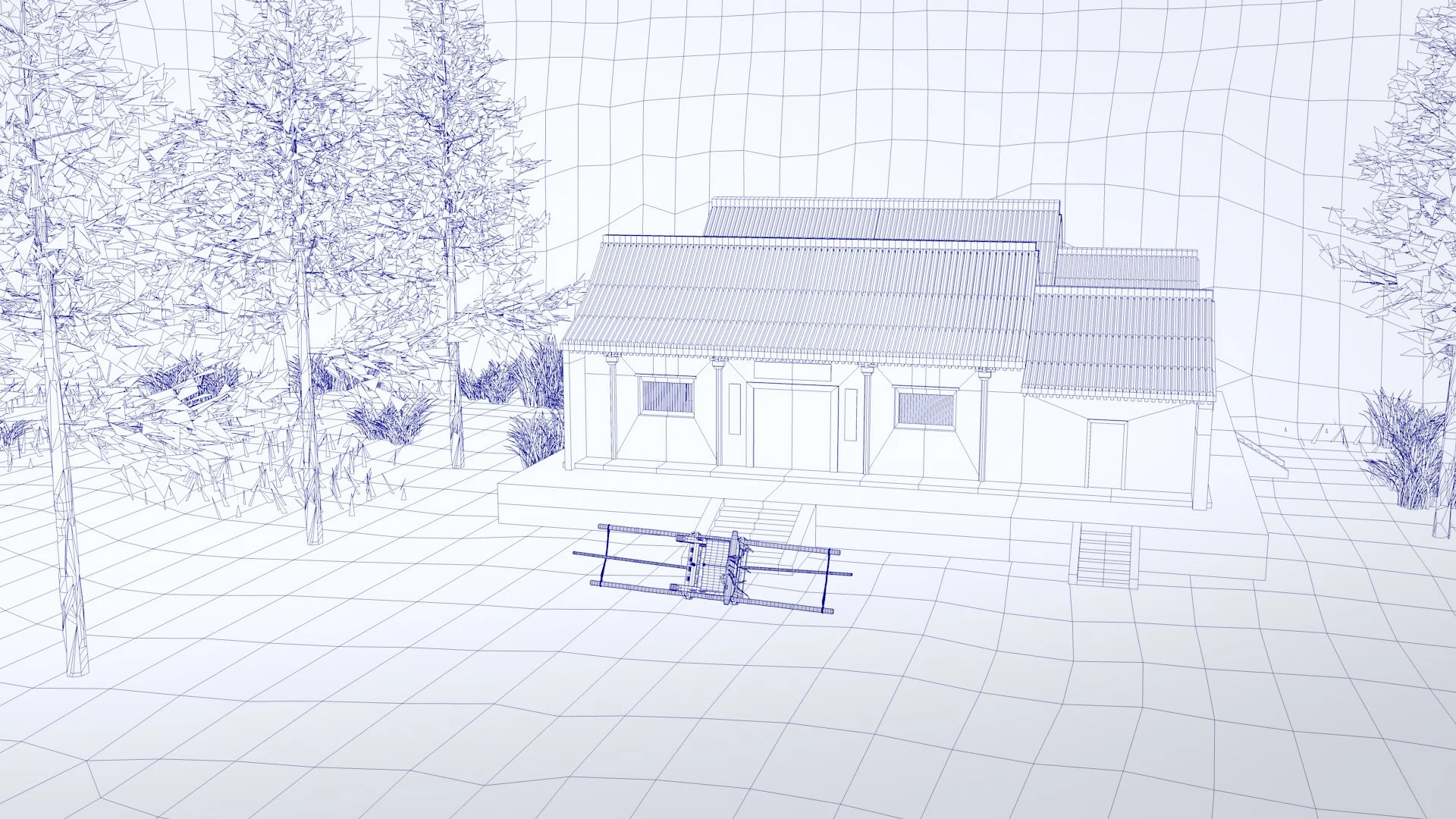
a special ritual, during which a spirit chair moves fiercely and hits against an altar table writing down messages under the command of the frog god and mediated by a group of men. One side of the screen shows the chair ritual of Marshal Tie Jia telling the artist story about the original conditions of the temple in the Wuyi Mountains, whereas the other side of the screen projects a digital re-construction of the temple and the Mountains following the frog god’s description. Chia-Wei’s work proposes a conversation between the realm of the divine and the digital world, testing the co-existence and compatibility between the magic of folk belief and the abstract world of the digital.

Through the works by the four participating artists, When the River Reverses puts forward questions rather than answers, complications rather than simplifications, the poetic as well as the political. The exhibition dives through various pervading forces of competing realities: the wild side of nature and human’s obsession with controlling them, the economy of global garment supply chain that relies on cheap labour in poorer nations, the visual politics of authority in religious practice, and the interface between indigenous and contemporary knowledge. The exhibition challenges us, at times on what is real or natural and what is artificial, at others on the interplay between the two and their “balance,” and these sometimes are complex and contradictory.

About the artists
Chu Hao Pei (b.1990, Singapore) works with various media. His artistic practice is informed by the shifting ecological, social and urban landscapes. By interweaving documentation and intervention as a strategy, he explores conflicts and tensions arising from state’s interventions on nature and culture. Hao Pei’s works examine loss, or potential loss, of nature and cultural heritage as a tactic to draw our attention to wider issues of environmental and cultural loss. Hao Pei is a recipient of 2017 Mutual Learning research and residency. He graduated from the School of Art, Design & Media (ADM) at Nanyang Technological University. Recent group exhibitions include Postfuture Journey, Athens Digital Arts Festival 2017, Athens International Airport “Eleftherios Venizelos,” Greece; Co-Existence Art Exhibition, Living with Animals/Seeing with Animals (LwA/SwA) Conference, Eastern University of Kentucky, United States (2017); and On the Stream - The Third Kunming Fine Arts Biennale 2016, Yunnan Fine Art Museum, Yunnan, China.
Hsu Chia-Wei (b. 1983, Taichung, Taiwan) is interested in the forgotten histories of the Cold War in Asia. His works develop a keen sensitivity that weaves together reality and illusion, history and the present. Through a critical use of film, he constructs mythical narratives that complicate and linger between fiction and reality, while exposing events, people and places that are usually excluded from the screen in the traditional history making. Chia-Wei is the Annual Grand Prize winner of 2017 Taishin Arts Award. Chia- Wei graduated from the Graduate School of Plastic Art, National Taiwan University of Art. Recent solo exhibitions include Industrial Research Institute of Taiwan Governor- General’s Office (2017), Liang Gallery, Taipei; and Huai Mo Village (2016), Hong-Gah Museum, Taipei. Latest group exhibitions include LOOP Barcelona (2017), CATALONIA RAMBLAS, Barcelona; and RIVERRUN (2017), Taipei Fine Arts Museum.
Piyarat Piyapongwiwat (b. 1977, Phrae, Thailand) works with various media. Her practice centers on documentation as a method to expose and question the conditions and implications of our globalised economy. Whether it is video, photograph, or installation, she often uses these media as text, image, or text-image, not merely as a record keeping, but as an attempt to map our inter-connected world through voices of individuals. Piyarat is a 2017 recipient of the Japan Foundation Asia Center Fellowship Program. Piyarat holds a BA from RMIT University, Australia and a BFA from Ecole Supérieure des Beaux-Arts de Montpellier Agglomération (ESBAMA), France. Her latest group exhibitions include Samut Thai: Unfinished History (2017), BankART Studio, Yokohama; Seismograph: Sensing the City - Art in the Urban Age, Art Stage Singapore (2016); and 2016 Sovereign Asian Art Prize Finalist Exhibition, Hong Kong.
Than Sok (b. 1984, Takeo, Cambodia) investigates religious and spiritual beliefs through the examination of ritual and everyday objects. Using various media including painting, sculpture, installation, video and performance, Sok’s works usually draw attention to the notion of merit, the relationship between belief systems and their material authorities, and the power relations that these systems produce. Sok studied at Reyum Art School and Norton University, Phnom Penh. His most recent solo exhibition is Khla Kloc (2017), SA SA BASSAC, Phnom Penh. Latest group exhibitions include Sunshower: Contemporary Art from Southeast Asia 1980s to Now (2017), Mori Art Museum, Tokyo; Net Present Value: Art, Capital, Futures, Art Stage Singapore 2017; and ASIA NOW – Paris Asian Art Fair 2016.
Public Programs
-
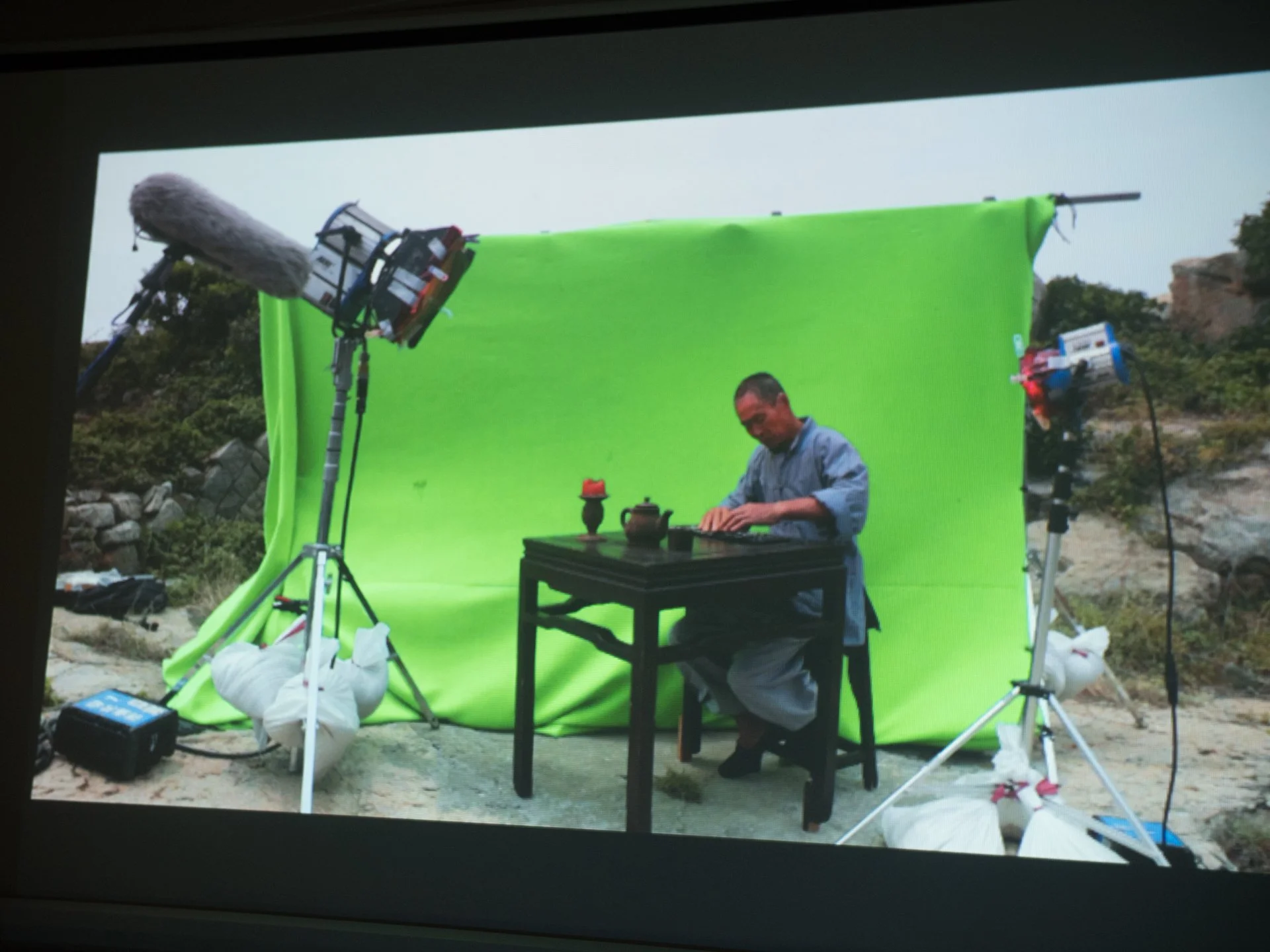
Panel discussion with exhibiting artists of “When the River Reverses” Chu Hao Pei, Hsu Chia-Wei, Piyarat Piyapongwiwat and Than Sok Moderated by Vuth Lyno
Wednesday, October 11, 2017, 6 PM
Sa Sa Art Projects #47, Street 350 (off Street 95), Phnom Penh
In English and Khmer -
The Nature of the Historical: Forming Worlds in Southeast Asia by Patrick D. Flores
Tuesday, 24 October 2017, 6pm
Sa Sa Art Projects #47, St 350 (off St 95), Phnom Penh
A collaboration between Vetika Brovoat Selapak: Art History Forum and Sa Sa Art Projects
Public program for the “When the River Reverses” exhibition
In English with Khmer translation -
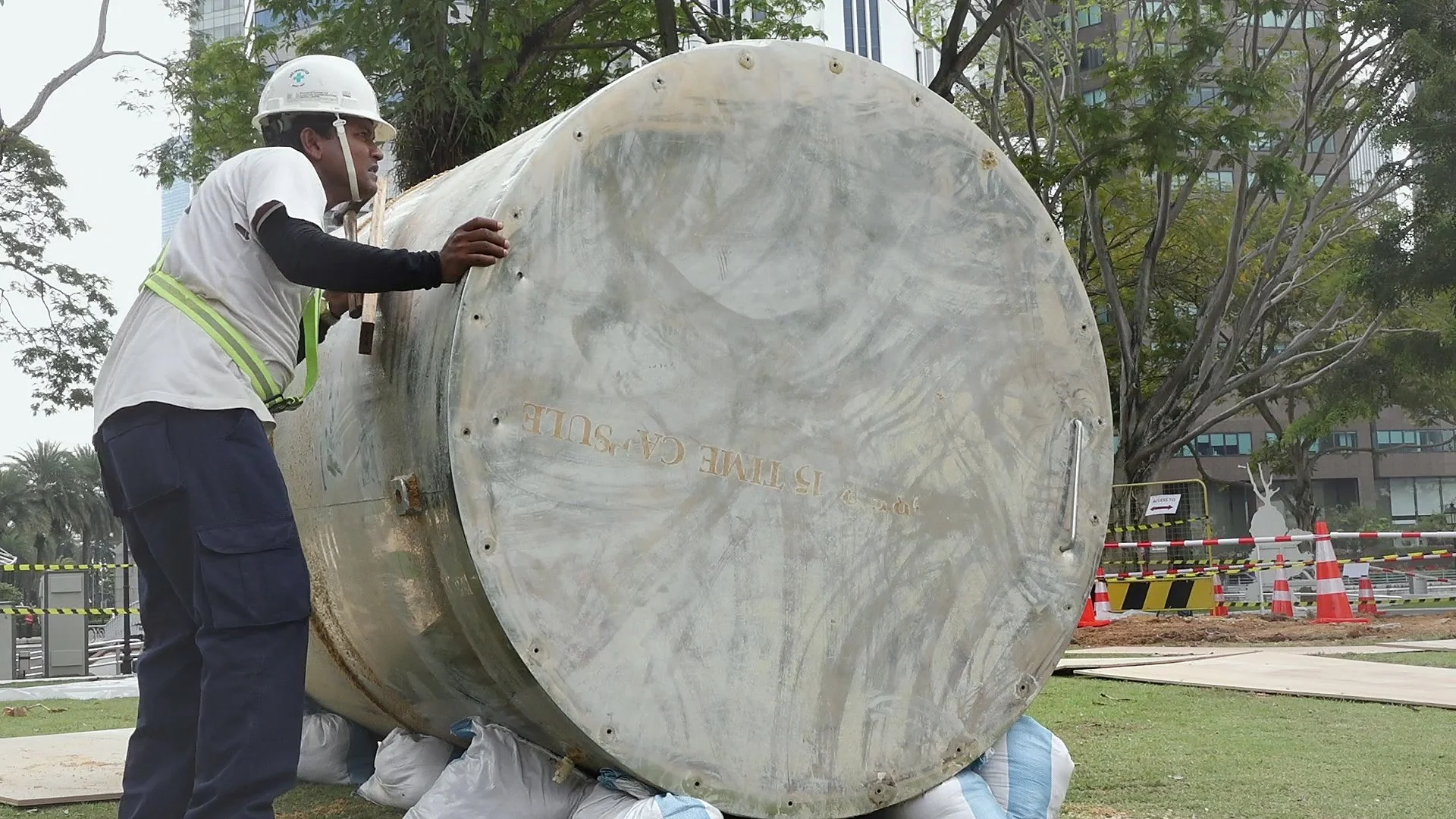
Film Screening: “In Time To Come” by Tan Pin Pin 2017, 63min, No spoken dialogue
Monday 6 November 2017, 6pm
Bophana Audiovisual Resource Center #64, St 200, Phnom Penh
Organized by Sa Sa Art Projects in partnership with Bophana Centre
-
When the River Reverses - Catalogue