Patch
Graduate Exhibition of Contemporary Art Class
Opening: Wednesday, 10th March 2021, 6:00 - 8:00 pm
Exhibition: 10th – 26th March 2021
In English with Khmer translation
Sa Sa Art Projects
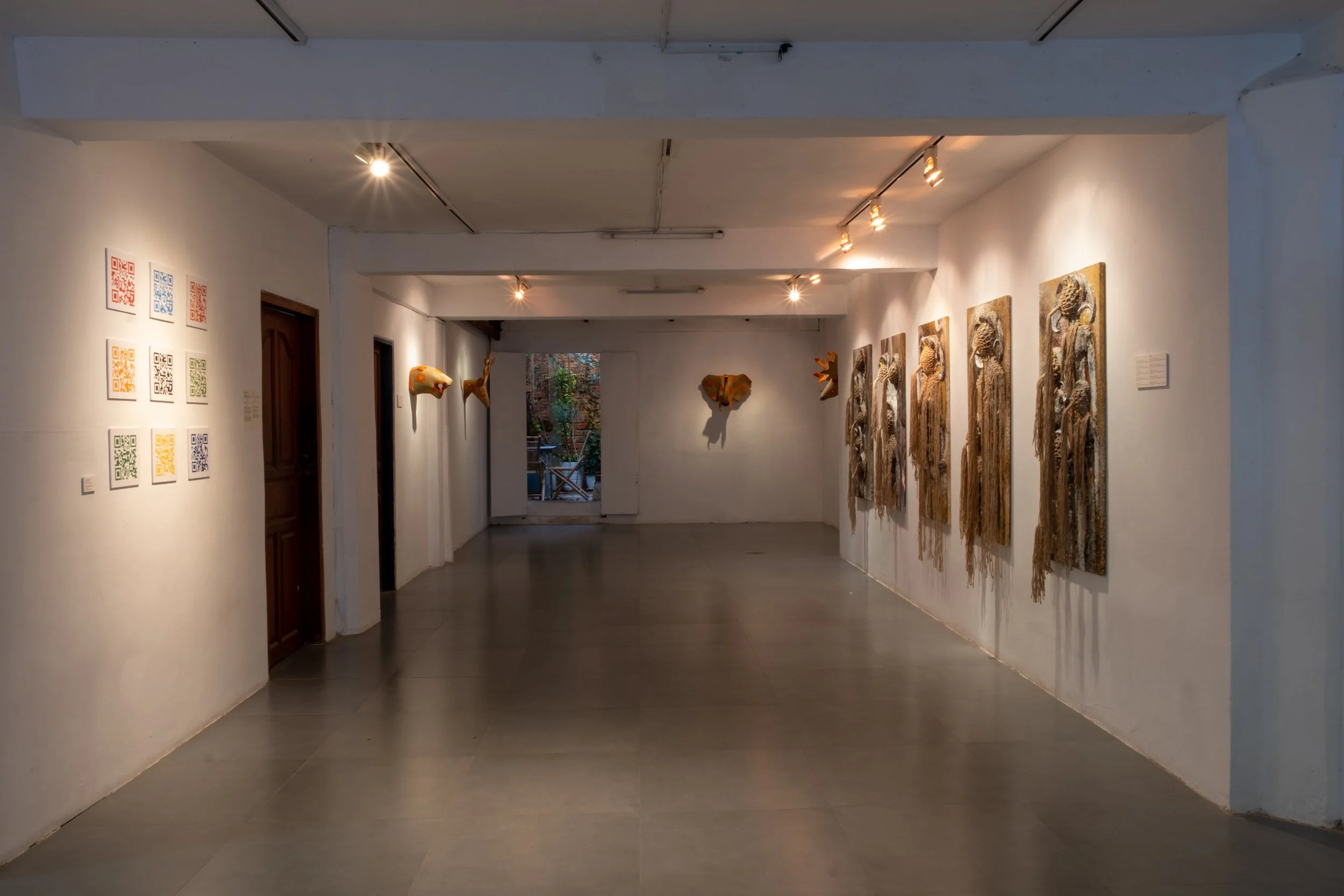
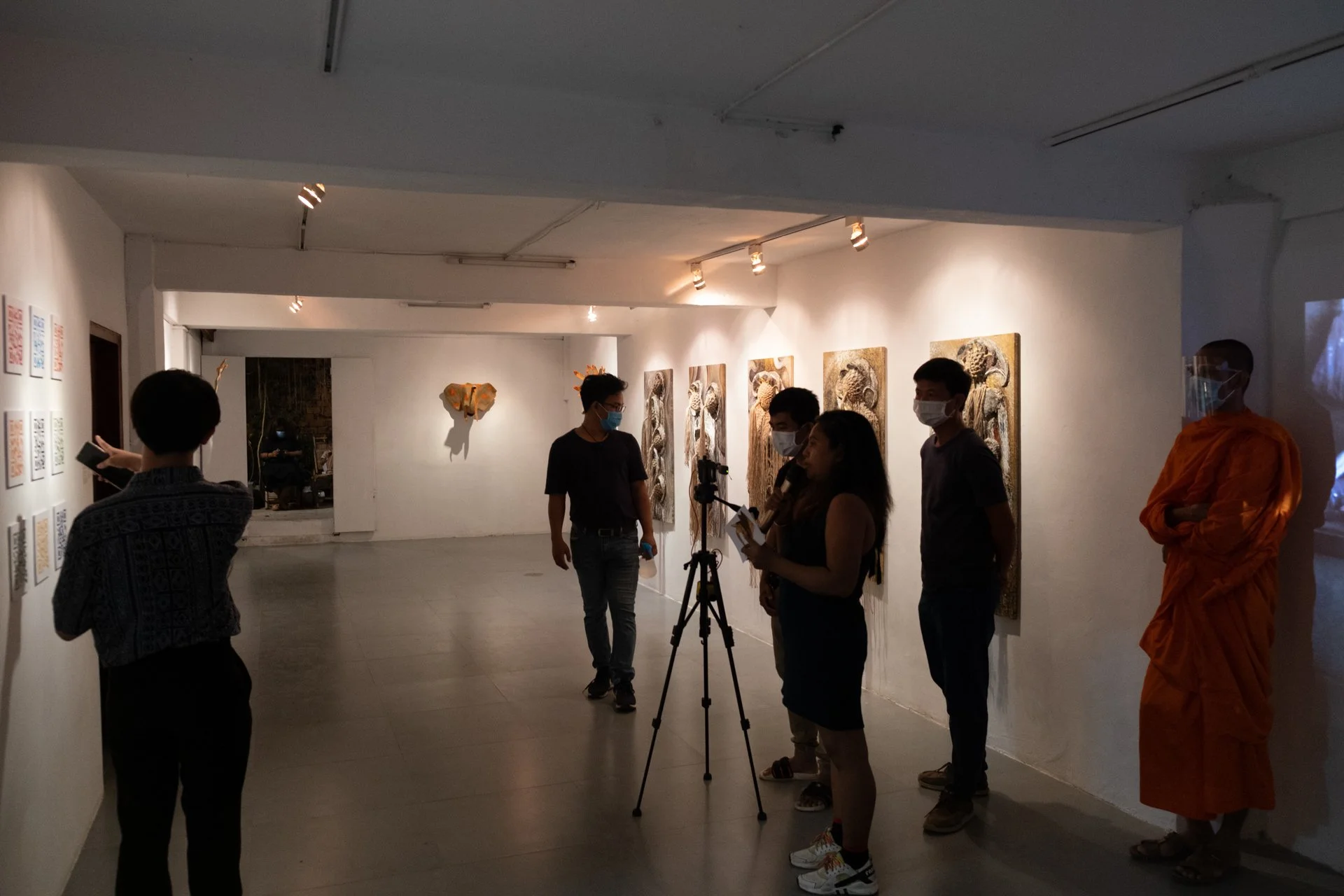
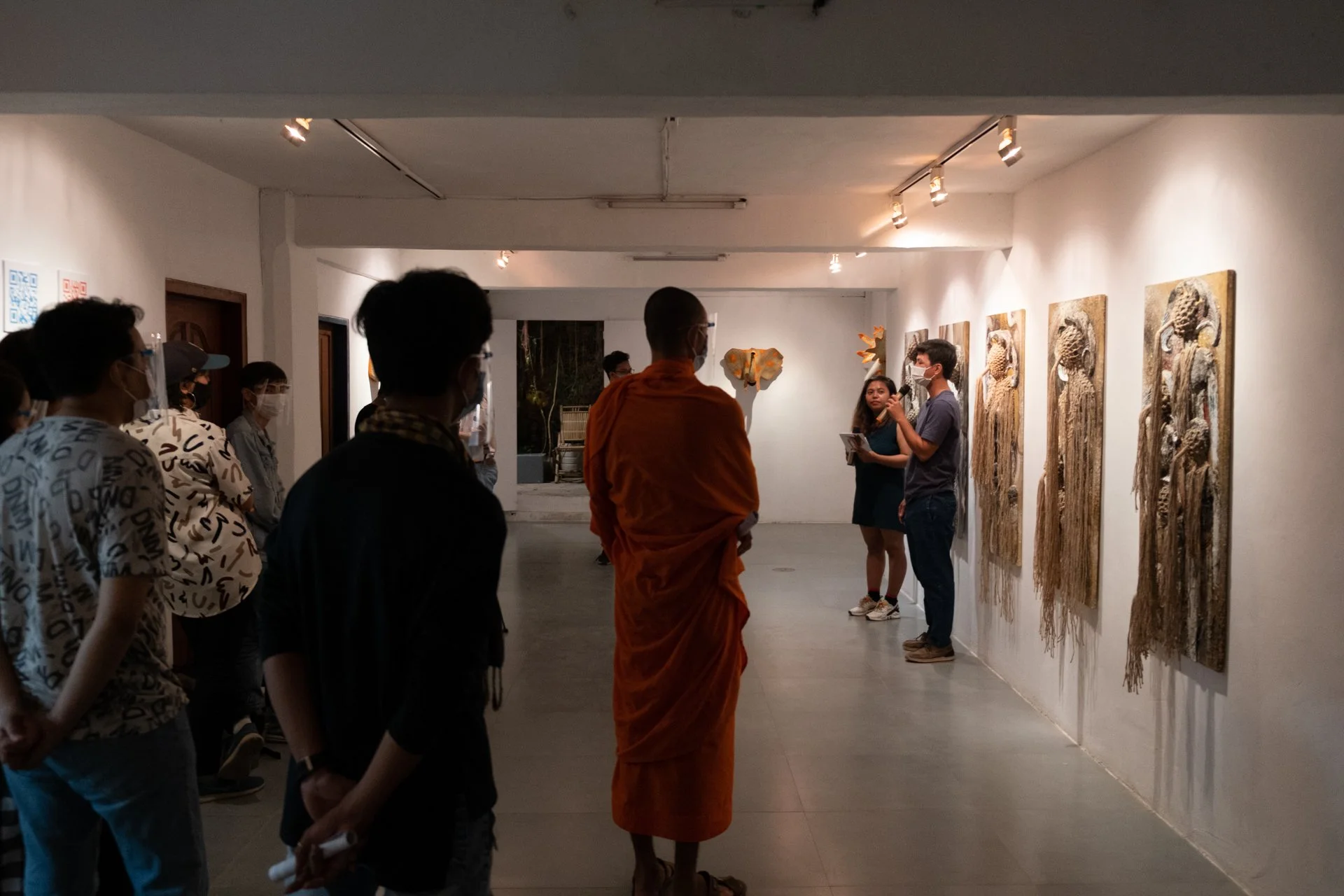
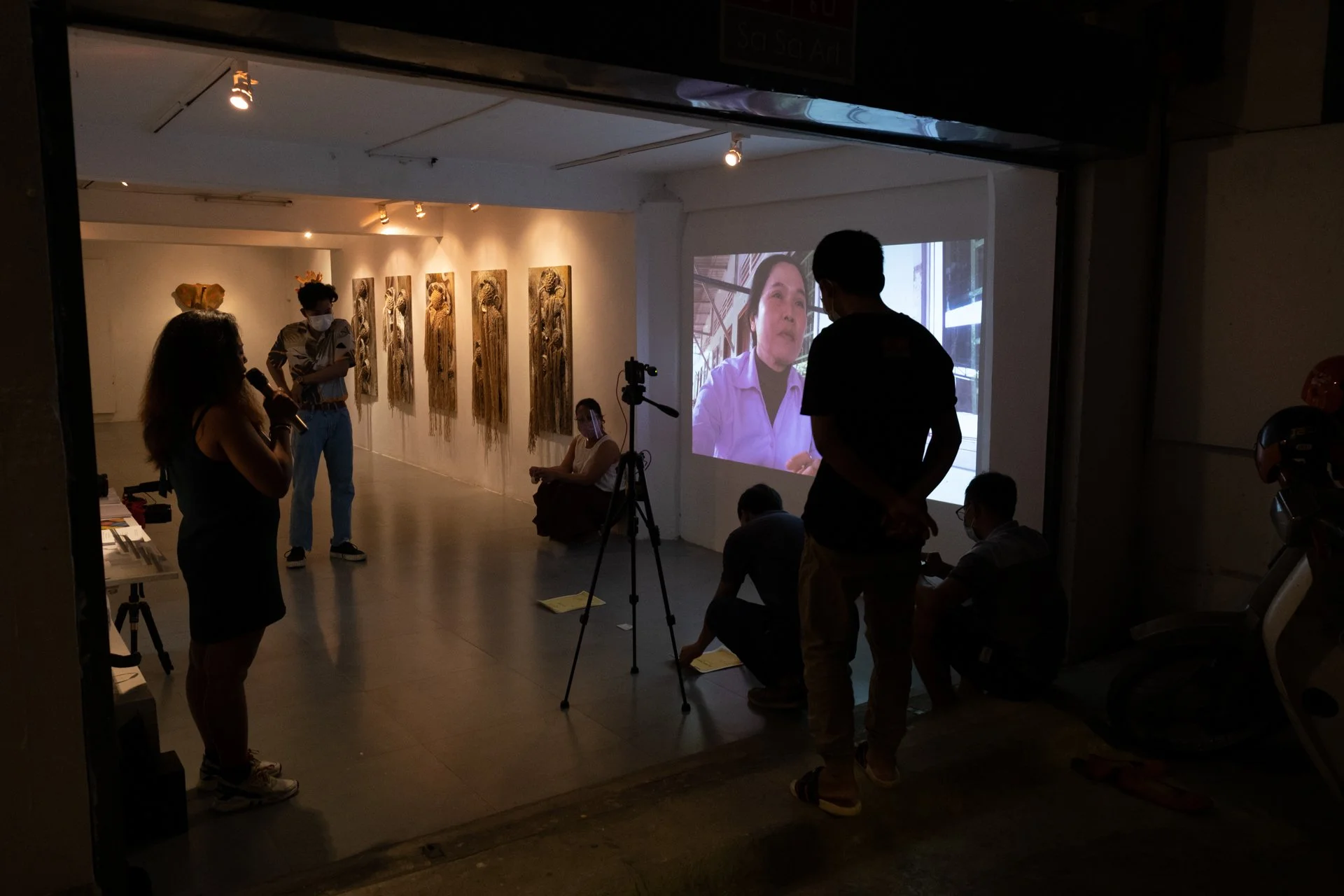
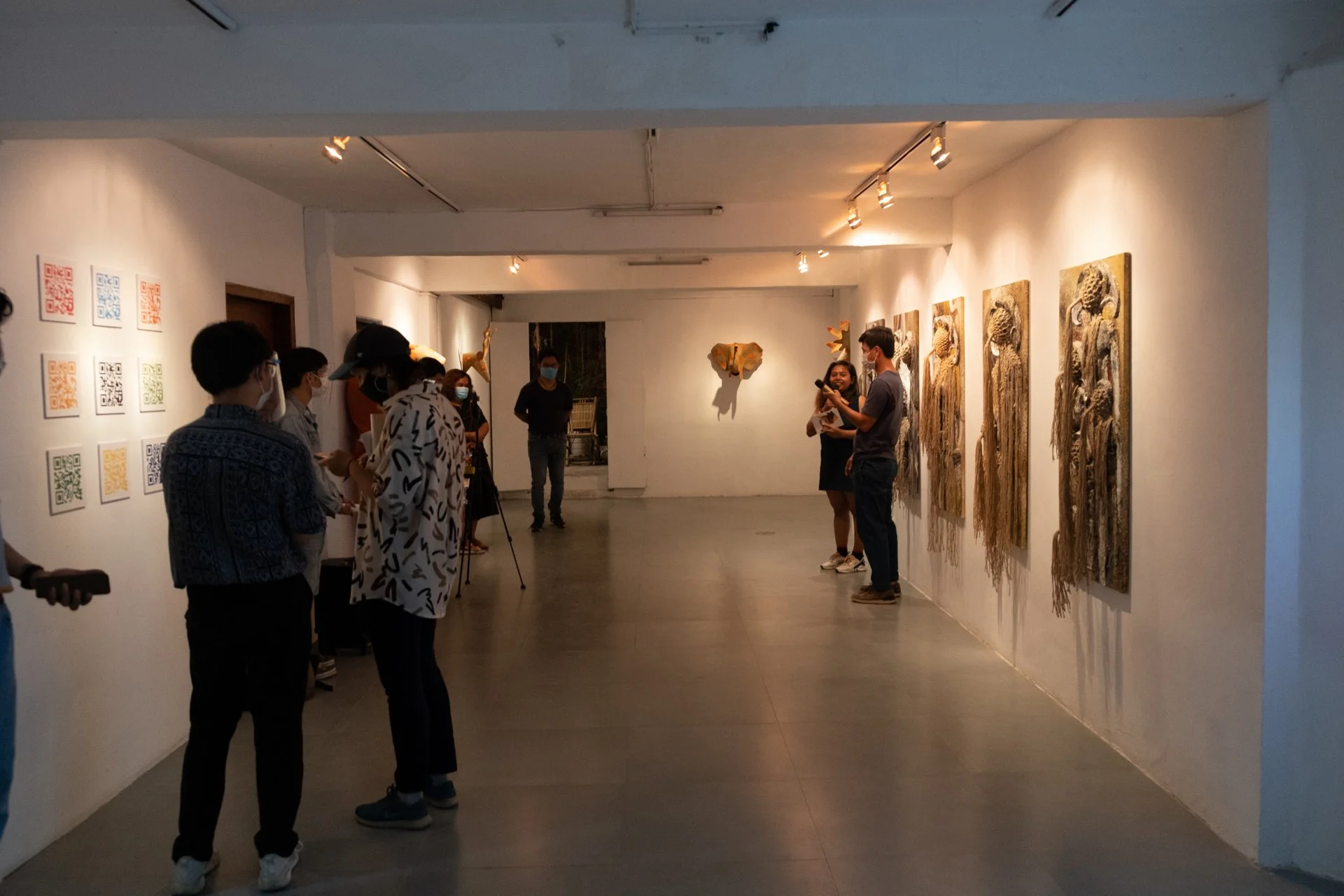
Patch presents new works by eight artists who recently graduated from Sa Sa Art Projects’ Contemporary Art Class 2020. The exhibition is a culmination of a six-month program through which the participants engaged in classroom lectures and discussions, site and studio visits, and development of new works. Coming from diverse educational backgrounds and professional fields, the eight participants produce new works employing various media from painting, sculpture, mix-media, installation, performance and video. They explore and question a range of topics including education, environment (climate change), religion, memory, human right, Covid situation, technology and economy.
Contemporary Art Class is part of Sa Sa Art Projects’ education program aiming to support young artists in developing their emerging artistic practices and building critical knowledge. The class involves three-month weekly meetings, followed by another three-month period for participants to develop new bodies of work. In the class, participants discuss different topics of various disciplines such as history, art and cultural history, politics, philosophy, and geography, facilitated by Sa Sa Art Projects’ co-founder Khvay Samnang and a number of invited guest lecturers and speakers. This critical discussion in turn informs and deepens the participants’ artistic practices and research for their new works.
Contemporary Art Class 2020 is supported by Rei Foundation.
Guest lecturers and speakers included Sopheap Pich, Leang Seckon, Soung Sokro, San Phalla, Vuth Lyno and Roger Nelson.
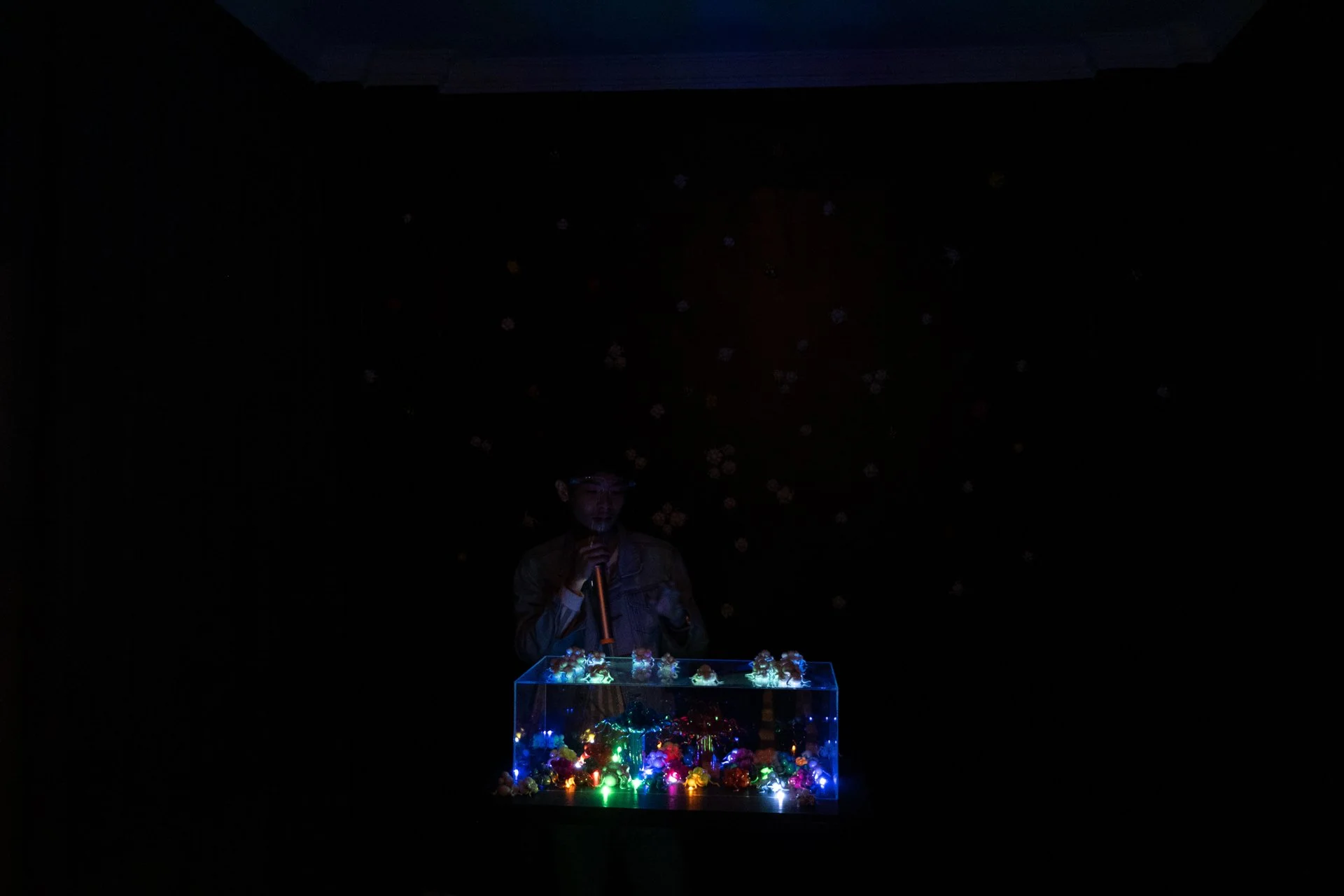



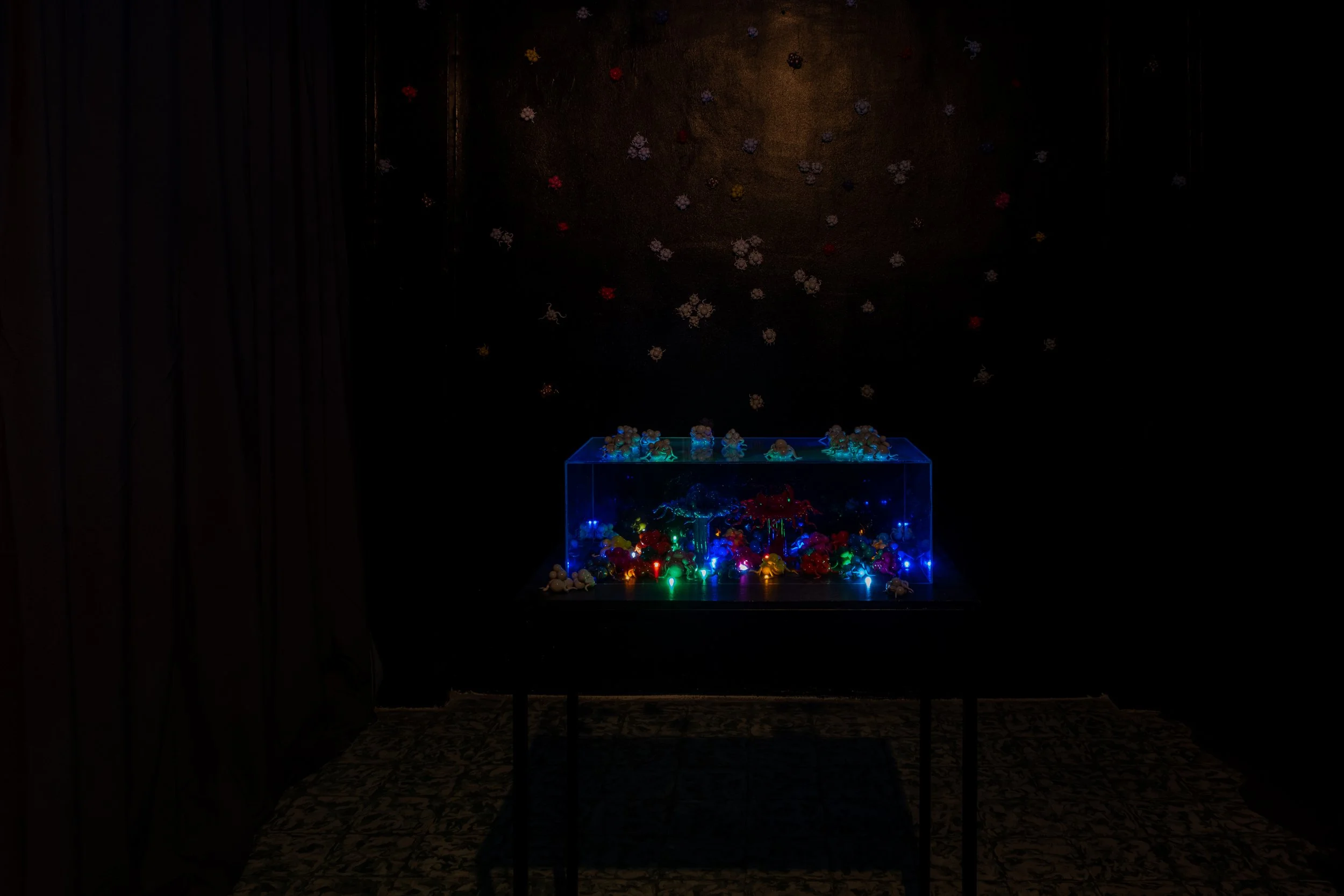
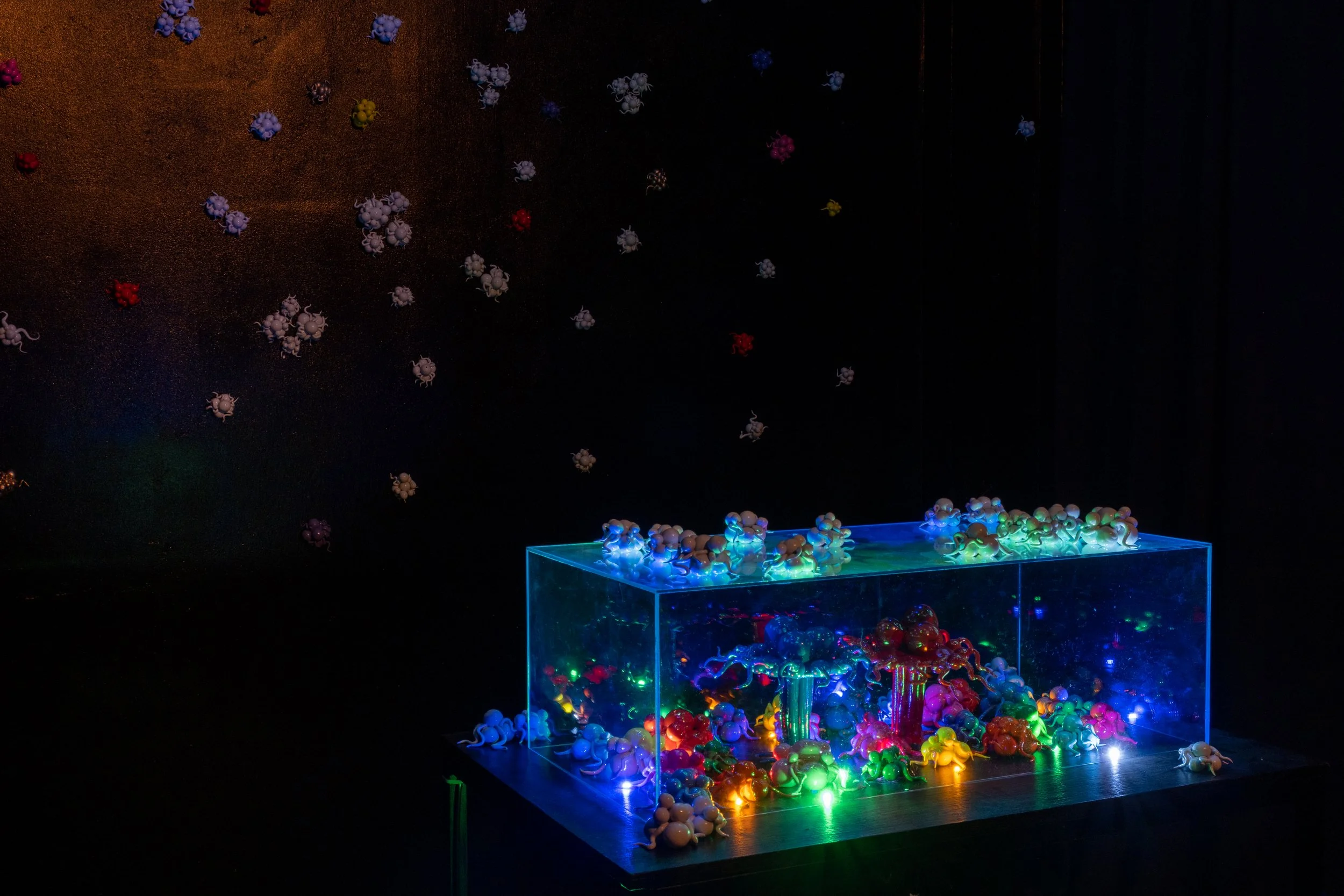
Kouch Kimchour
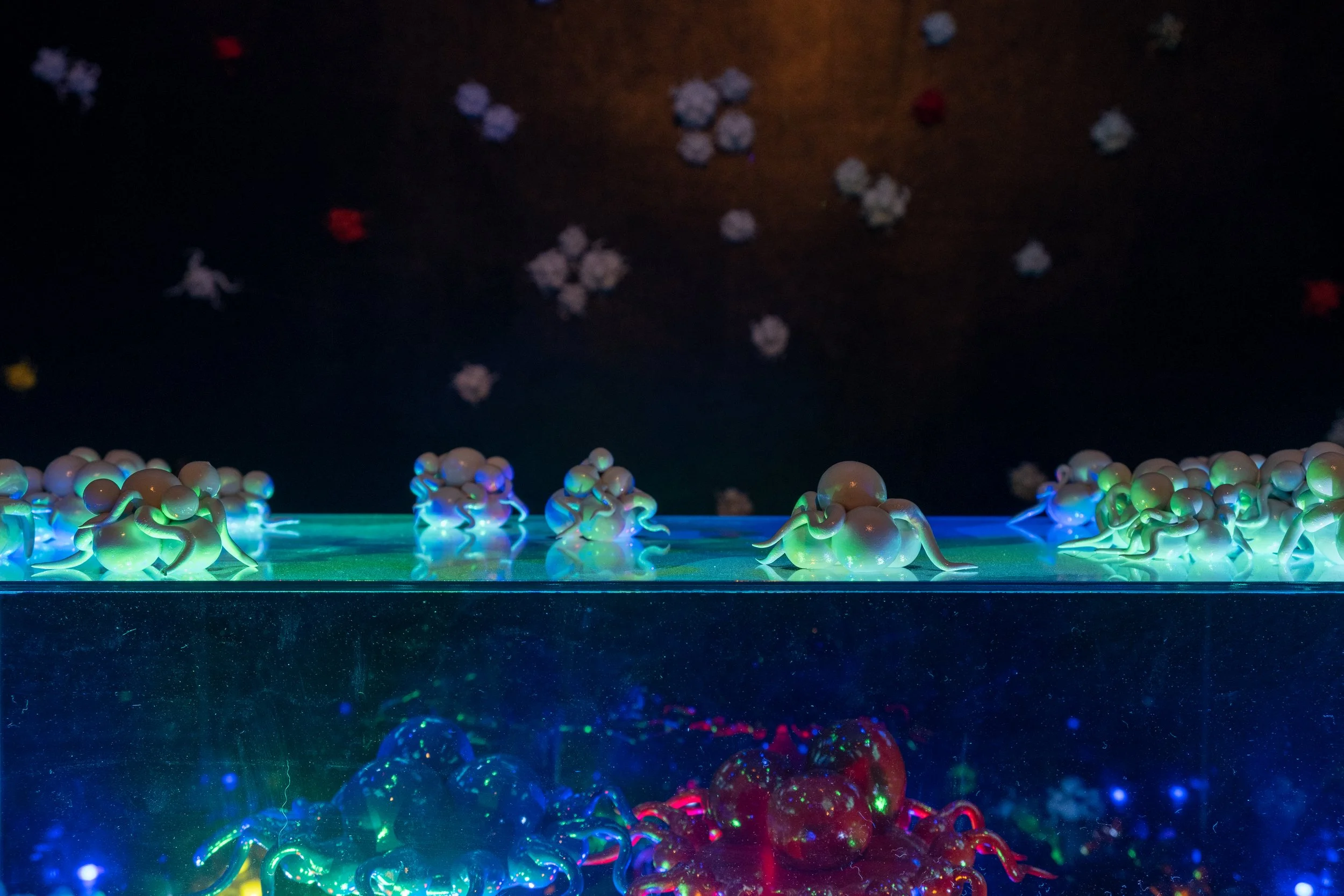
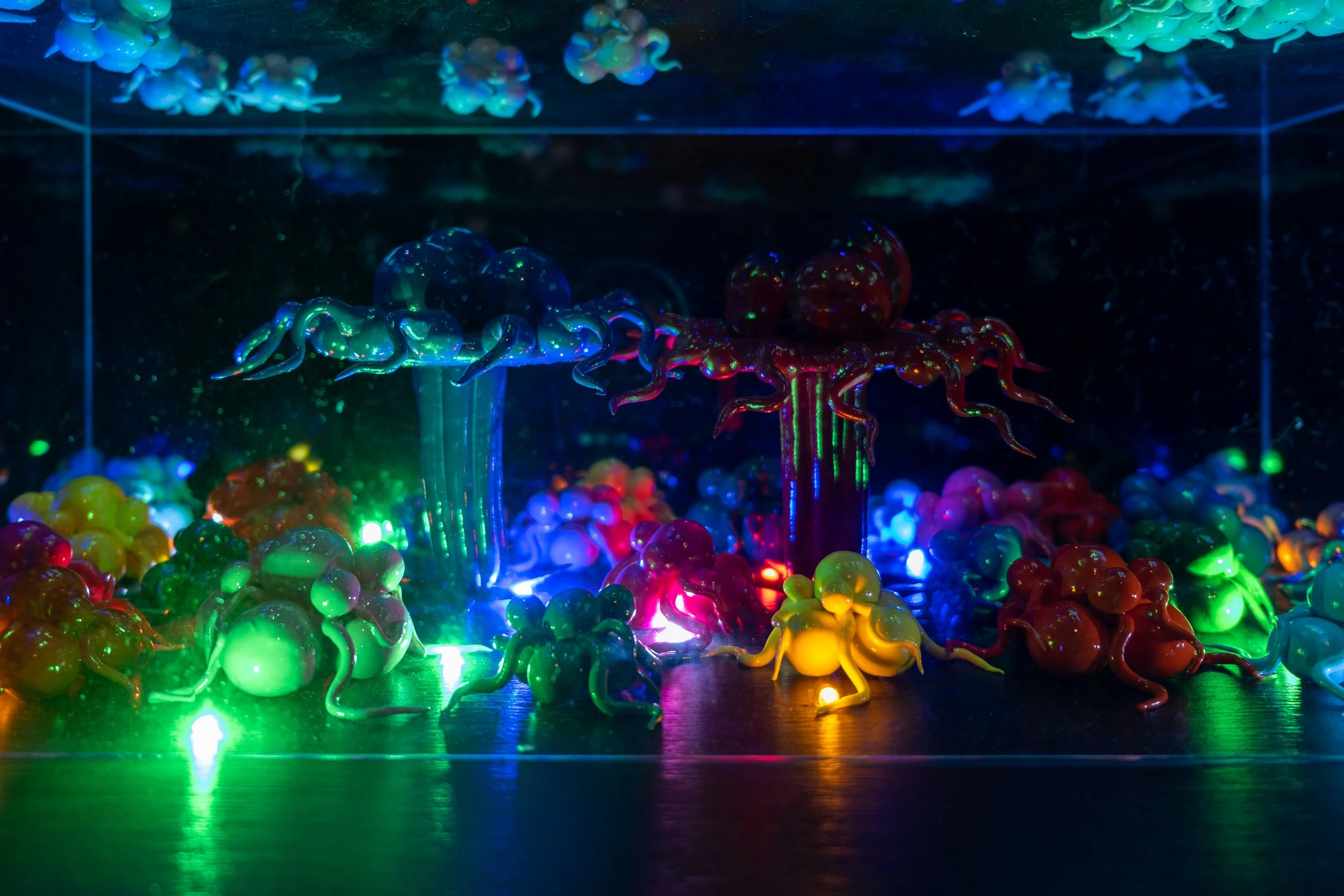
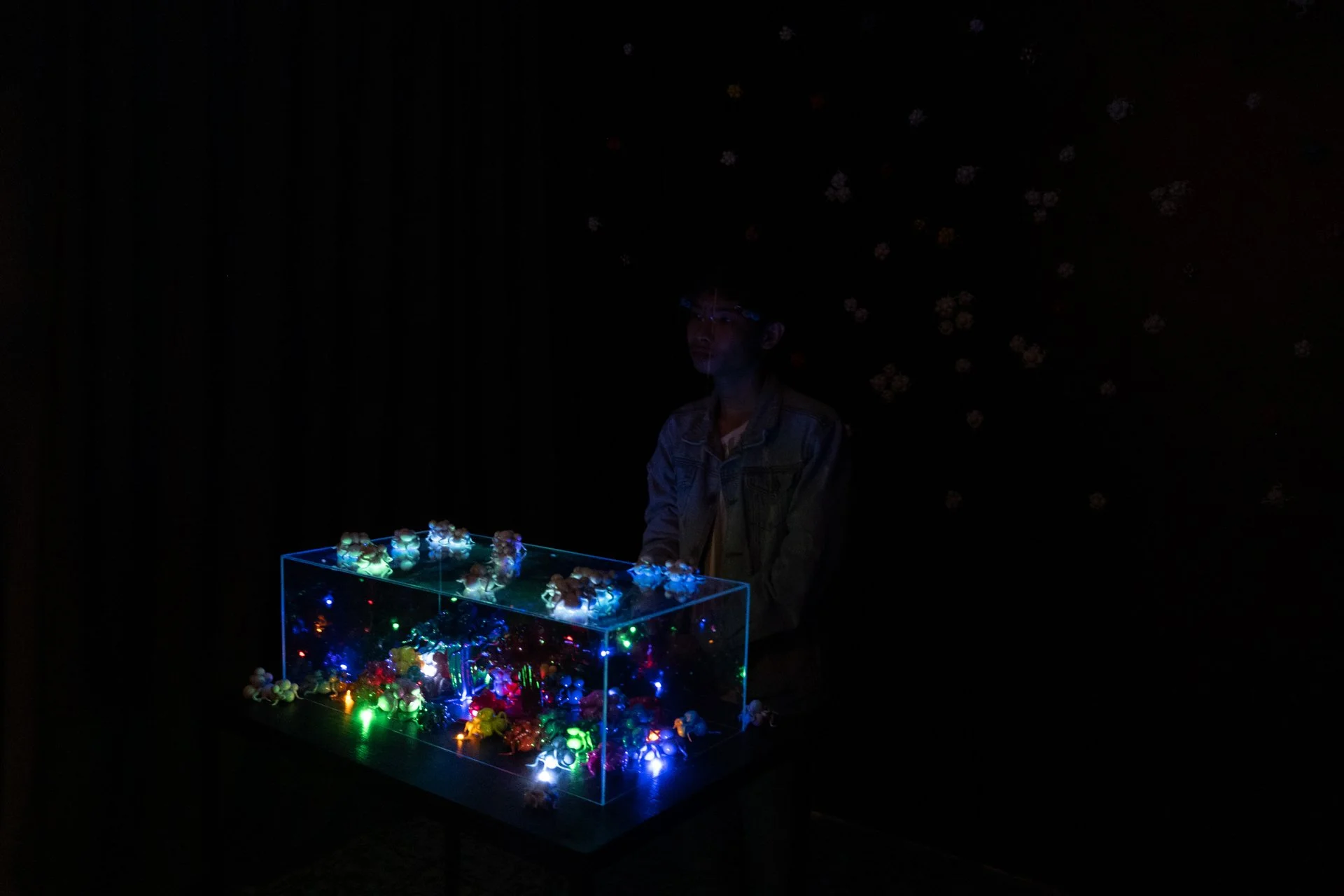
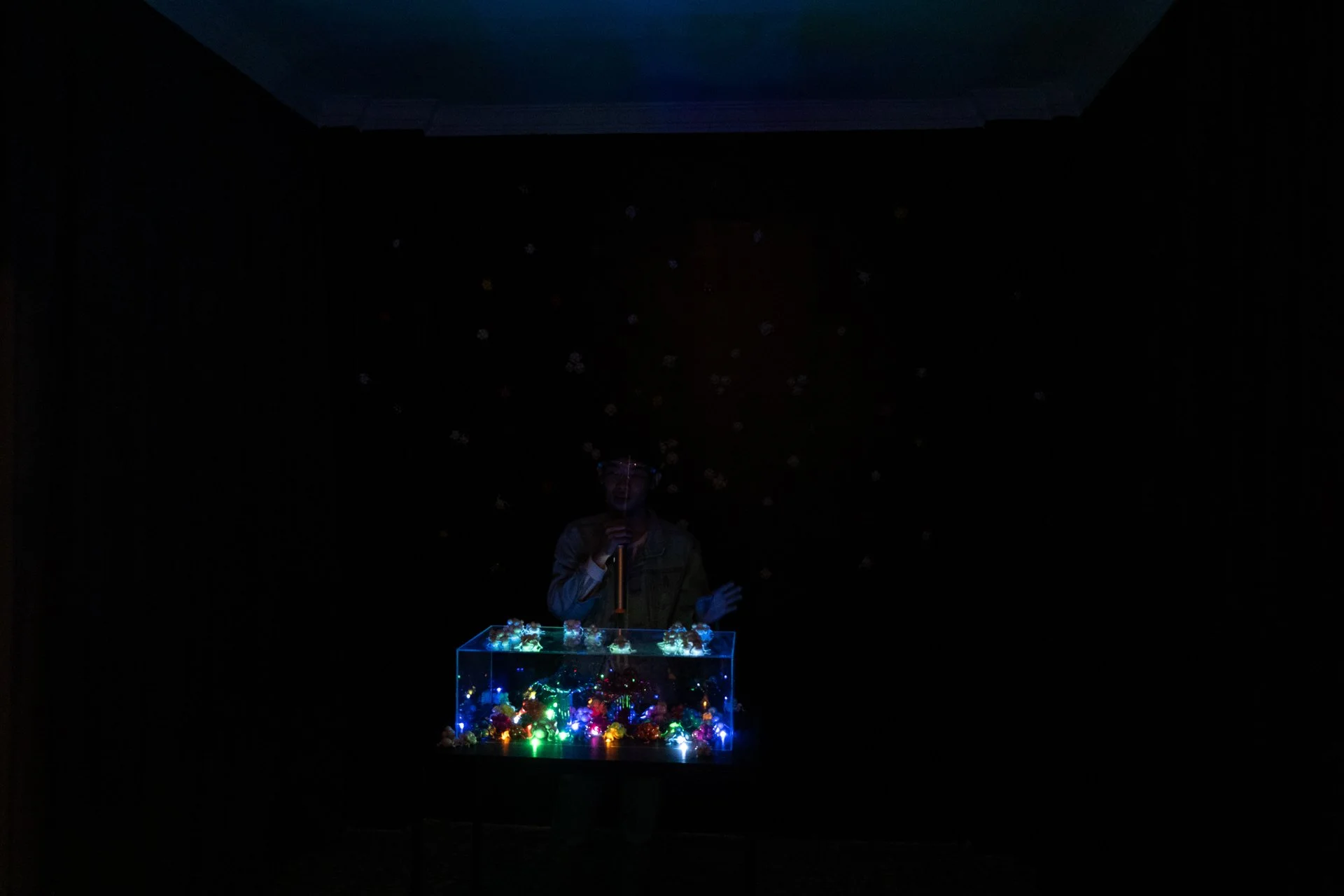
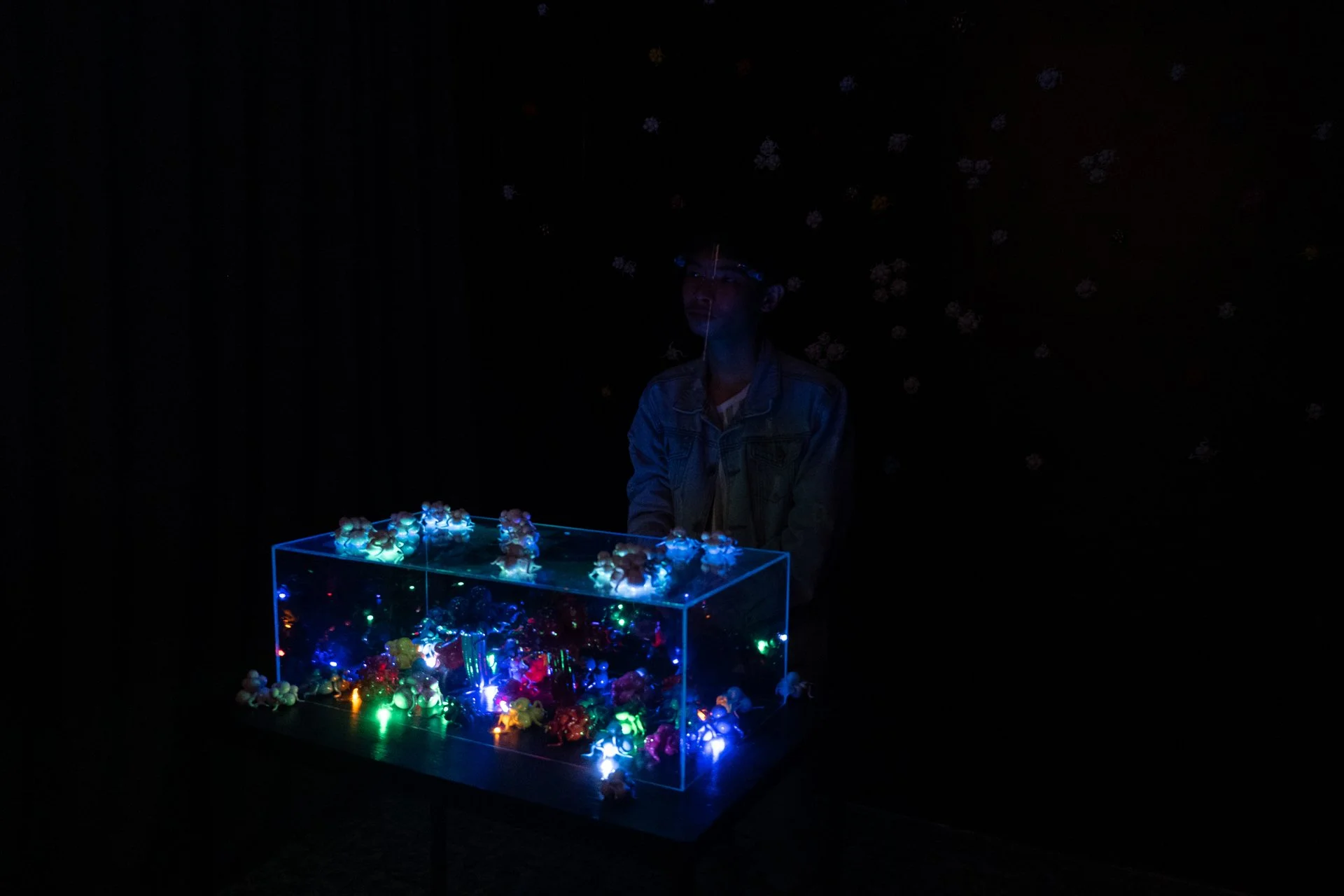
New Life, 2021
People need development and growth to serve their needs relentlessly. Along with the rapid growth of technology, science responds to the same serious impact if we use it unintentionally. Vaccines are substances that help prepare the immune system to fight disease-causing invaders by avoiding infection. Vaccines used on humans and animals are usually weakened viruses or bacteria that are injected into the body to block the activity of viruses or bacteria. This is the main reason why it is not possible to ban technological, science research or legally prohibit the making of scientific instruments. Although effective, it can have serious consequences. In fact, the global Covid 19 virus response to close other countries’ economies by spreading its own virus: unemployment, restricting education, and closing exports and imports. This caused unrest in many countries.
Can the Covid 19 virus be equivalent to an economic war? Can an economic war be equal to a world war? Does science really meet all human needs?
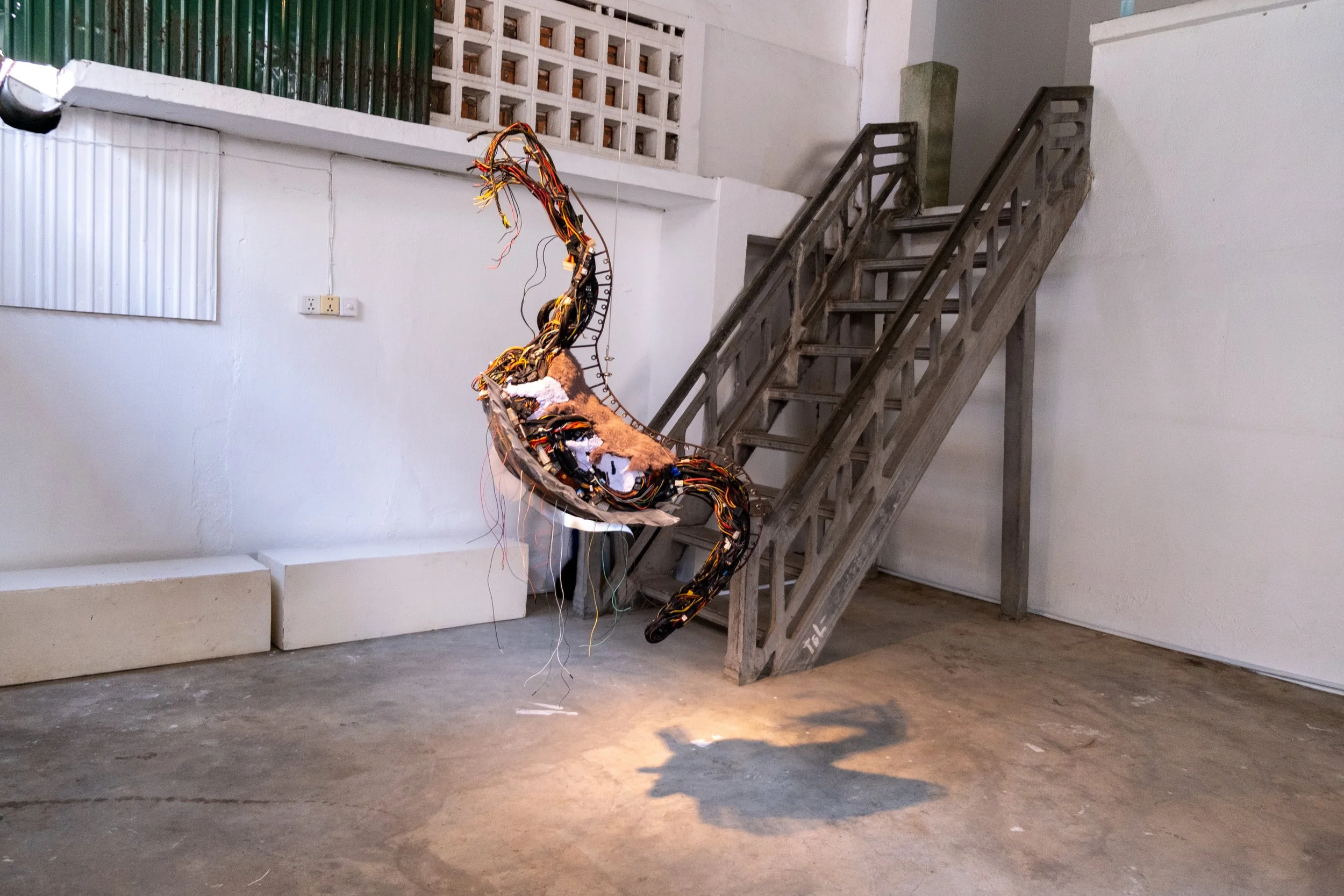
Phe Phearom
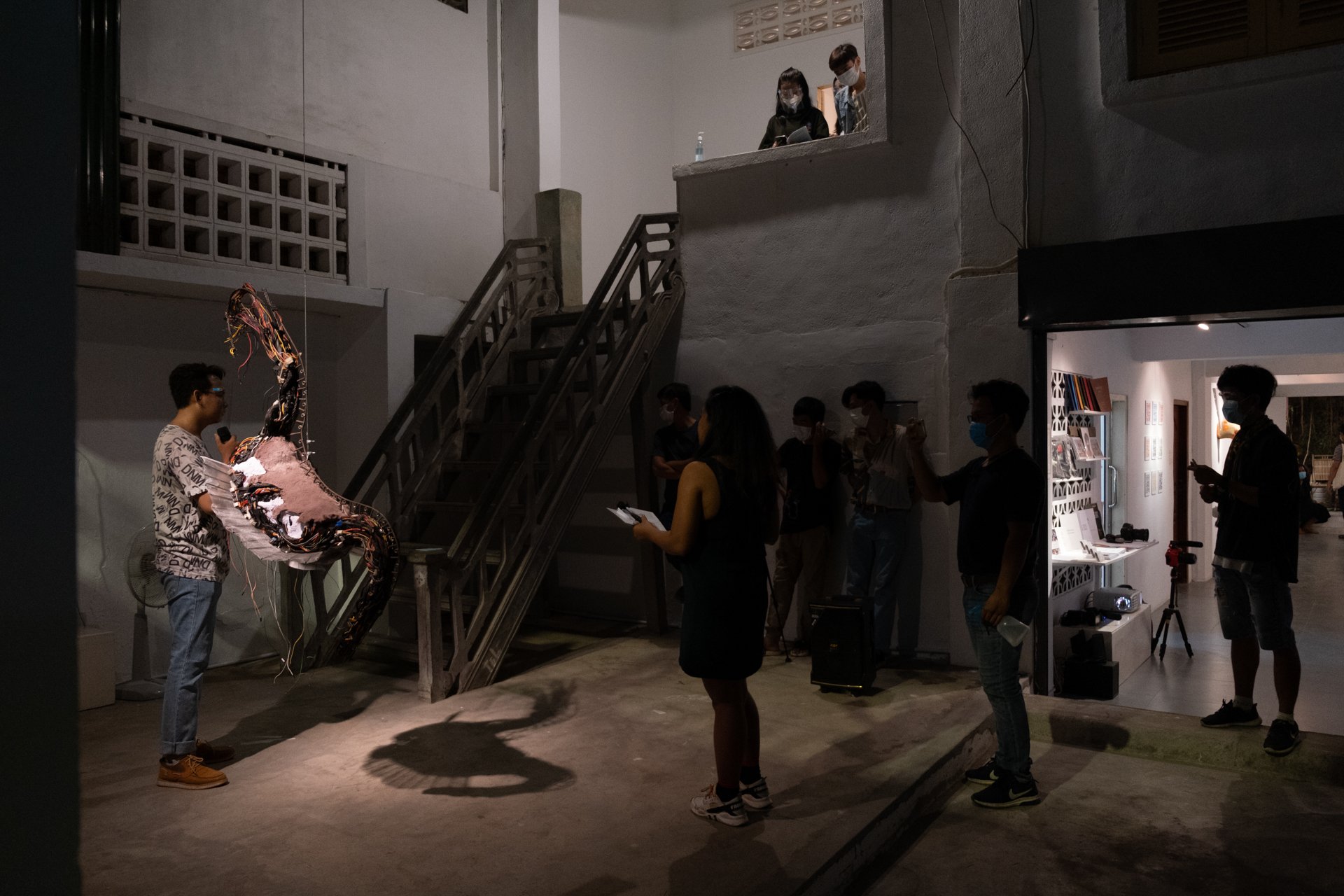
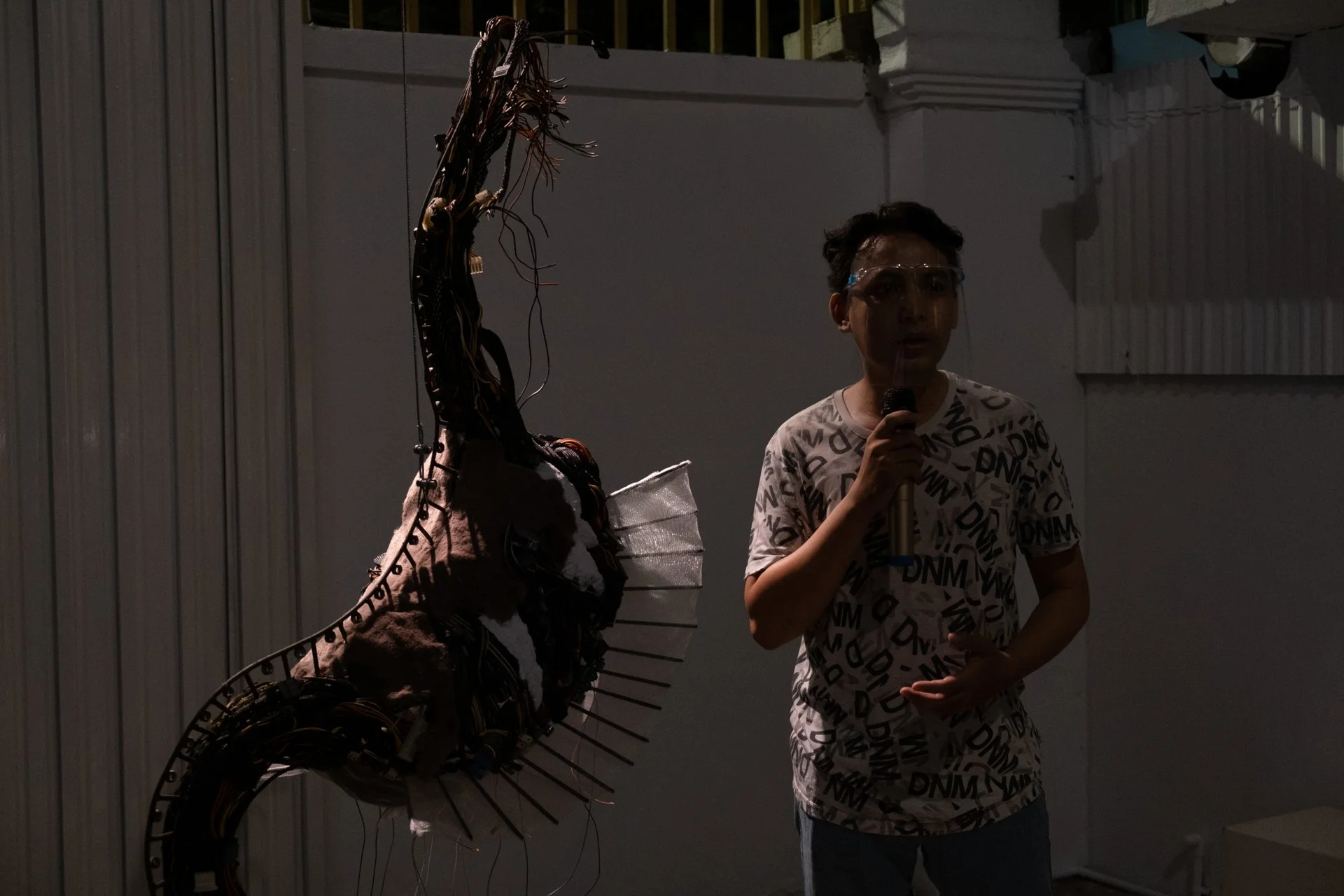
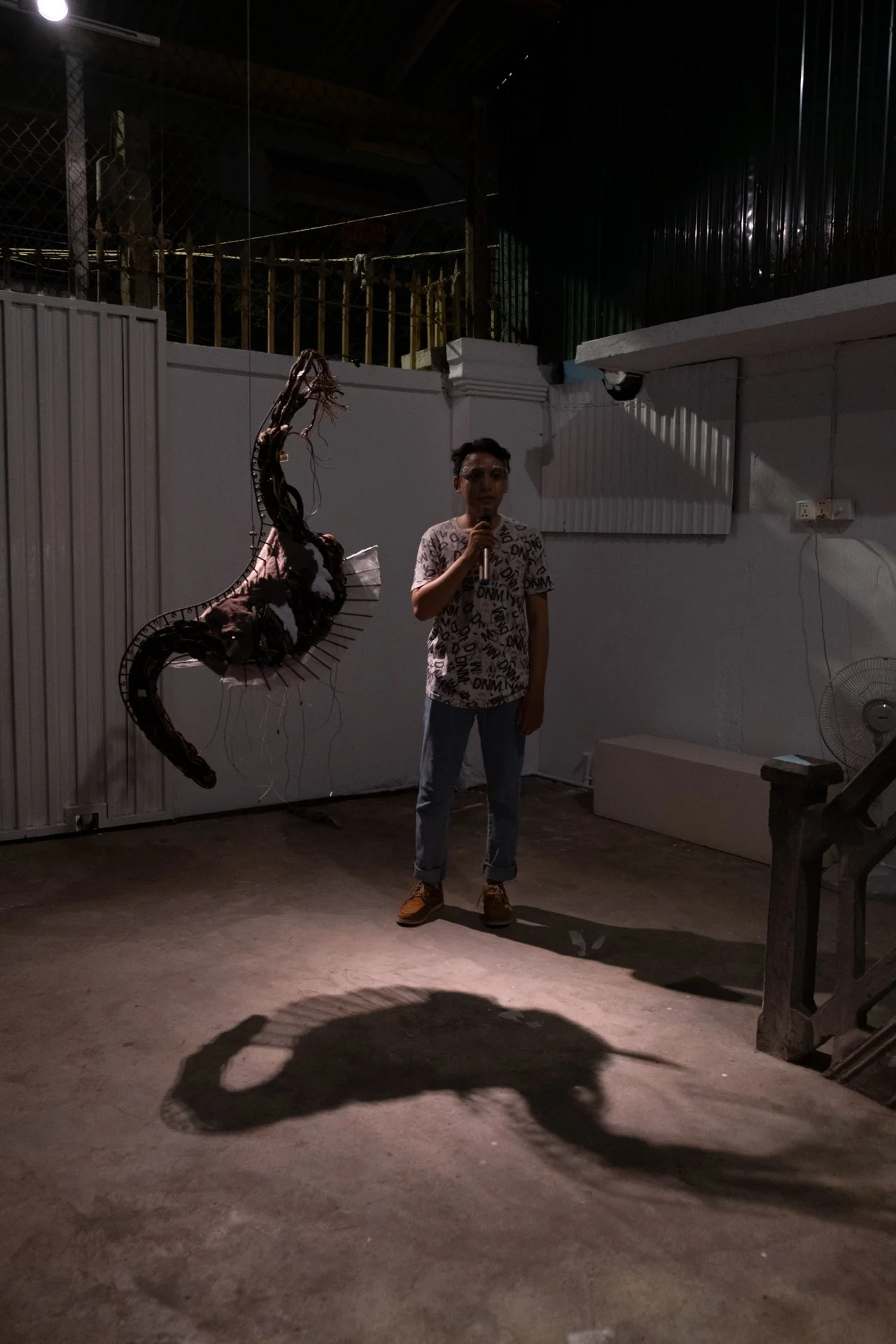
Untitled, 2021
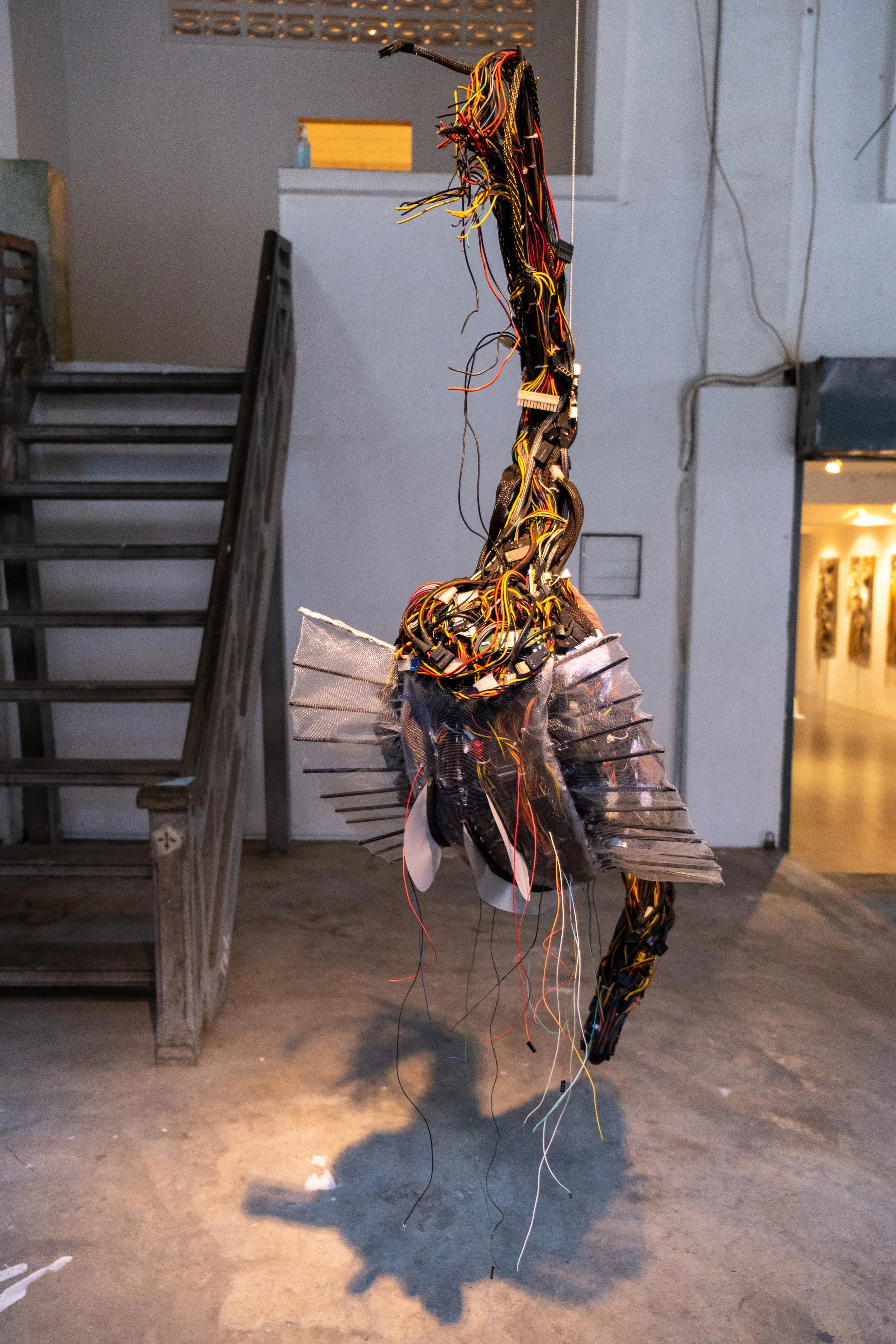
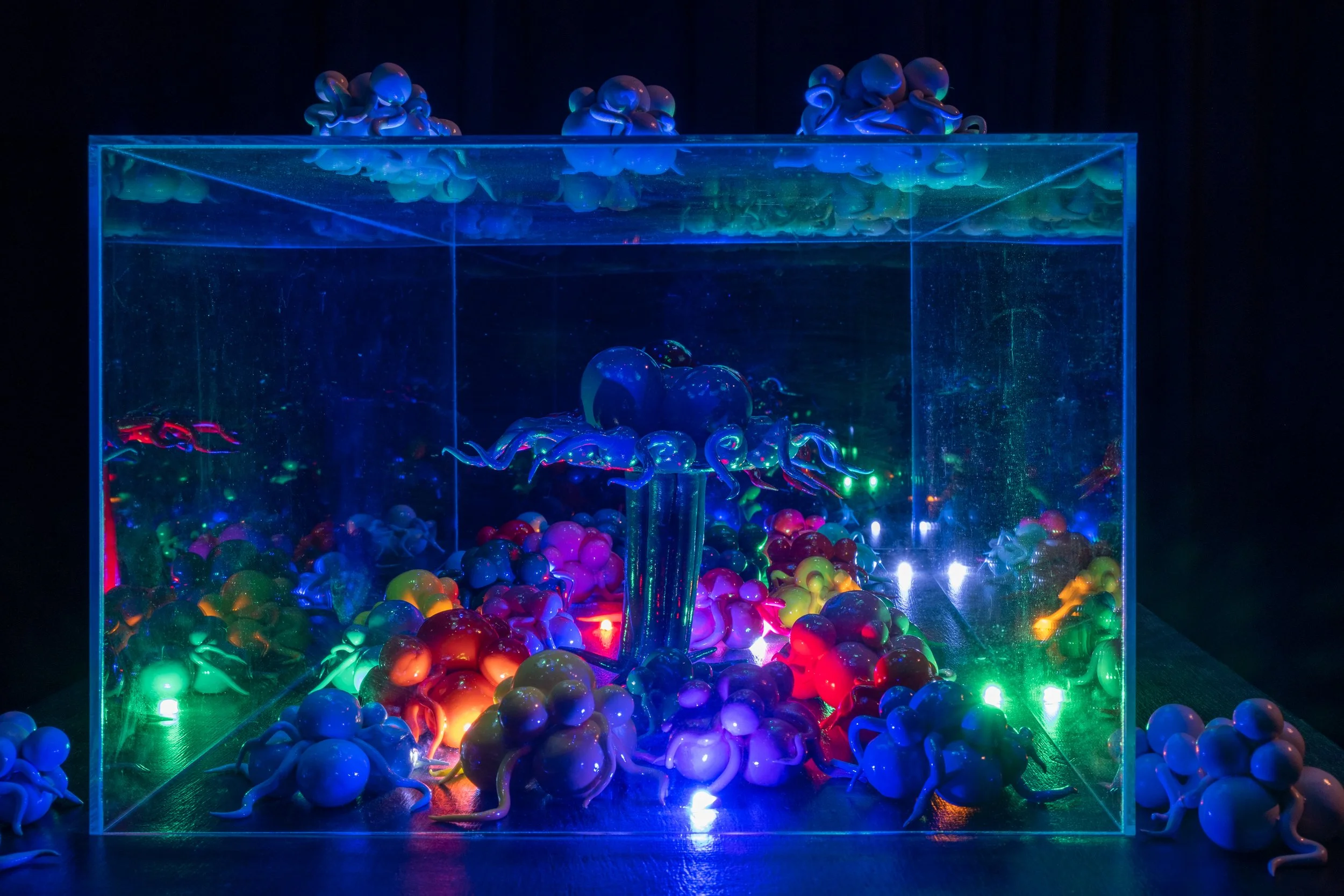
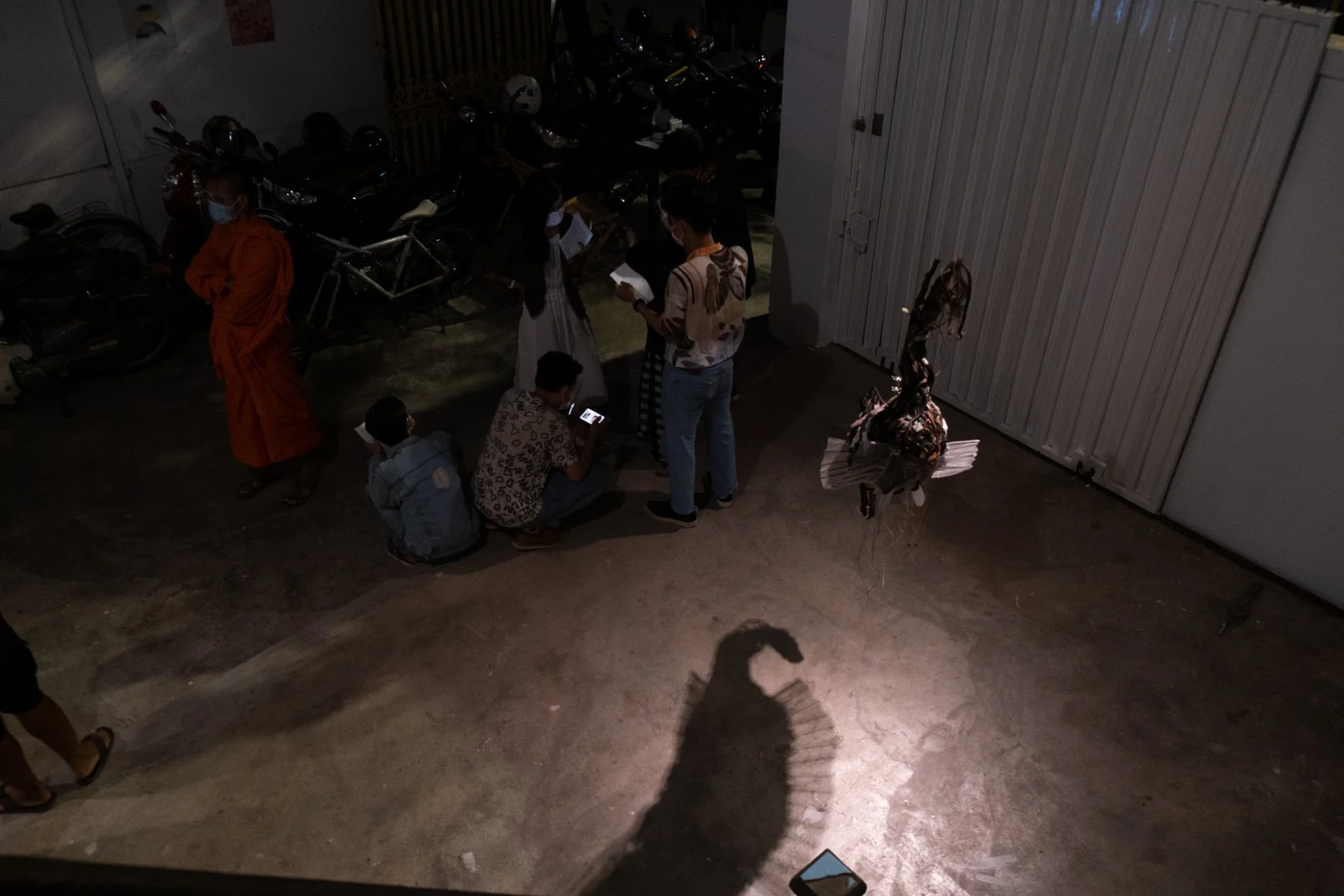
The rapid development of society requires everyone to develop their capacity for knowledge to meet the challenges during the current long-term era of globalization. Not everyone can predict what the future will hold. Some provinces and cities in Cambodia are very developed, especially regarding construction and infrastructure. In the last five to six years, there has been a new face for Cambodia, showing a country as prosperous as its neighbors and we also embrace this development. In this sculpture of a stomach, I focus on inadequate development. I think my stomach is controlling me at all times to satisfy my cravings and hunger, even getting my whole body to do what I do not want to do. The stomach plays a stronger role than the brain. When we use it against our inner-knowing, it will make me give up my self-determination at some point. Sometimes development also affects the stomach. Some stomachs have not been able to change their environment, including living standards, capcity, as well as social and cultural capabilities. If we want to create something new, we need to upgrade human resources first to meet the needs of professional development in all areas. In recent years, at a time when Cambodia’s development is moving too fast, human resources are not yet capable of meeting the needs of this dramatic development. What are the goals of development? Who are the real beneficiaries of this development? What will happen when this development does not meet the demand? What kind of education should we strengthen to get human resources to work better? That is why my stomach has not been able to modernize or develop well, due to lack of knowledge and experience. This requires me to keep doing what I can before continuing my research.
Keo Sreypheak
Rooted, 2021
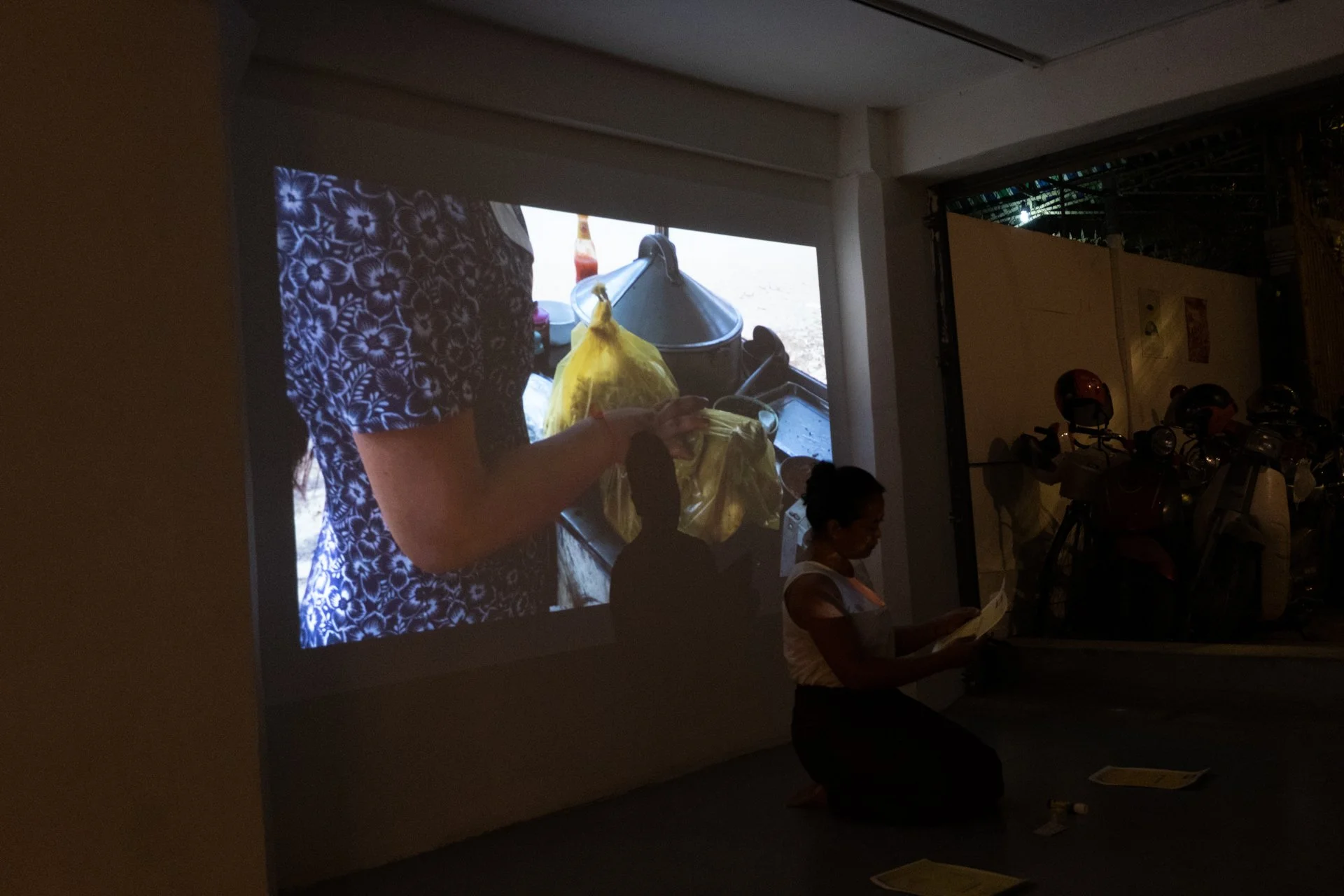
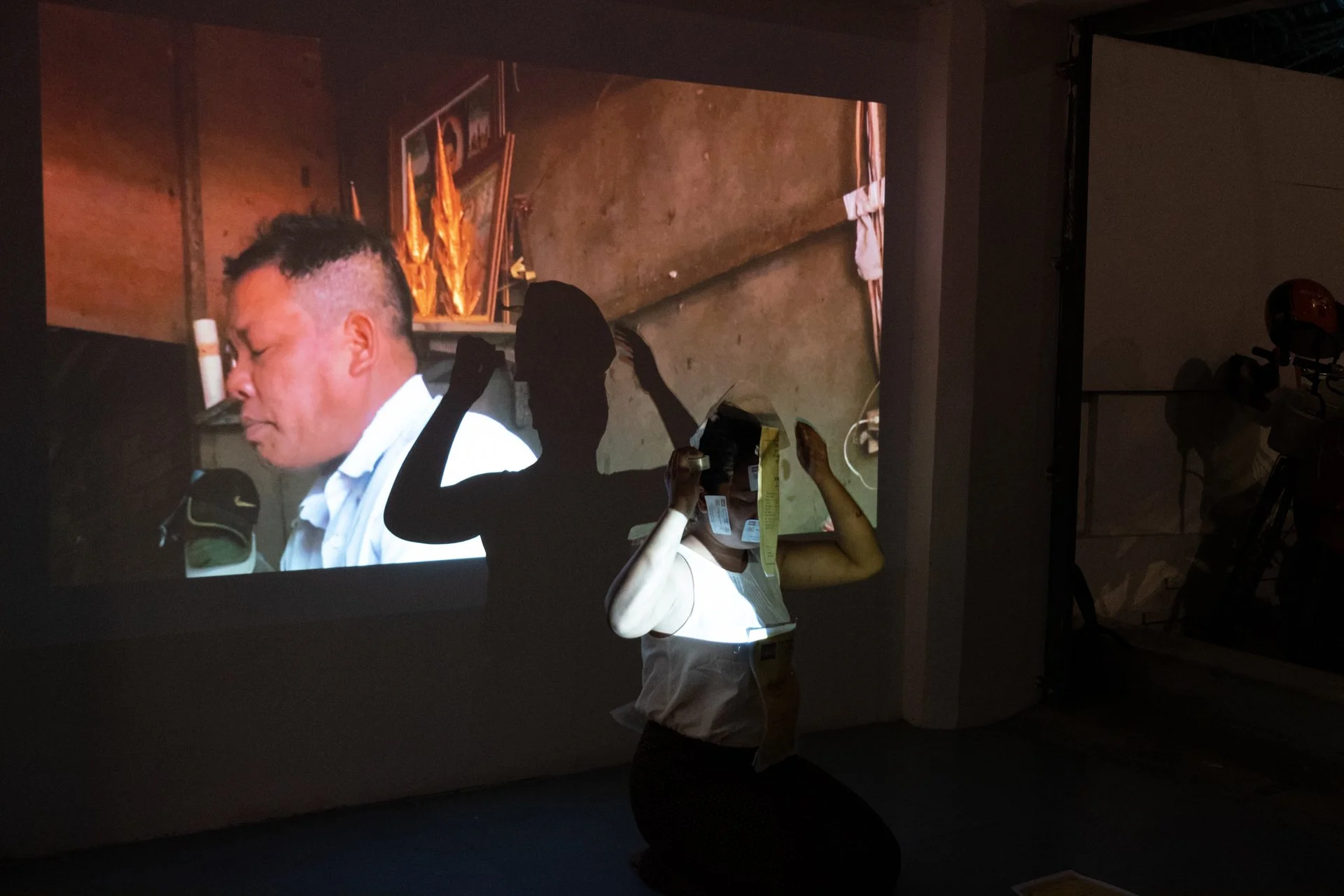
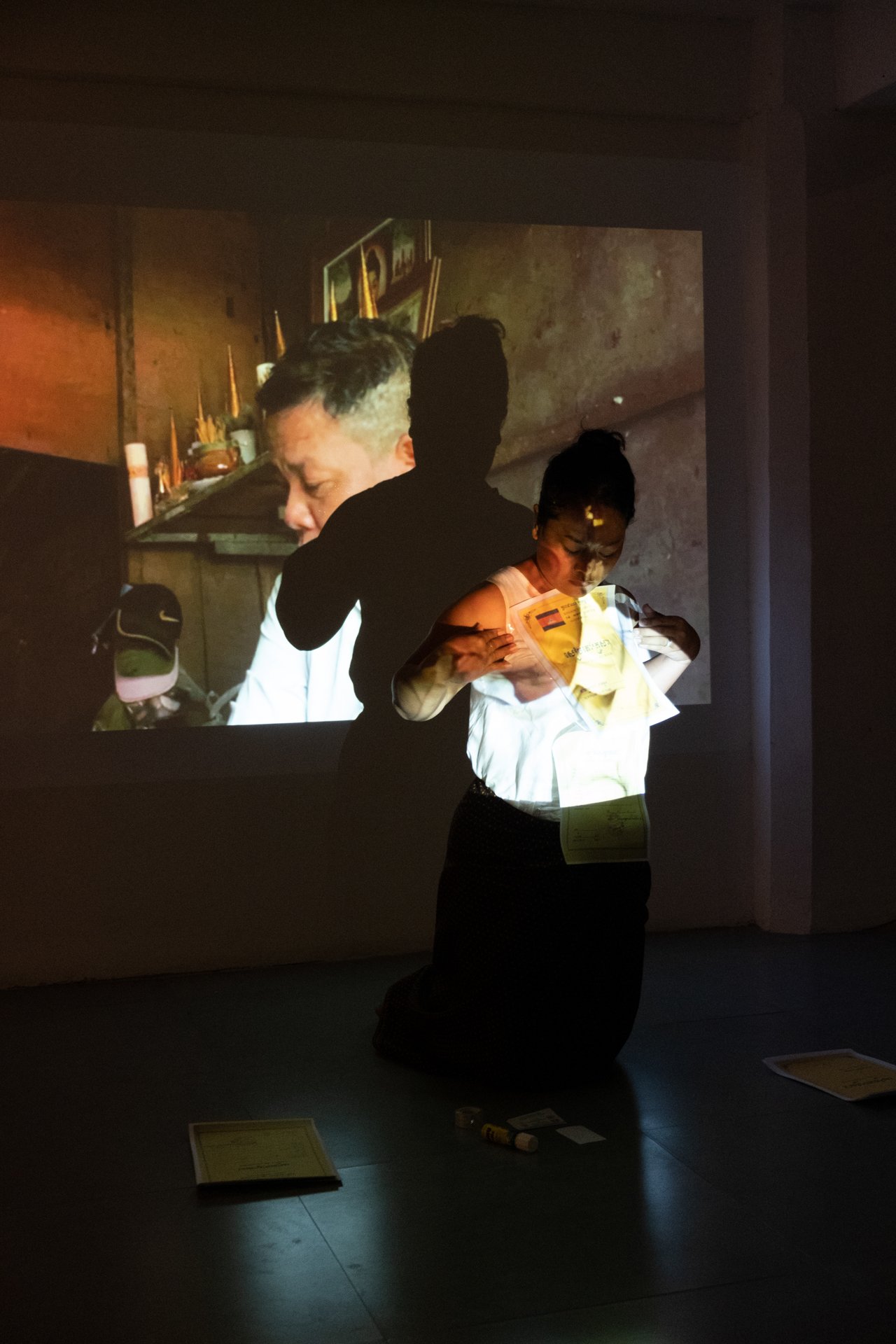
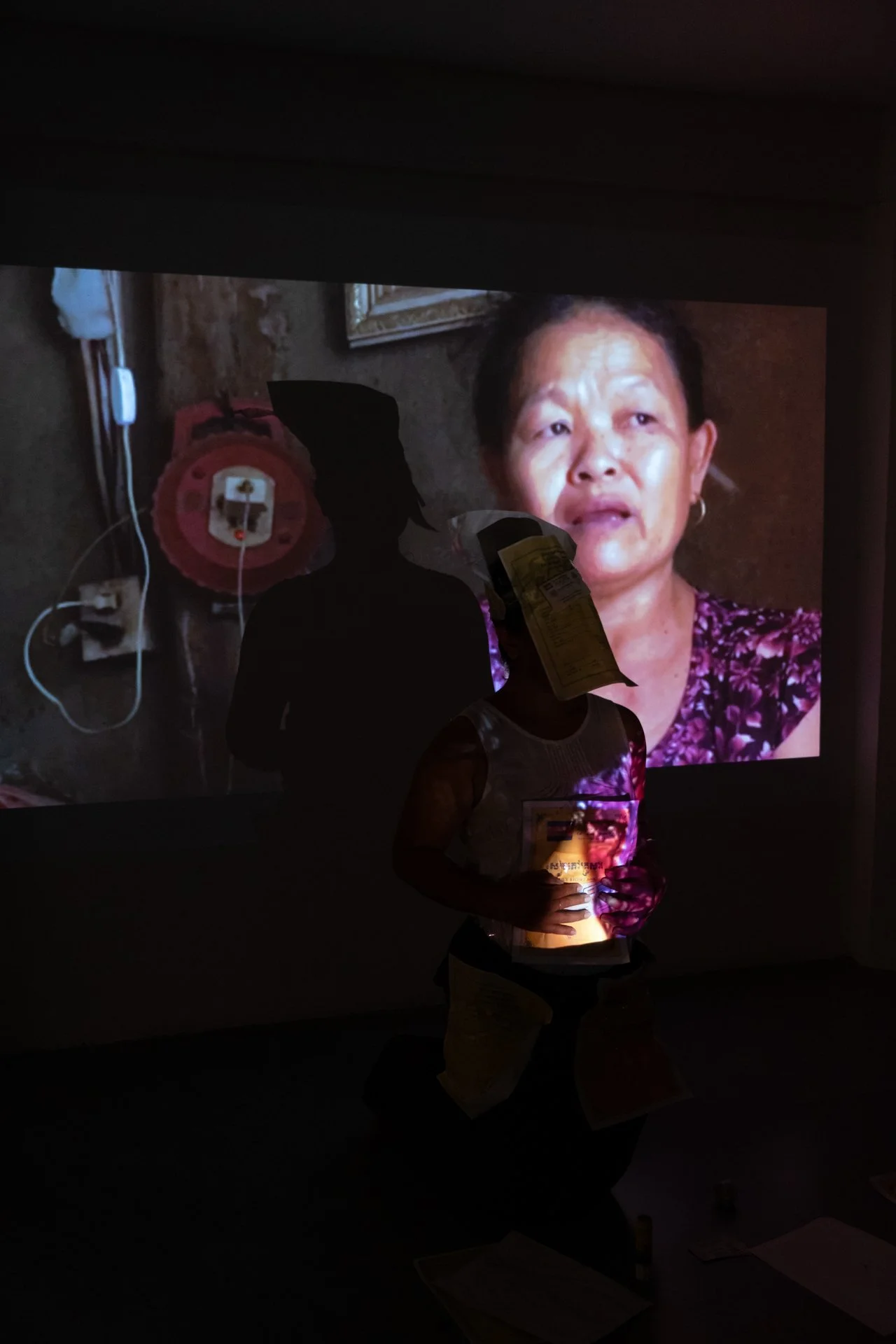
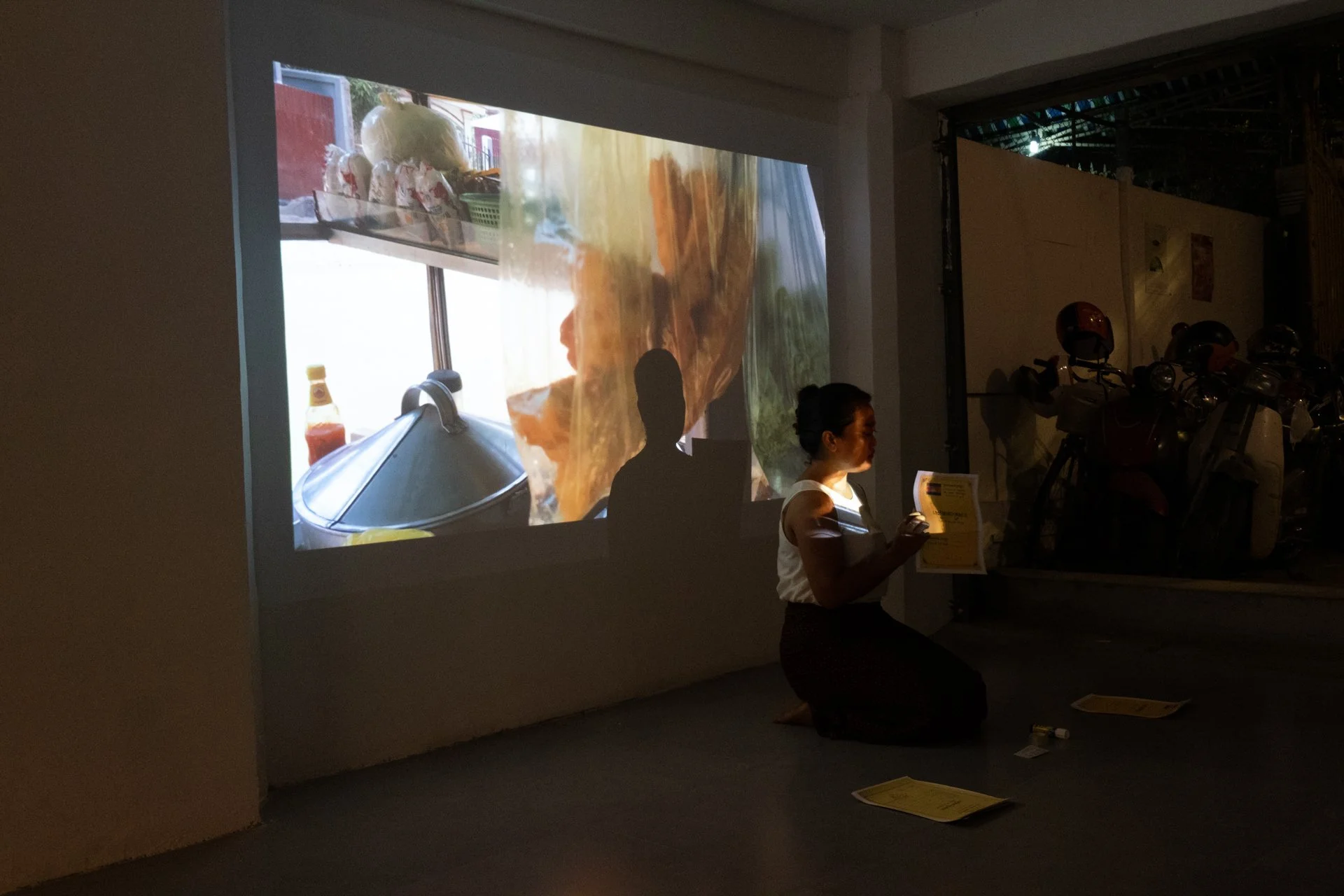
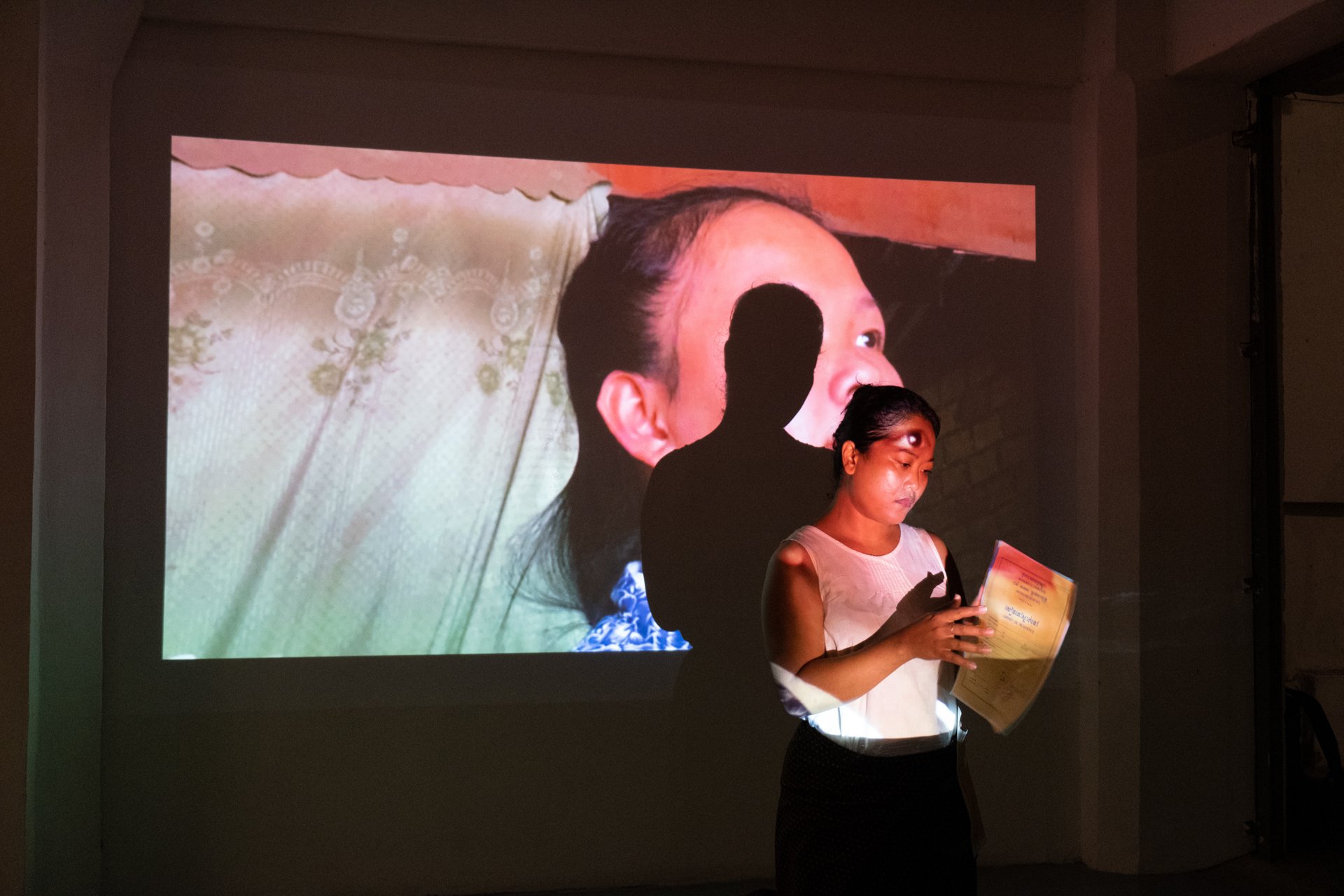
When I was in Sa Sa Art Projects’ contemporary art class at, the teacher asked all the students to read a book on Cambodian diseases. In the book, the author describes historical events from 1946 to 1987. After reading, I found myself obsessed with the story of Kampuchea Krom, the territory that Cambodia had ceded to Vietnam during the French colonial period. I started researching everything I could on the topic. I traveled to Siem Reap and Battambang to find people from Kampuchea Krom who had fled to live back in Cambodia to learn about their lives.
They told me, “Nothing more to talk, because no one hears, no one cares, no one speaks about the matter, and sometimes, when they know that I am Kampuchea Krom, they discriminate against me.They do not speak to me anymore…I came here empty-handed, trying to do business, to buy a motorbike. They wouldn’t sell it to me because I have no ID card. When I want to buy land, I didn’t own anything, they asked for a residence book, birth certificate, but they did not do it because they did not believe that I am Khmer Krom. ”
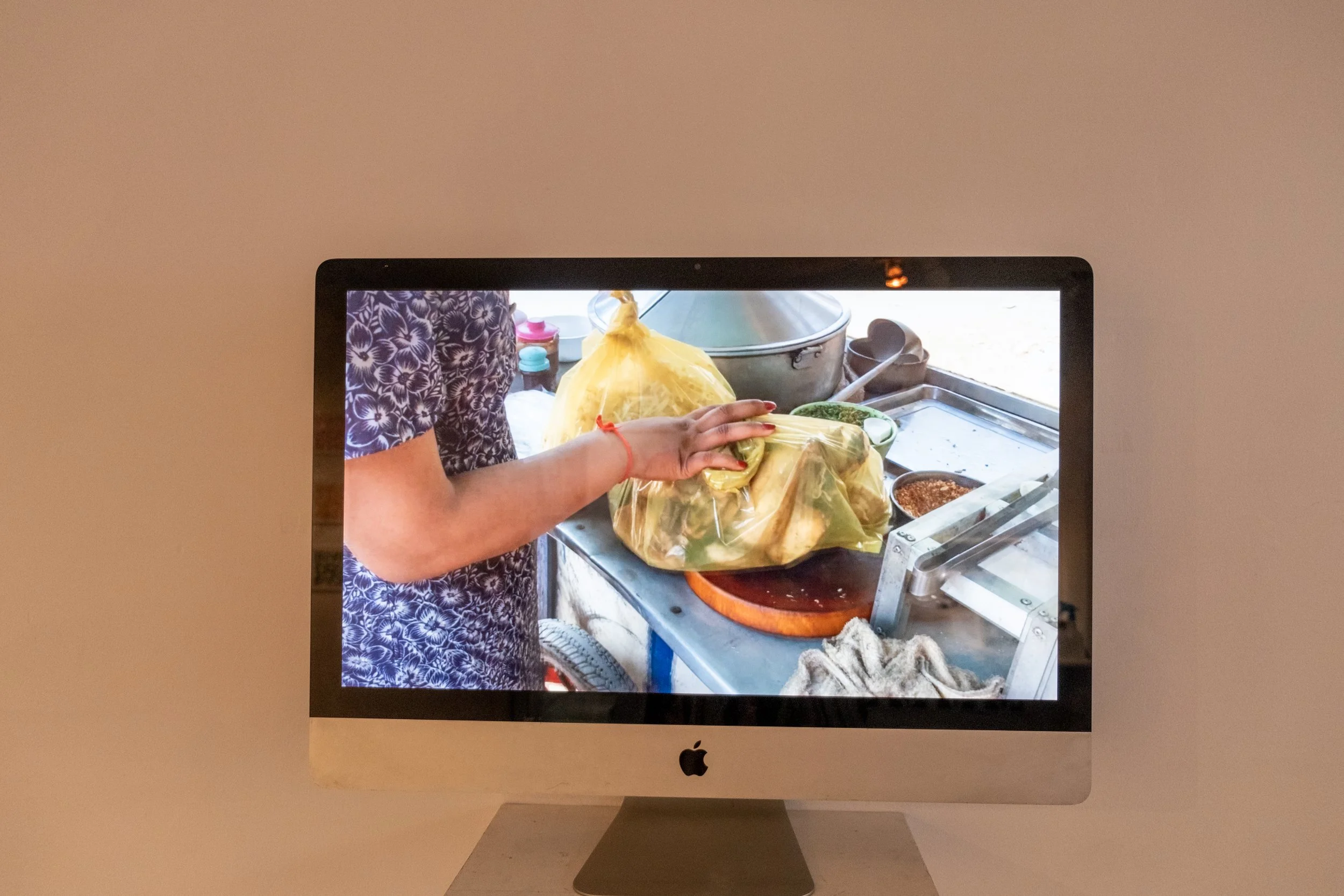
Chea Chansoksambath
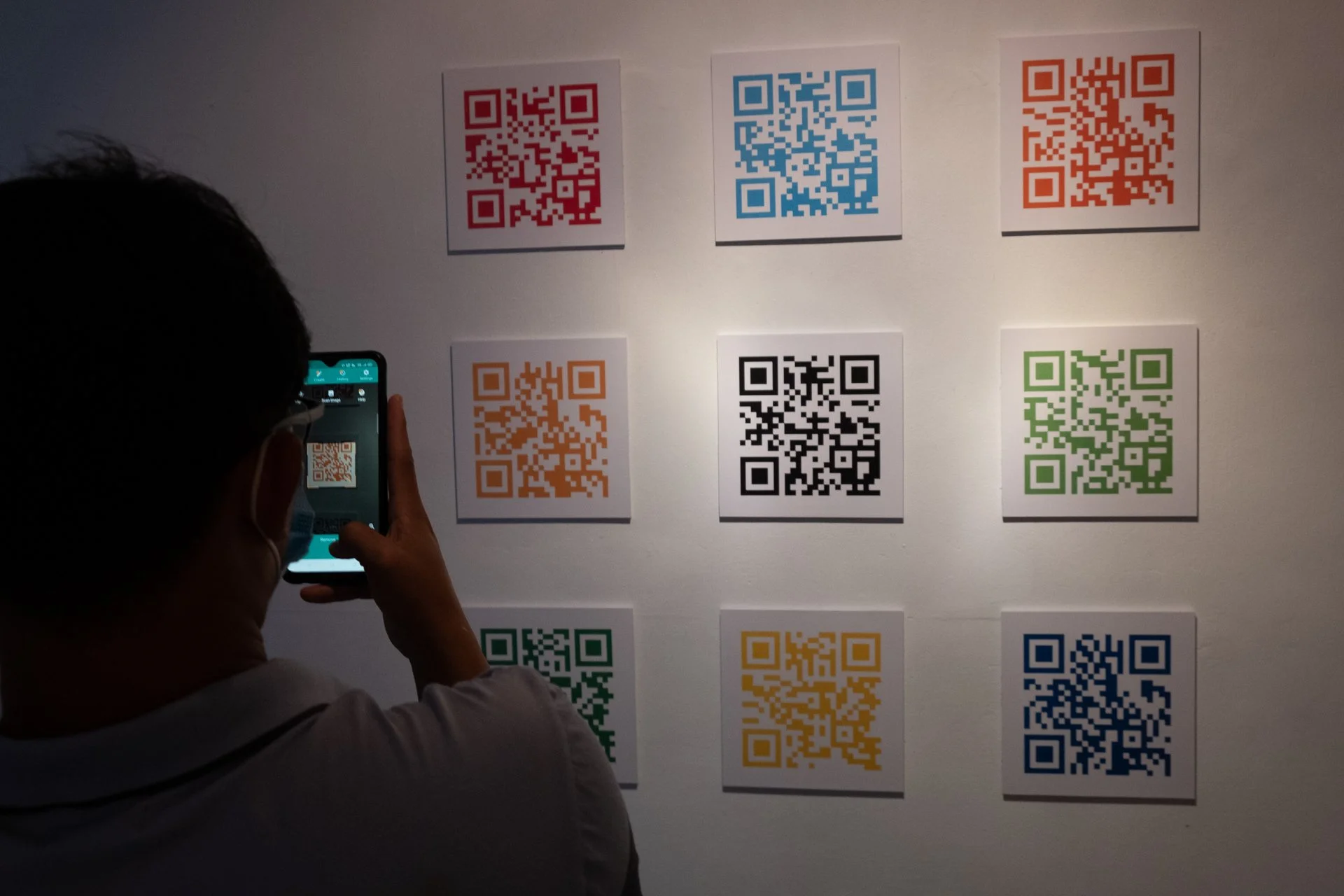
Choices, 2021
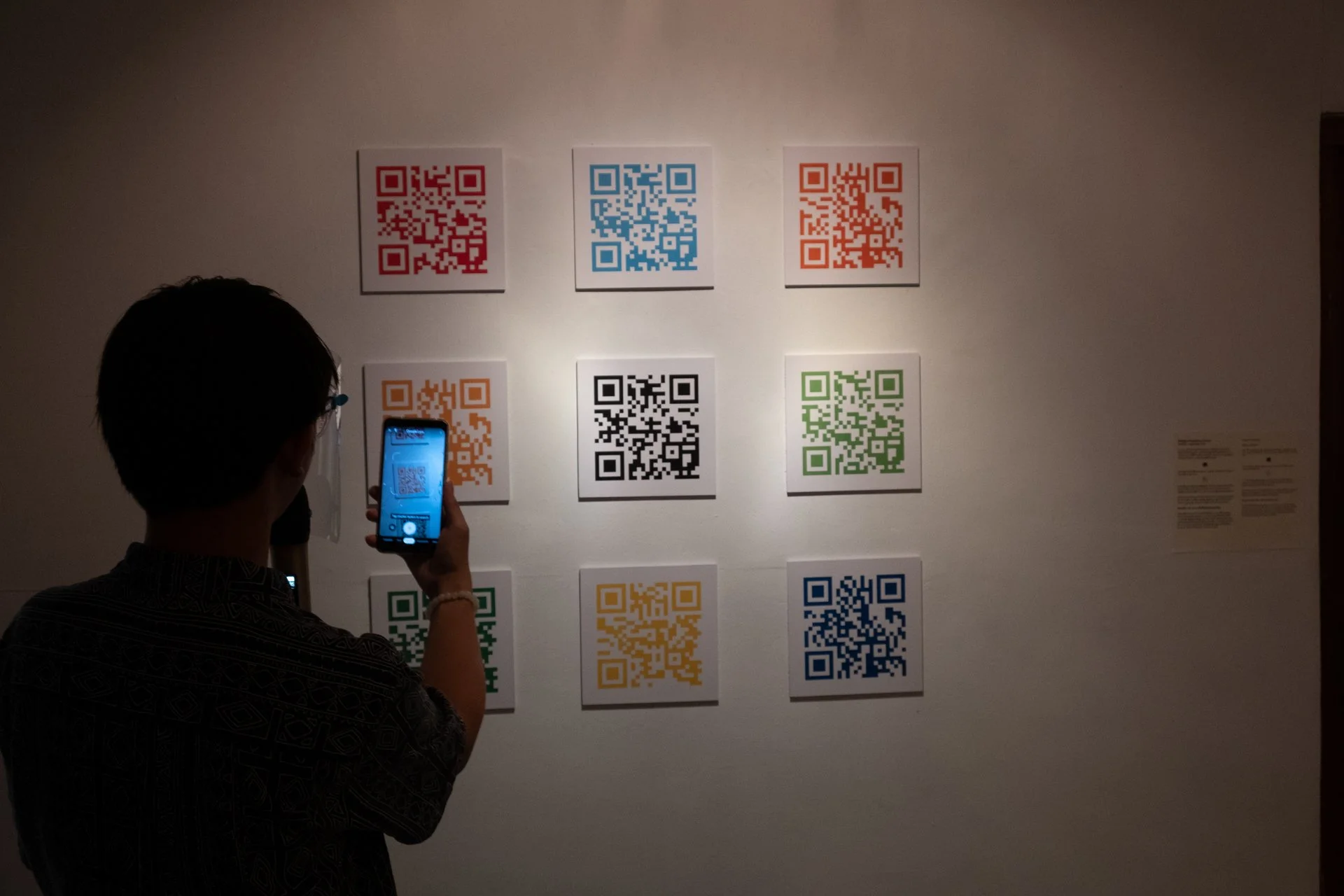
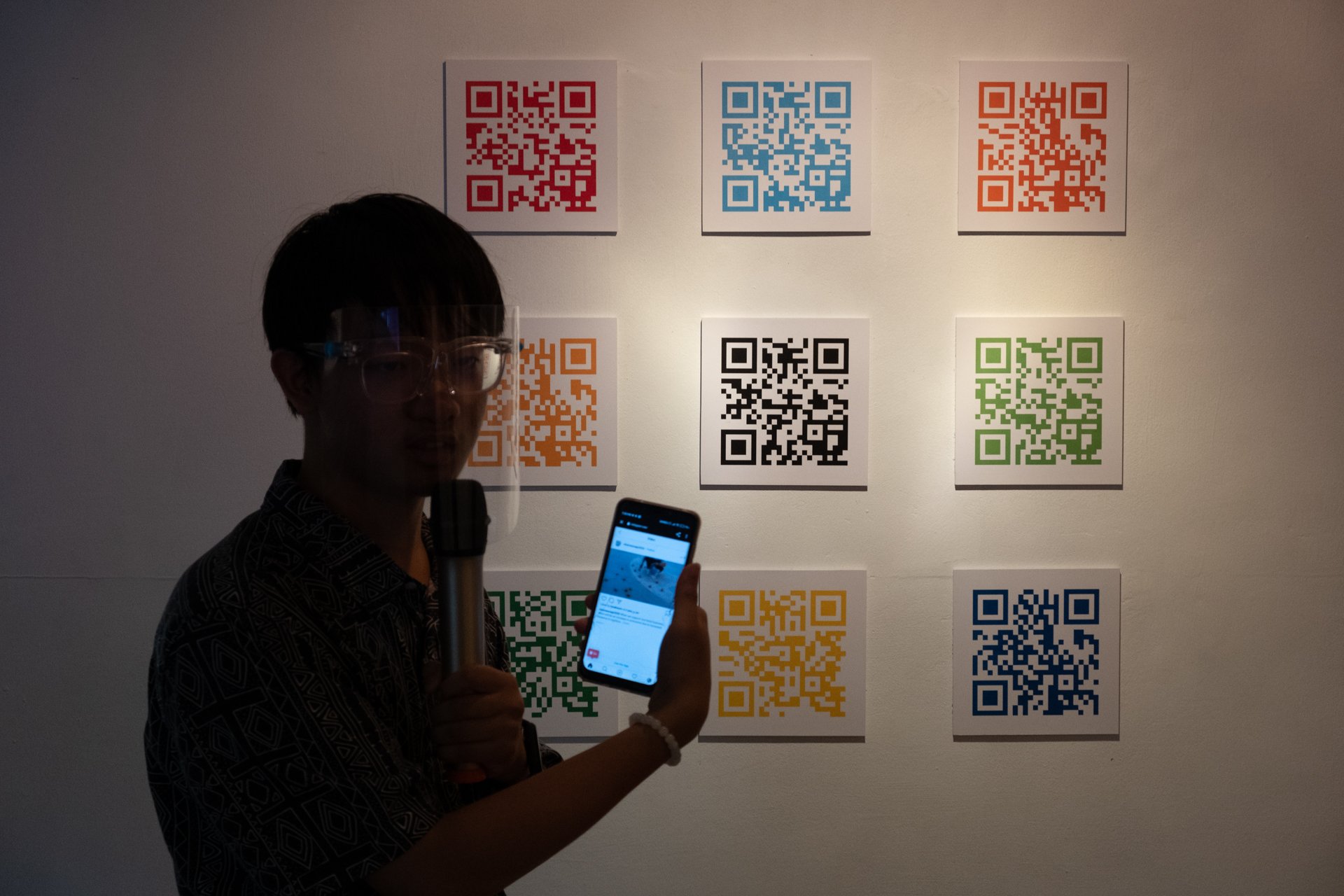
After more than 3 years of involvement with environmental initiatives in Phnom Penh, I find that environmental issues are still prevalent because people are not mindful of the relationship between their choices and society. It is hard to believe that this is still a problem despite the growing access to information, mostly from social media, and increasing local initiatives on the matter. This makes me believe that even if the best information is available to most people, what really matters is how well people can understand it. Are people willing to decode and learn more about environmentalism?
How much can they comprehend and understand from it?
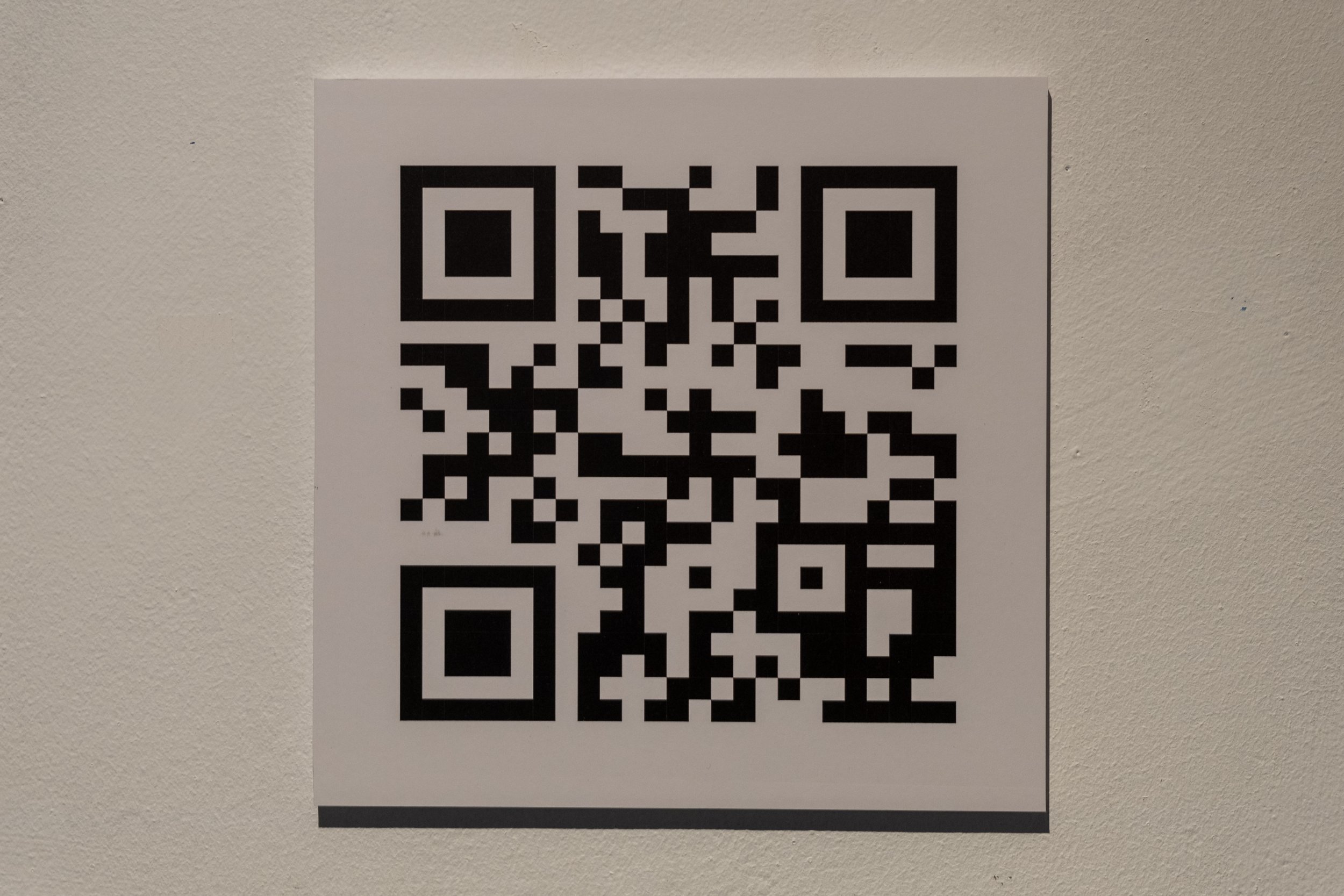
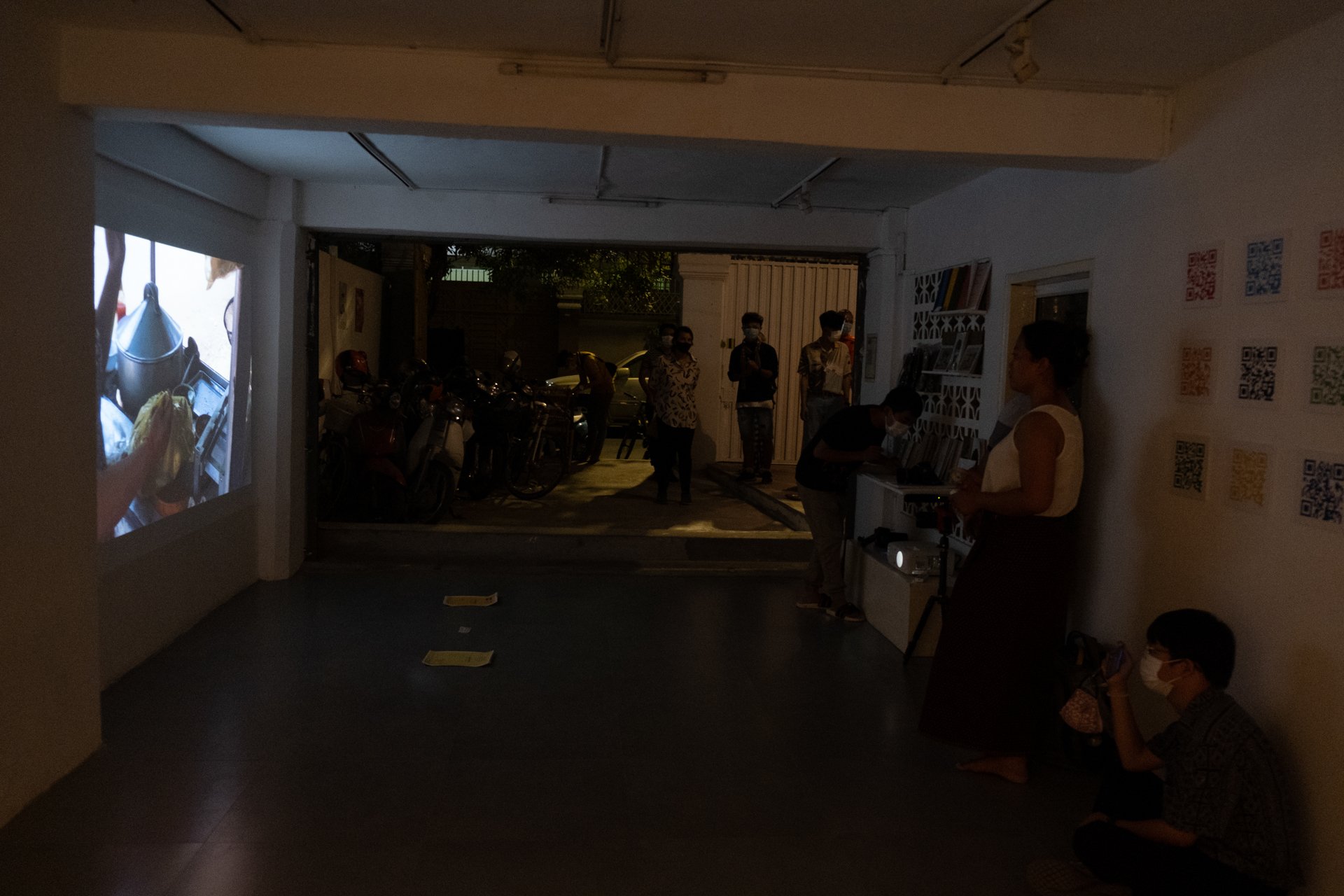
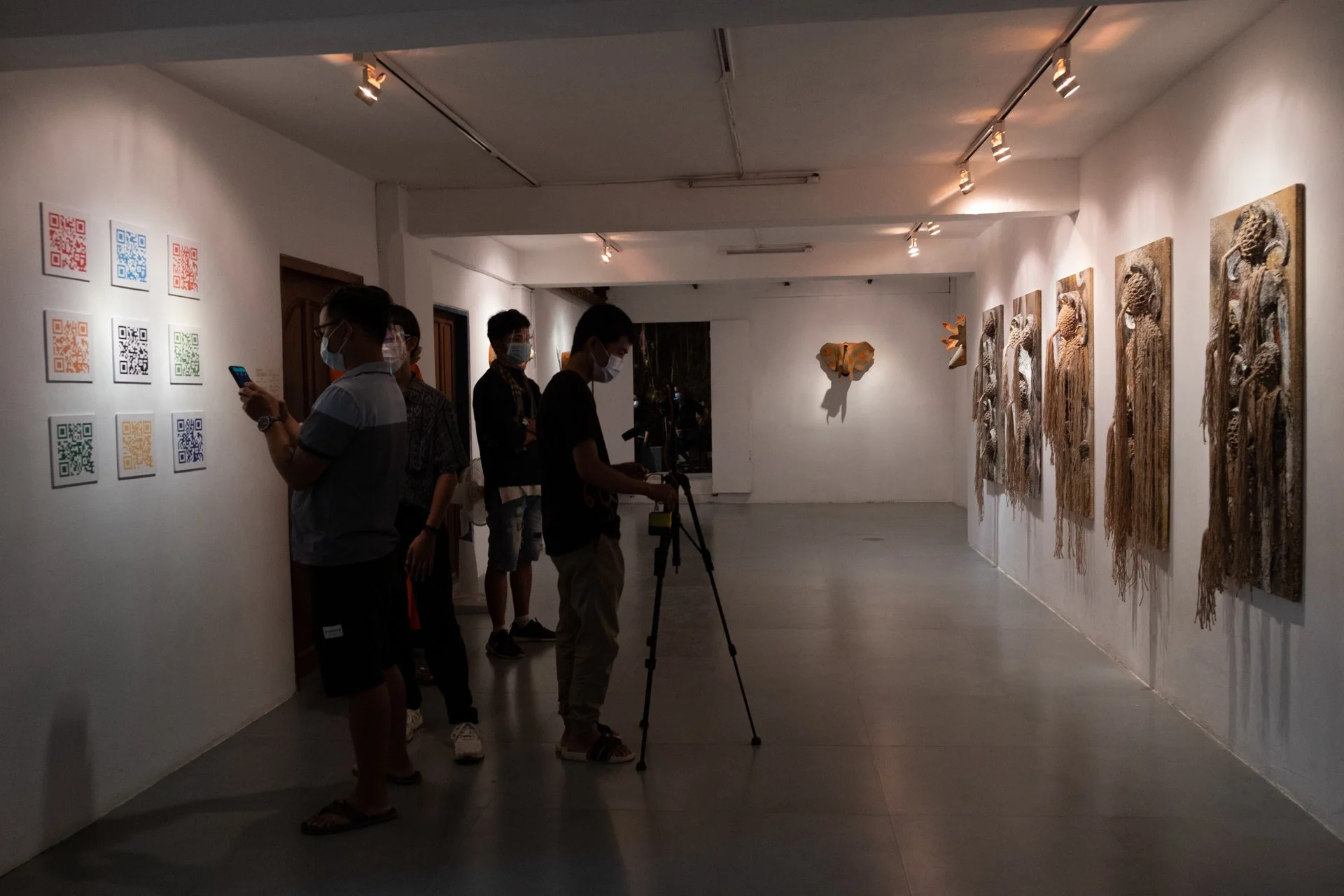
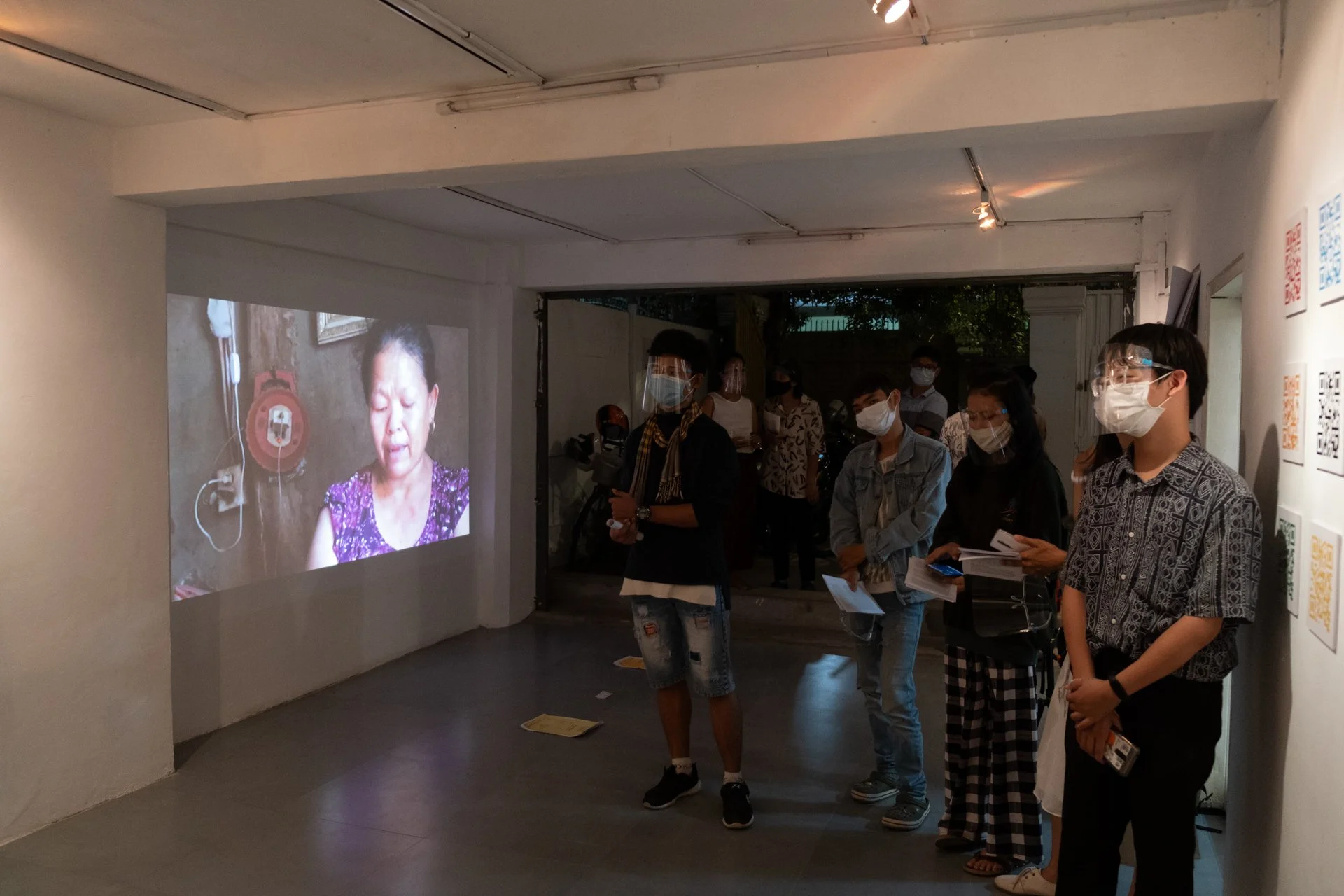
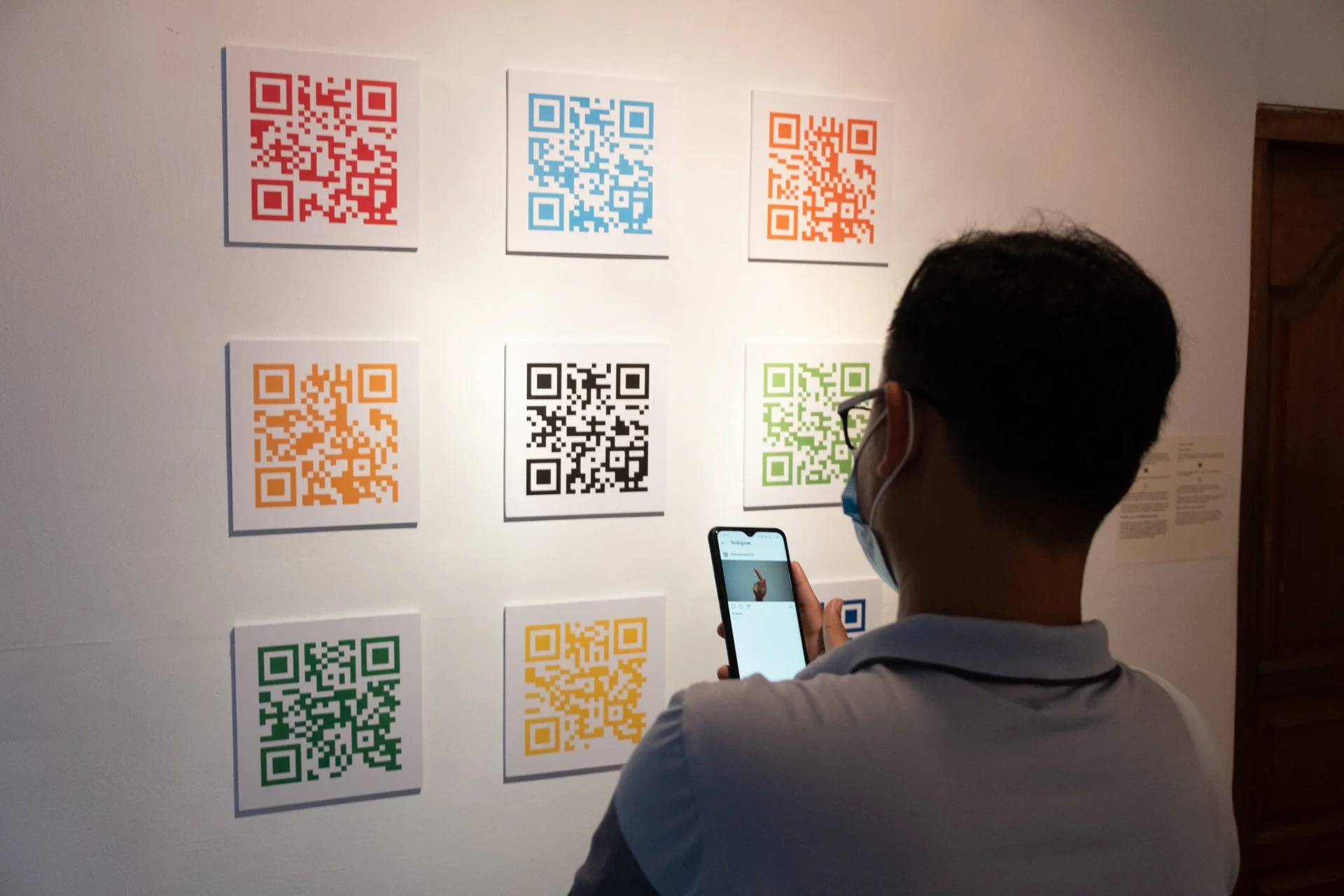
This interactive mixed media project comprises a website, 9 artworks, and 8 performance videos. Together, the work illustrates the relationship between our choices and the environment with regards to our willingness to understand the available information on environmental protection and directly how our choices impact the environment. Using the QR codes in the work, viewers are asked to decode the information and/or like the associated performance videos. These choices have direct consequences that will be revealed daily on a website using many variations of the same, Phnom Penh-inspired scenery. Here, the audience has the power to use their choices to make an impact on their environment and are invited to be mindful of how their choices can be beautiful or ugly.
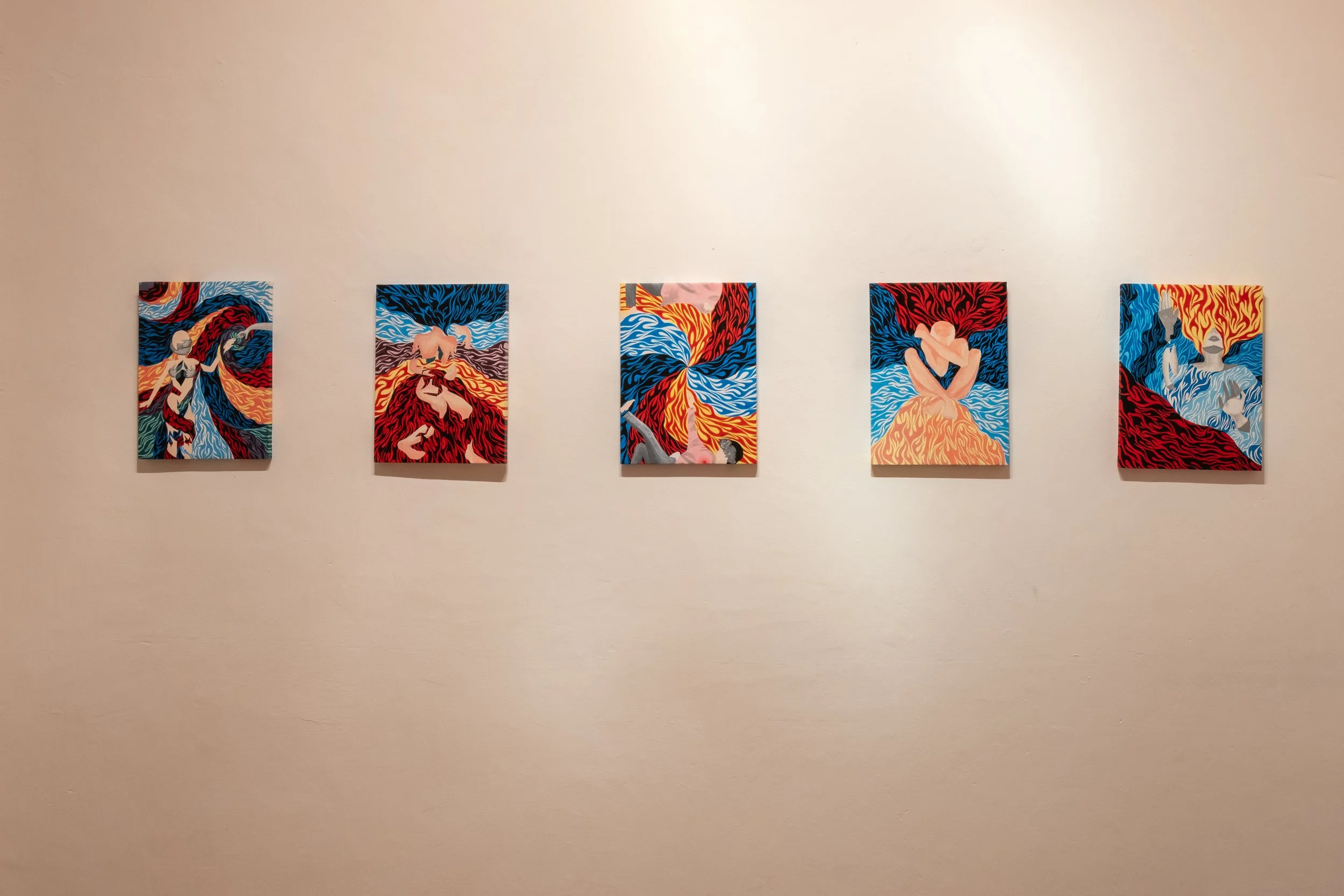
Sour Eliza
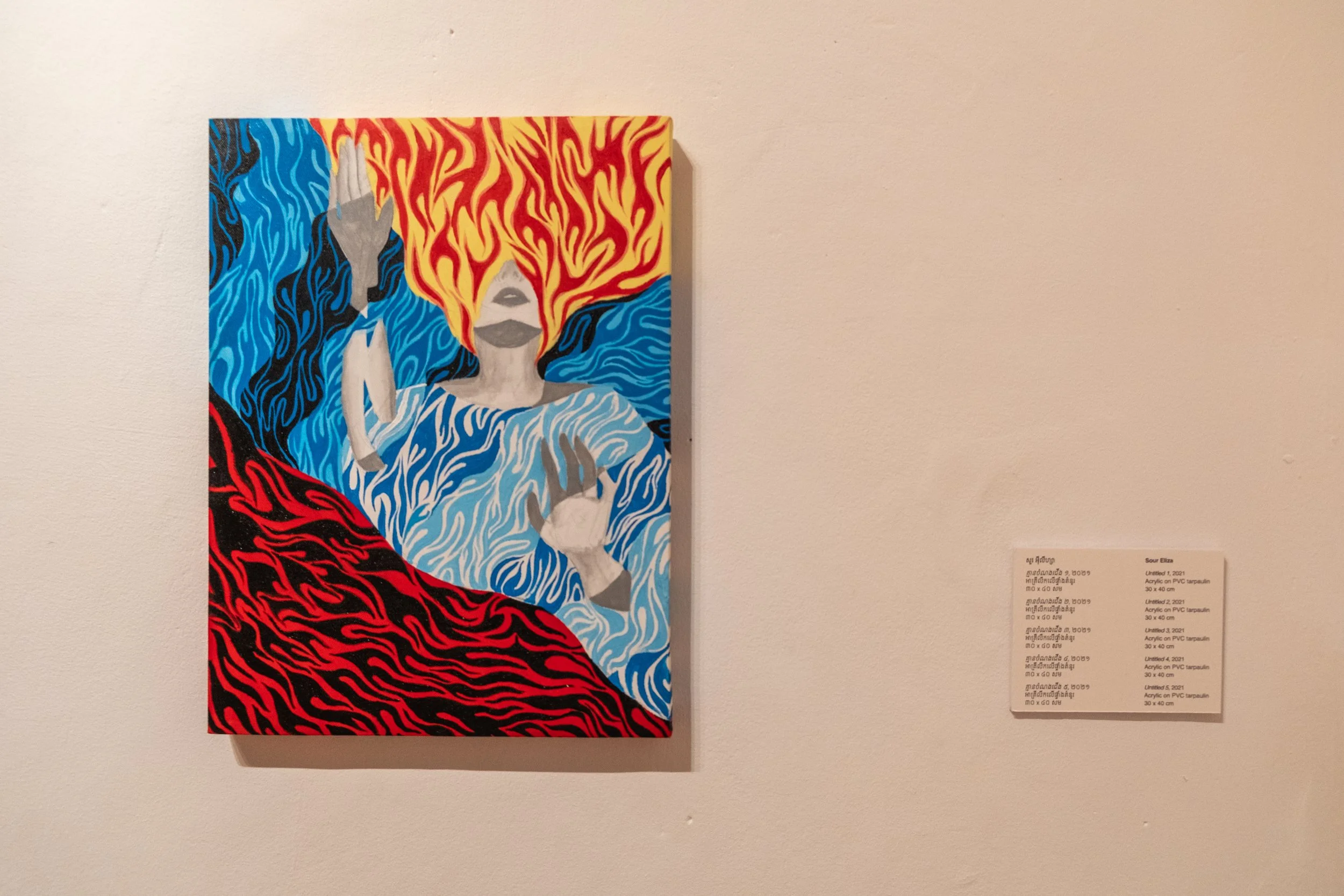
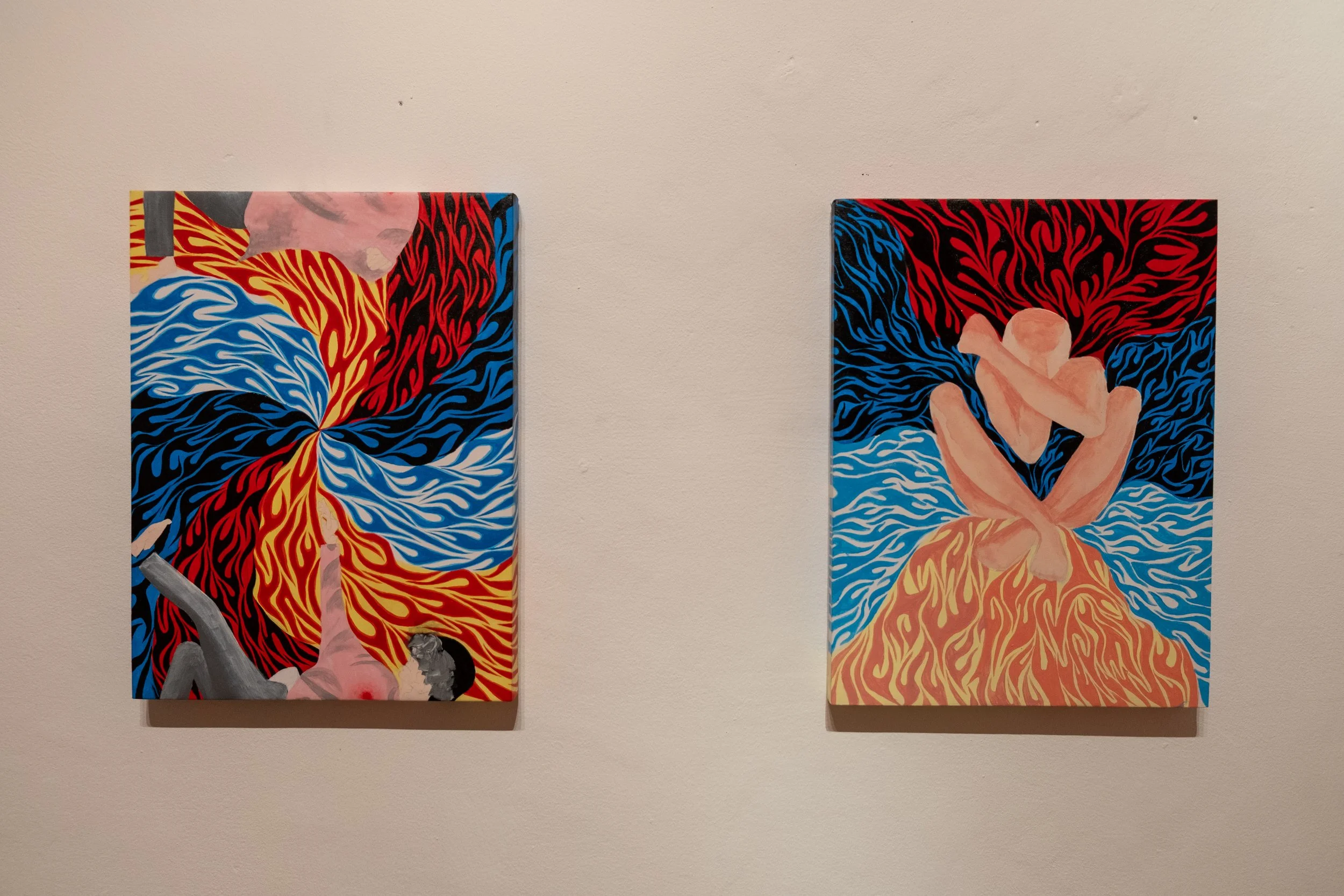
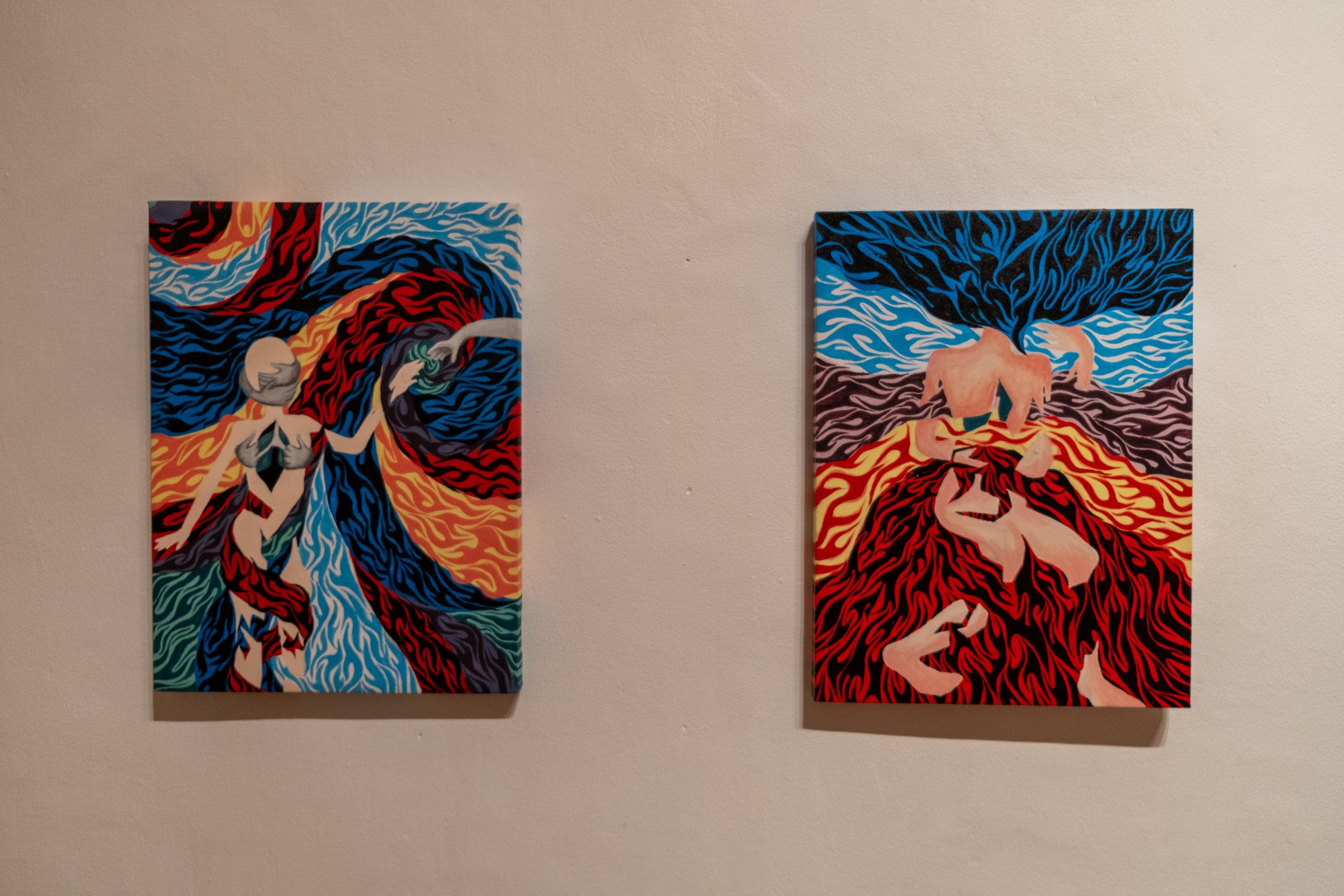
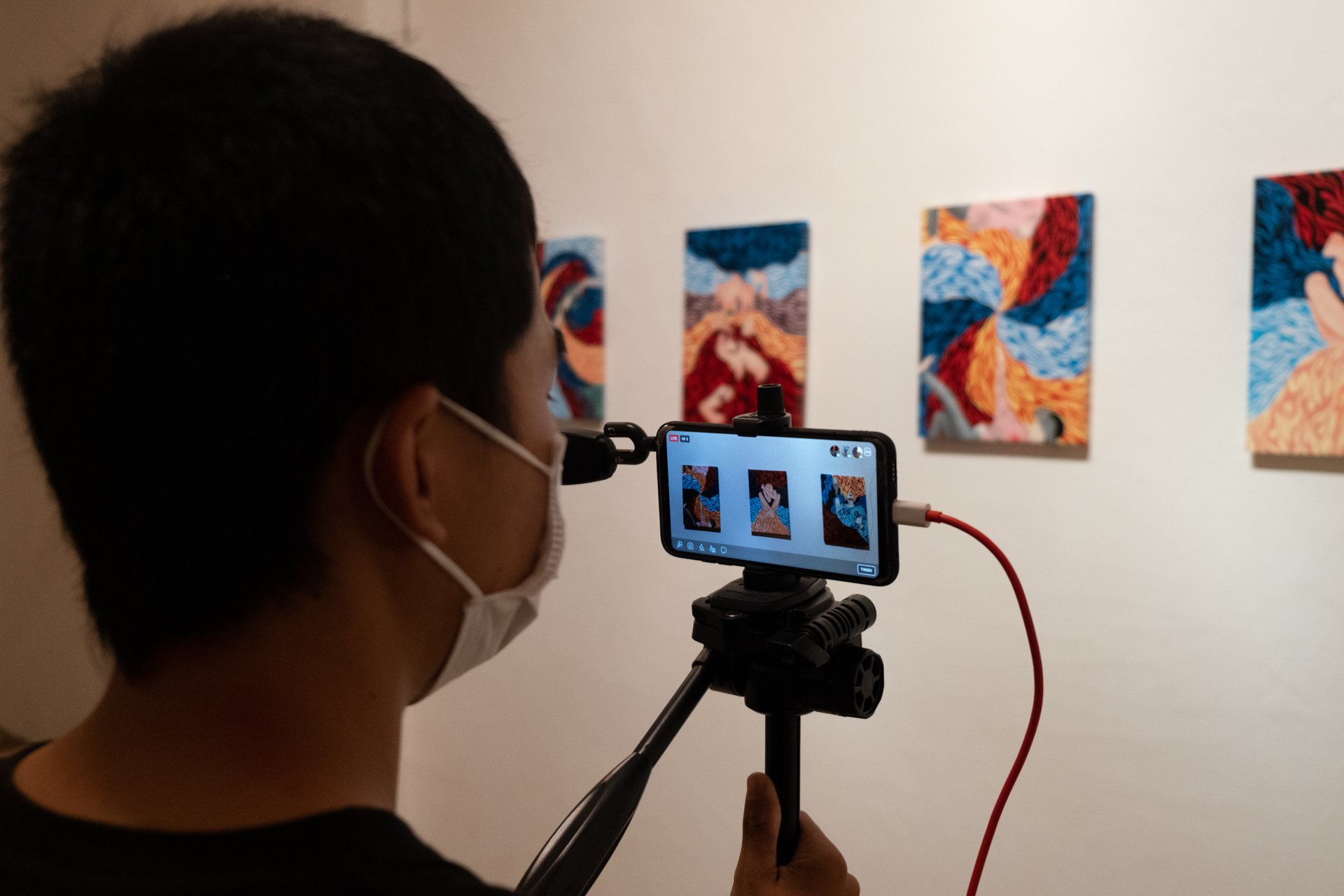
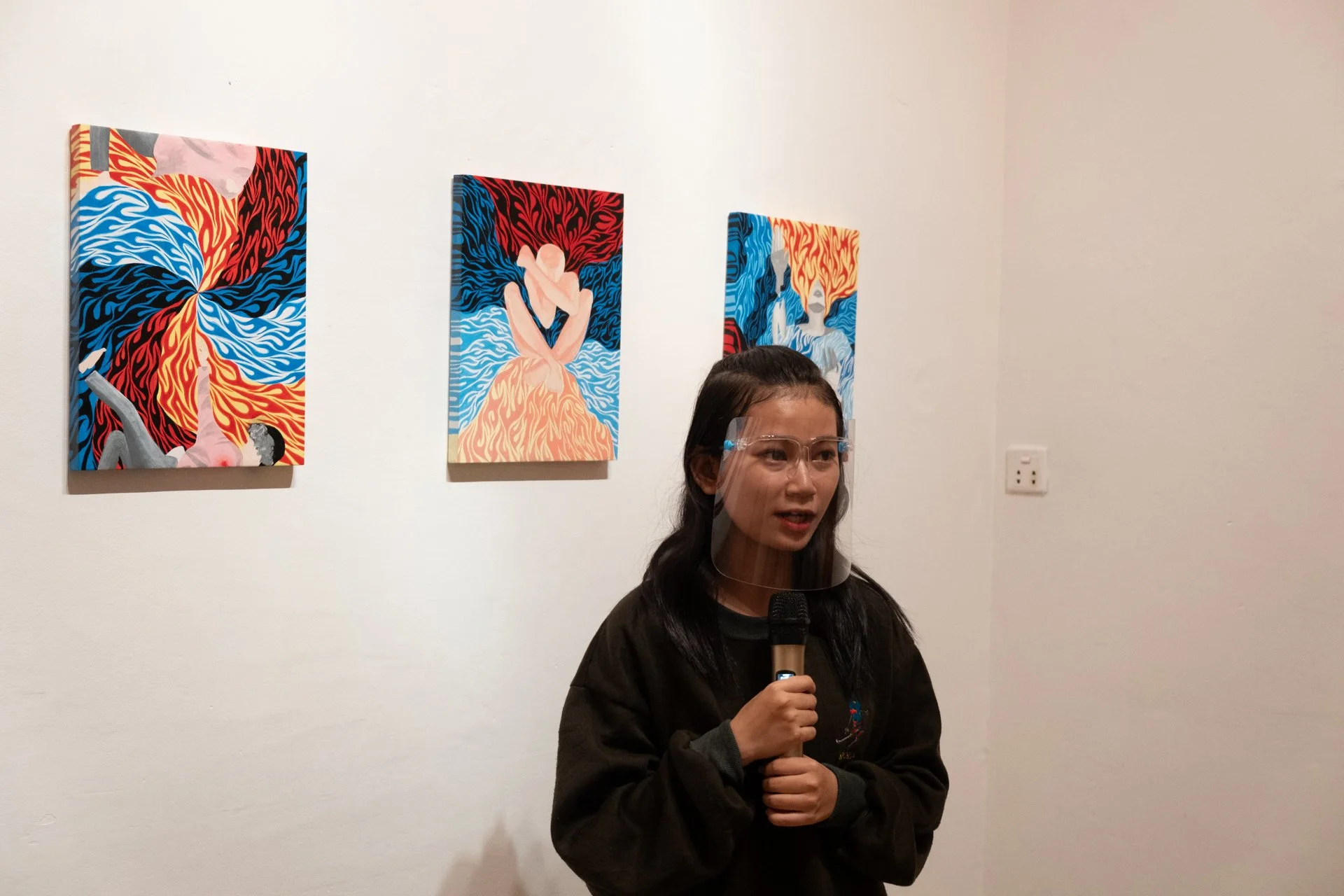
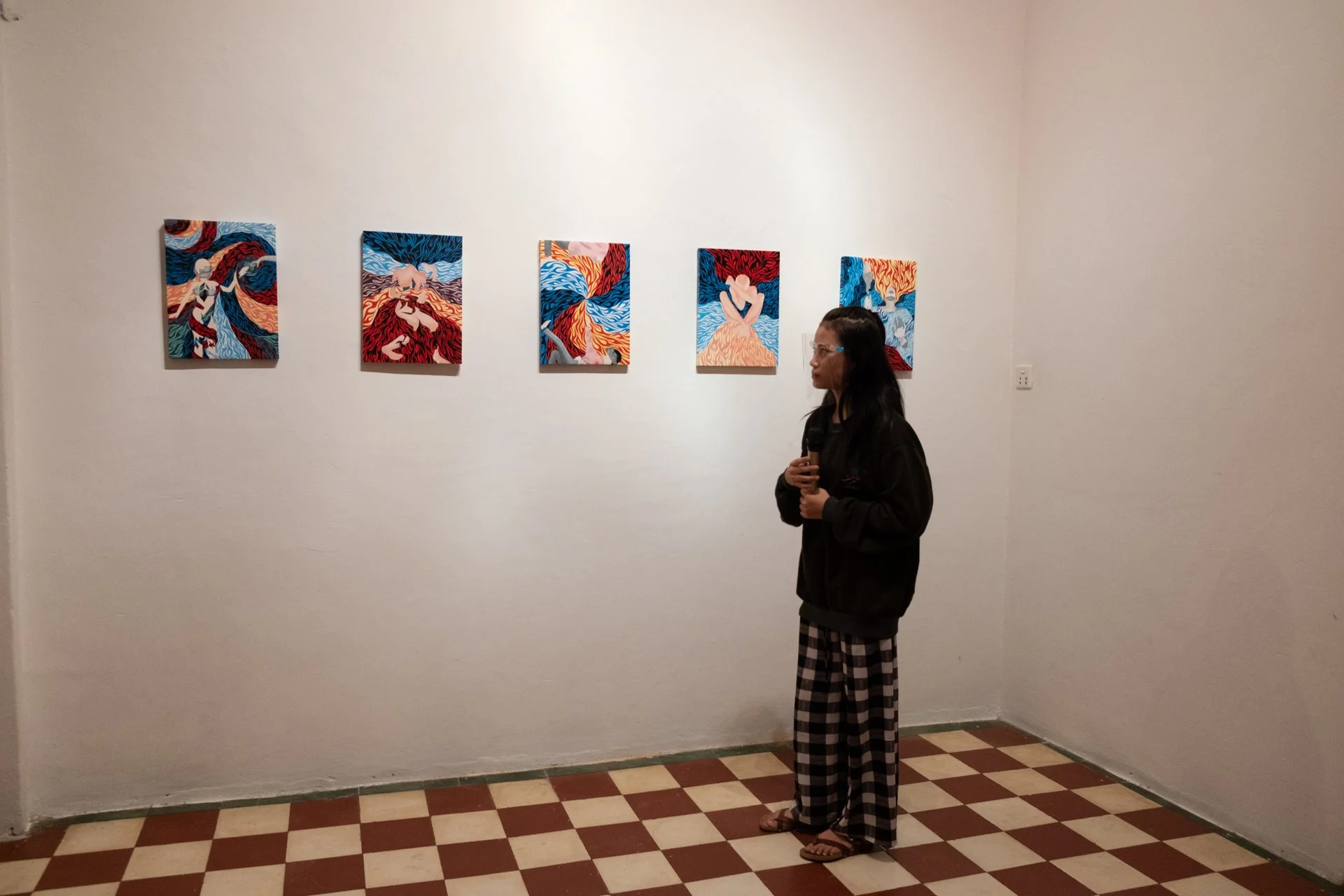
Untitled, 2021
When I first started learning to draw, I used a pencil. I would draw everything I saw. Now, I’m more interested in drawing people. Though, I do not make much art, I really
like painting. I always draw and paint in my spare time. Eventually,I started adding color
to my artworks because it made the picture look more lifelike. In this work, I depicted stories of crises from 2020 so people around the world can remember the tragedies of natural disasters such as earthquakes, floods, volcanic eruptions and wildfires. Additionally, the world has been affected by Covid-19.
It has killed more than 2,536,703 people. People are losing family members, the national economy is declining and market prices are rising, affecting the lives of many people. All over the world people need to social distance to prevent the spread of this infection. We are starting to lose intimacy even though maintaining this gap can be difficult for many. It affects our emotions and mental health as people are living in fear. I added bold and bright colors to give the audience a fresh feeling, but I want them to remember what has happened and take it as a lesson: together we need to take care of the environment and fight germs according to the guidelines of the Ministry of Health.
Phy Phorn
Restriction, 2021
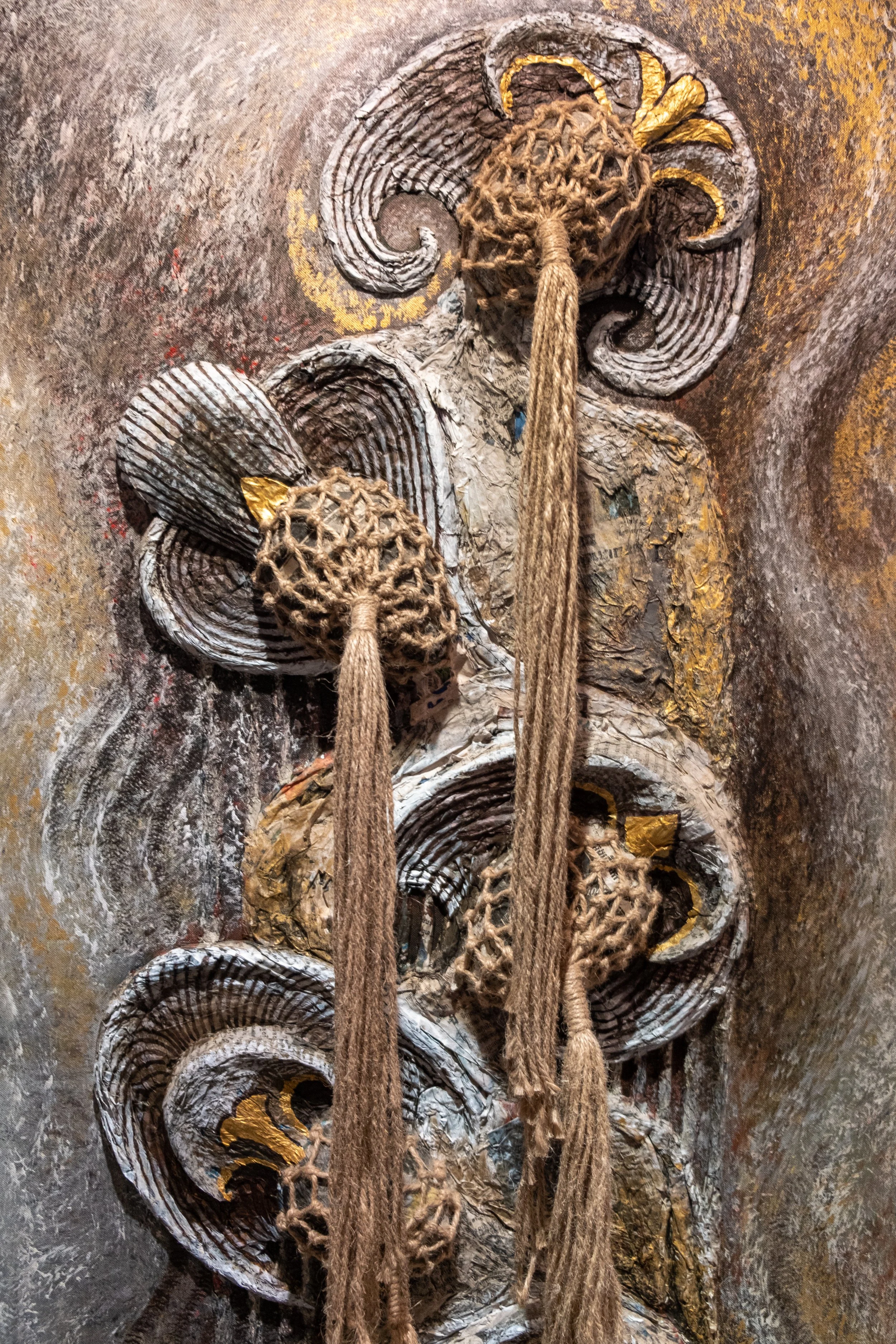
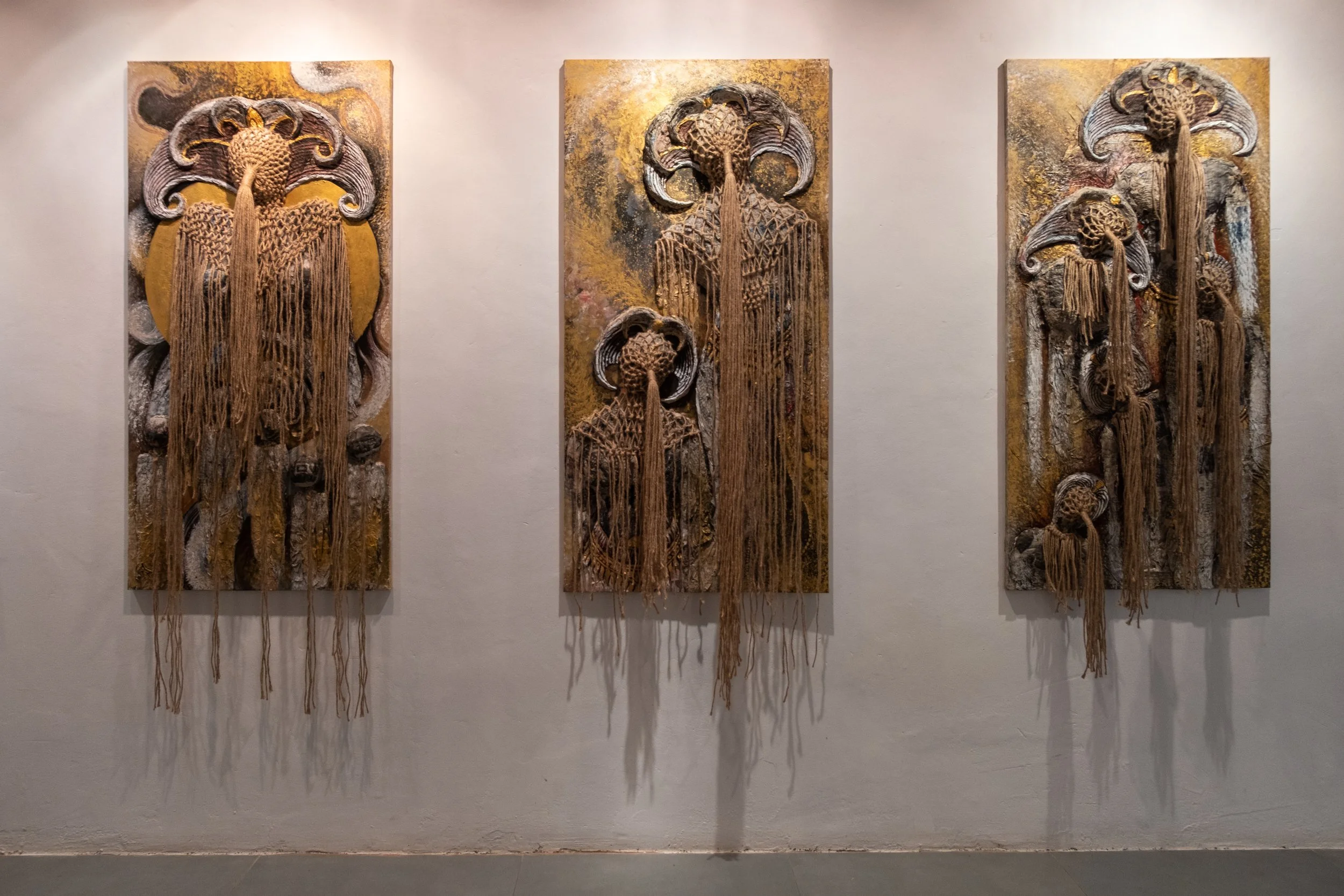
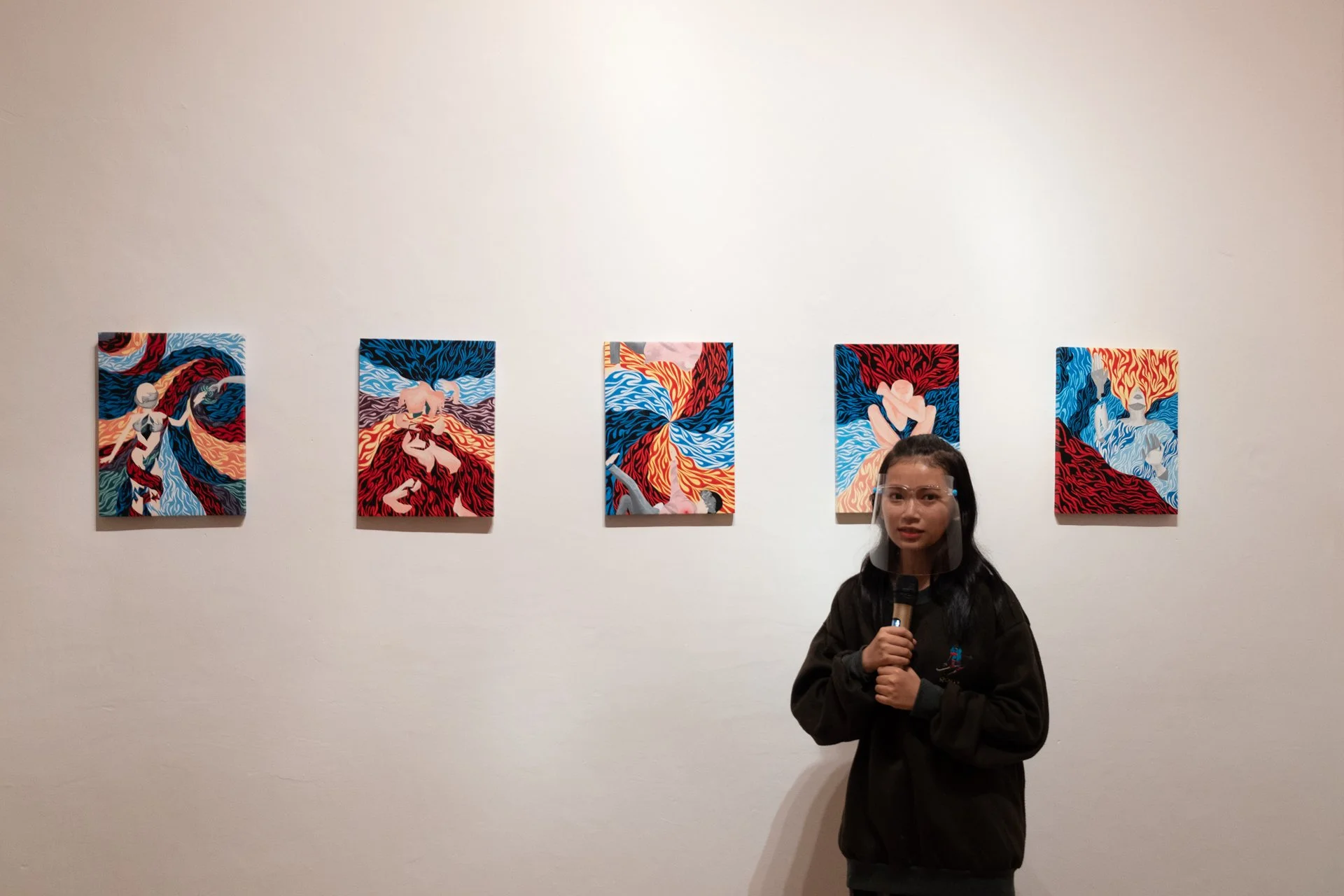
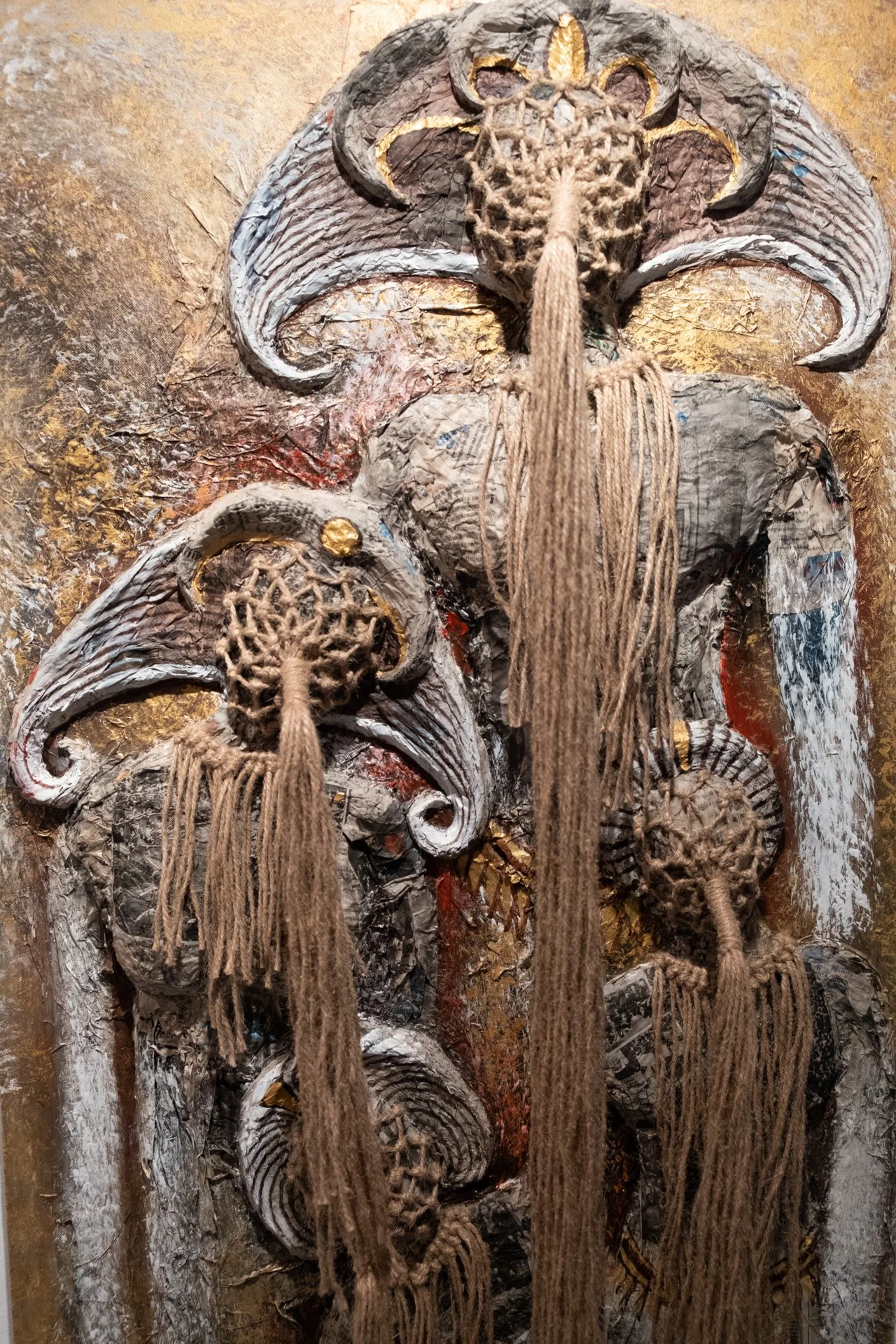
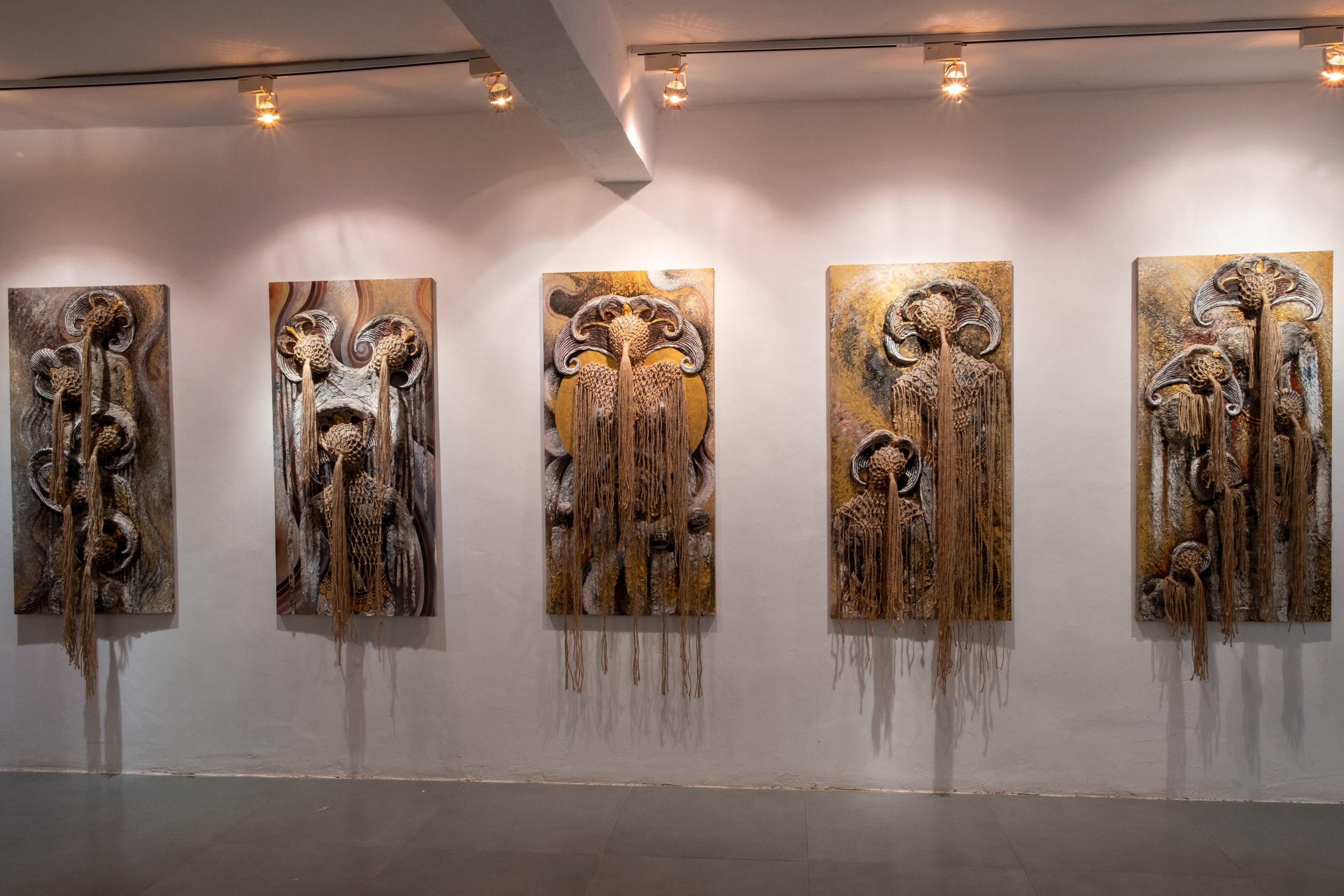
All people that spend a lifetime living in a society always suffers from many things directly and indirectly. The story that in the lives of human beings are affected by their social context and it is just in a different picture. All of that is shown in “Restriction”. “Restriction” refers to pressure from the powerful or from a non-transparent society.
“Restriction”is illustrated by a mix media drawing made of newspapers, which includes information on the history and events of the past and present as well as they victims or injustices of social contexts and the people around them. It can also reflect on the future as it unfolds. Apsara characters are created in a new form, representing people who have been affected by their social context. These mixed media paintings are tied with cross-stitched threads over the Apsara characters, signifying pressure and enclosure in a “prison without walls”. The colors used are gold, red, black, gray, and white to represents the dignity of purity, but is obscured by social pressure in various images.
Soung Pheakdey
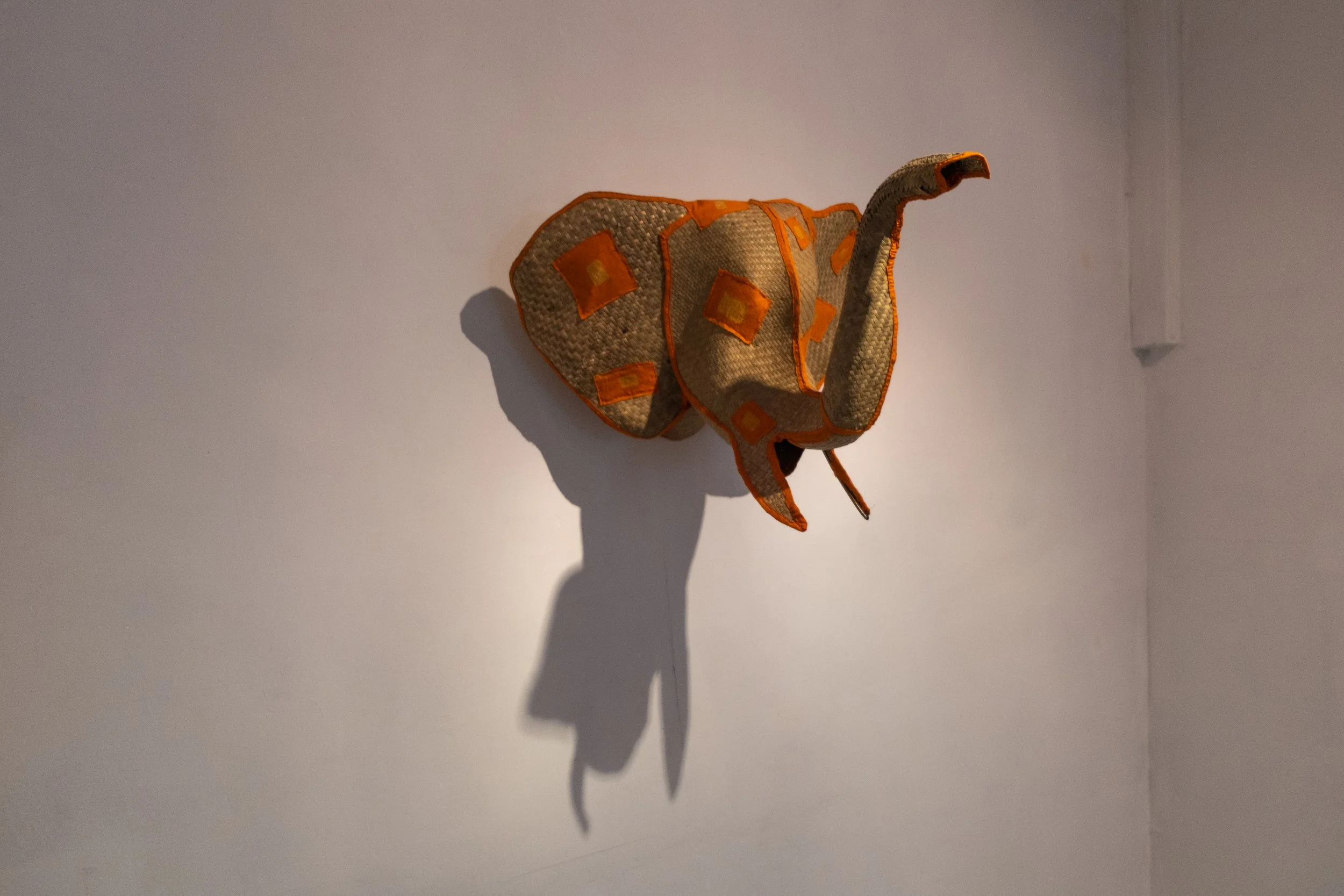
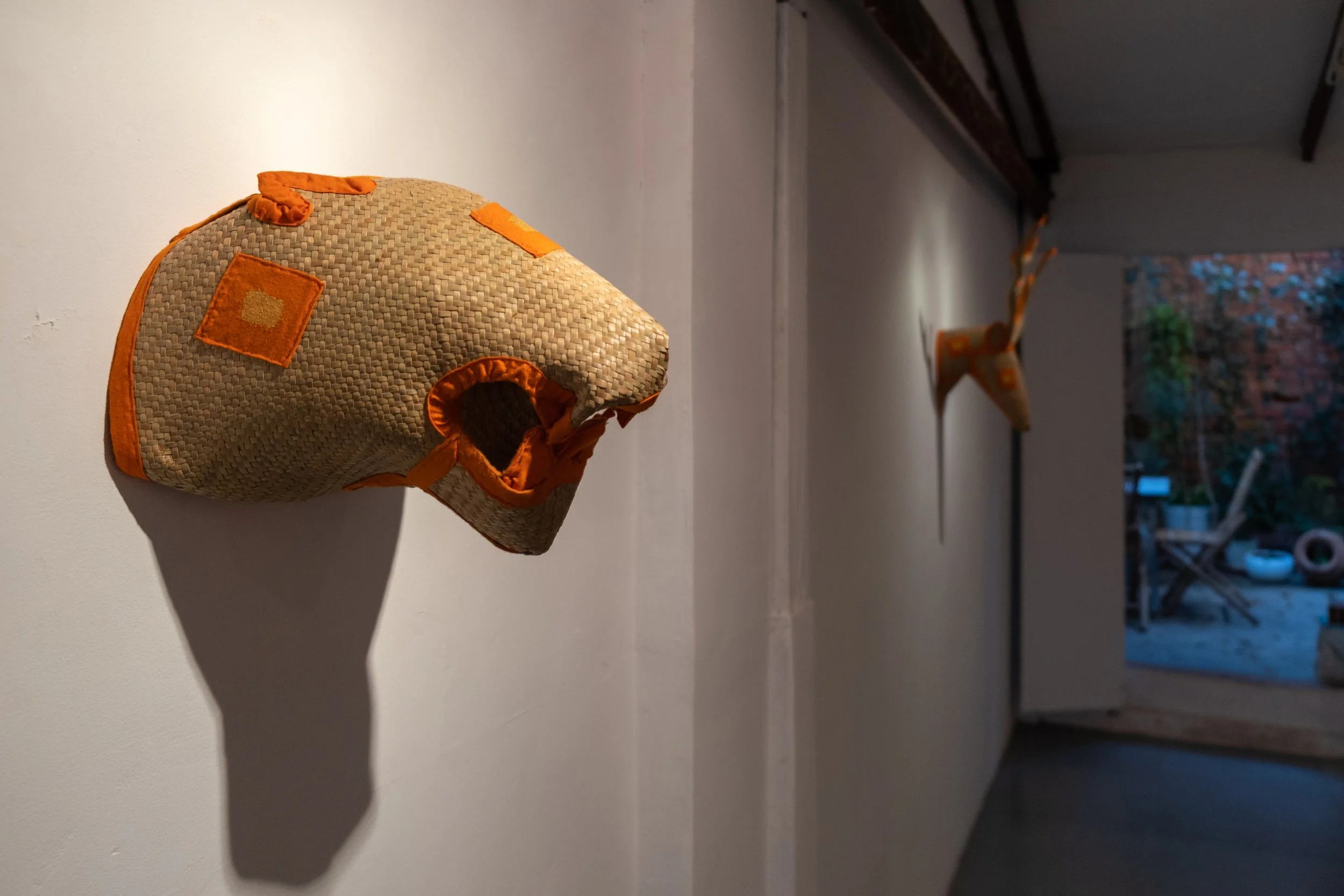
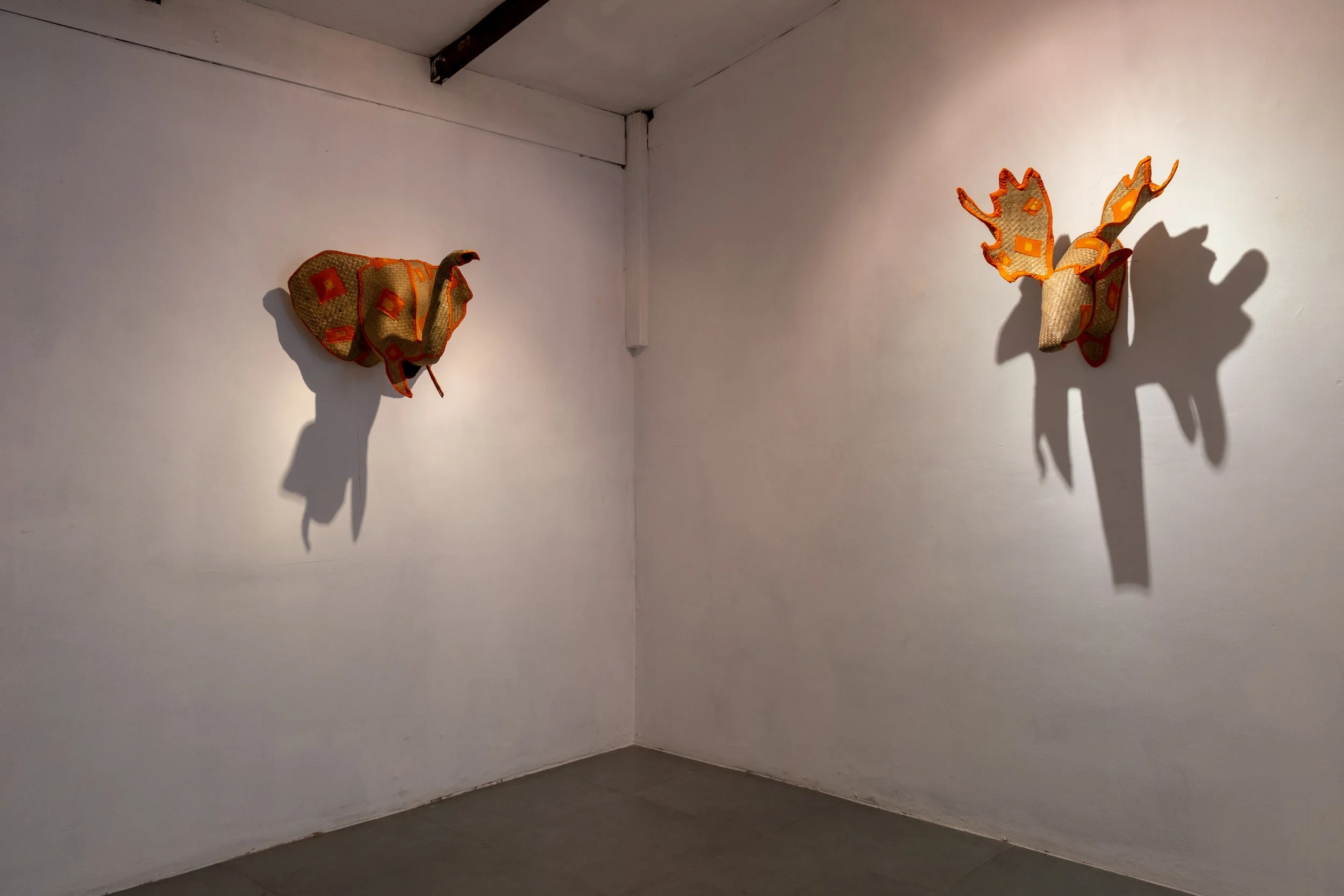
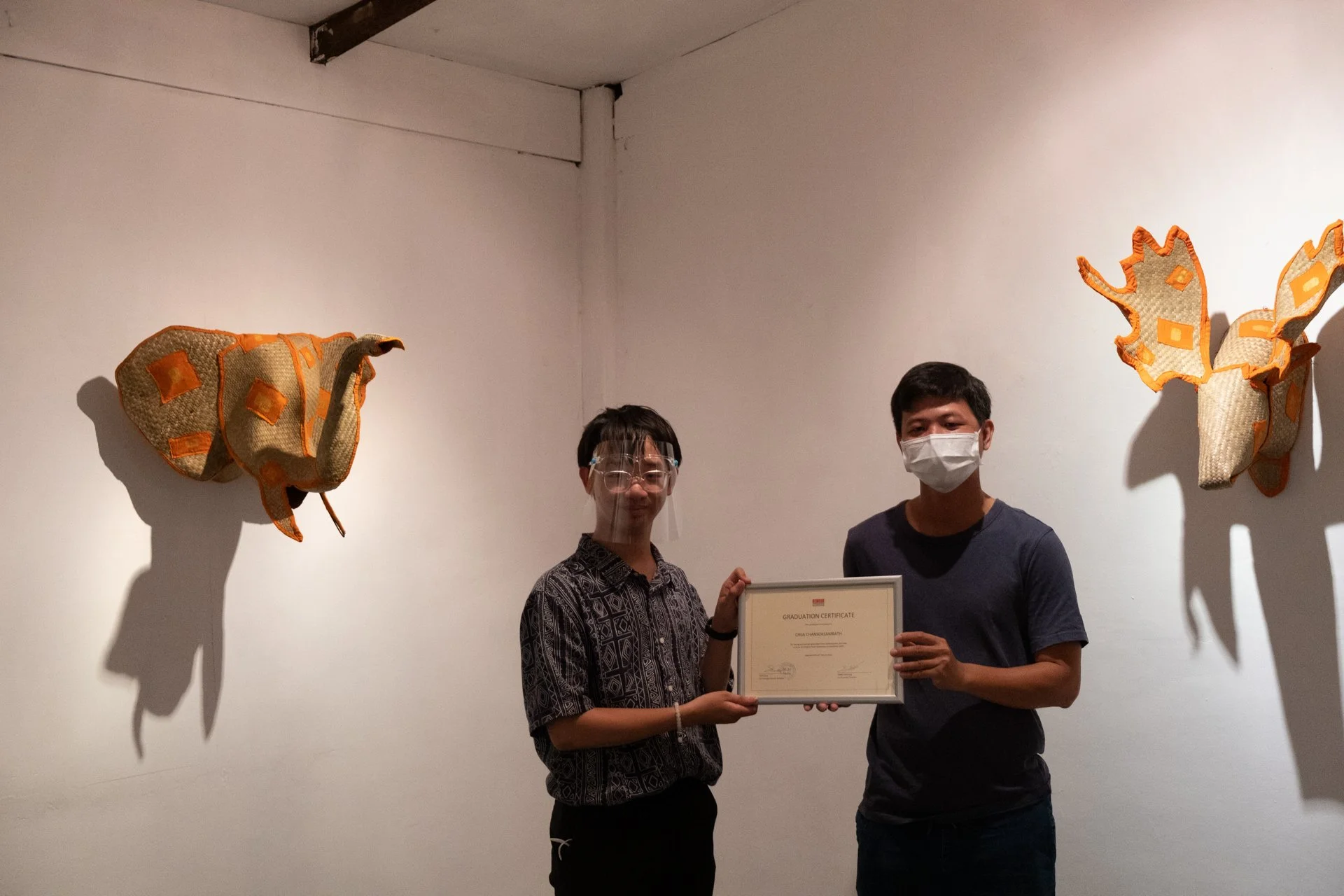
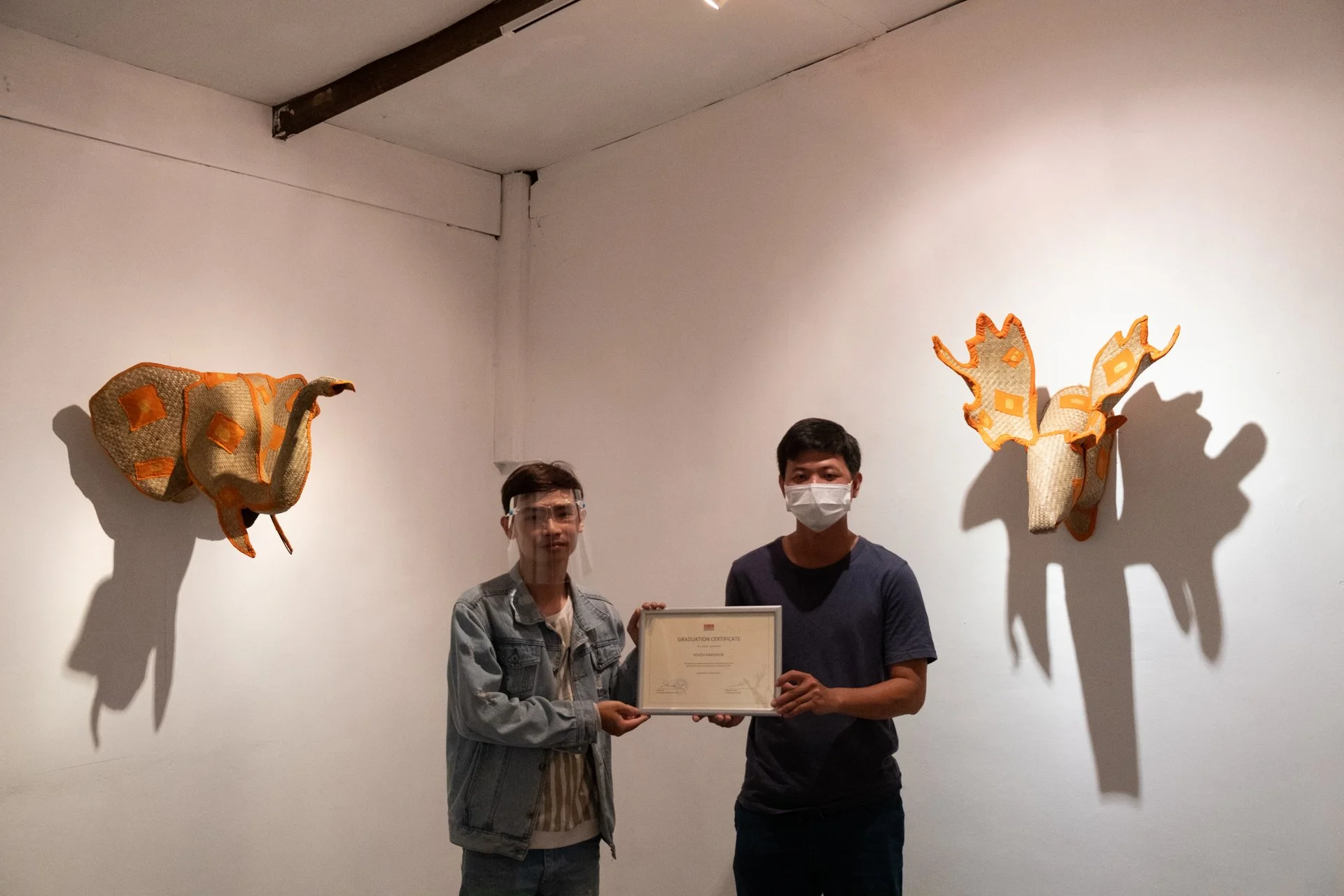
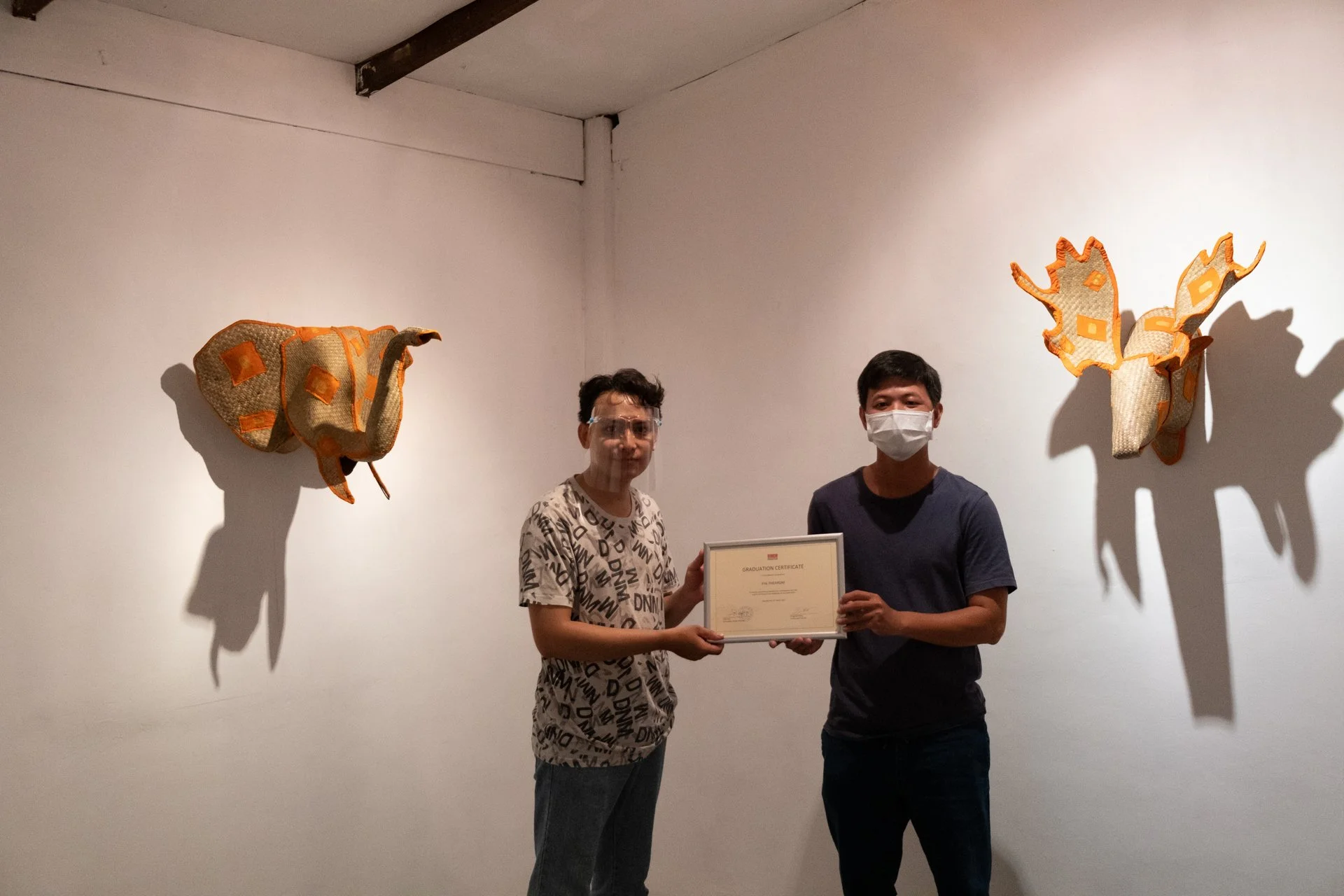
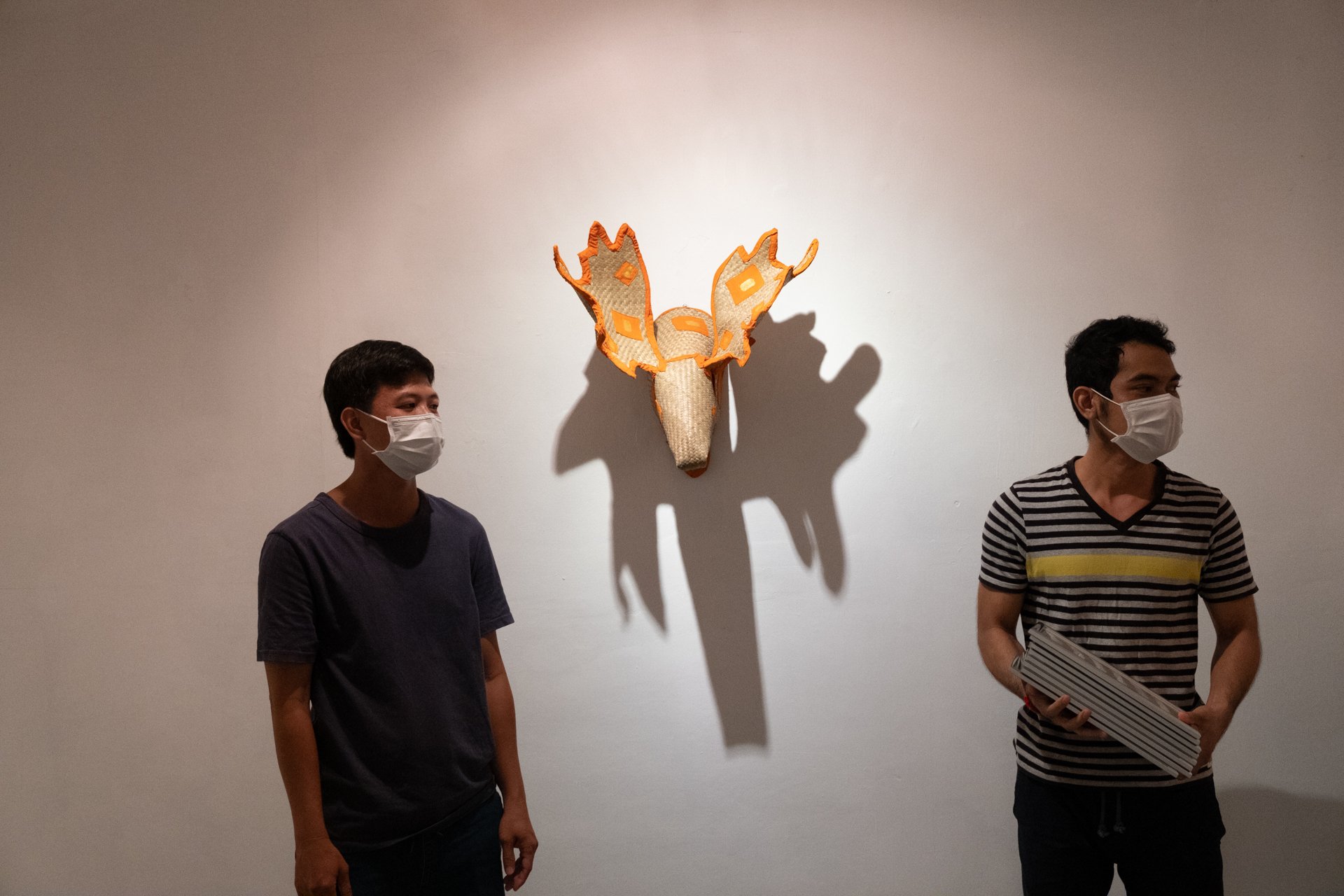
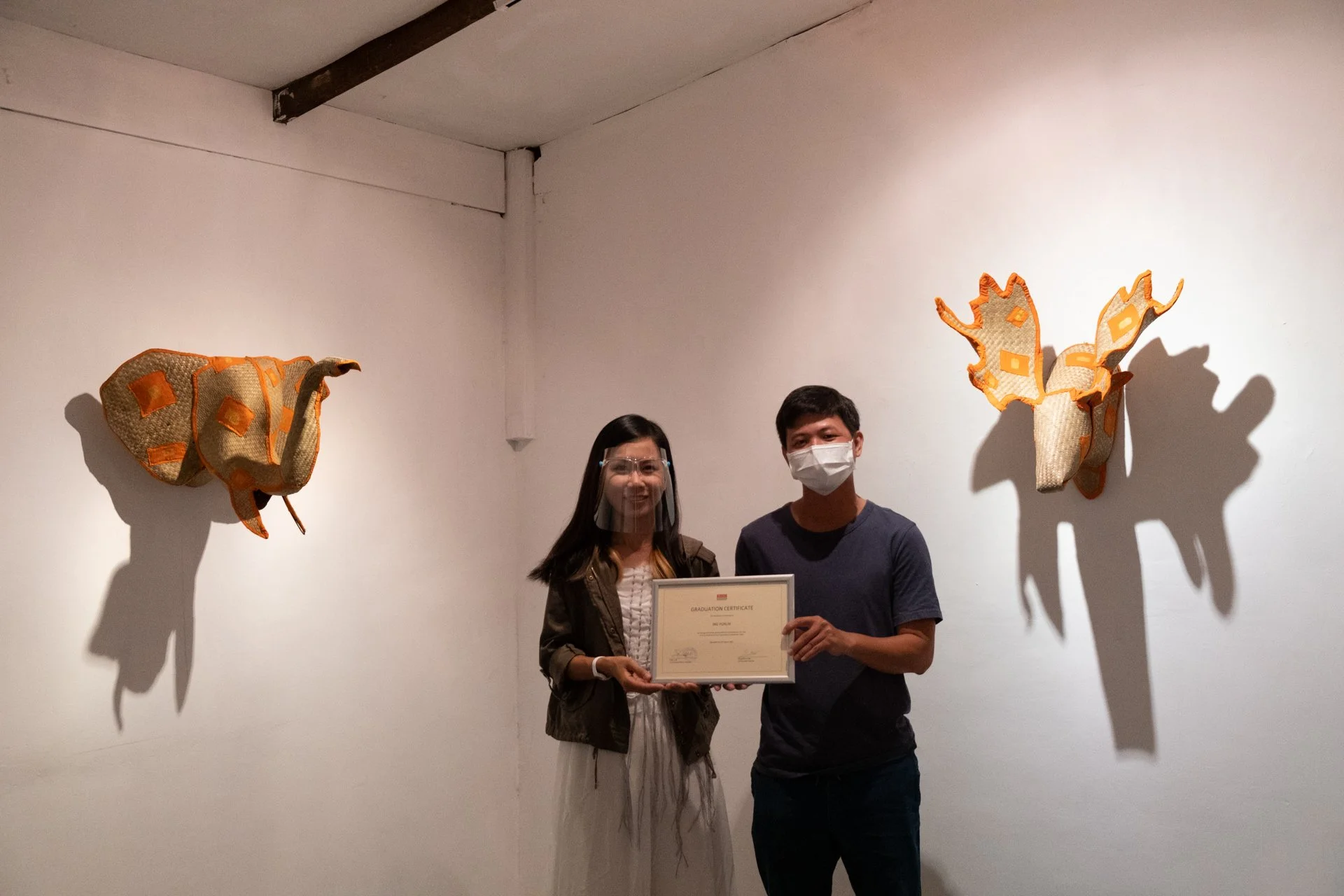
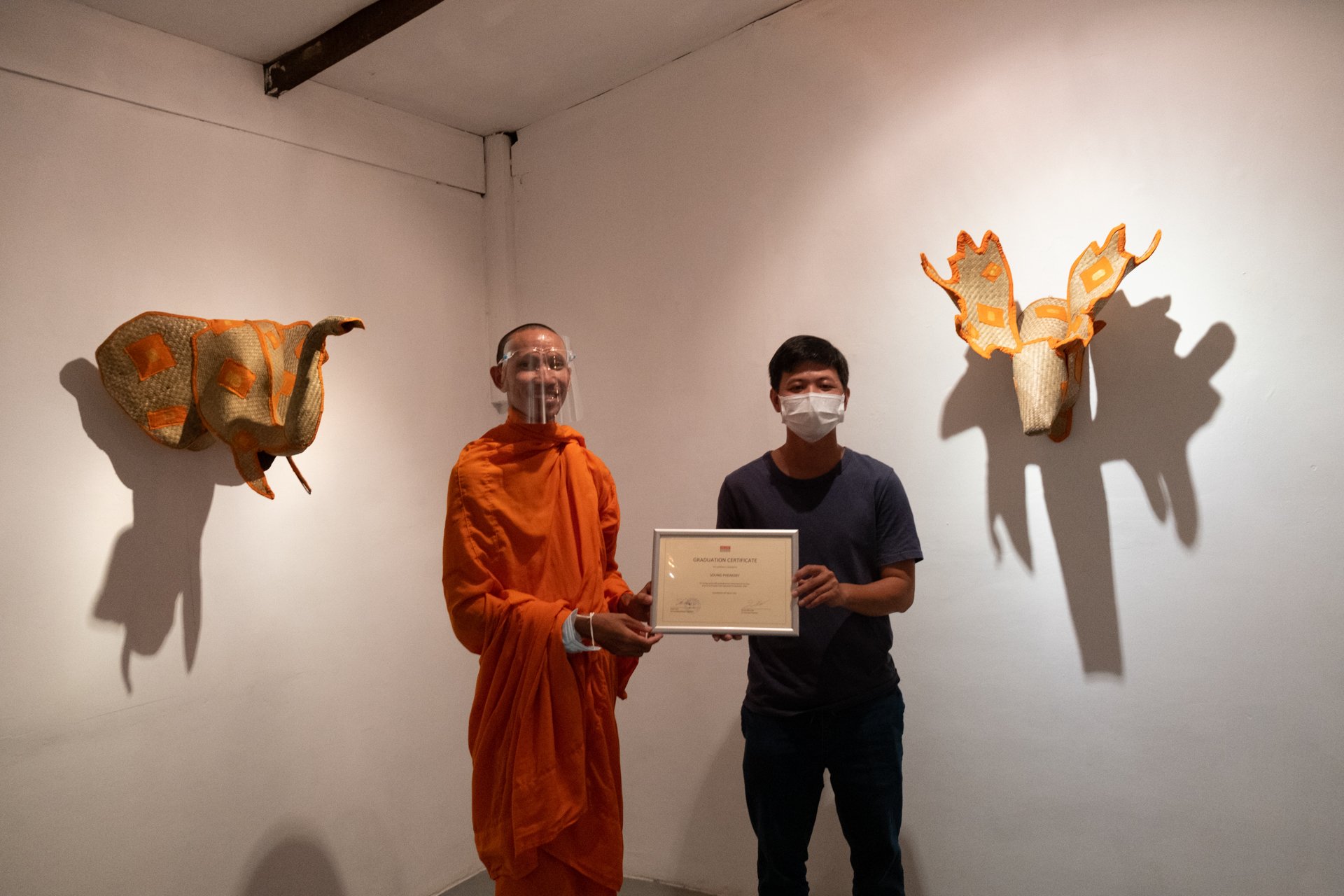
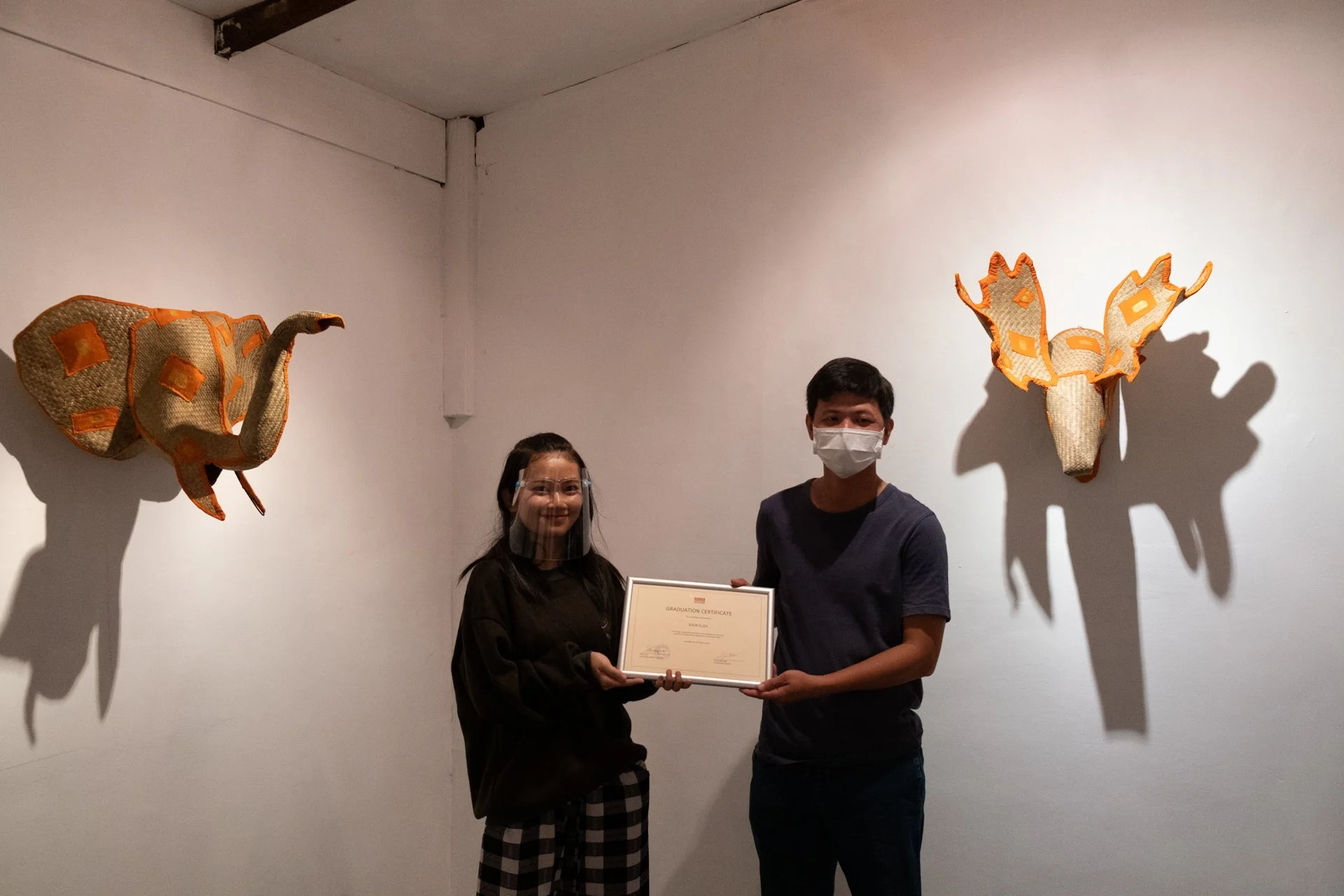
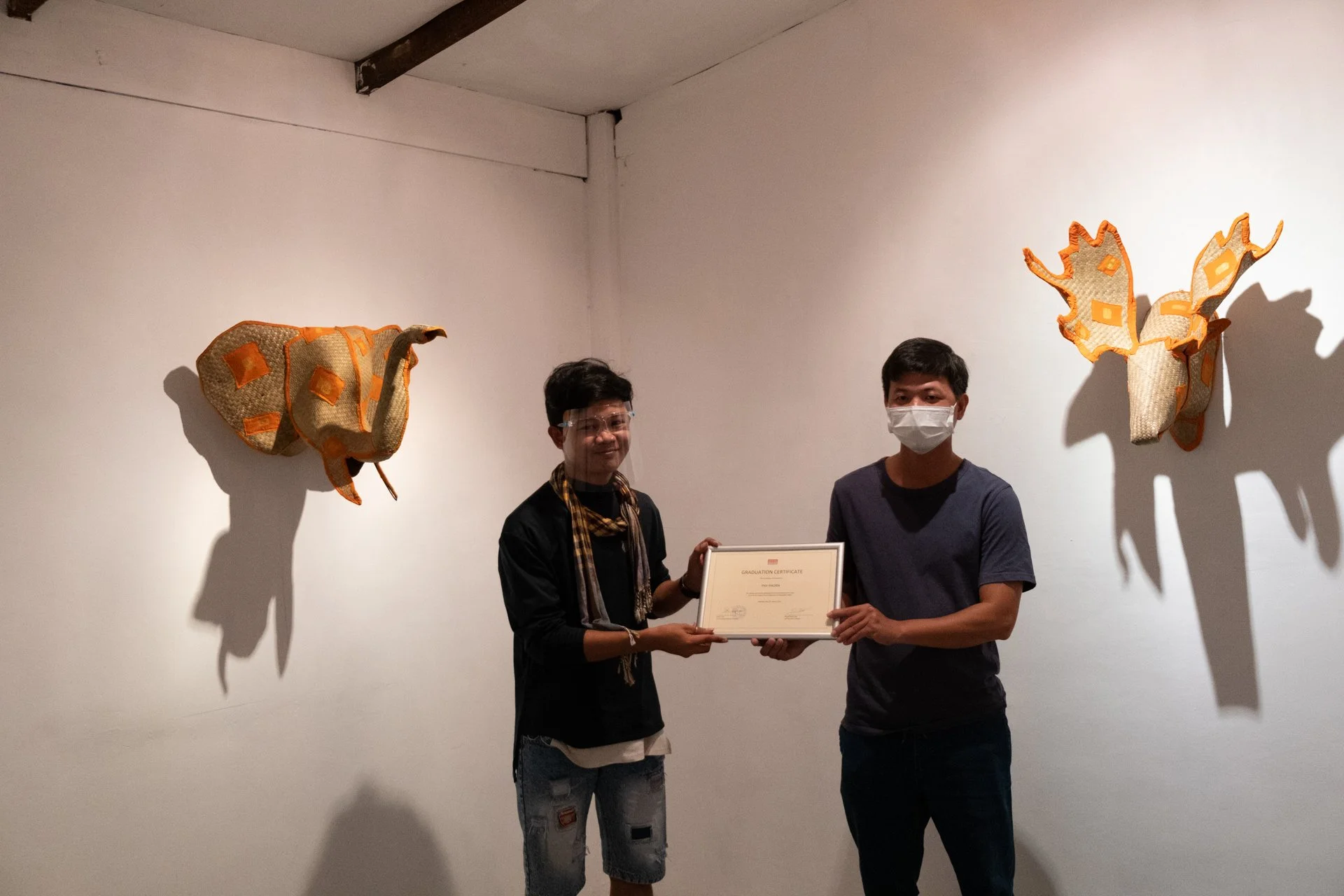
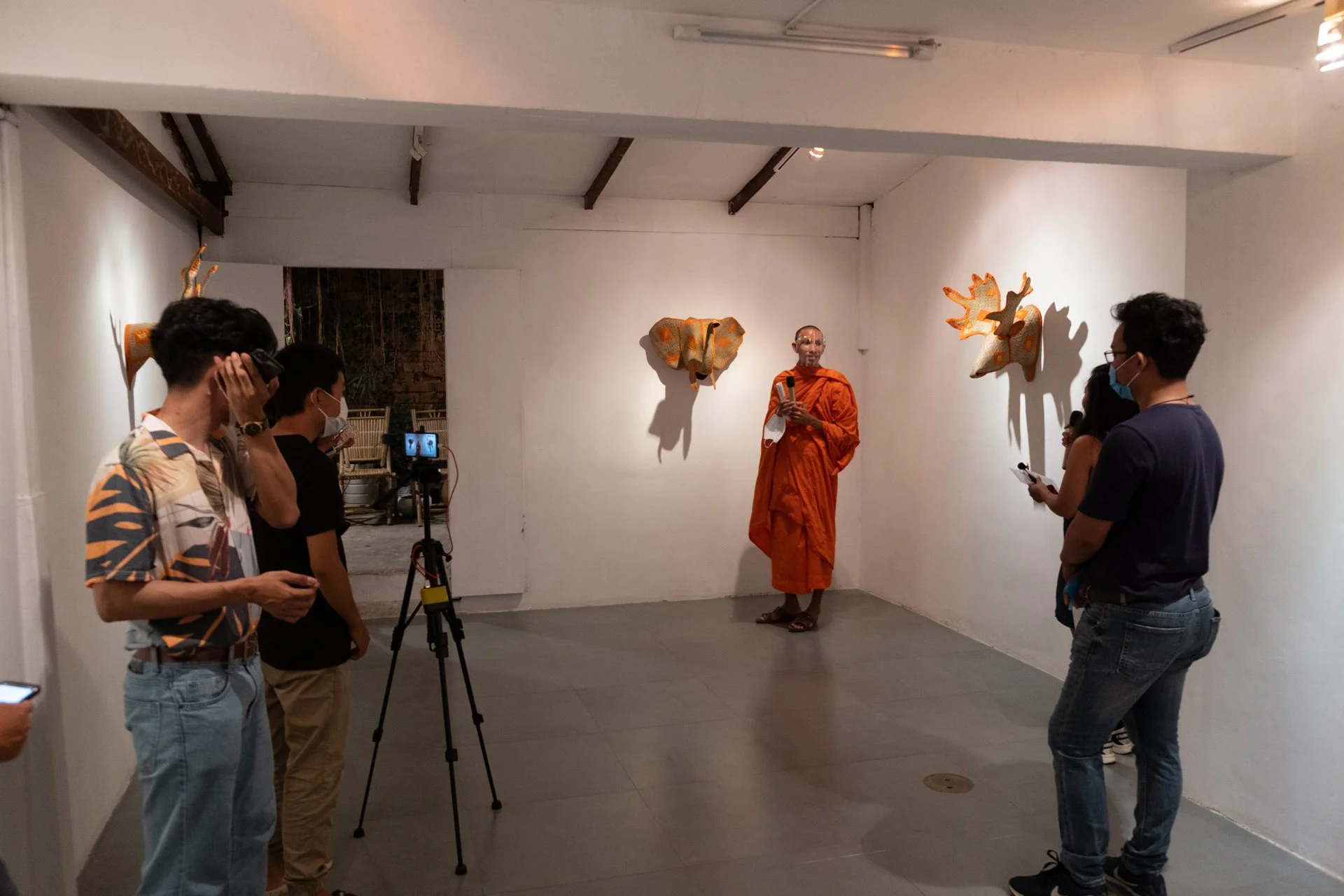
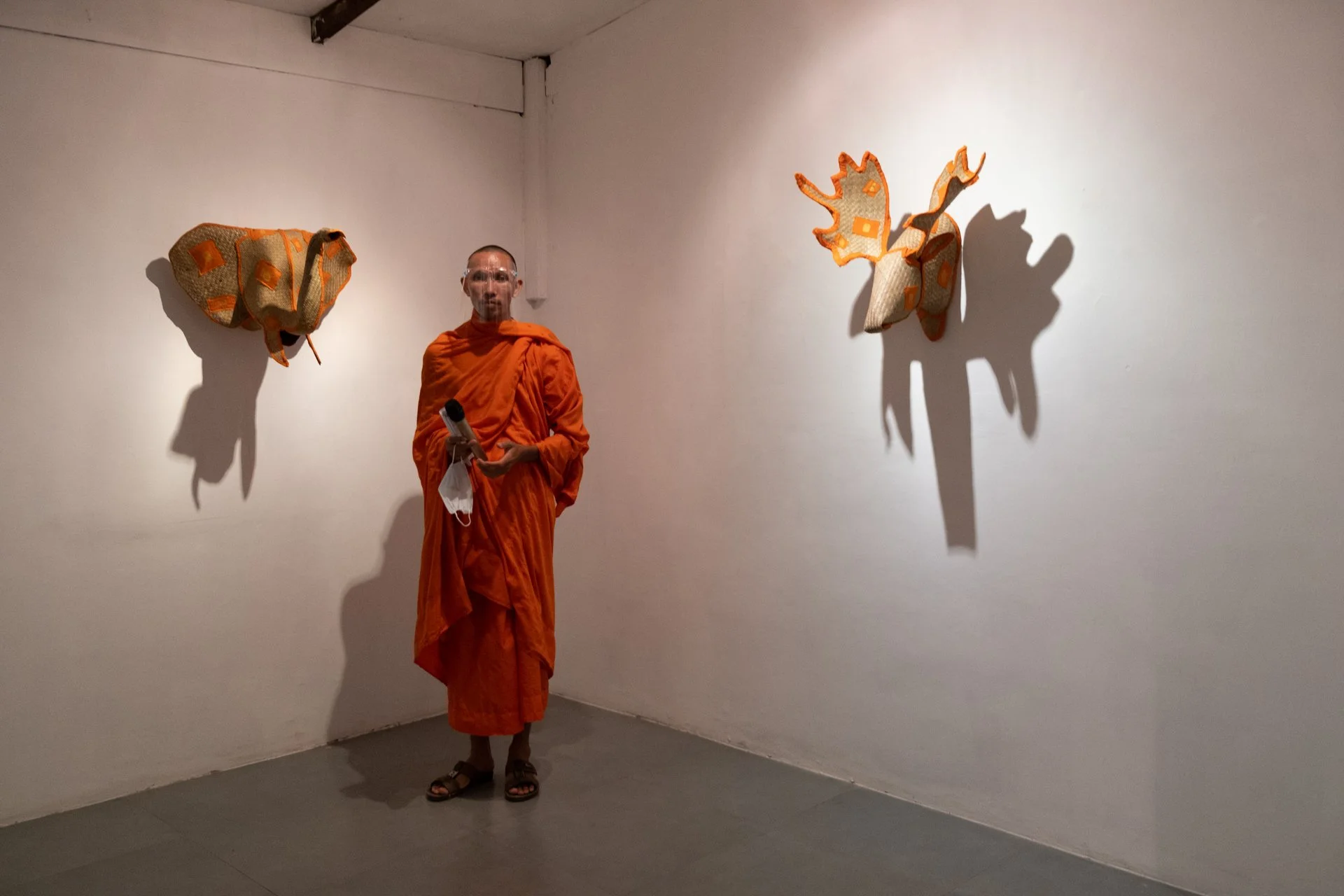
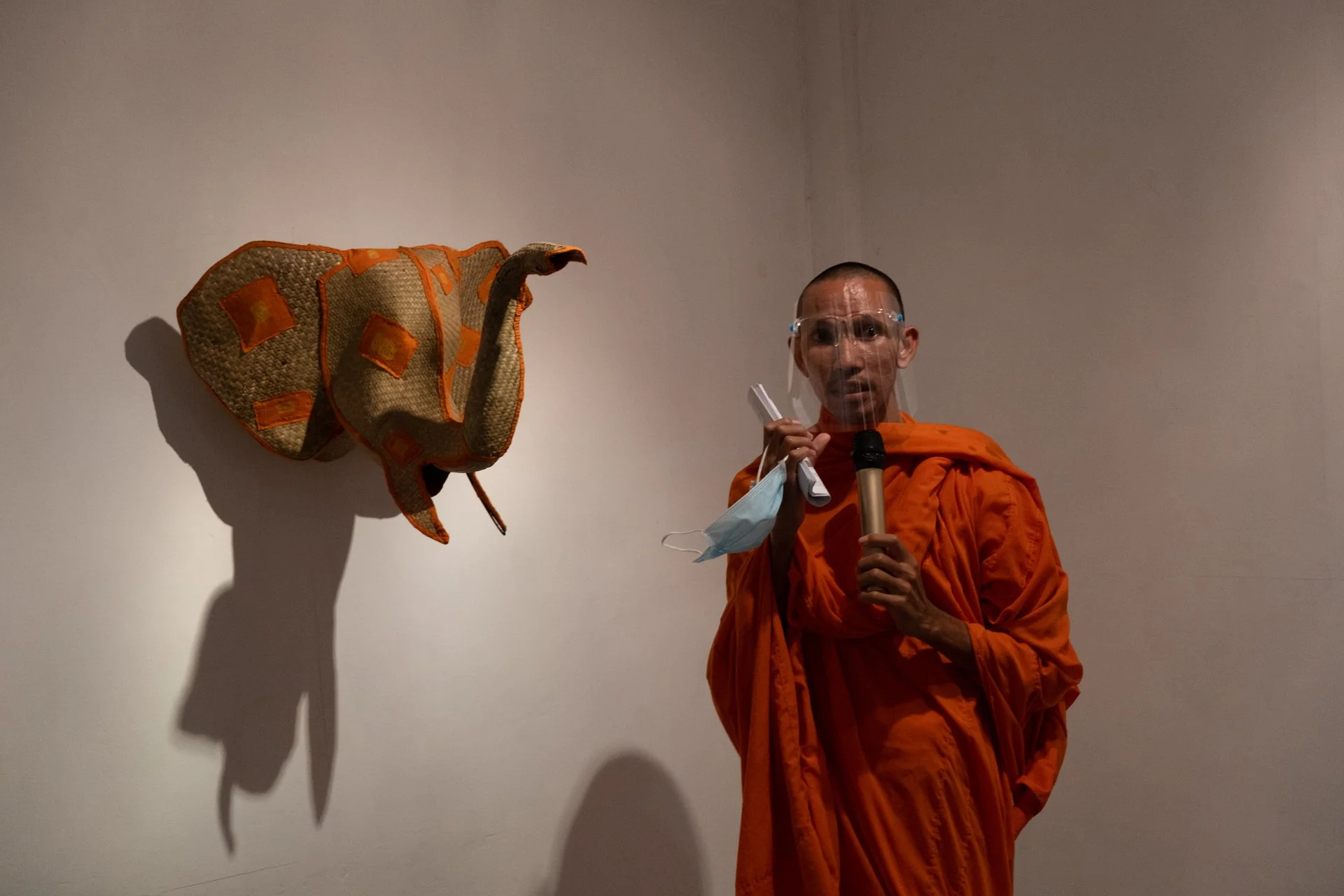
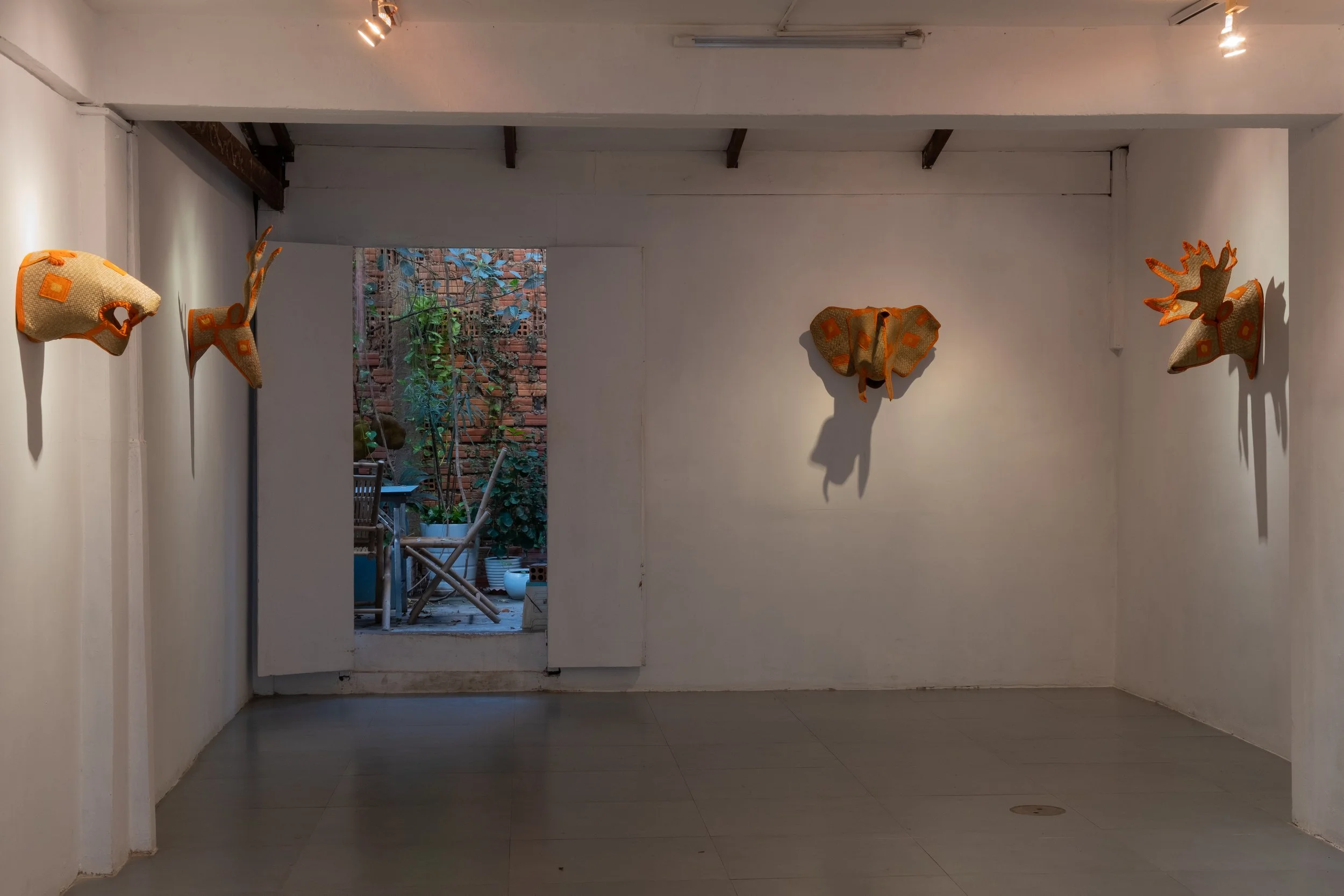
Patch, 2021
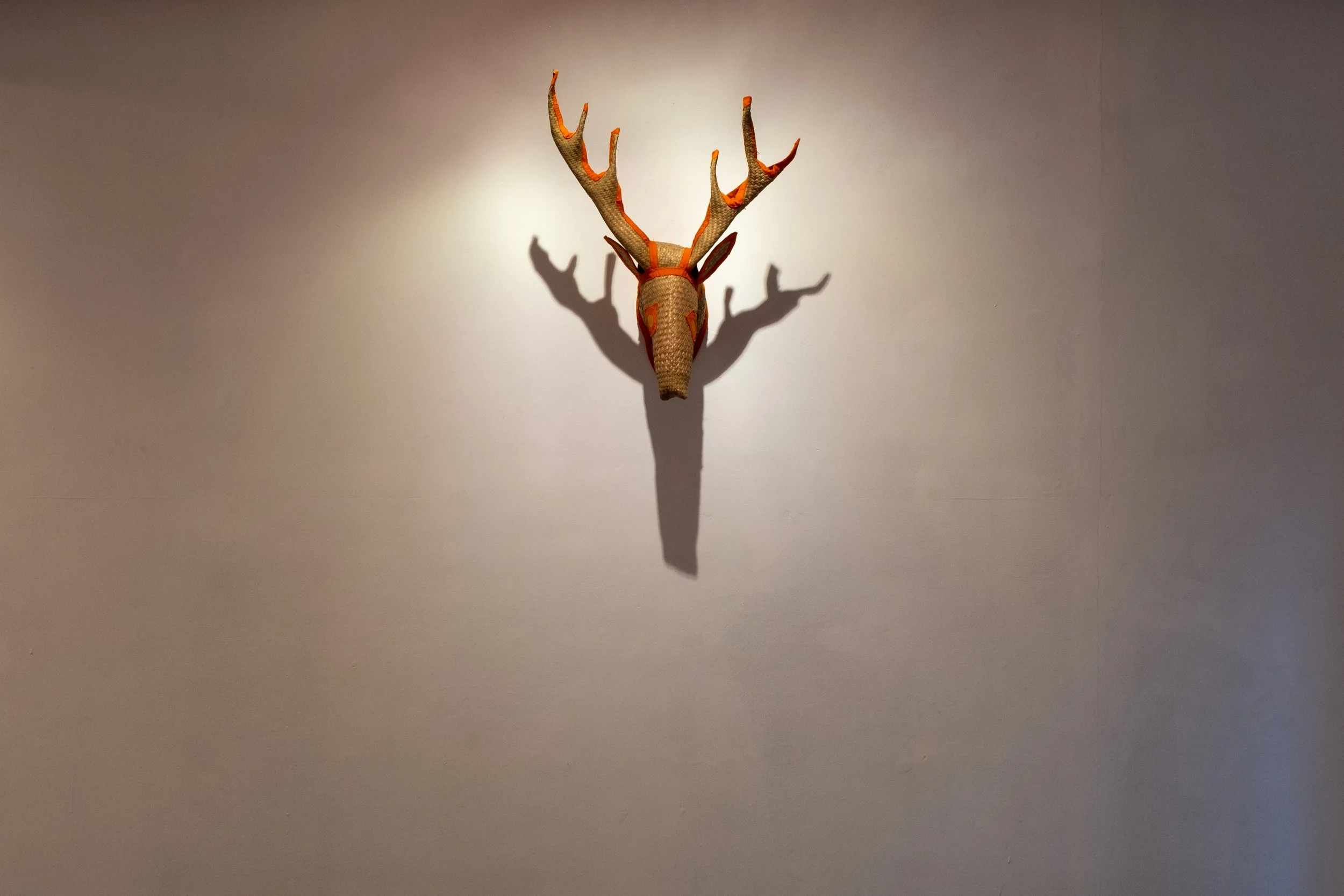
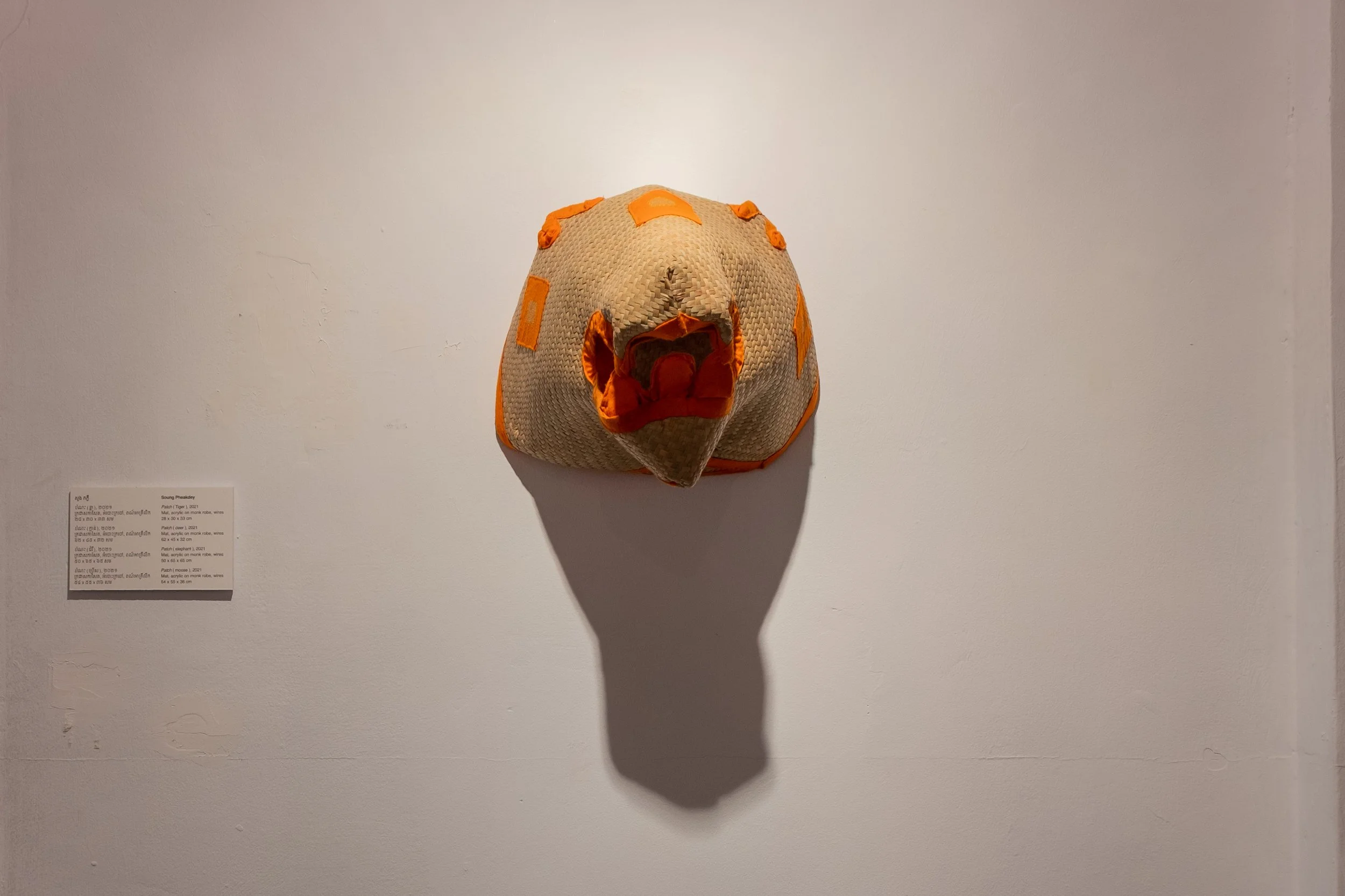
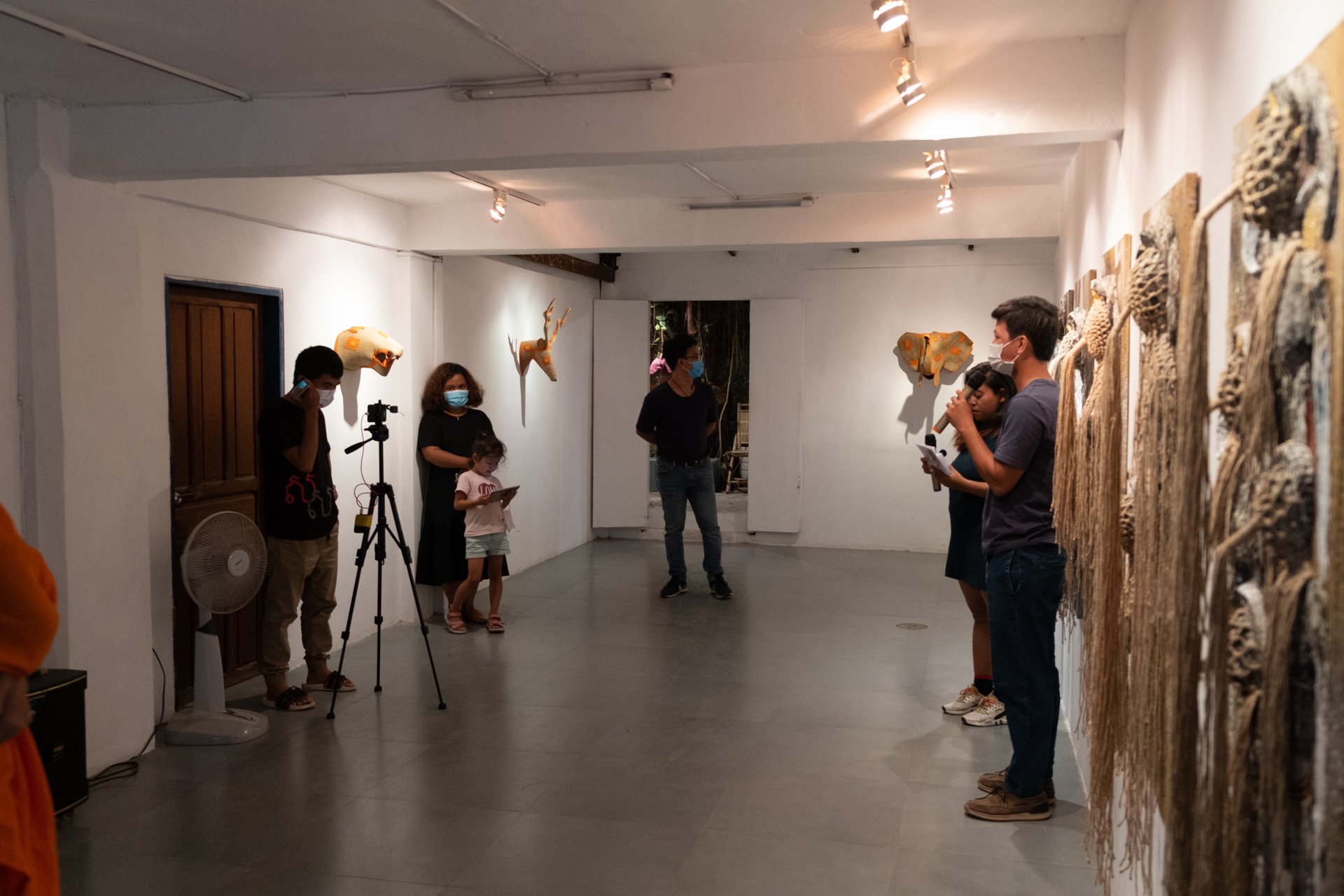
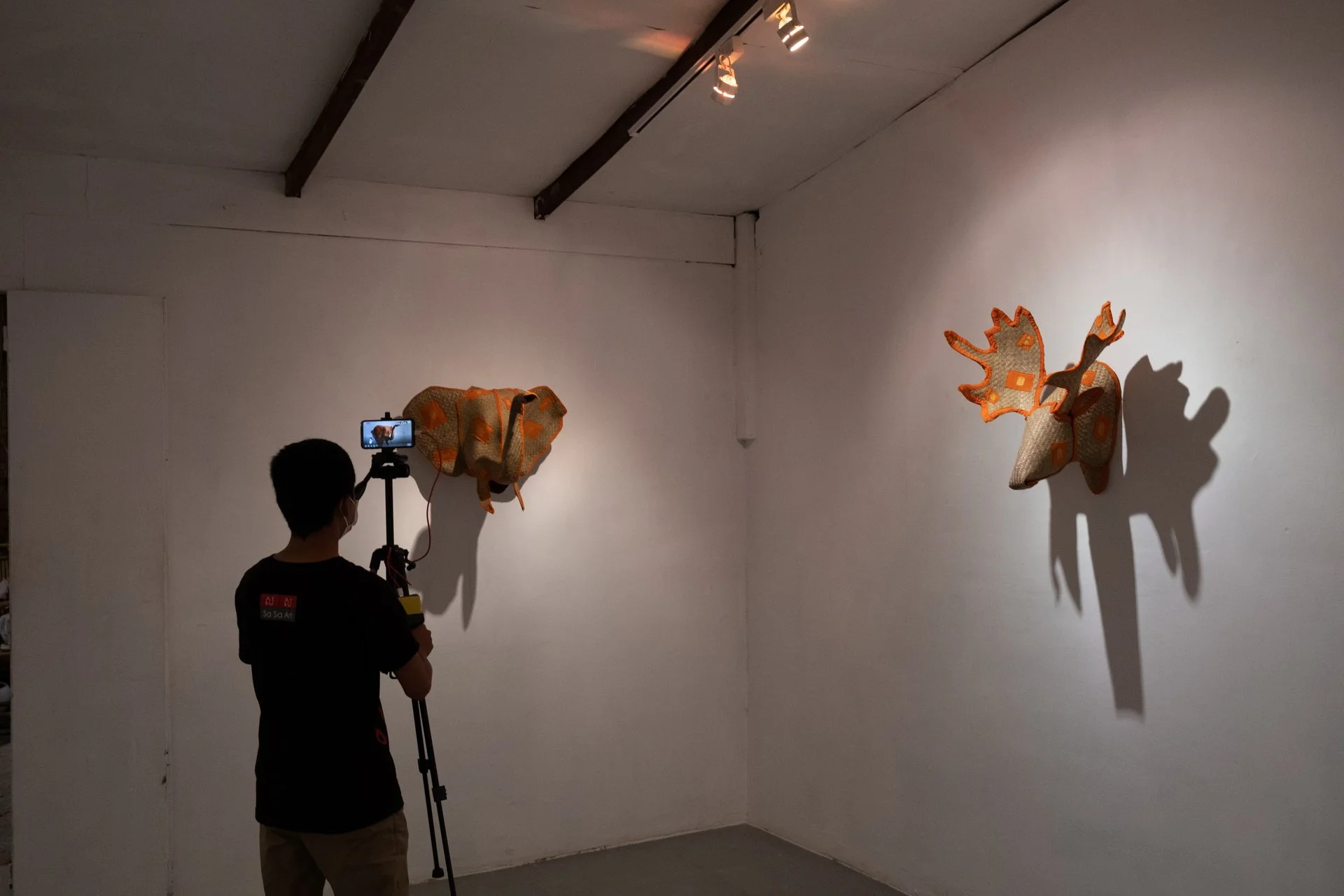
The biodiversity of wildlife and forests are sources of life on earth. They are wonderful aspects of earth that have specific and essential roles such as protecting ecosystems, economics, food, oxygen, water, purification, pollution, carbon storage and creating land’s nutrition and so on. In addition to wildlife’s and forests’ importance for human health, they also have innate values, like spiritual aesthetics and recreation. Despite their necessity, agriculture, logging, hunting and development are major threats – and destruction of these habitats occurs worldwide. This problem is having a significant impact on Asia, where deforestation is increasing rapidly. “Imagine our economy and society if we lost them.” The continued existence of humanity on earth and the eradication of global poverty depend on the recognition of the natural environment or biodiversity as the basis of a strong economy. “Do not buy short-term economic prosperity at the expense of biodiversity, which is a long-term economy.” For this work, I chose my art by assembling animal heads that represents corpses and loss.
Ing Porlin
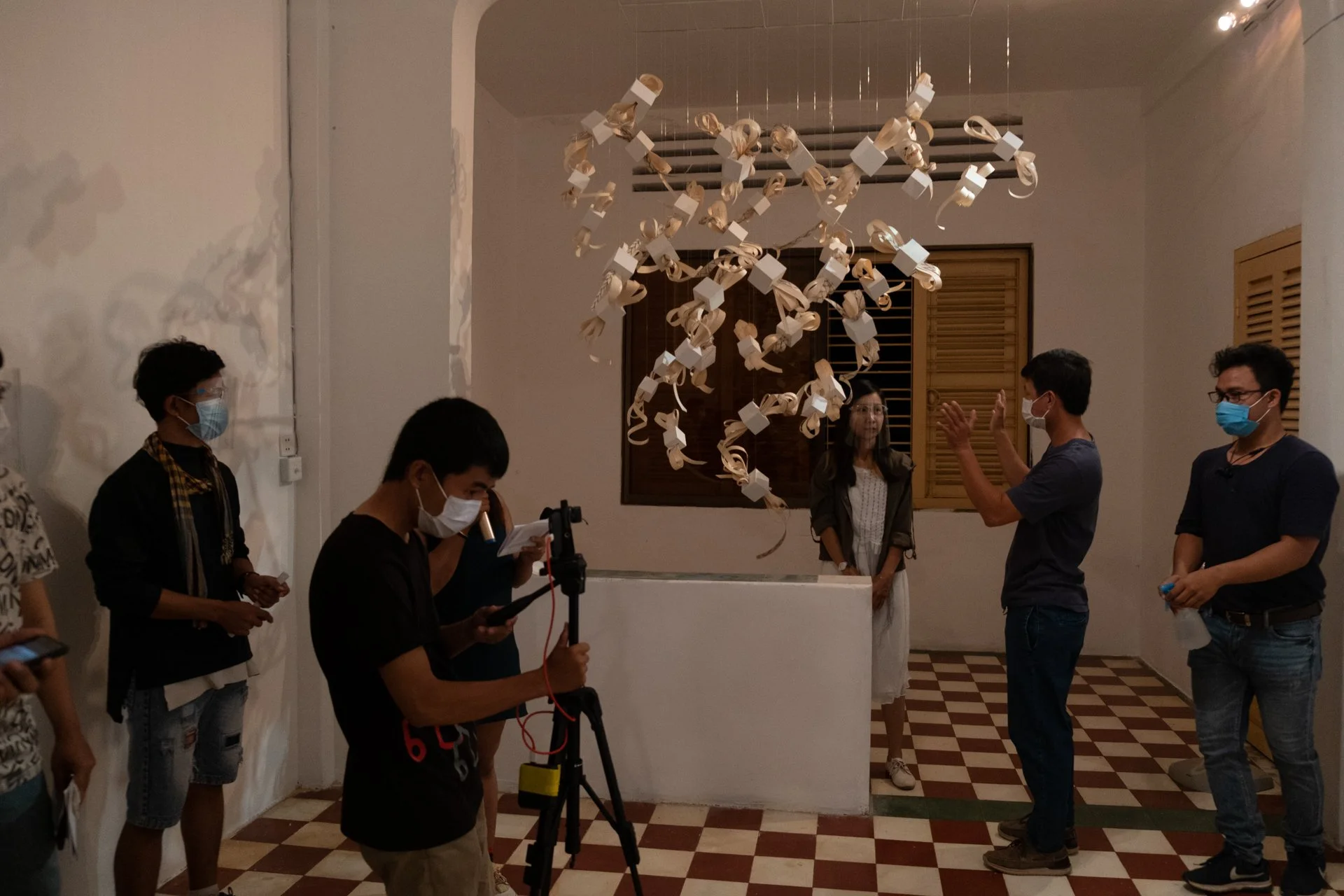
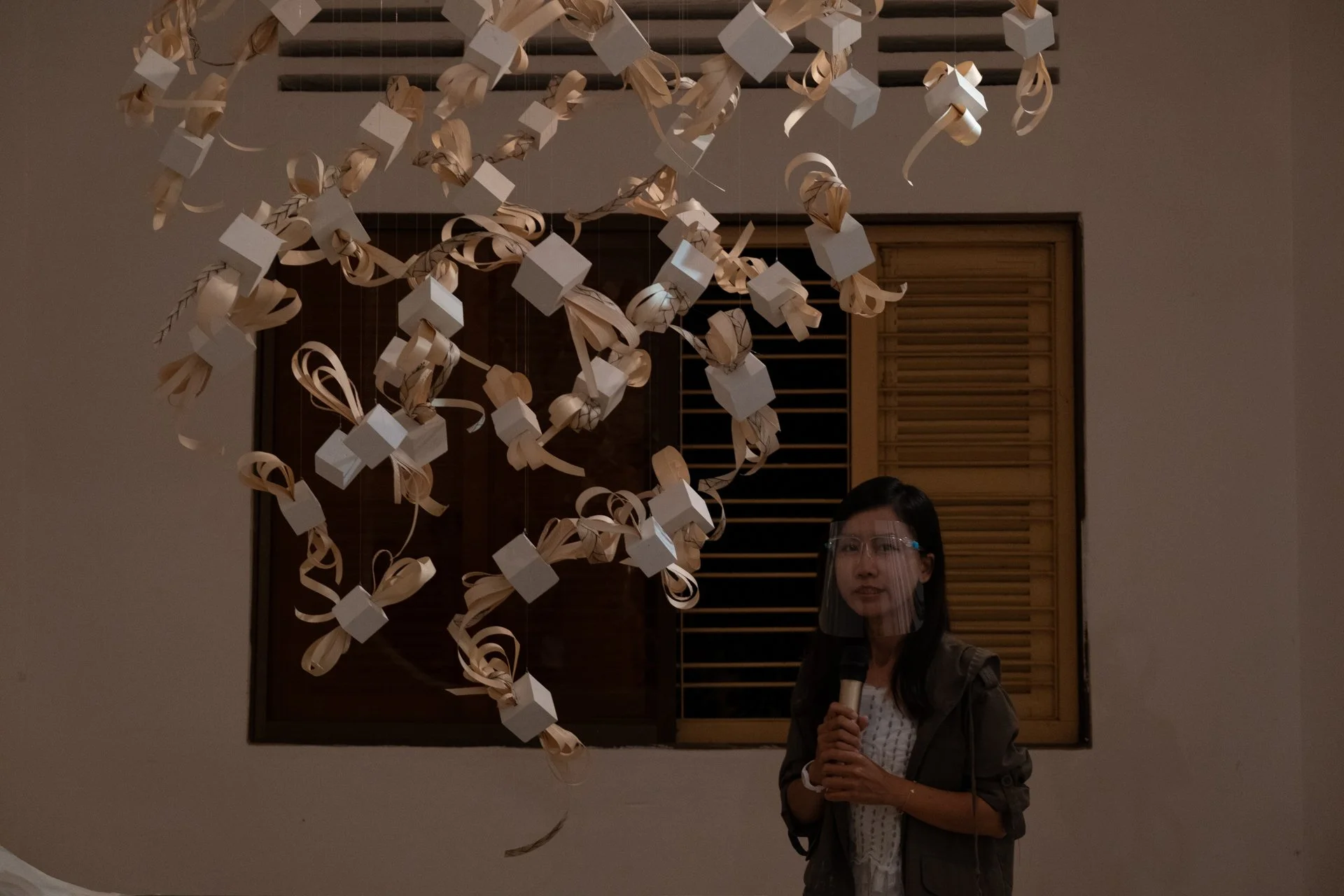
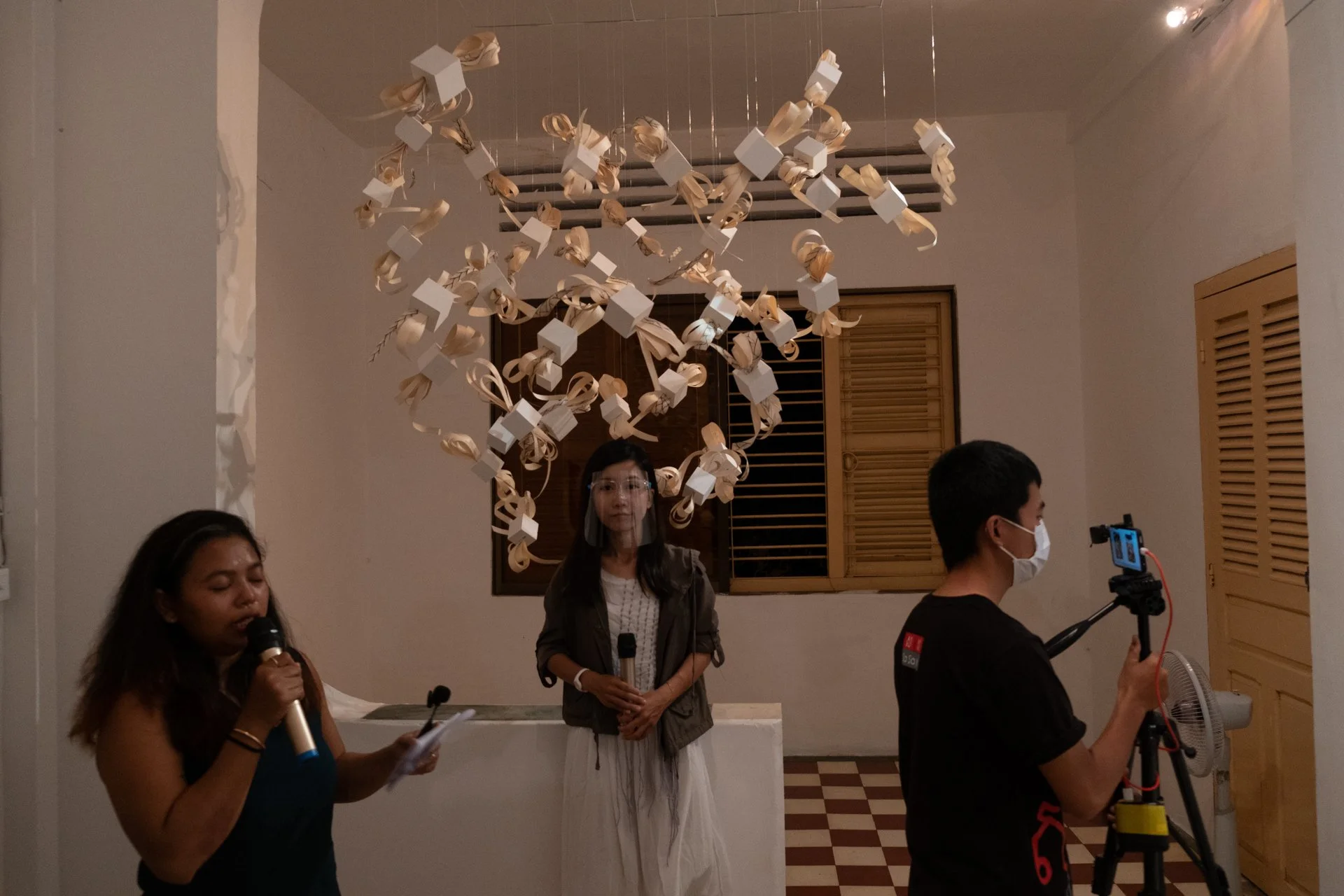
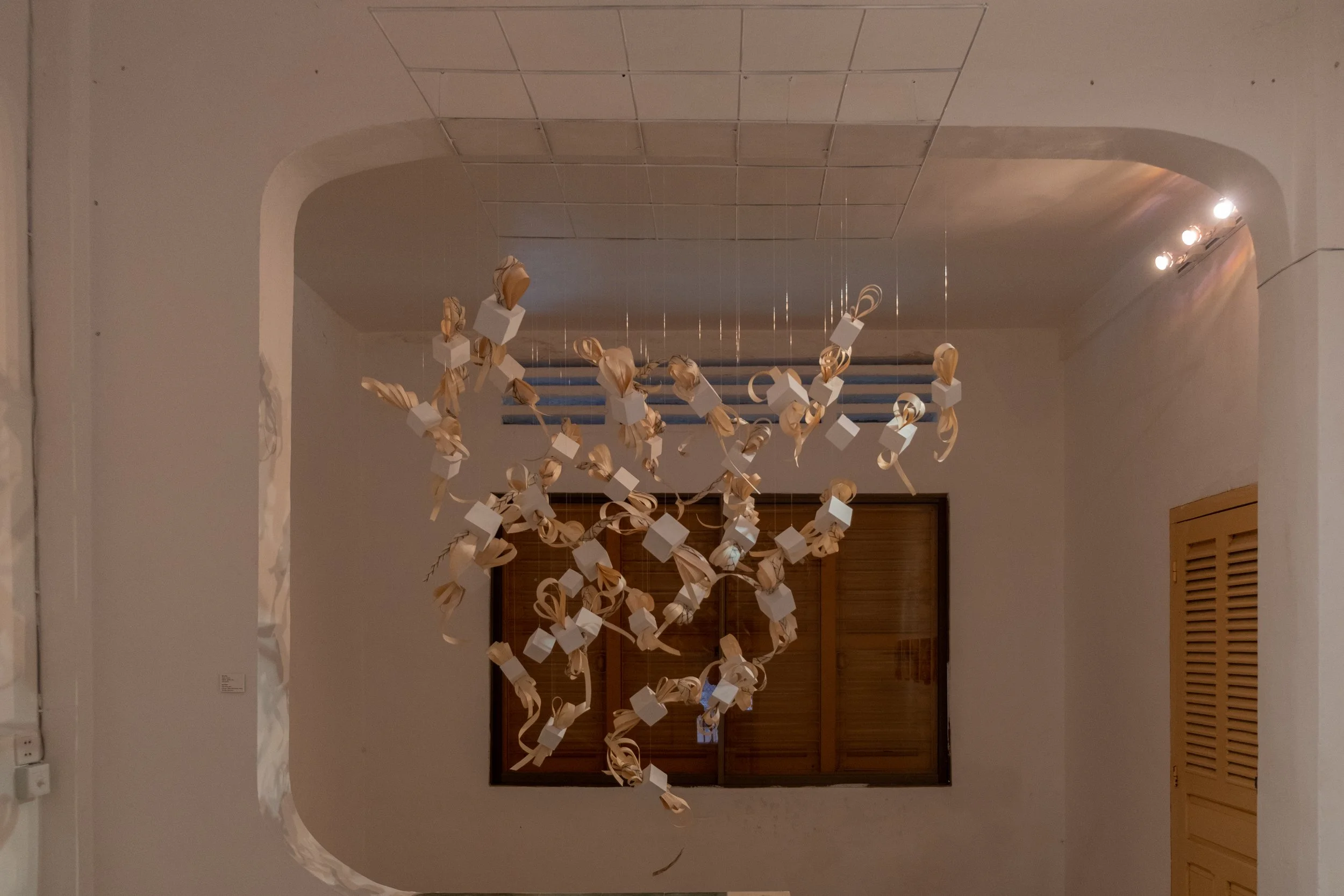
Kam Rong, 2021
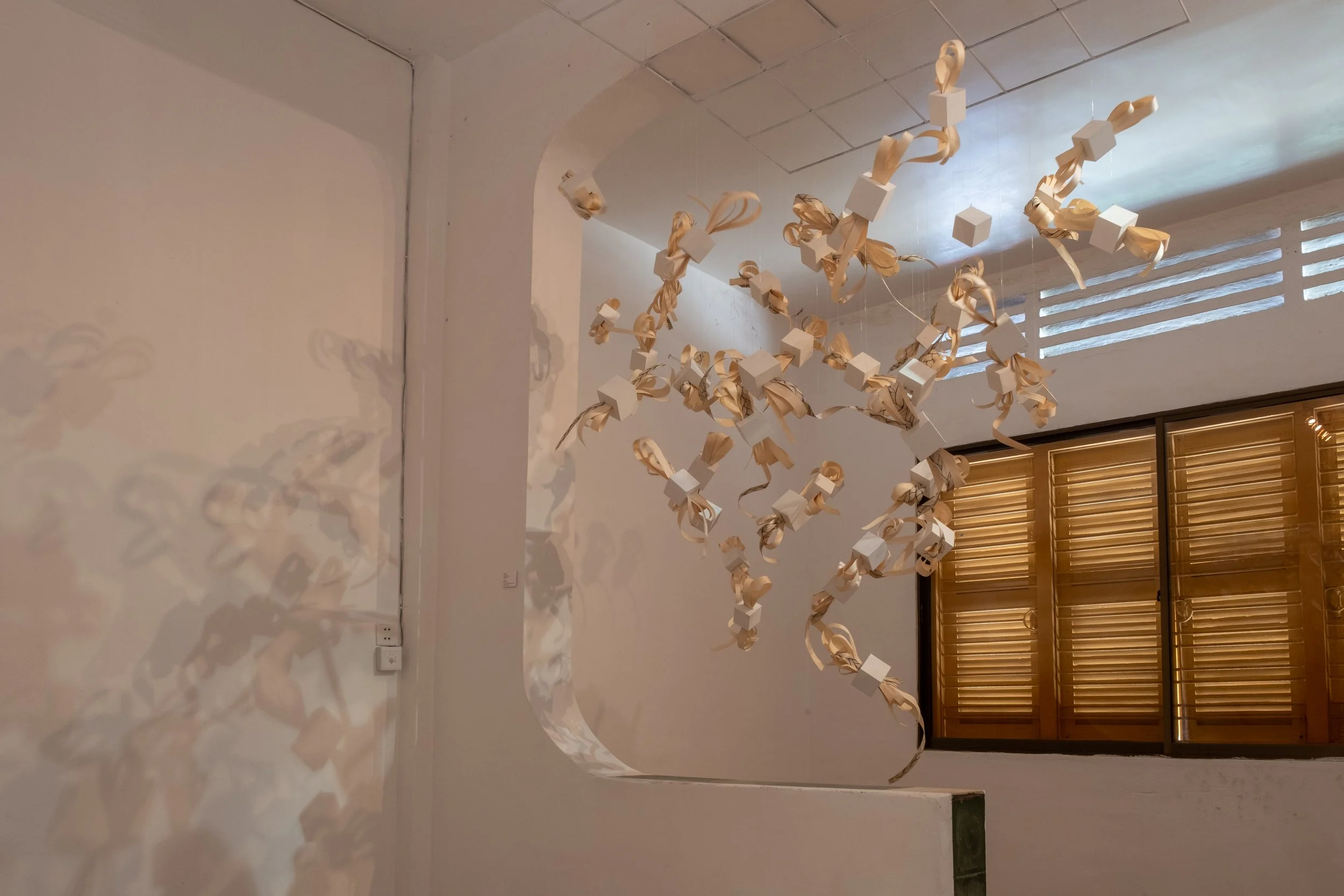
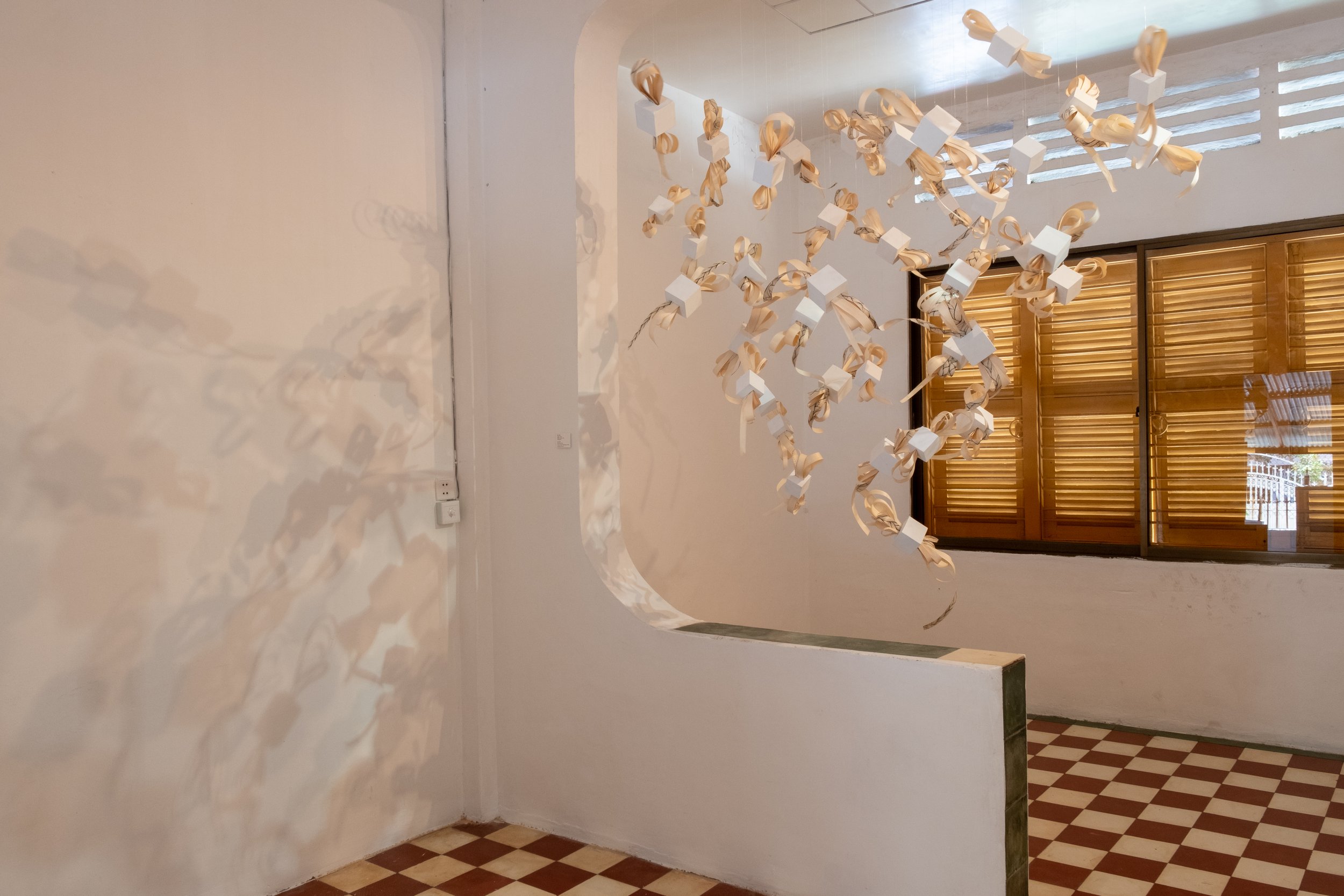
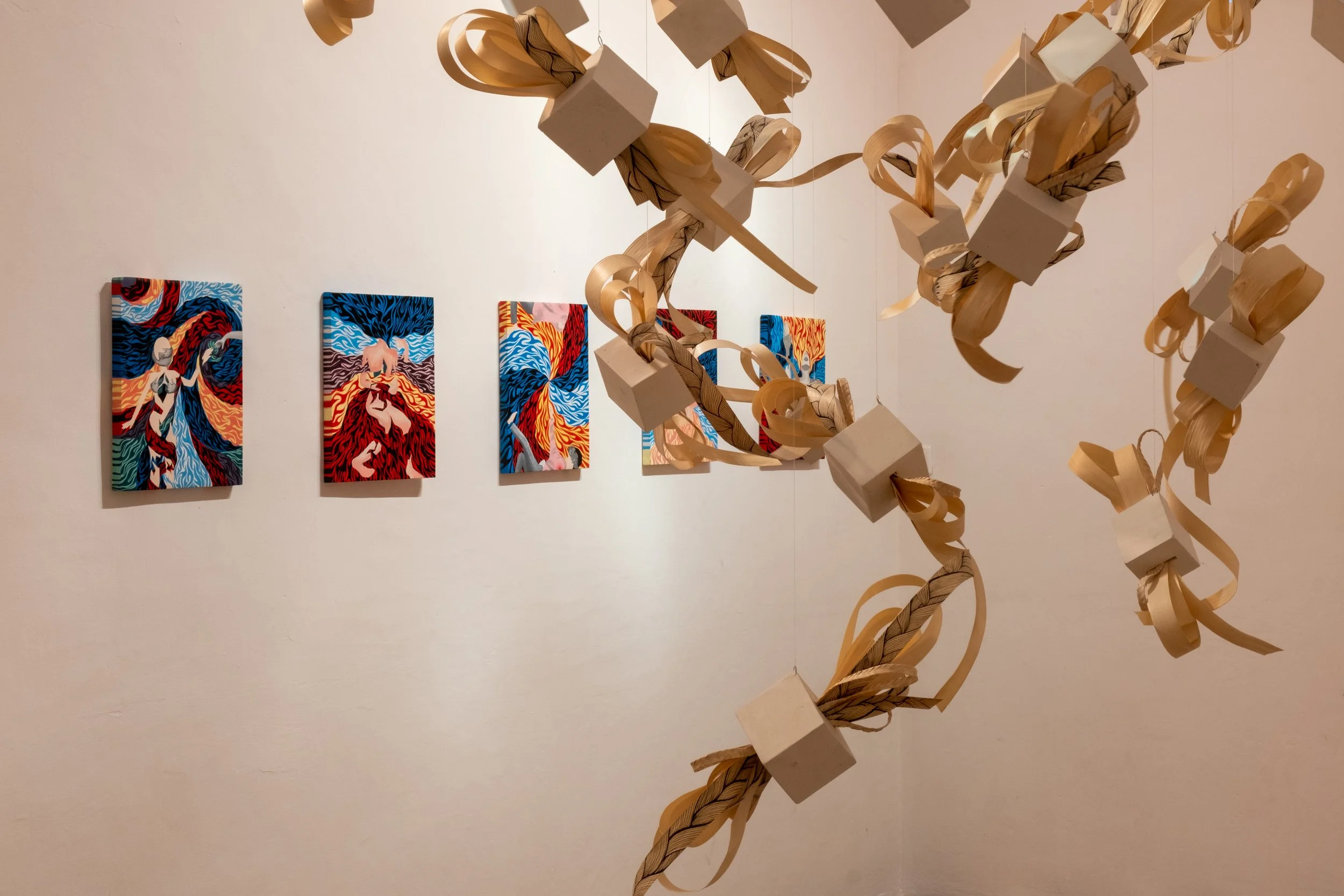
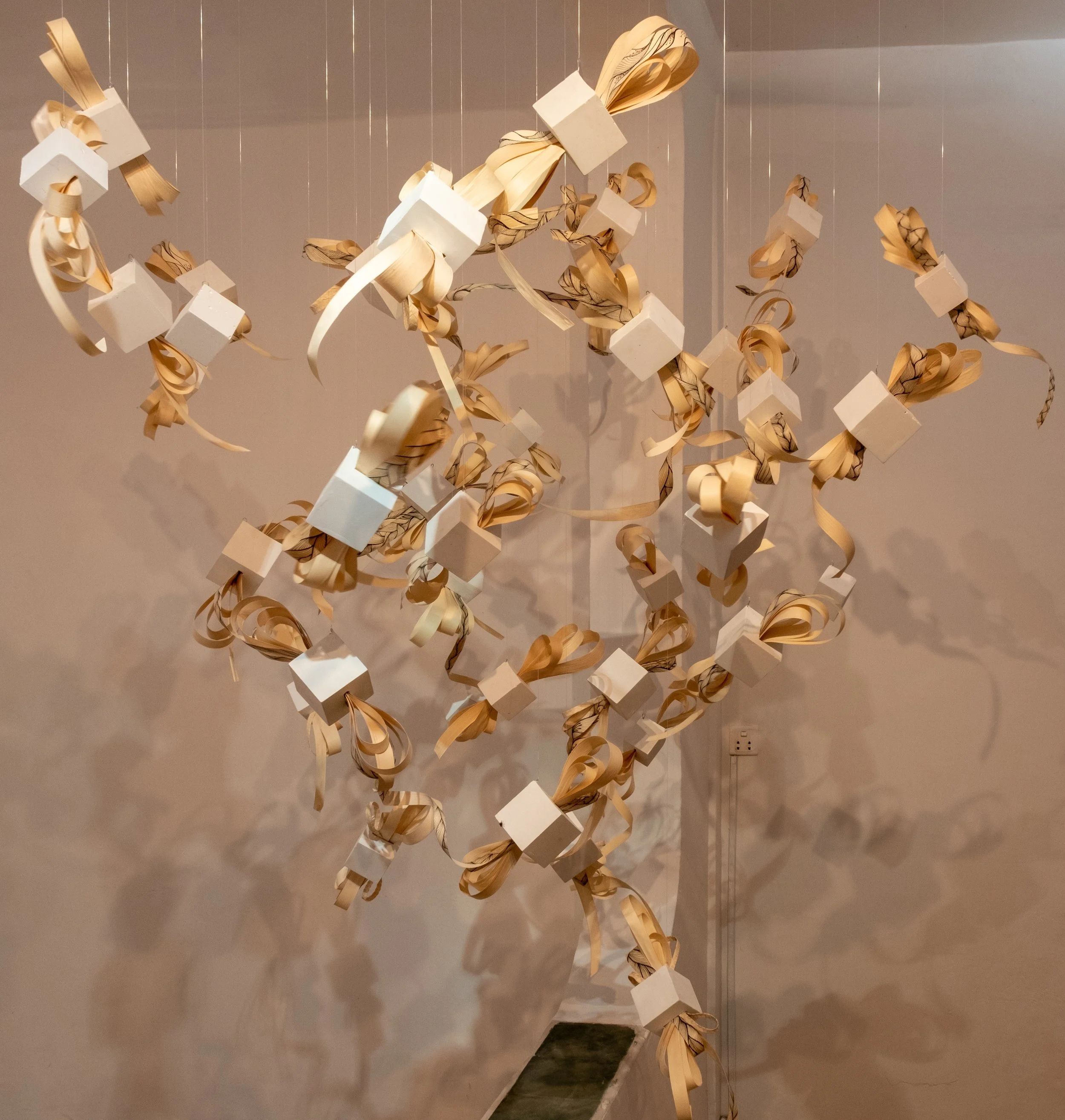
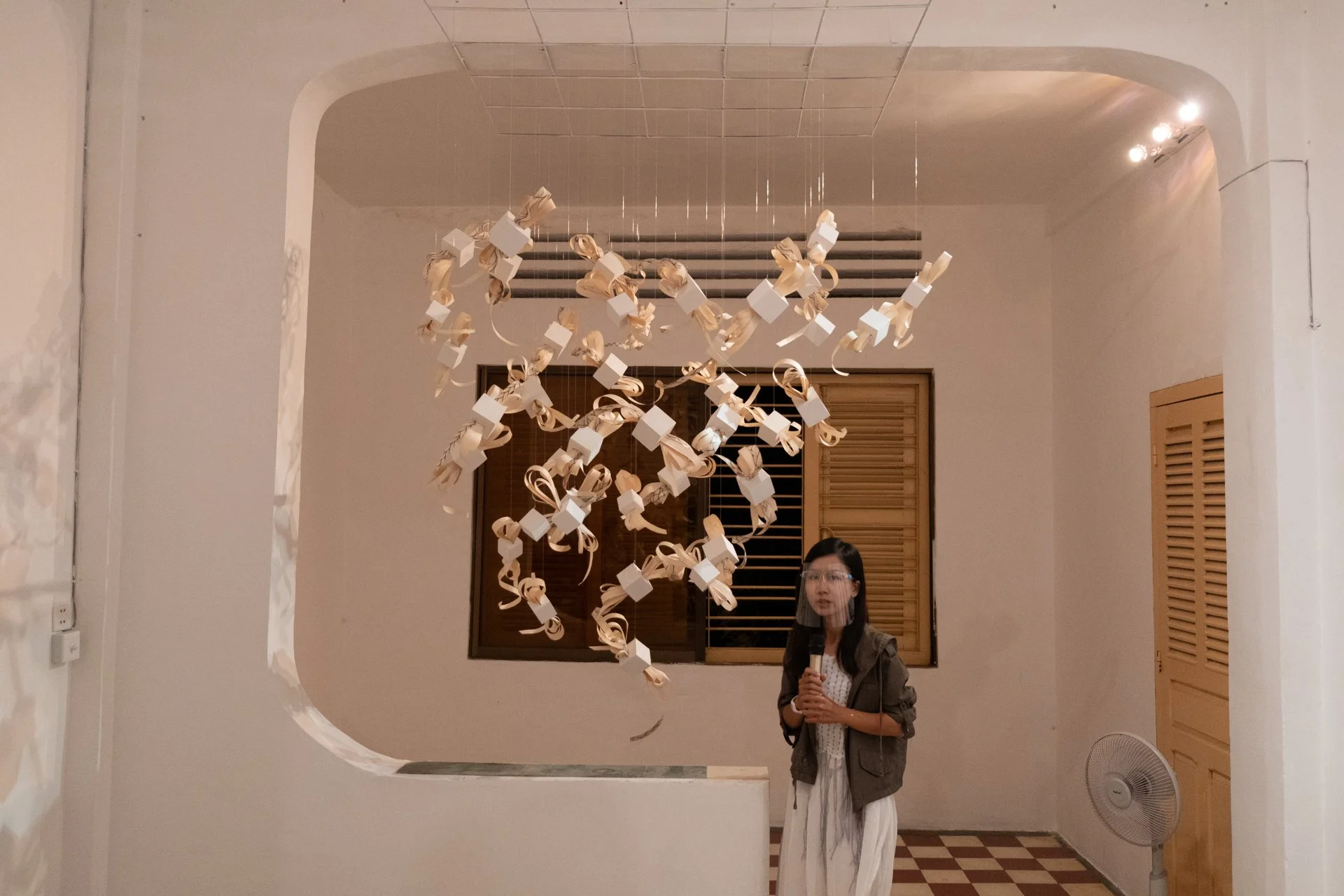
Throughout its history, Cambodia has gone through many wars and regime changes. In almost every field this caused the loss of many documents through fires and wartime destruction such as during the Longvek and Khmer Rouge wars. After the end of the war, in the last 40 years, our country has developed the economy, tourism, urbanization and modern media but in the field of education we still have a shortage of documents to study and research with regards to libraries and media. Society in general is rich with documents translated from foreign languages. Slek Rith manuscripts used to play an important role in documenting ancient times. They are however rarely used in religious texts, so I created this “Kam Rong” artwork using manuscripts to encourage people to come together to promote the re-documentation of our society. Obviously, documenting is not just the work of a single group of researchers. Everyone has a meaningful life experience to share, it can be knowledge, skills, accomplishments or important events that everyone goes through in life. The compilation and sharing of all individuals is very influential in our society, from one person to another and from one generation to the next. We should ask ourselves what we want to share and leave something meaningful for today’s society and future generations.
The biodiversity of wildlife and forests are sources of life on earth. They are wonderful aspects of earth that have specific and essential roles such as protecting ecosystems, economics, food, oxygen, water, purification, pollution, carbon storage and creating land’s nutrition and so on. In addition to wildlife’s and forests’ importance for human health, they also have innate values, like spiritual aesthetics and recreation. Despite their necessity, agriculture, logging, hunting and development are major threats – and destruction of these habitats occurs worldwide. This problem is having a significant impact on Asia, where deforestation is increasing rapidly. “Imagine our economy and society if we lost them.” The continued existence of humanity on earth and the eradication of global poverty depend on the recognition of the natural environment or biodiversity as the basis of a strong economy. “Do not buy short-term economic prosperity at the expense of biodiversity, which is a long-term economy.” For this work, I chose my art by assembling animal heads that represents corpses and loss.
About the artists
KEO Pheak (born 1991) from Battambang. She is an exhibition coordinator. In 2012 she went to visual art at Phare Ponleu Selpak. Her currently living in Phnom Penh and passionate about contemporary performance art. She also doing research about environmental issues, shared education, and recycle. For her artwork is focusing on women’s, social-environmental issues and discrimination on the basis of race.
KOUCH Kimchour (born in 1996) is a young emerging artist from Siem Reap province. He graduated in department of interior design from Royal University of Fine Art in 2019. He is an assistant interior design of architect. After studied at Contemporary Art Class, it’s given him more knowledge on human livelihood. He is interested in the event that happened in society the people environment and technology.
CHEA Chansoksambath is currently a senior in Computer Science at NIPTICT who also has his fair share of interest in exploring his artistic side, with the vision to tell stories using mixed media. He also has had many experiences in project design and implementation, environment, and sustainability.
PHE Phearom (born in 1998 from Sihanuk vill) graduated in department of Fine Art from Royal University of Fine Arts in 2019. He is currently work and living in Phnom Penh. He is a freelance interior designer, an architect and a young emerging artist. He is interested in kinetic sculpture which his work focus in moving or alive beauty techniques and technology that related to thesociety issue, the influent of development capacity, climate change, the division of nature, politic, the lost and individualistic.
PHY Phorn (born in 1995 from Siem Reap) is a senior in architecture and urbanis of Royal University of Fine Arts. He studied drawing from Small Art School from 2008-2018 and self taught artist. Most of his works reflect the society and nature through creative painting.
SOUR Eliza (born in 2002) is a freshment in architecture at Norton University. She studied Contemporary Art Class at Sa Sa Art Projects in 2020. She interests in environment, economy, war and human connection.
SOUNG Pheakdey (born in 1996 at in Koh Andet district which locates in Takeo province). He is fourth year student at the Royal University of fine arts in faculties are painting, and University of Indrawichea in law and the Sa sa art project in Contemporary and Documentary photography class 2019.
ING Porlin (born in 1991, Kampong Cham Province) was a student of Architecture and Urban Planning in the Royal University of Fines Art, graduated bachelor degree in 2015. Nowadays, she is working on architectural freelance projects with her team in Phnom Penh. Beside architectural creativities, she likes abstract drawing and DIY craft. Most of her artistic forms are combination of geometric and organic form. She is keen on creating contemporary art works which show about existing problems in society and art concepts that motivates people to have critical thinking of any philosophy, that has it’s value in social development and culture of humanity.