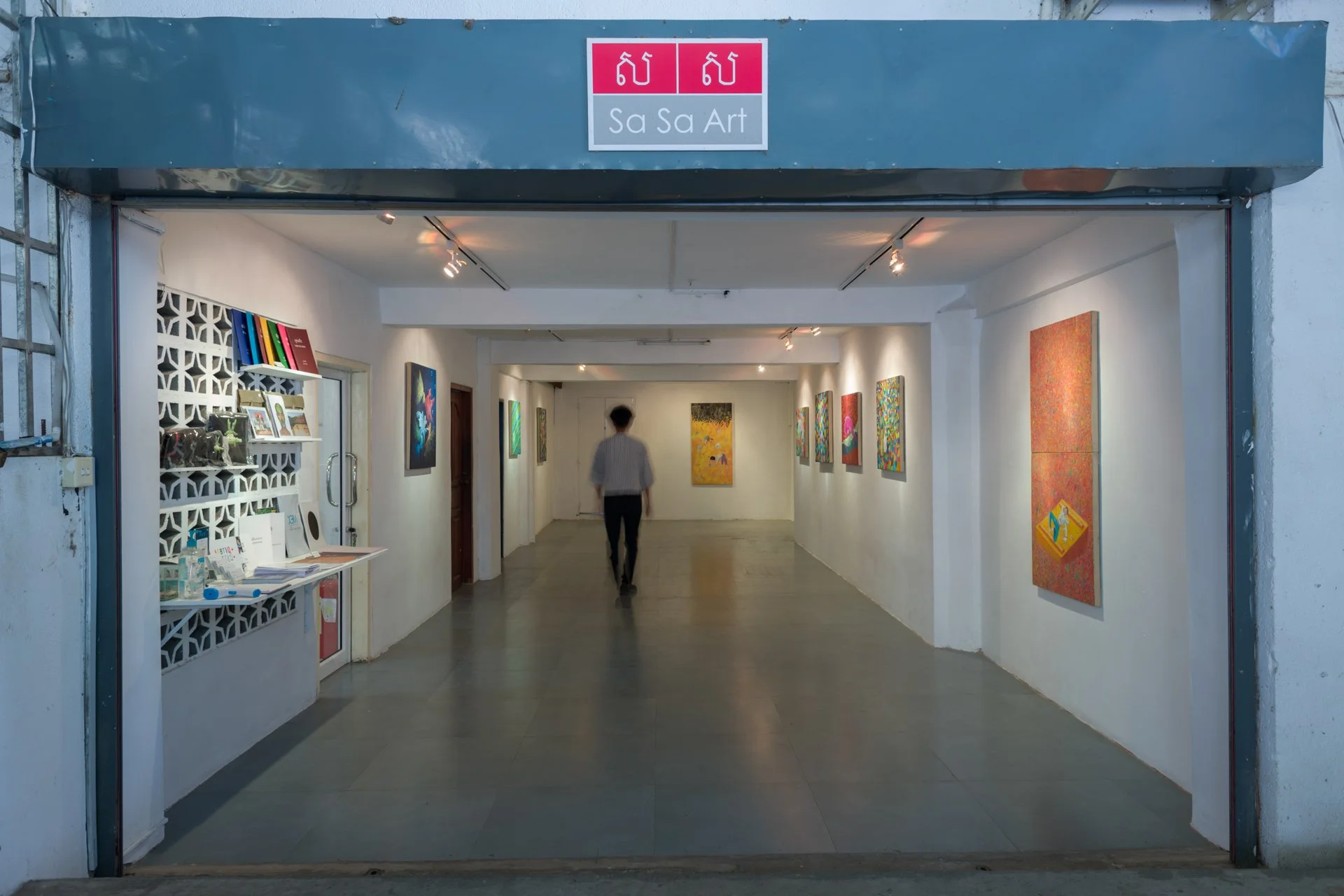
Anonymous Heirloom
By Koeurm Kolab
Opening: Thursday 3rd Dec 2020, 6:00-8:00 pm
Period: 3rd Dec 2020 - 30 Jan 2021
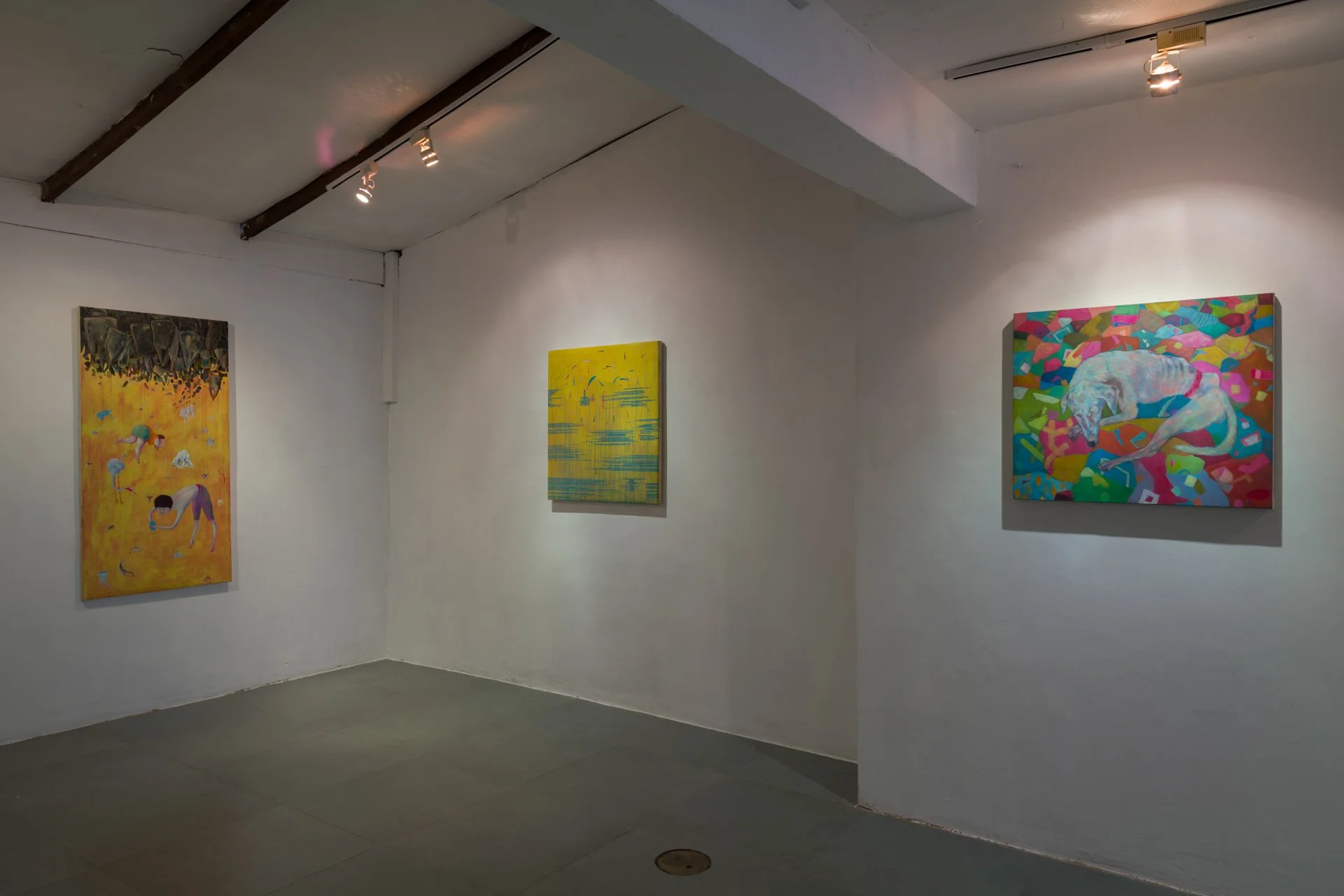
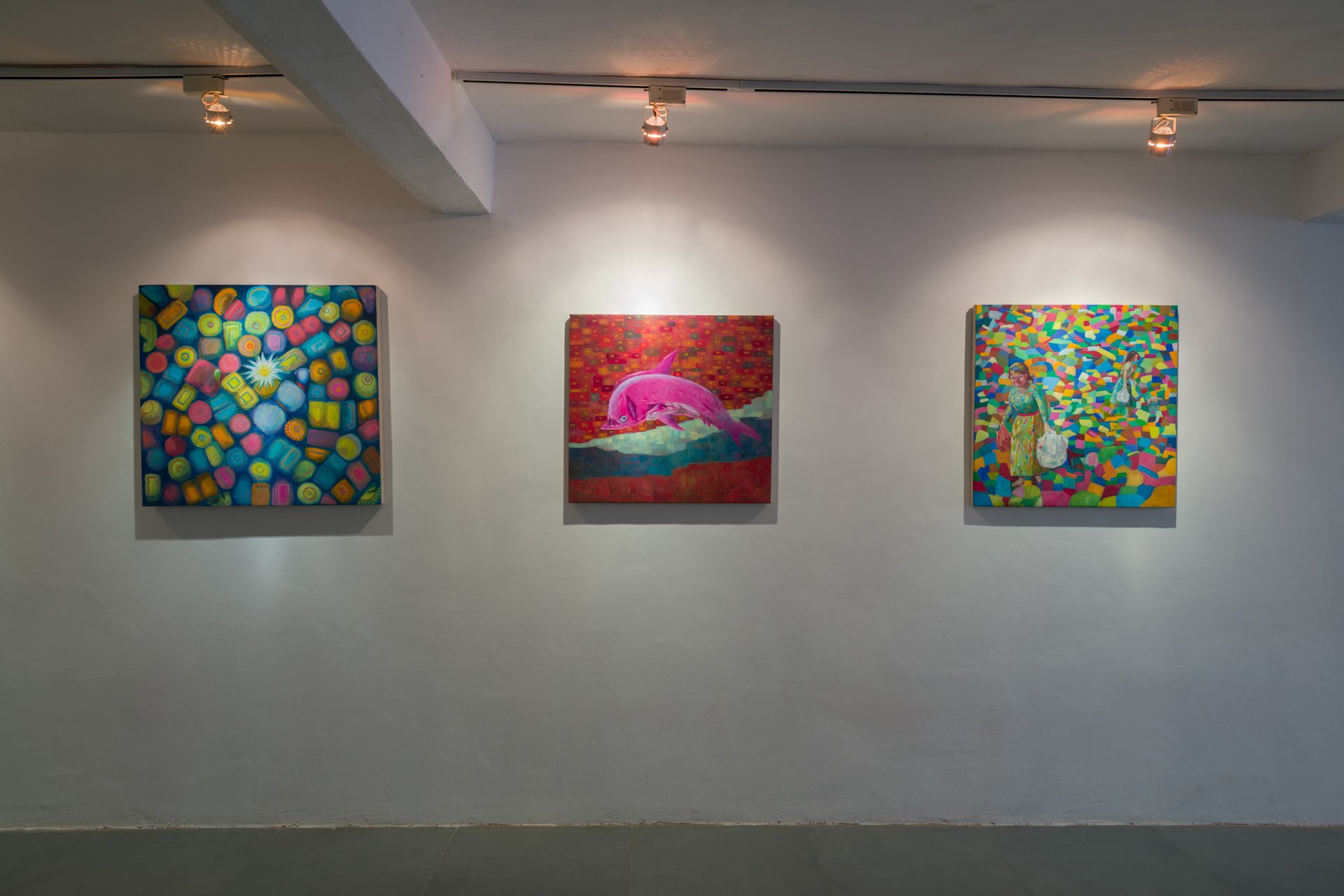
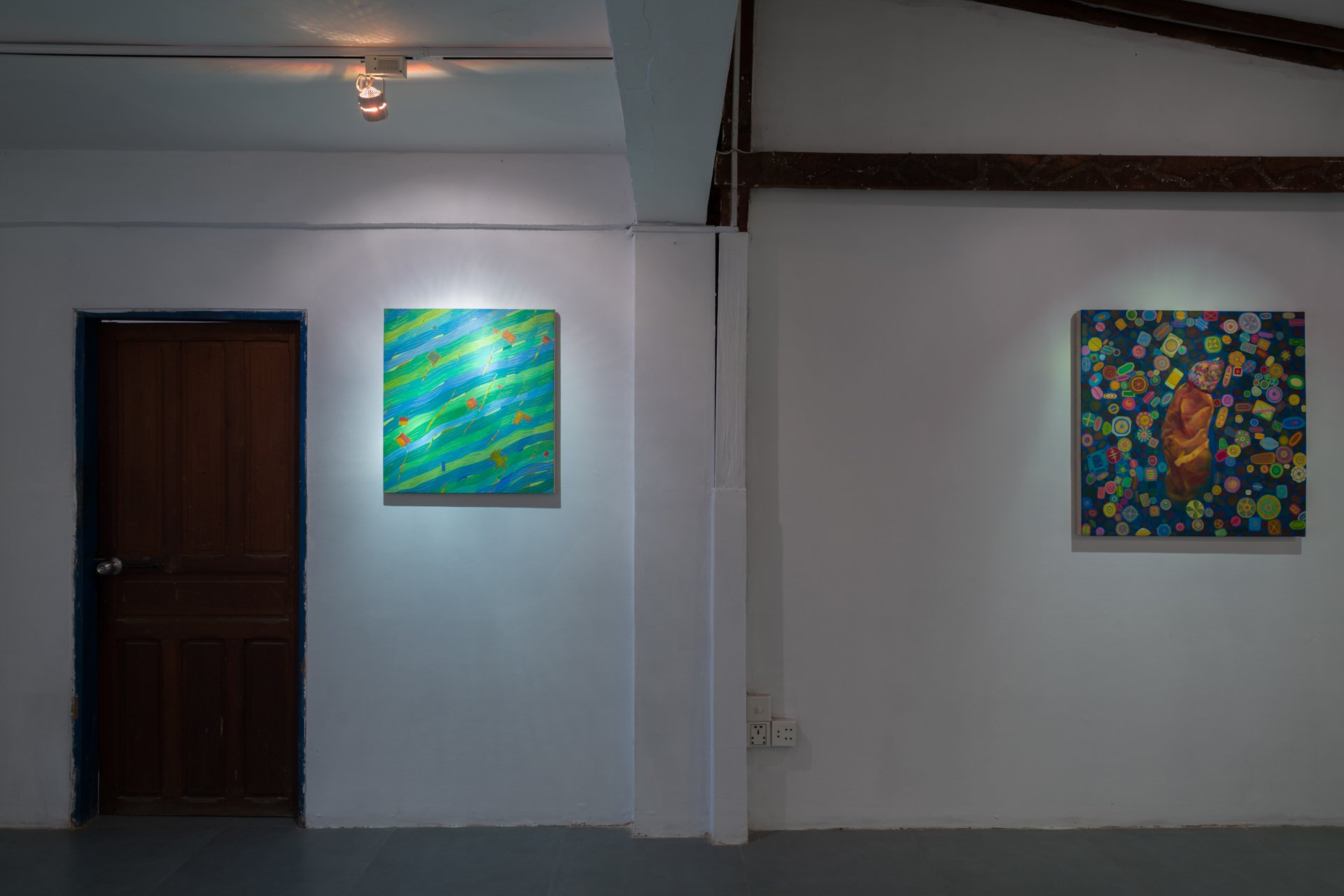
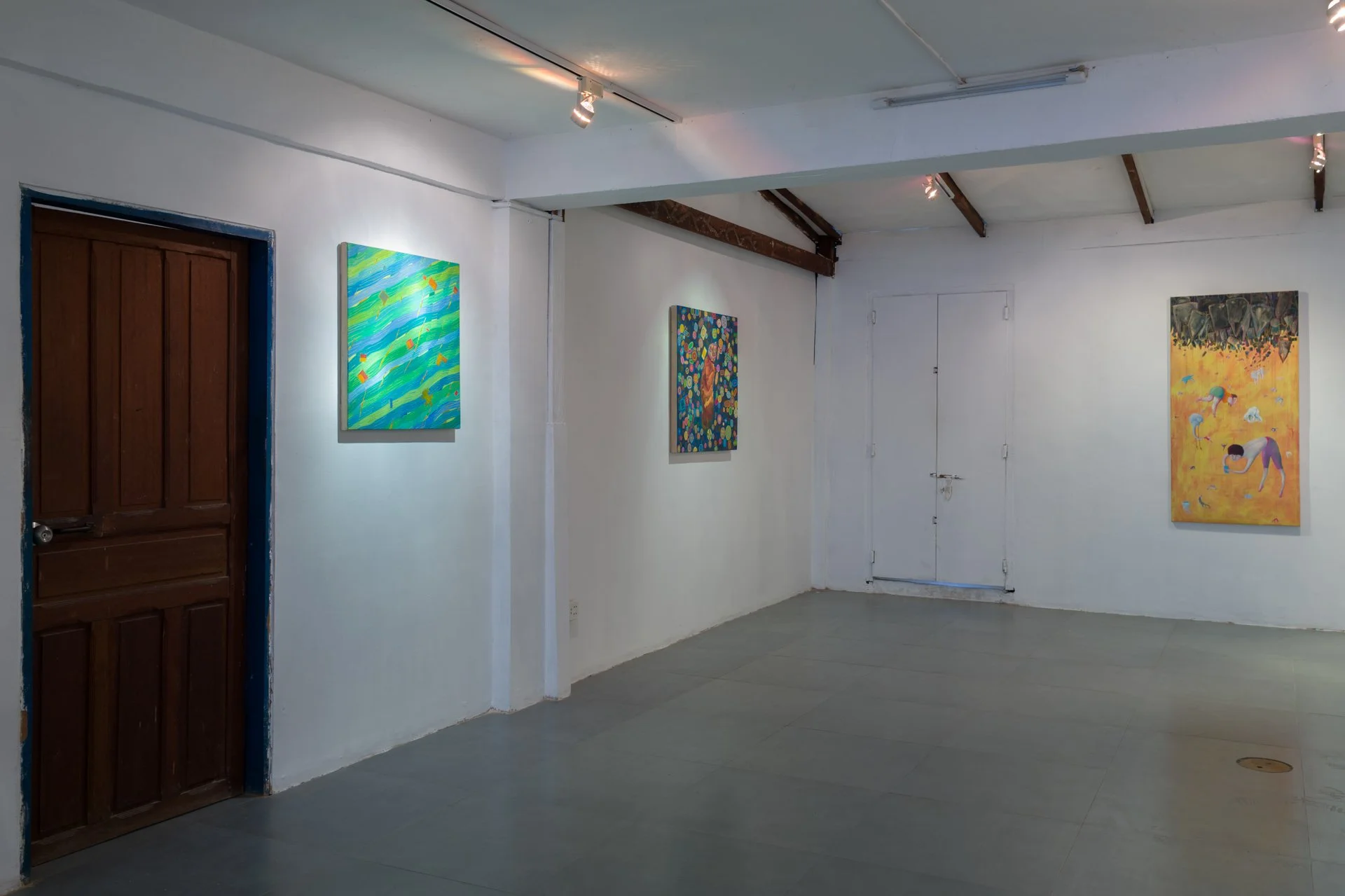
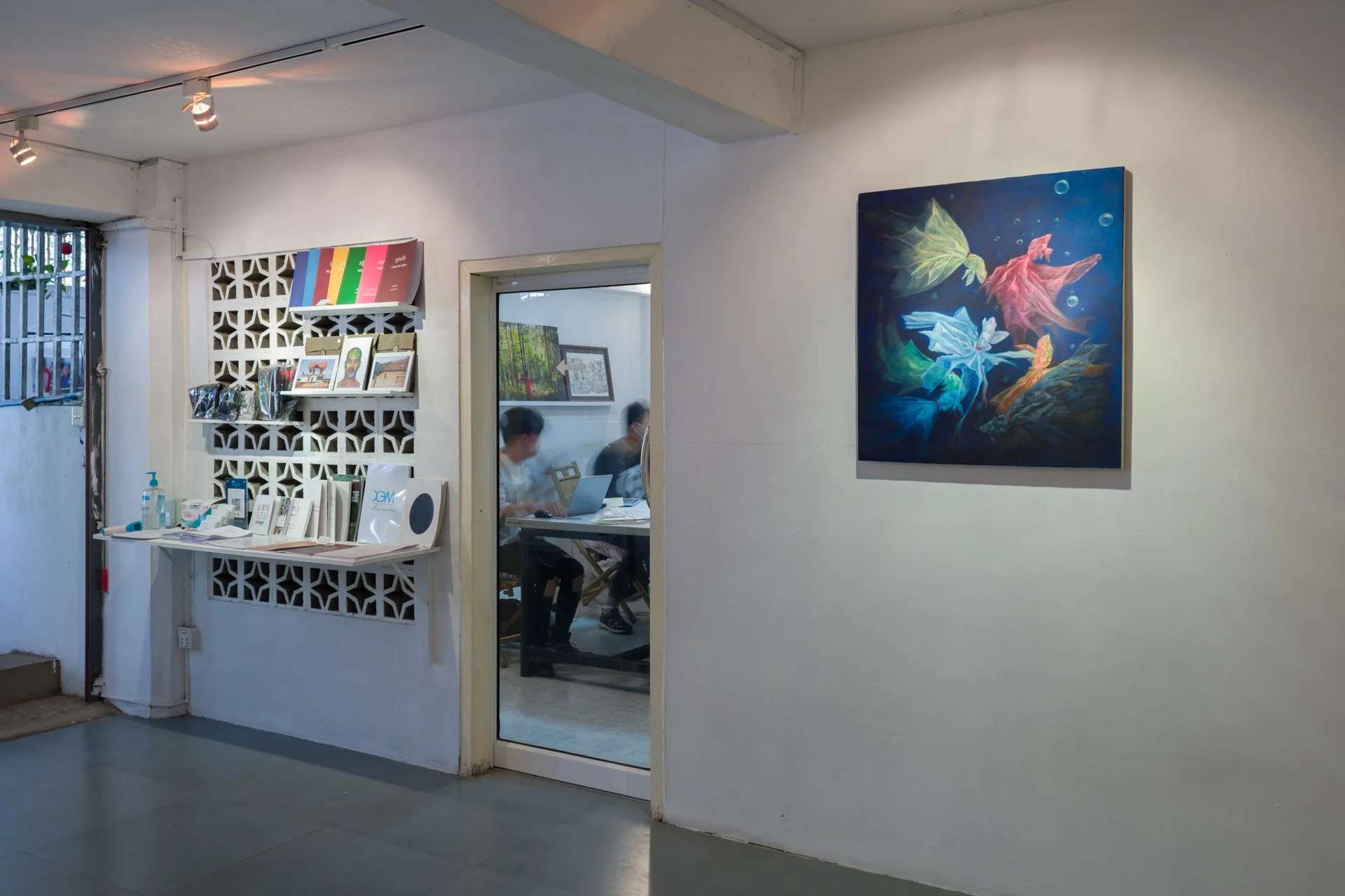
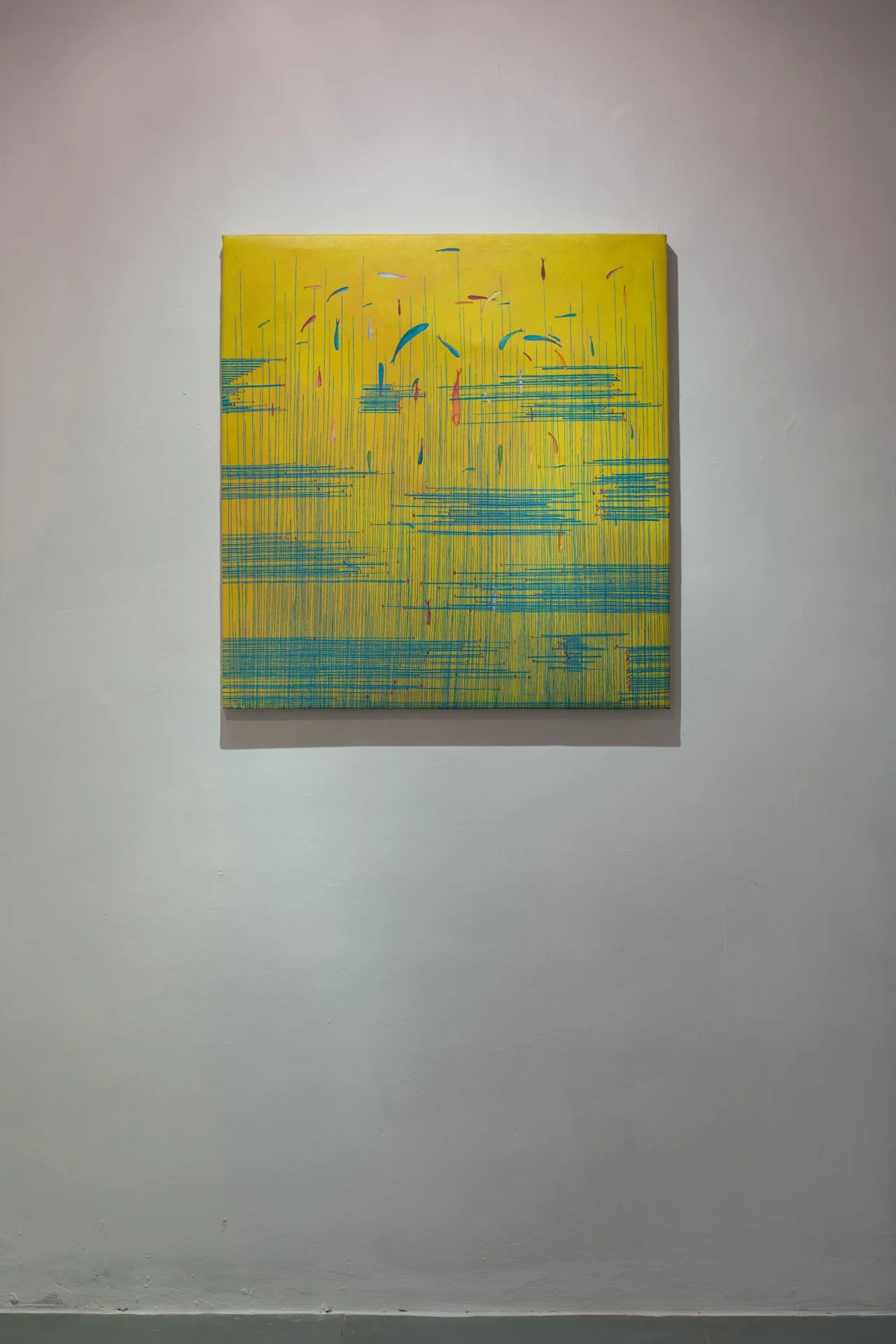
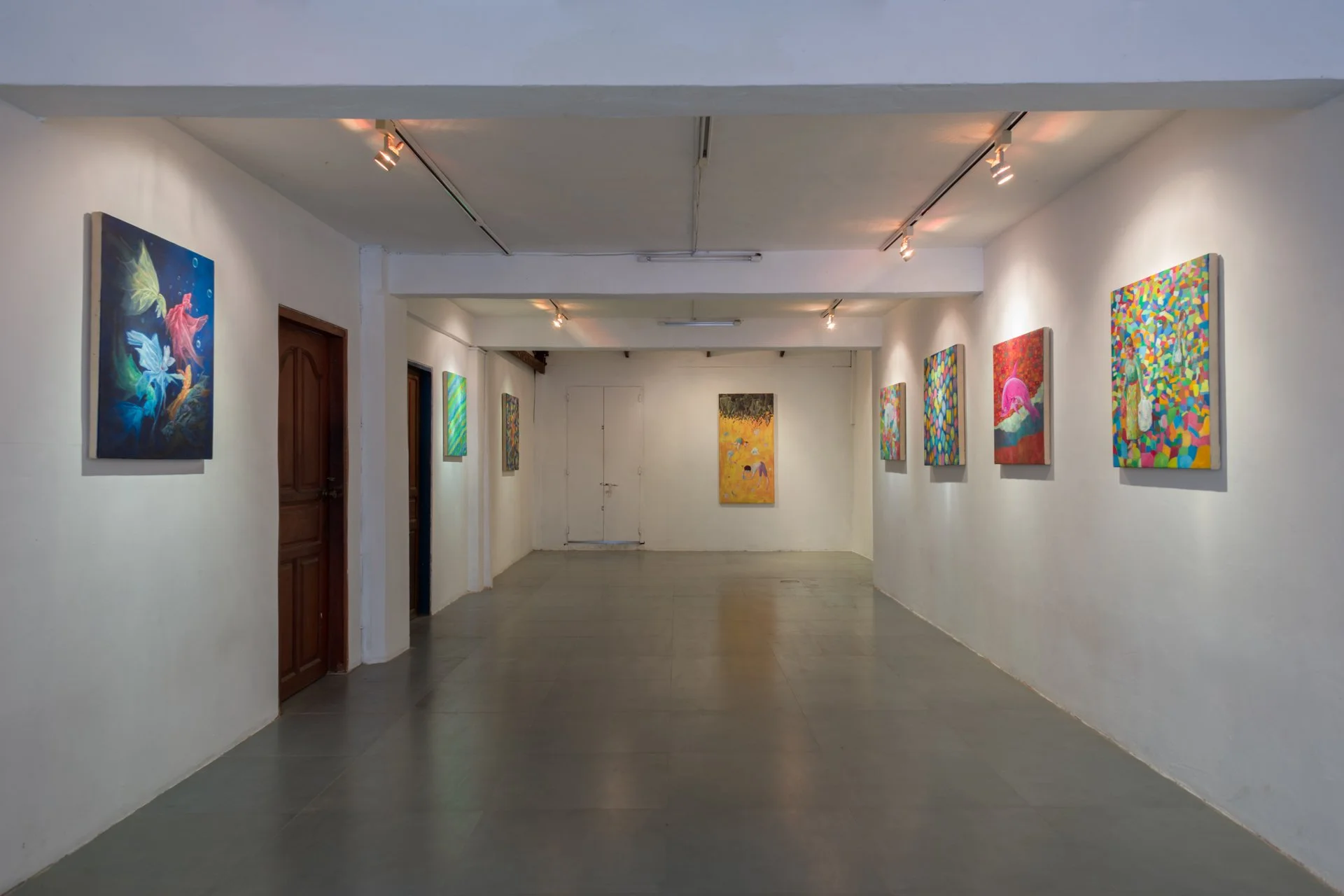
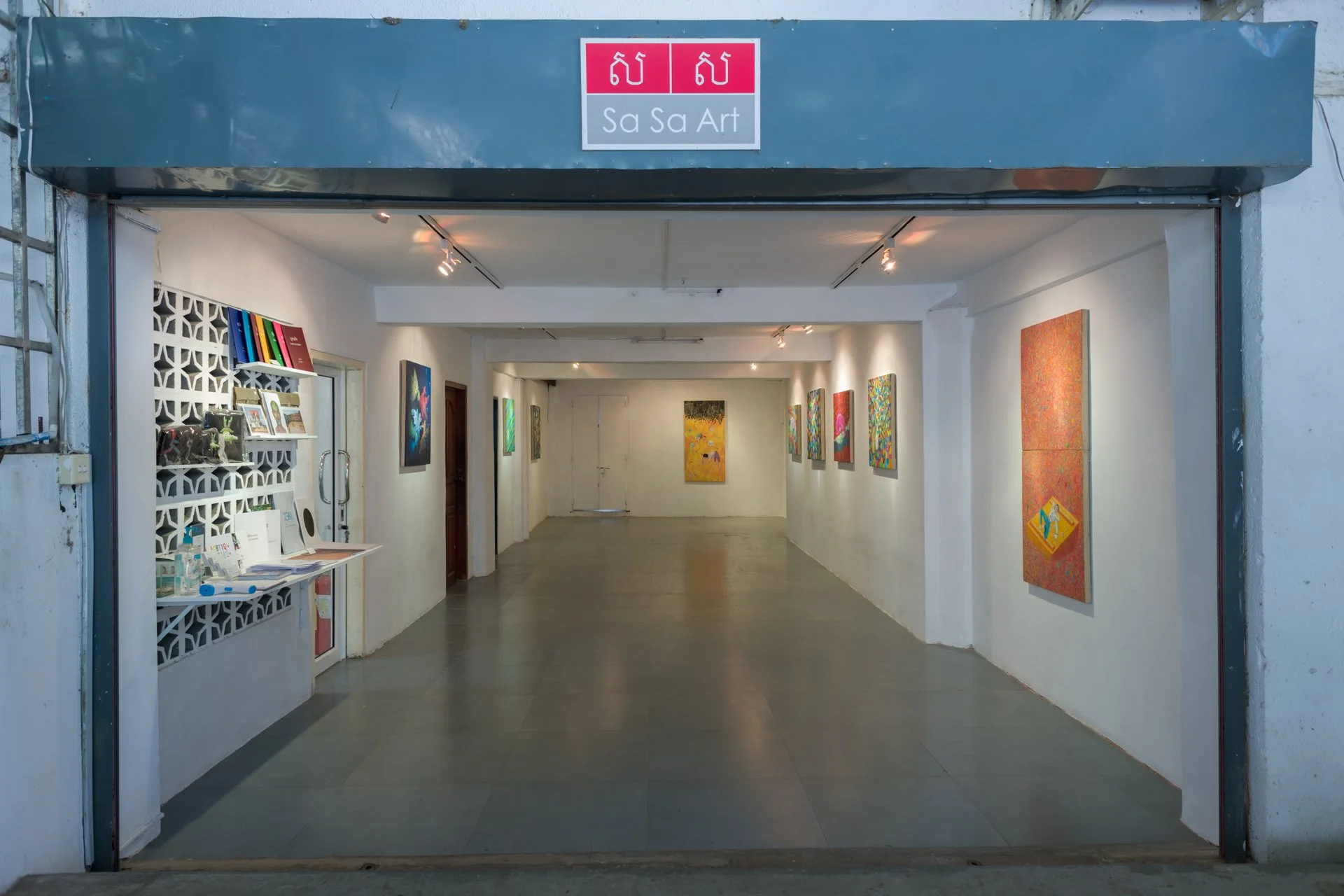
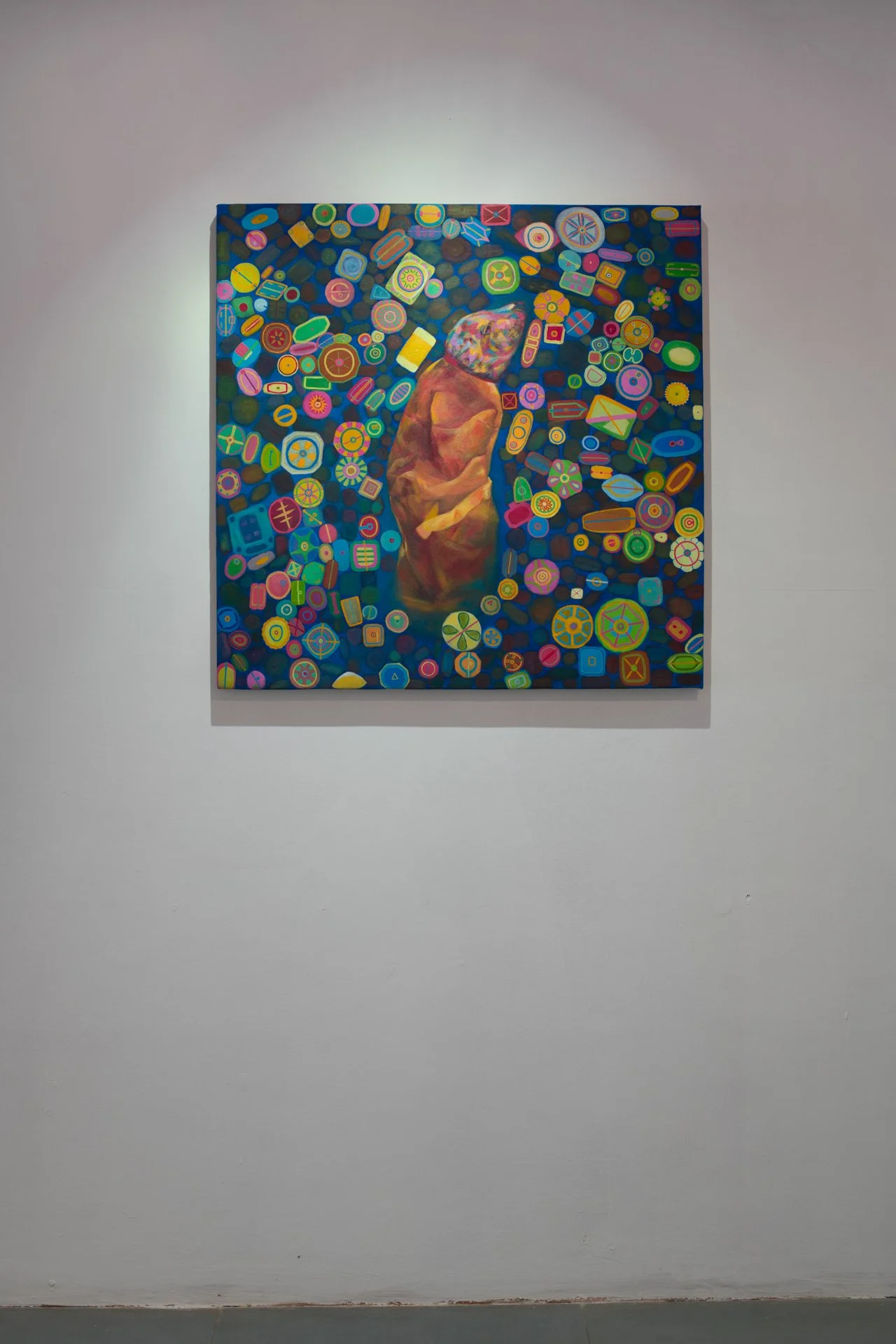
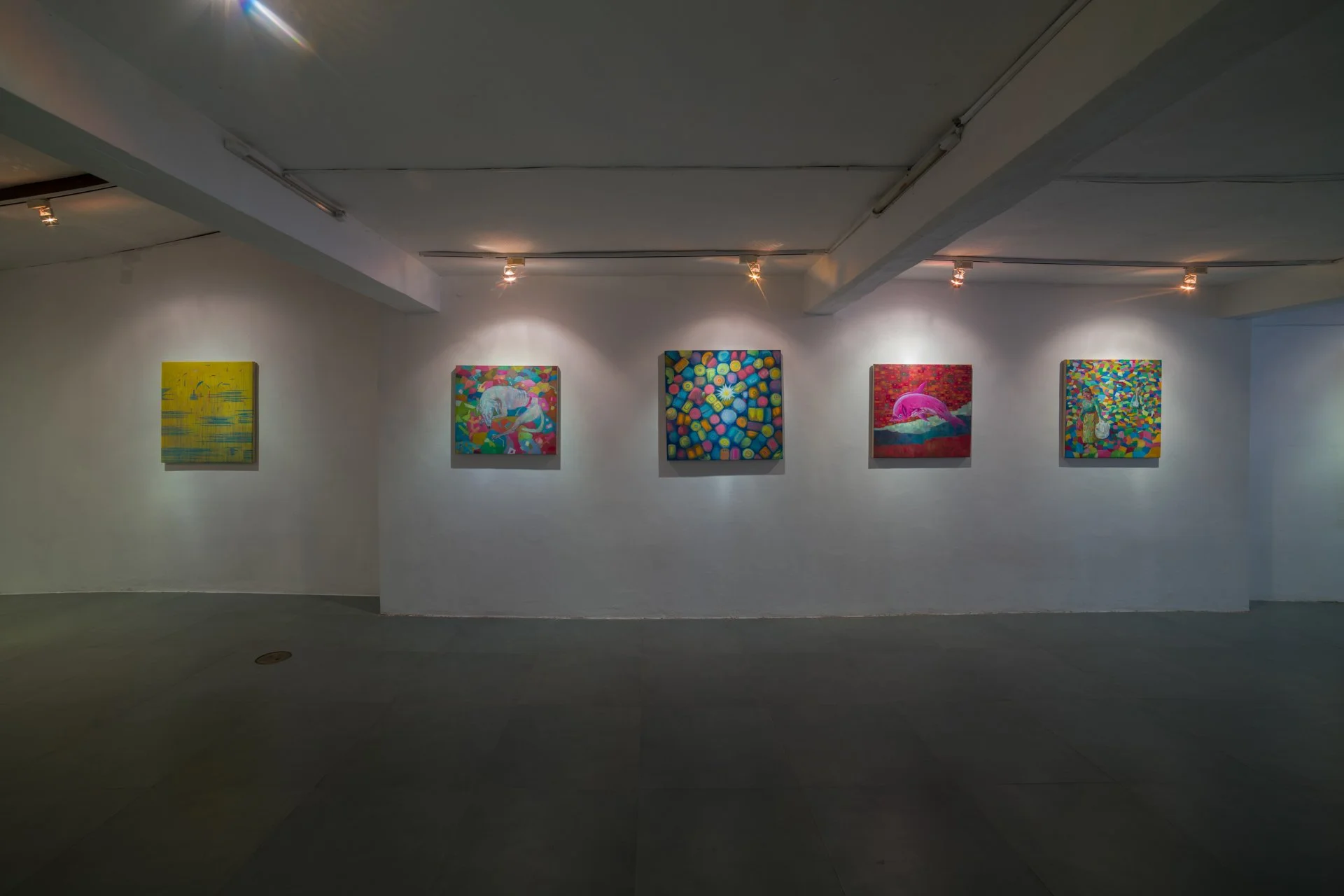
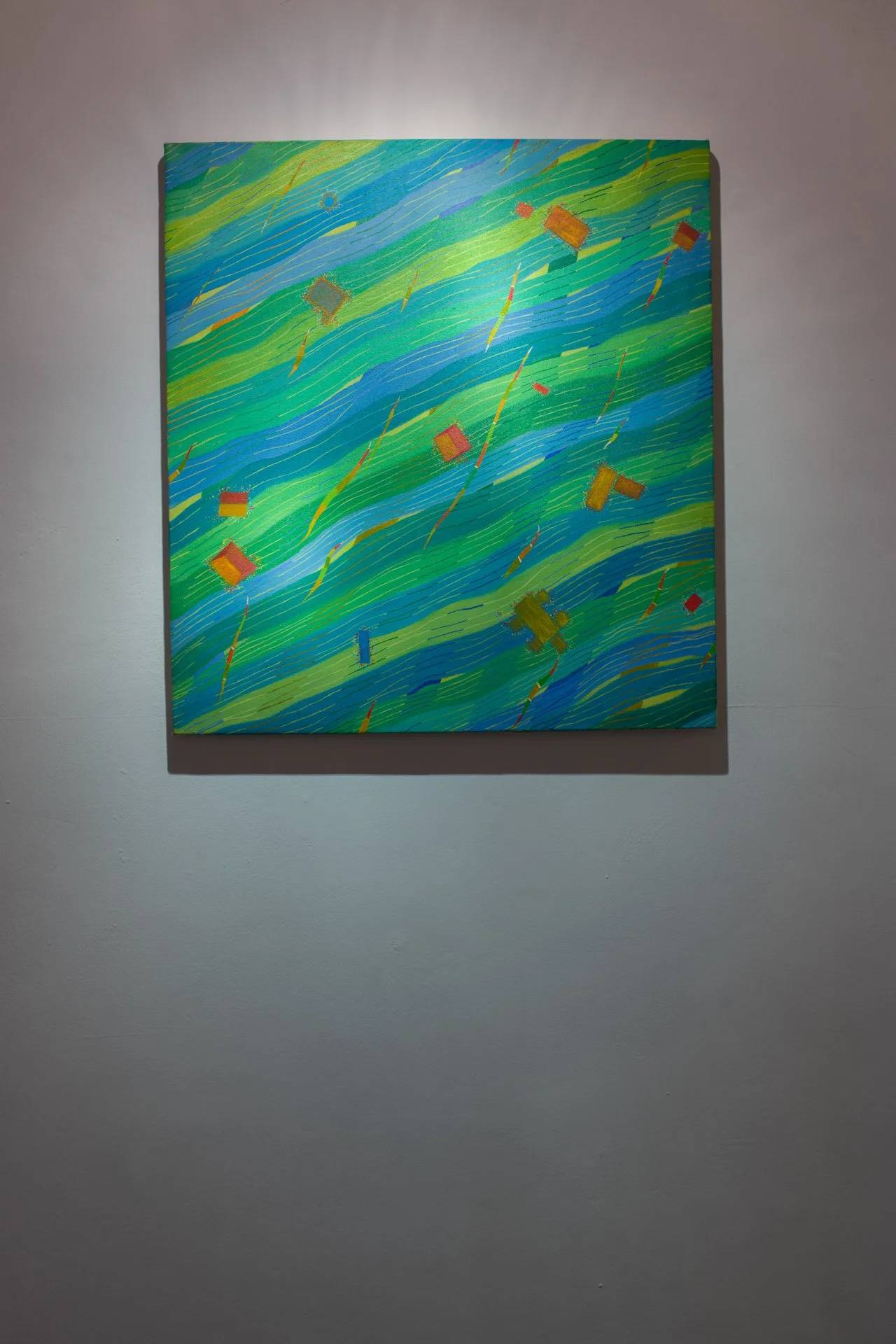
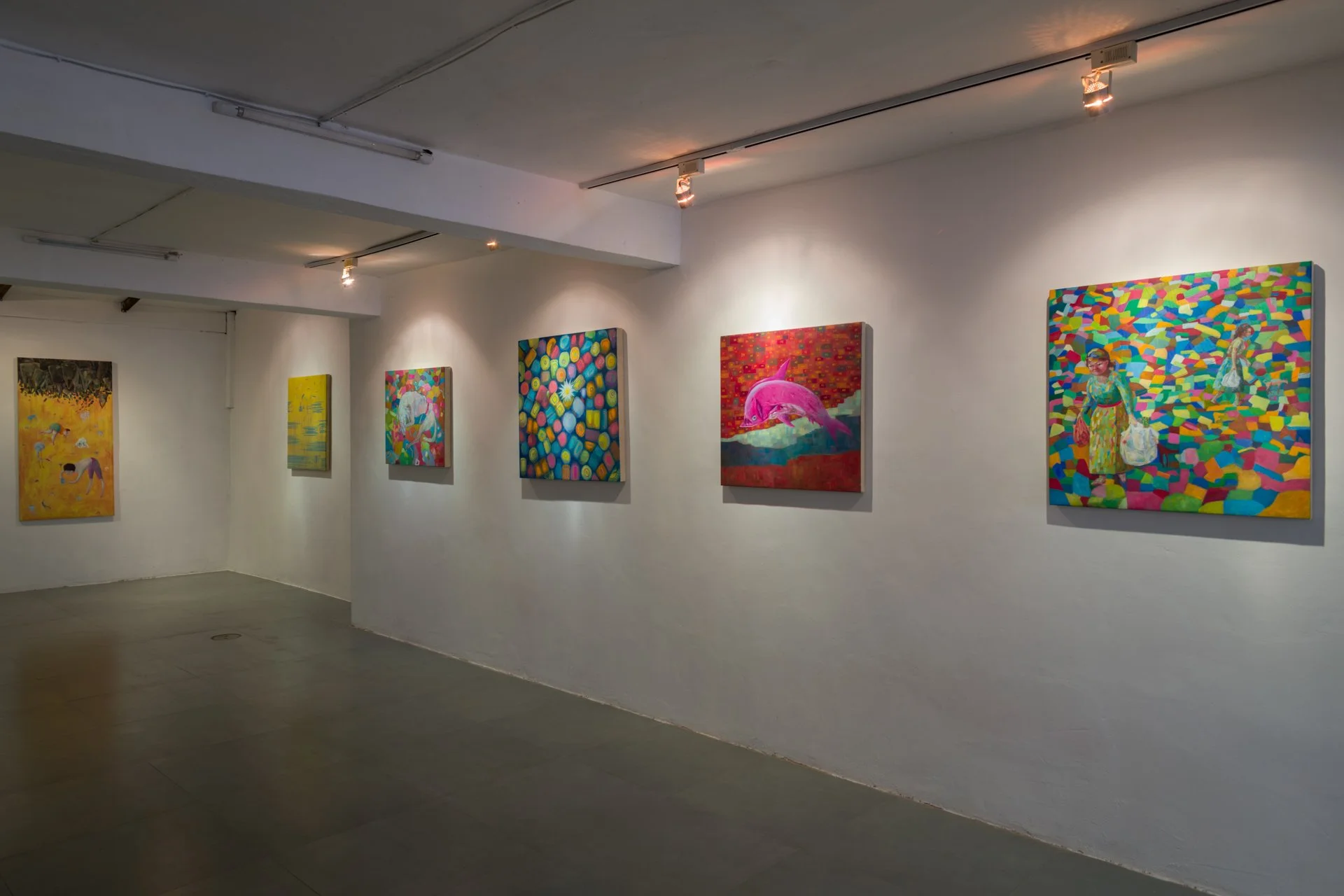
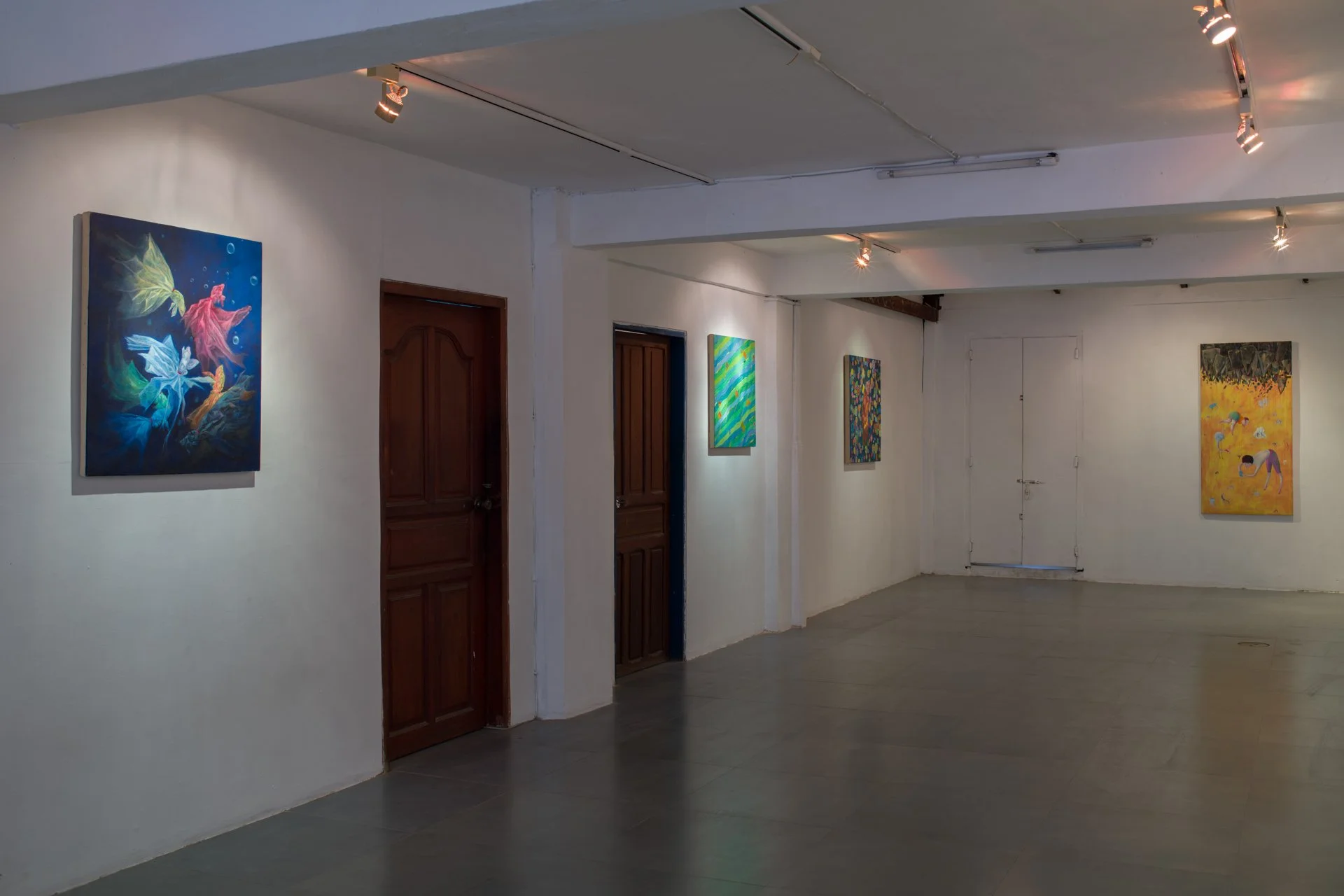
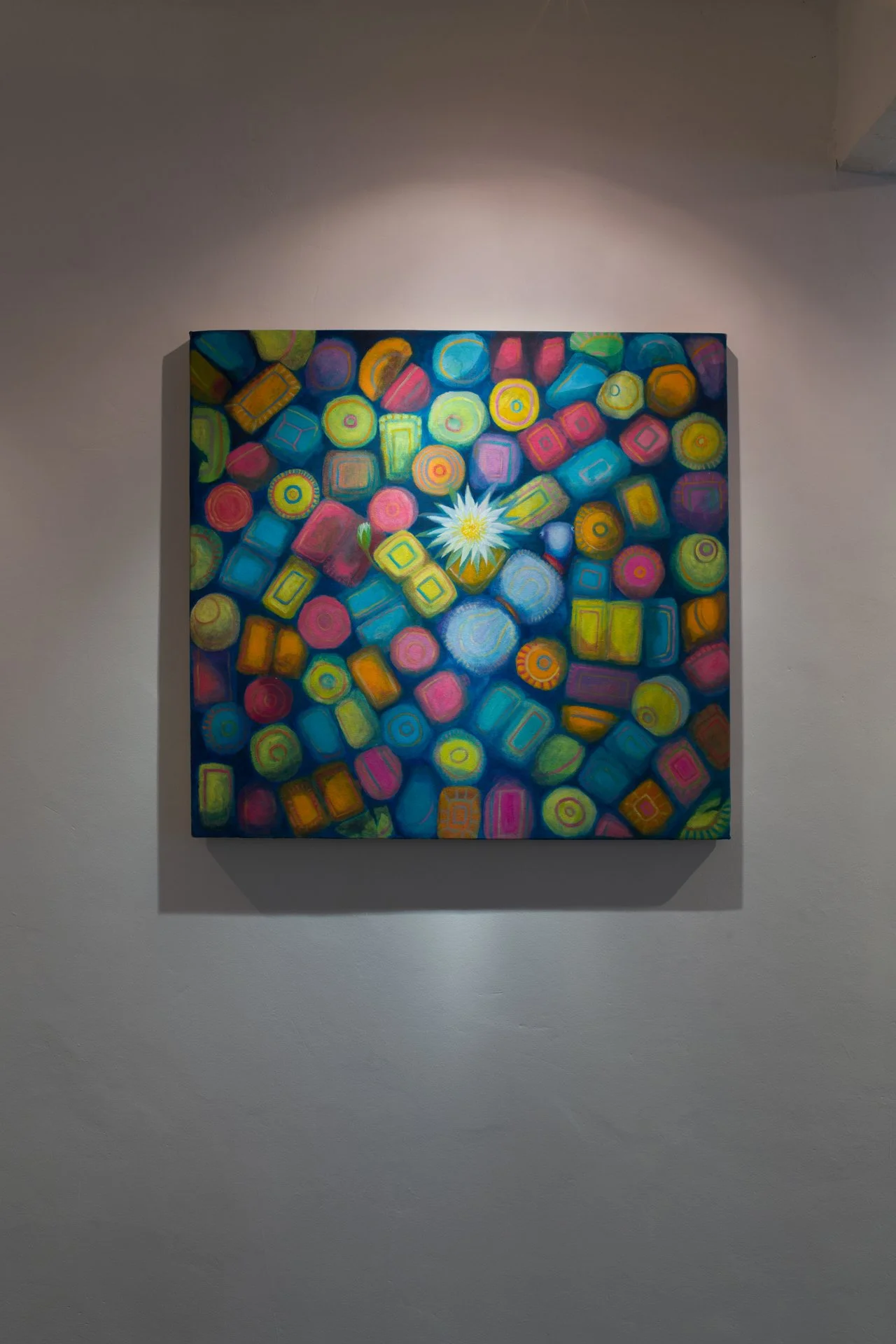
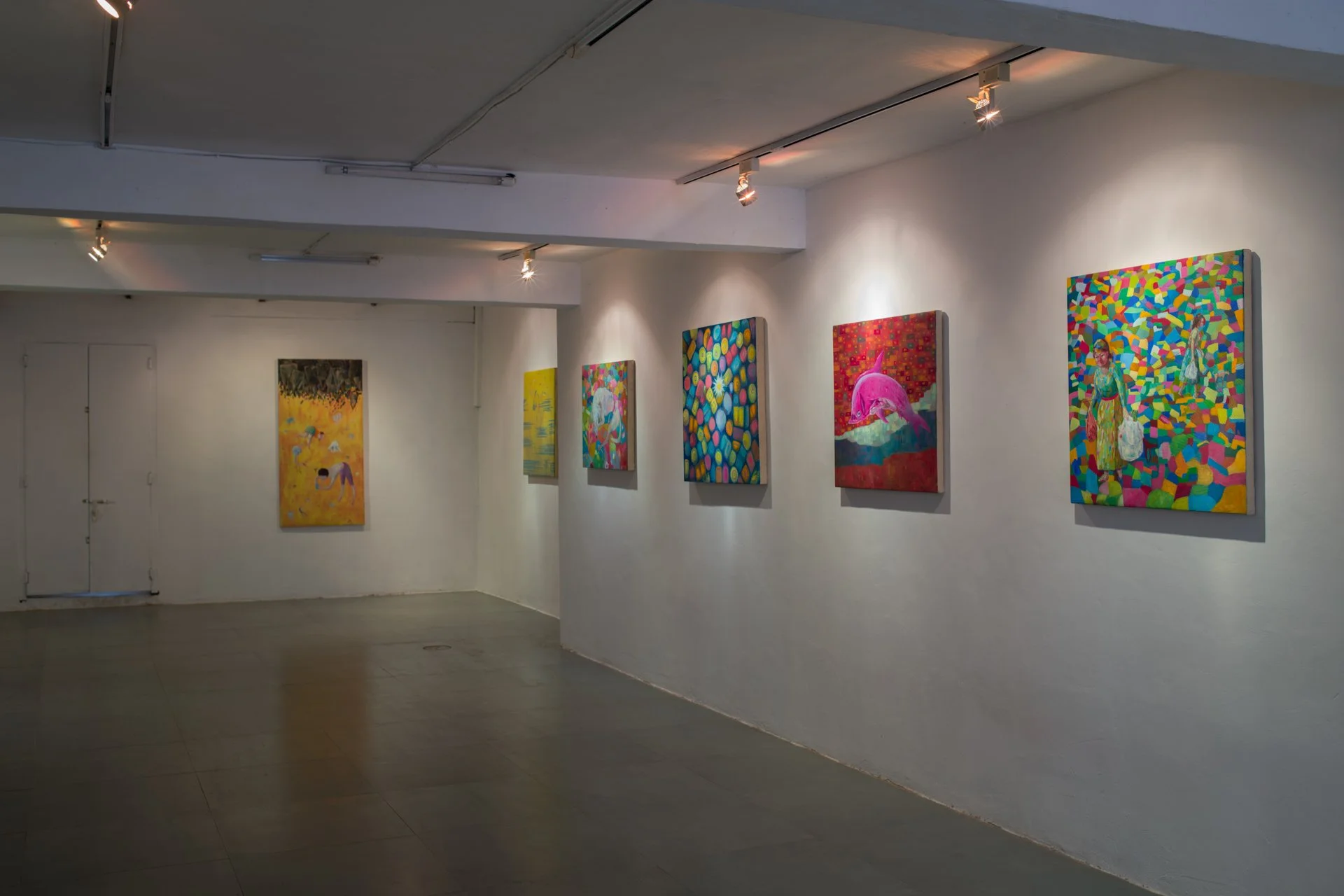
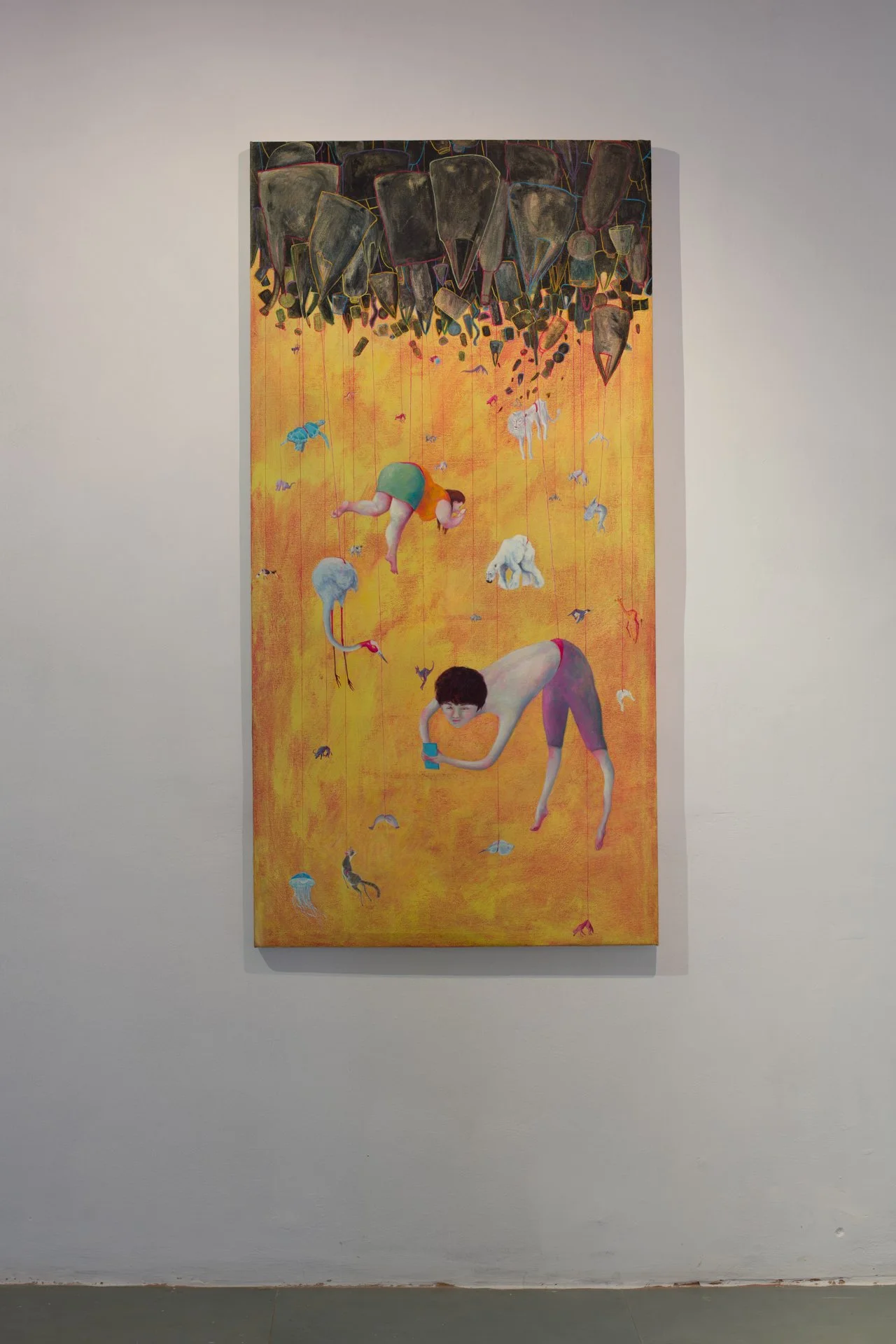
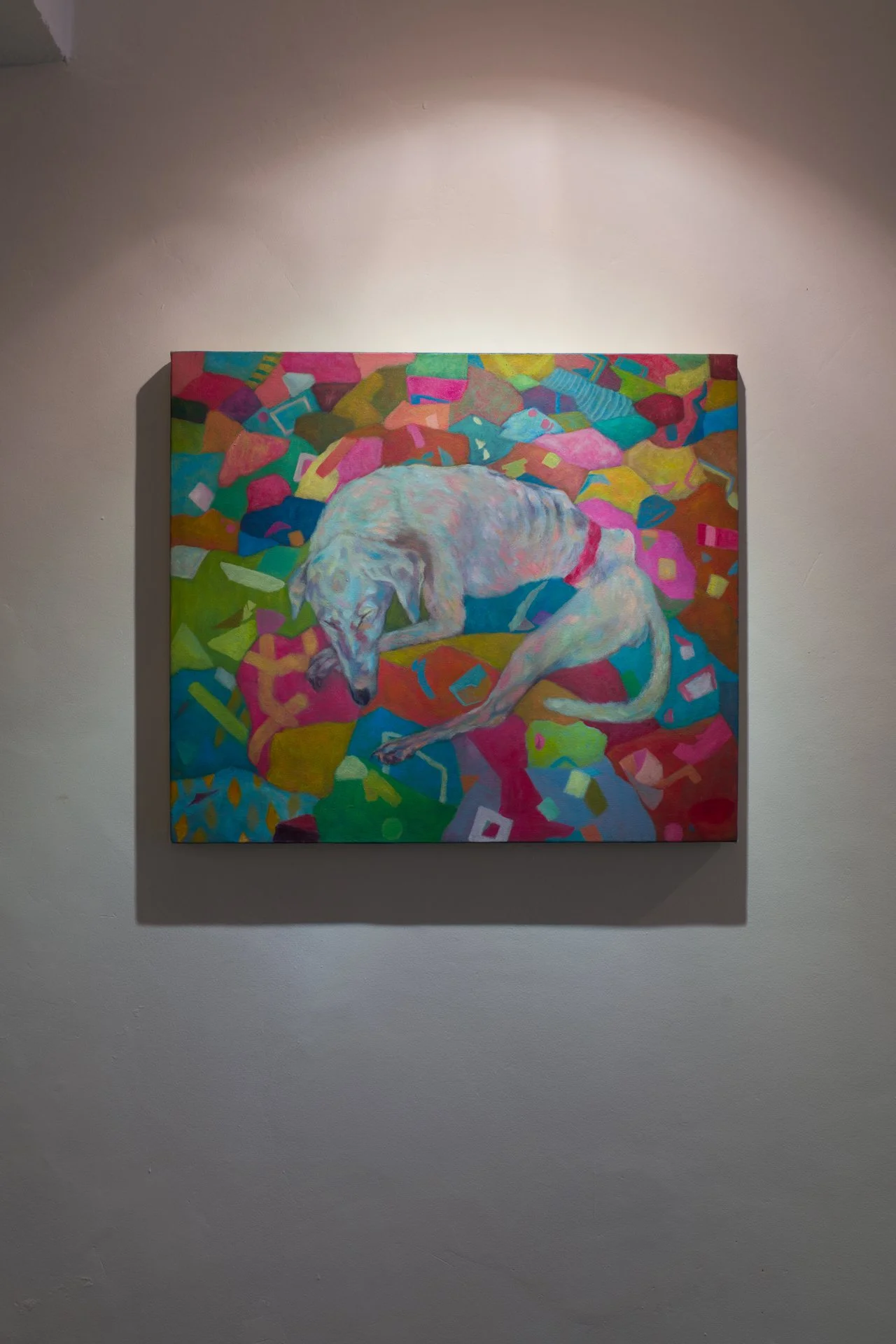
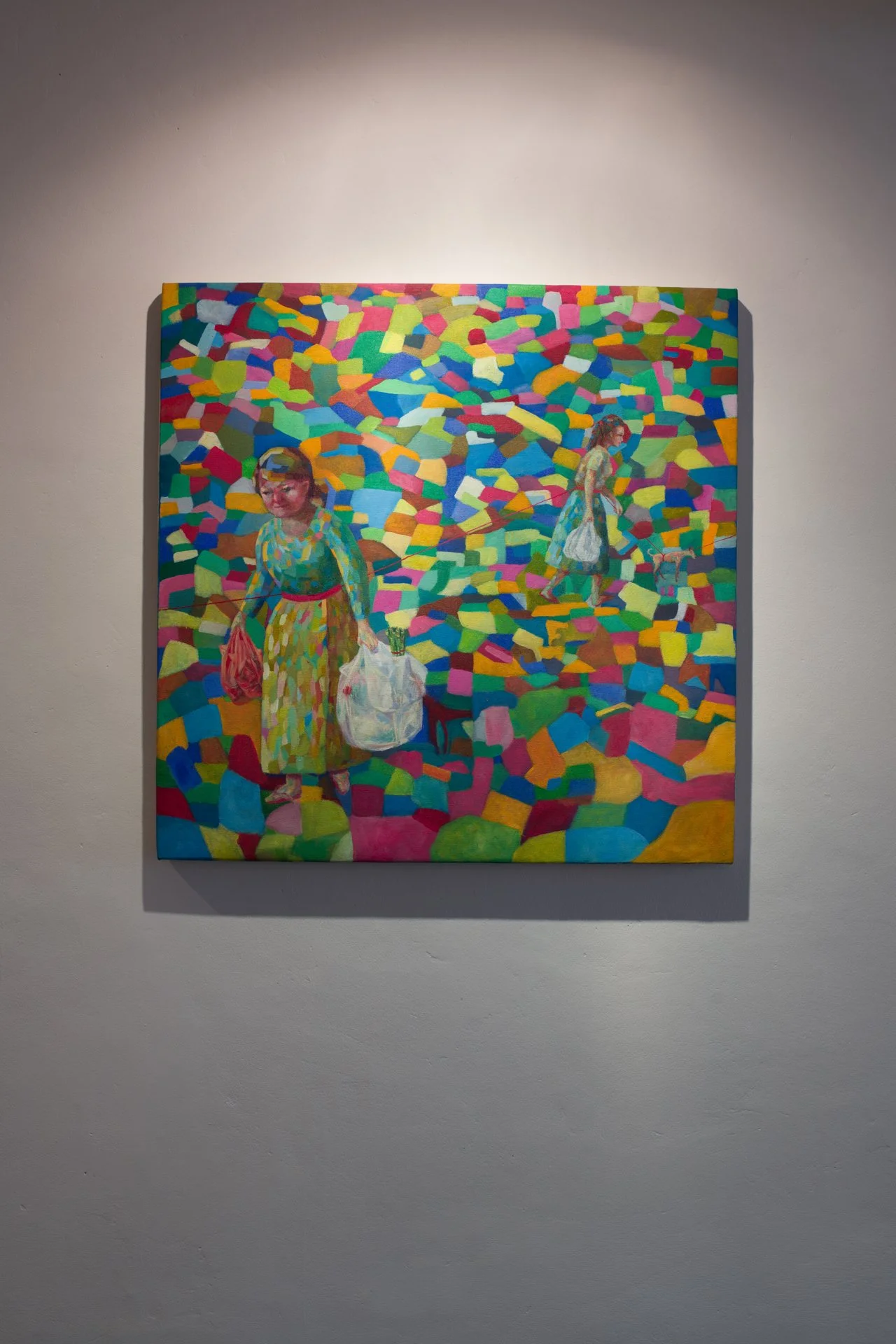
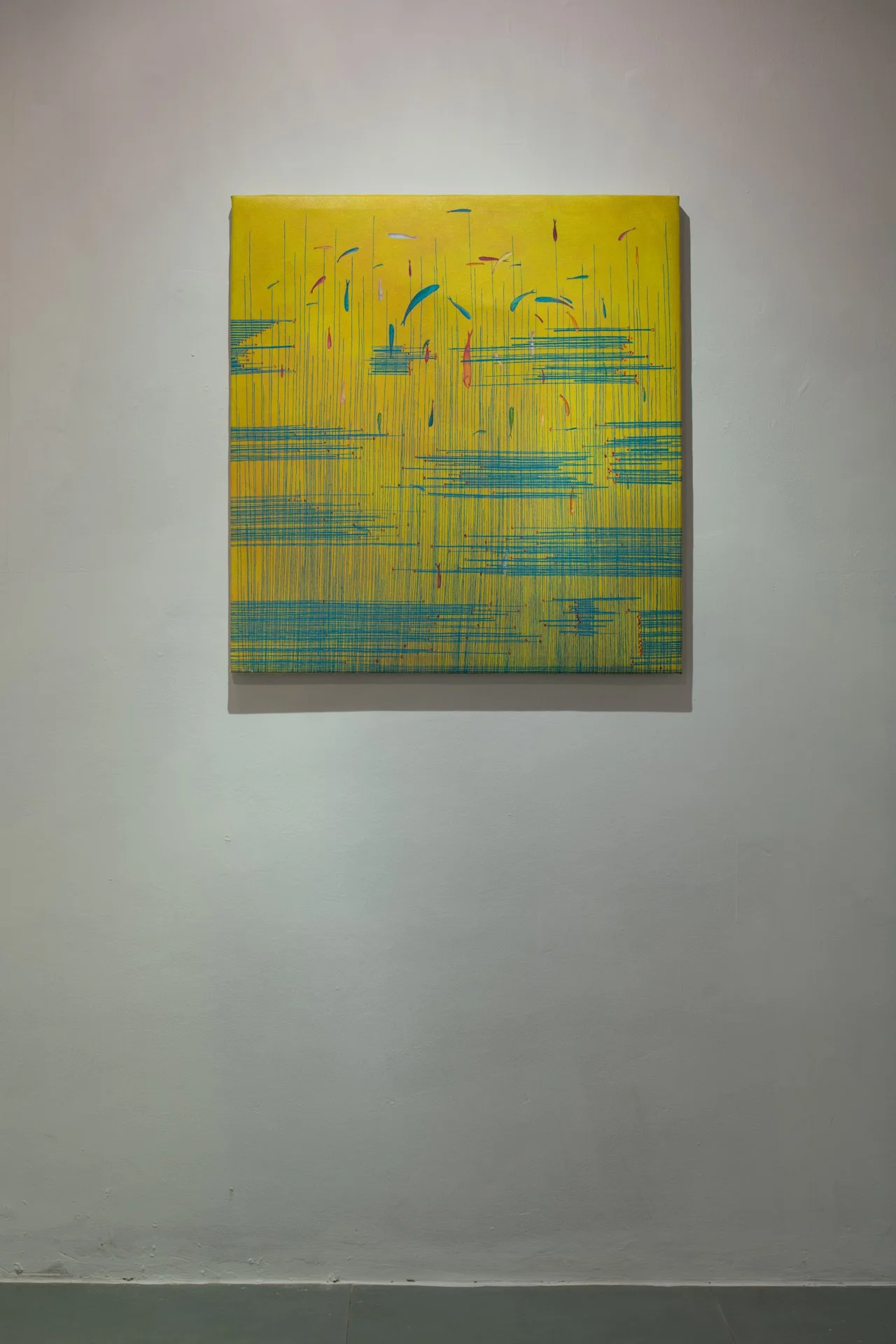
Anonymous Heirloom introduces a new painting series by Koeurm Kolab on today’s confronting social and environmental realities shaped by plastic use. The artist produced ten paintings depicting alluring and colourful sceneries of a world in which plastic waste from human consumption threatens the well-being and lives of humans, animals, and nature.
Social and environmental concerns are recurring topics in Kolab’s practice. For this new body of work, the artist closely studies the life cycle and consumption of various plastic materials. From bags, bottles, containers, toys, and endless types of objects, plastic has become an intimate companion of our life and our planet for its durability, accessibility, and convenience. After a very brief lifespan of single-use, they often end up discarded in a landfill, water, and the atmosphere. Those that fall into the rivers later gather and even deposit into garbage patches in our oceans.
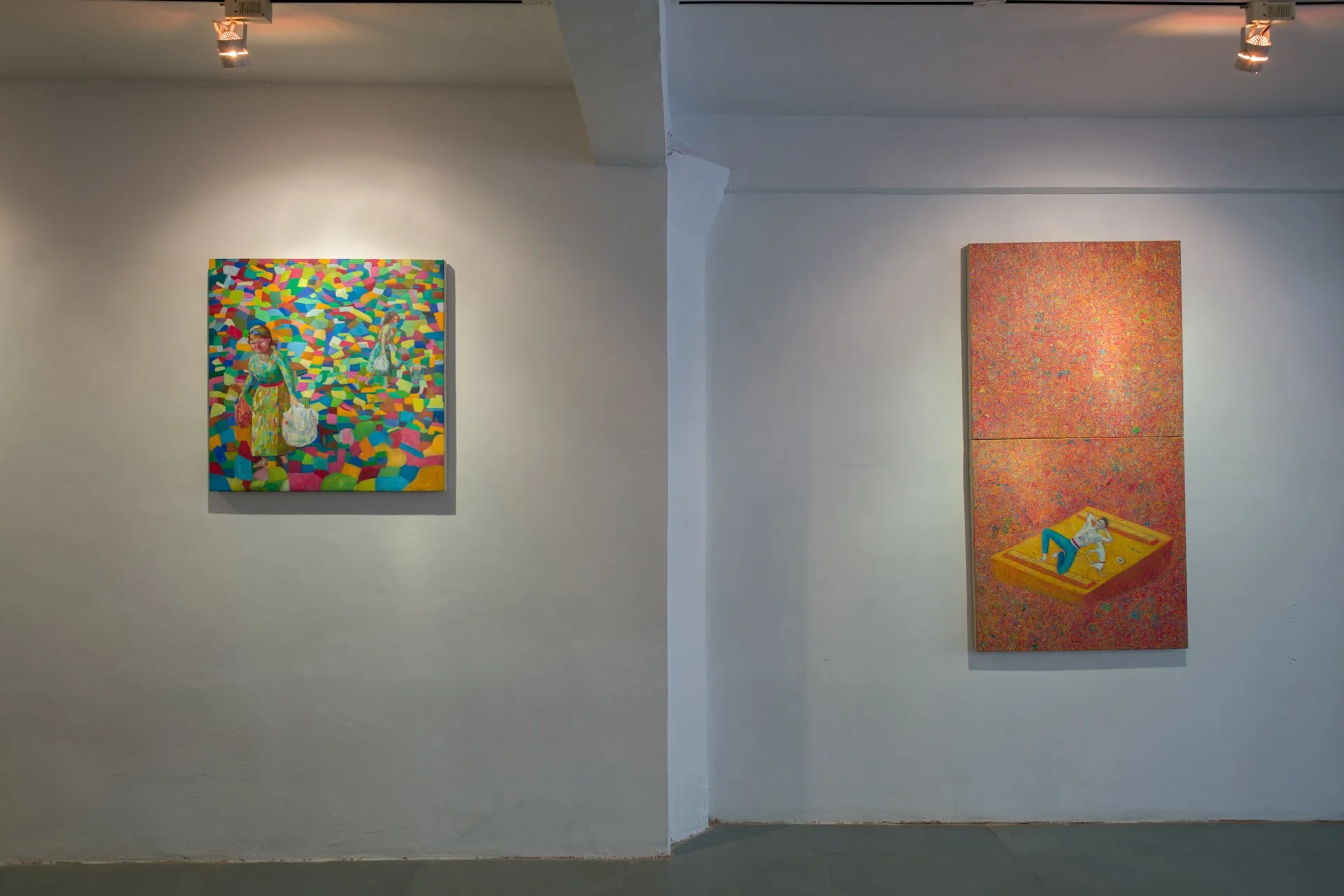
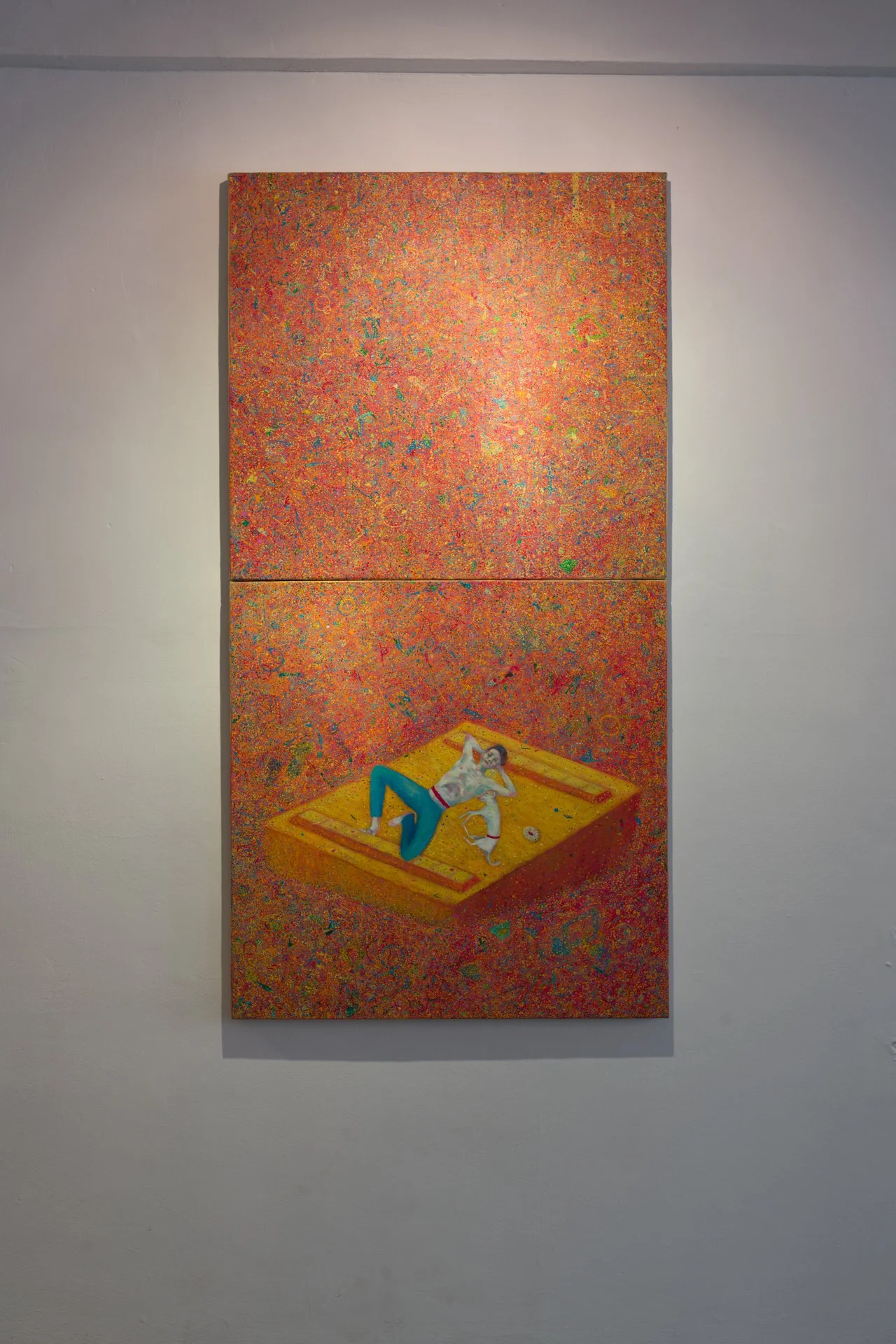
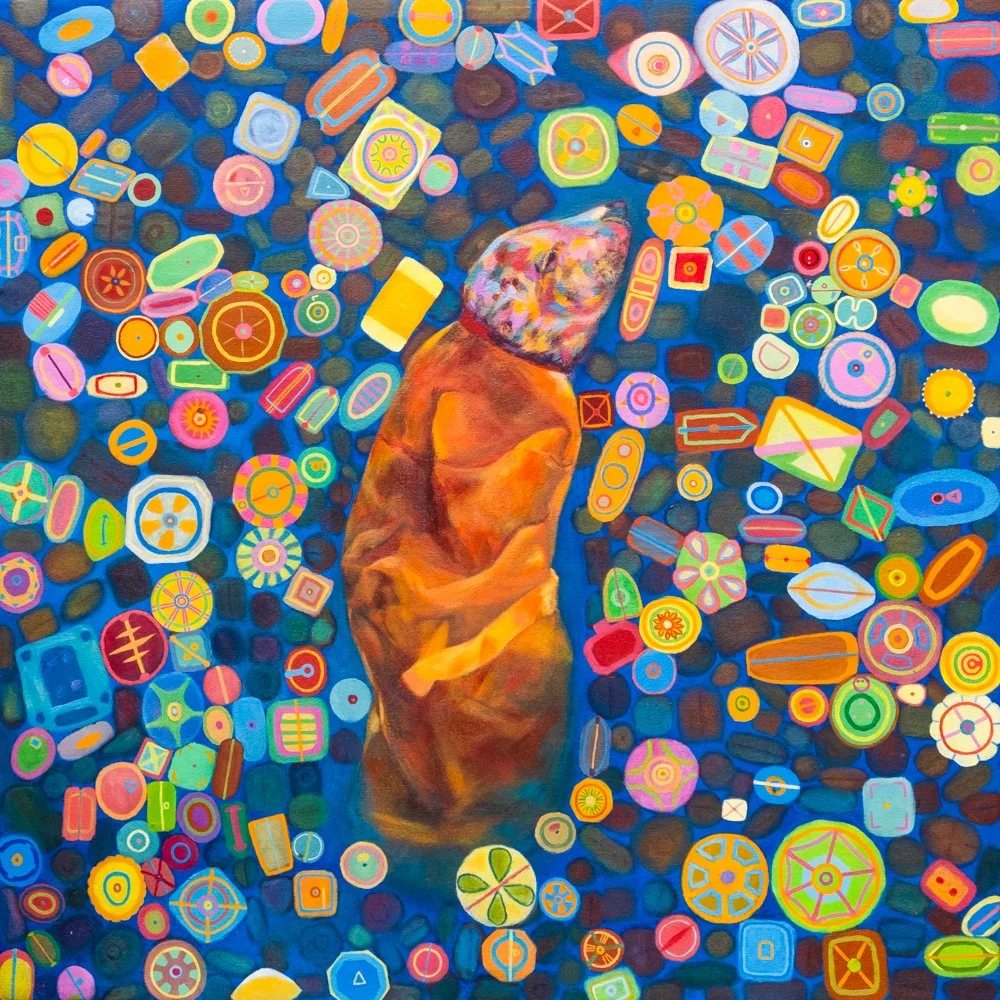
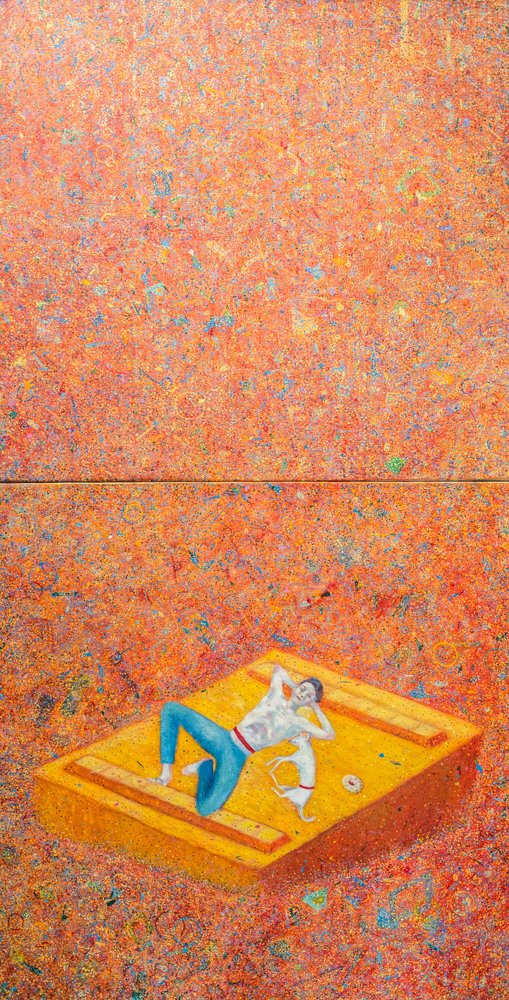
Globally, we consume about 160,000 plastic bags every second, from which as little as less than 1% are recycled. This alarming number is reflected in one painting titled “One Second,” a diptych in which Kolab used 160,000 marks of paint, creating a striking pictorial plane. Floating atop of this field, a human appears resting and contemplating next to a dog.
Ulourful plastic world? And to whom and how many generations we want to pass on this “heirloom”?
Public programs:
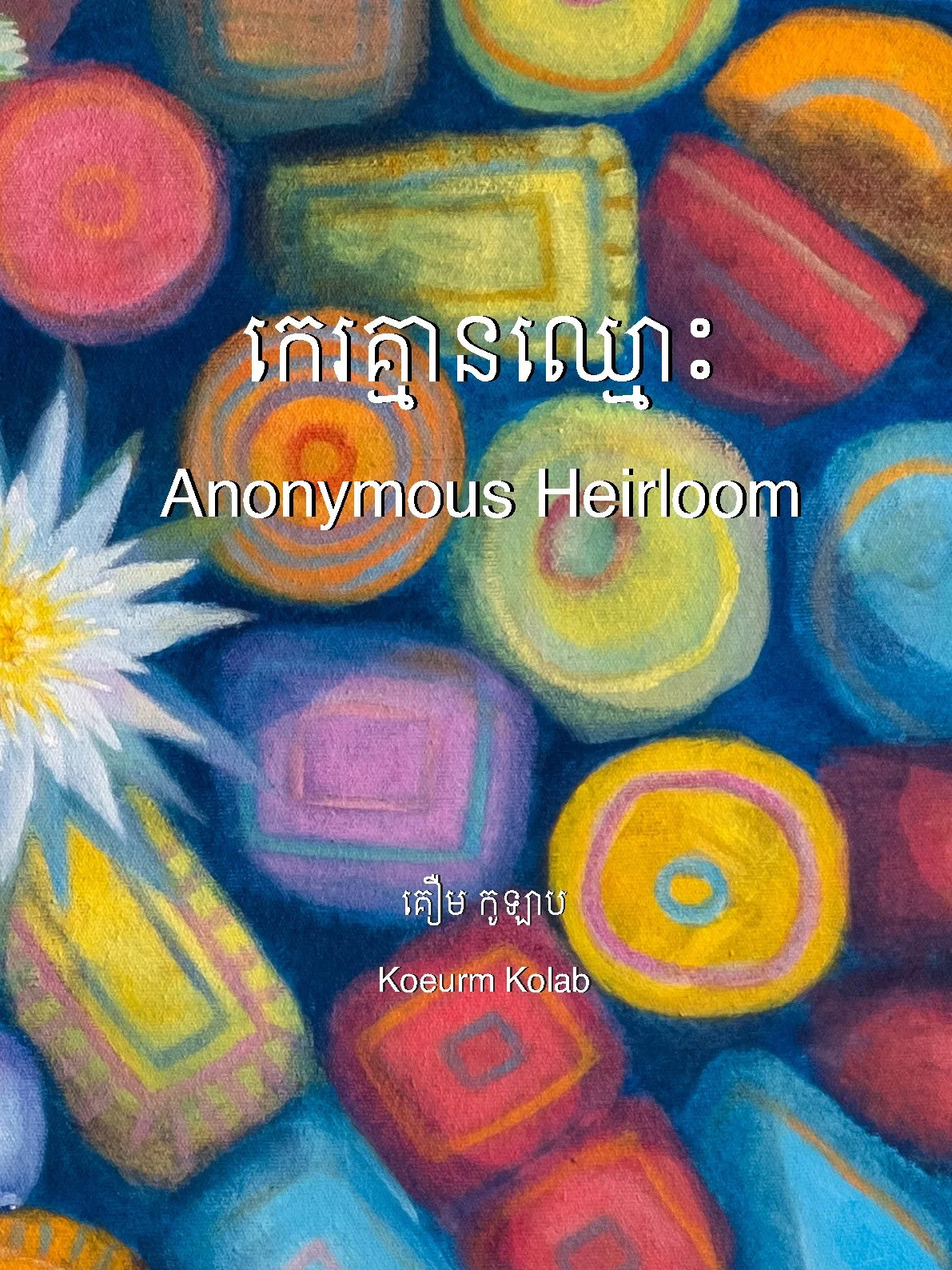
Exhibition catalogue:
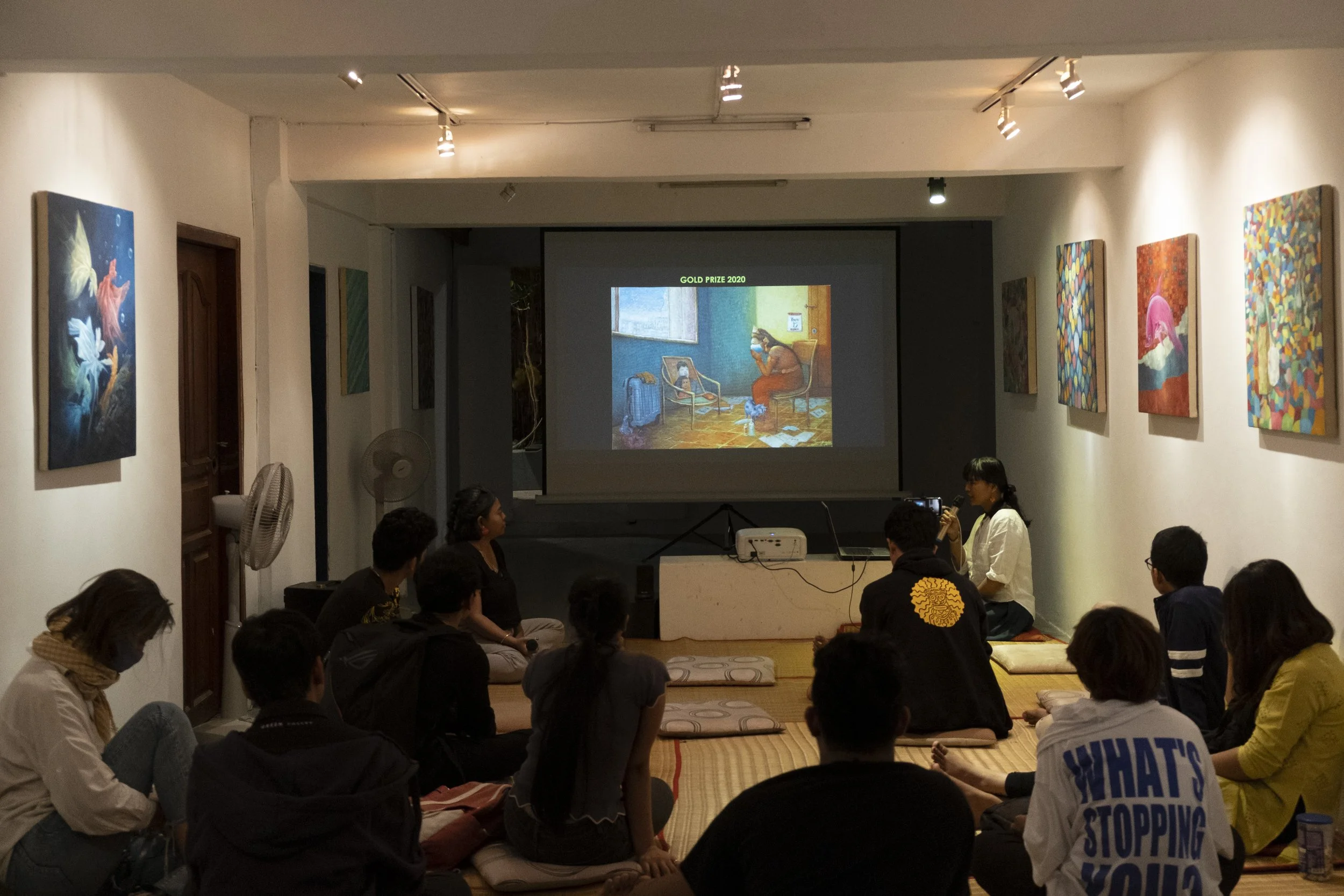
Artist's Talk by Koeurm Kolab
Thursday, 21 Jan 2021, 6:00-7:30pm
In Khmer with English translatation
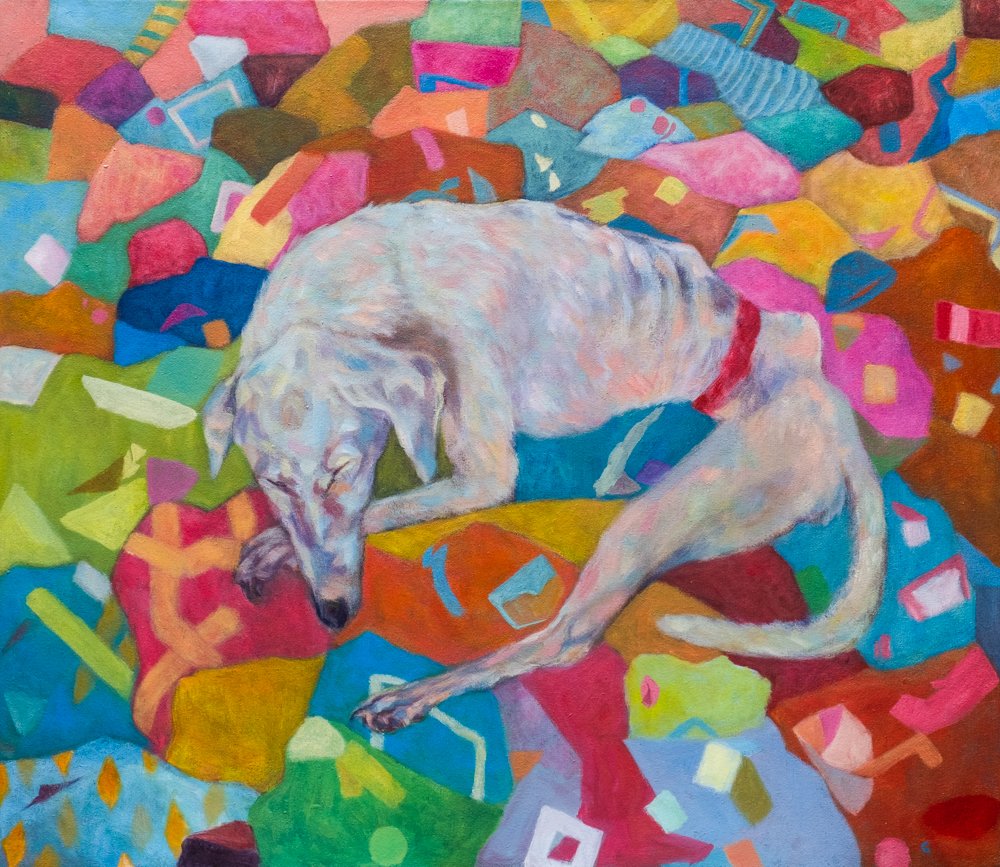
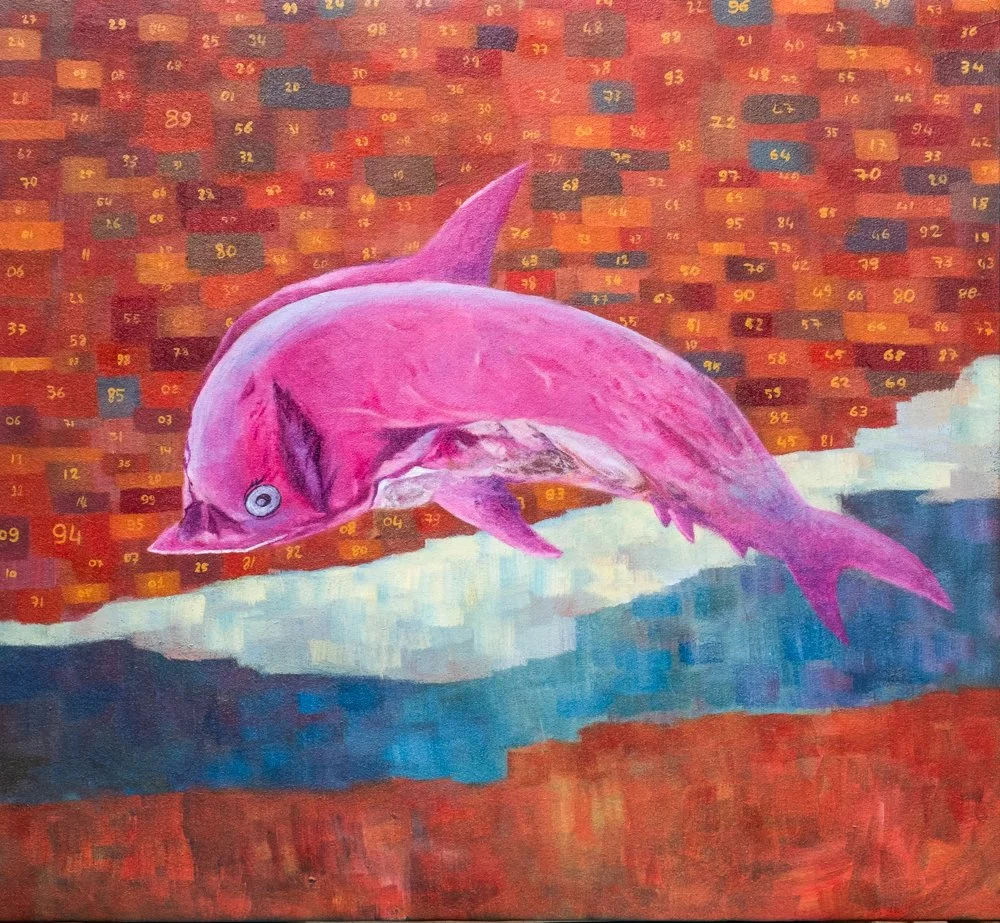
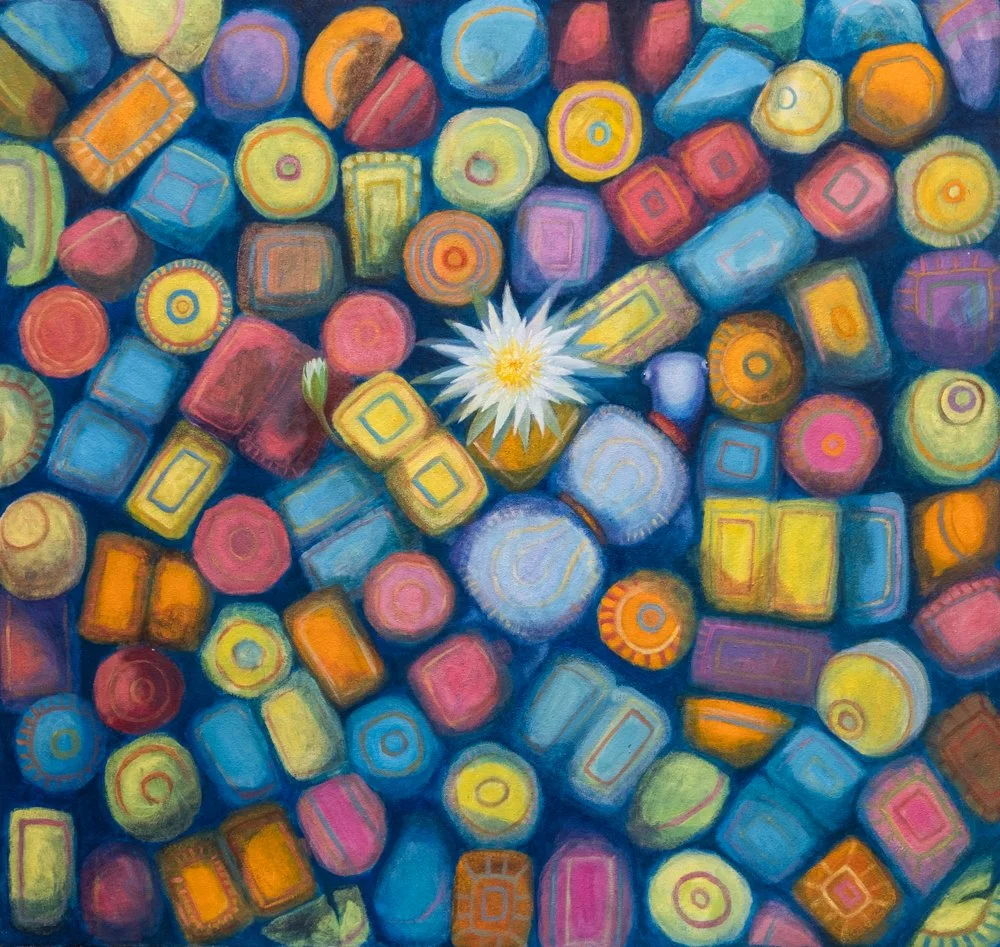
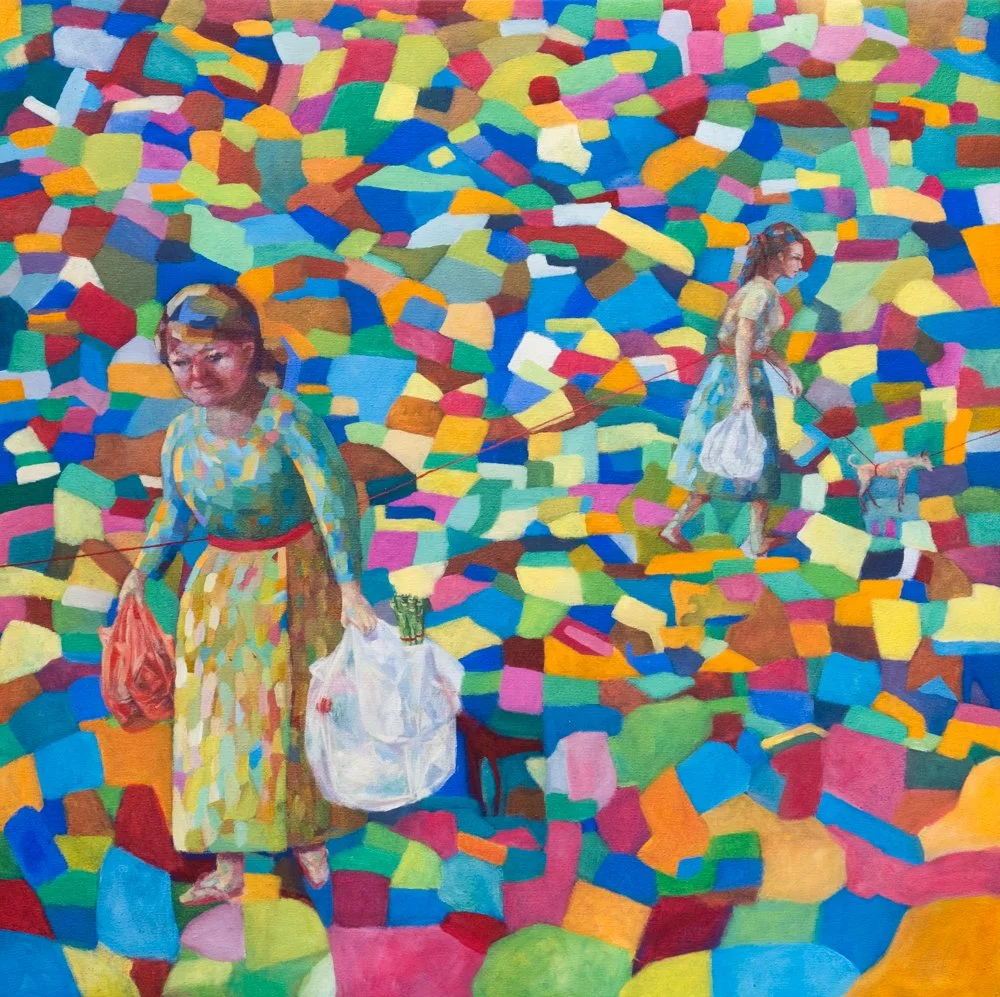
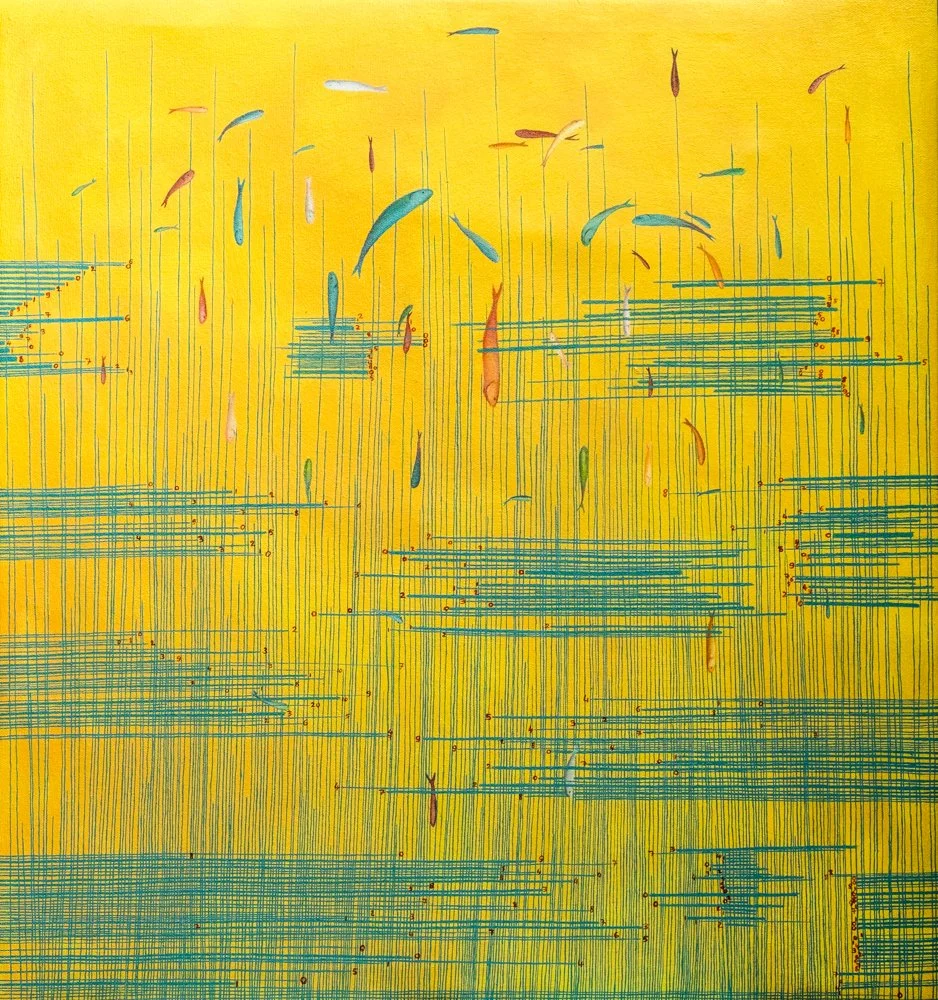
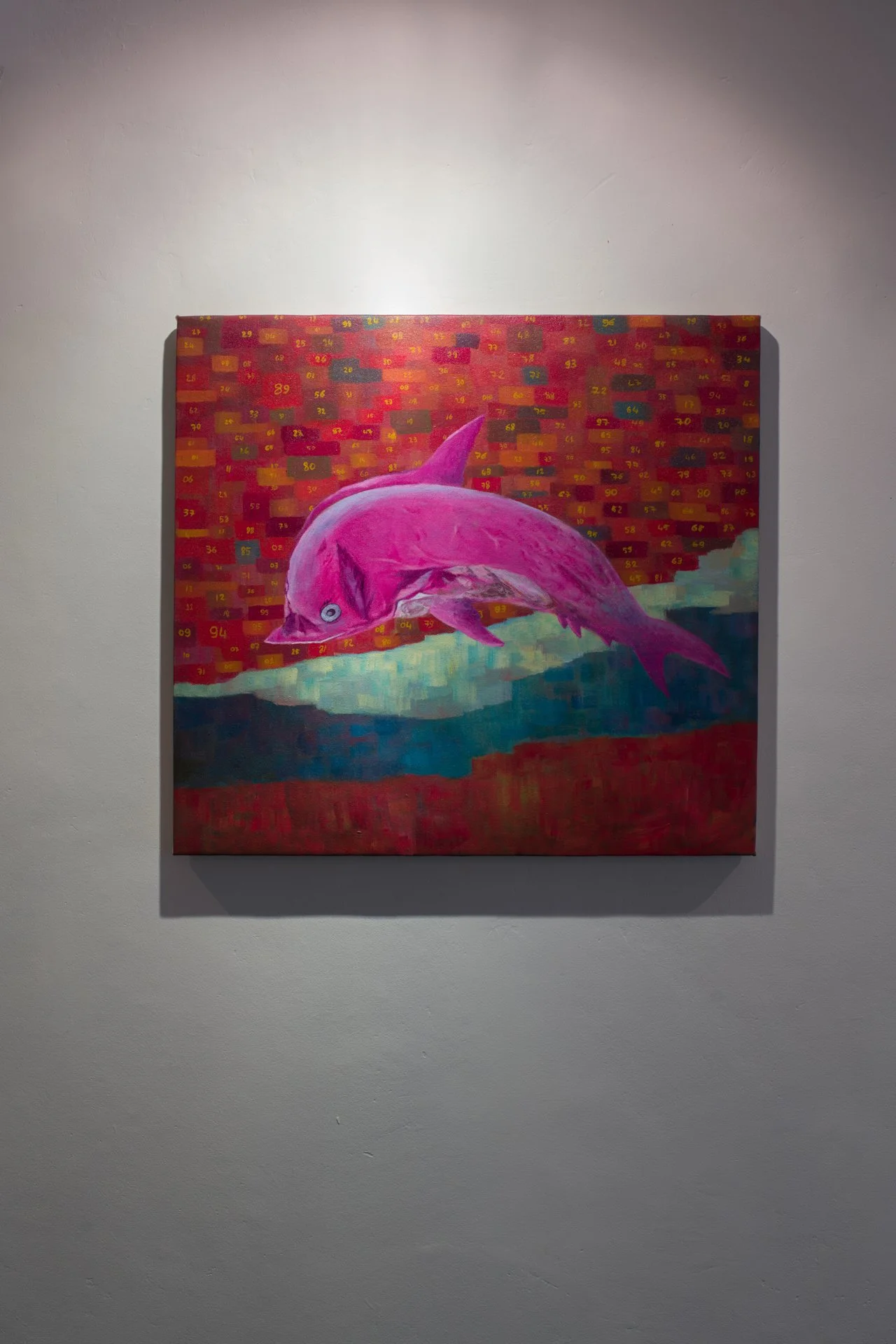
Usually, a plastic item can take up to about 1,000 years to decompose. They are one of the most stubborn and lasting environmental pollutions. In one painting titled “Waiting for the Owner,” the artist depicts a pink dolphin toy that she saw again and again by a pond whenever she passed by. It was left and stayed there, as if waiting for something or someone. Its lasting presence contrasts with the shorter lifespans of human lives combined, represented by various numbers in the painting’s background.
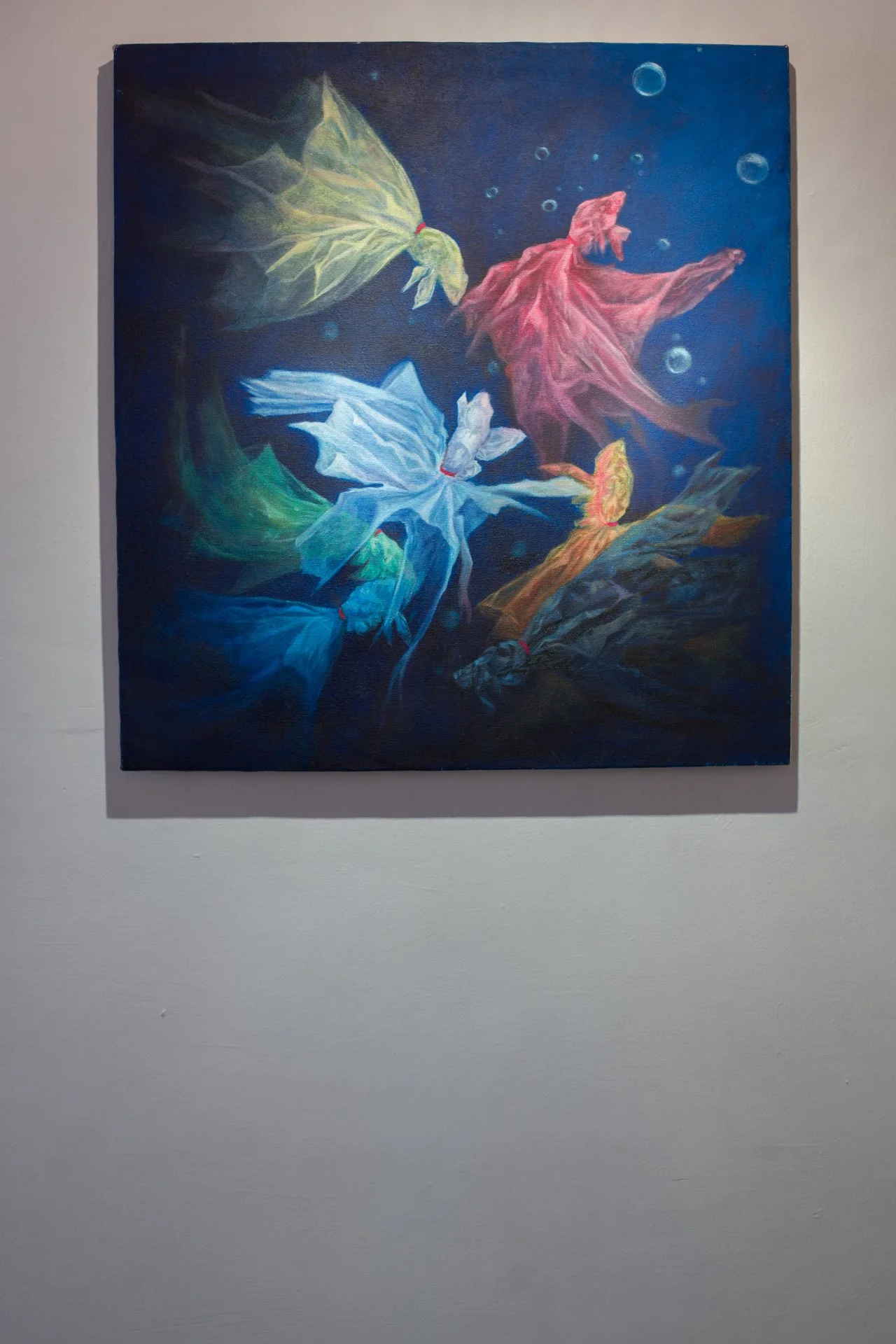
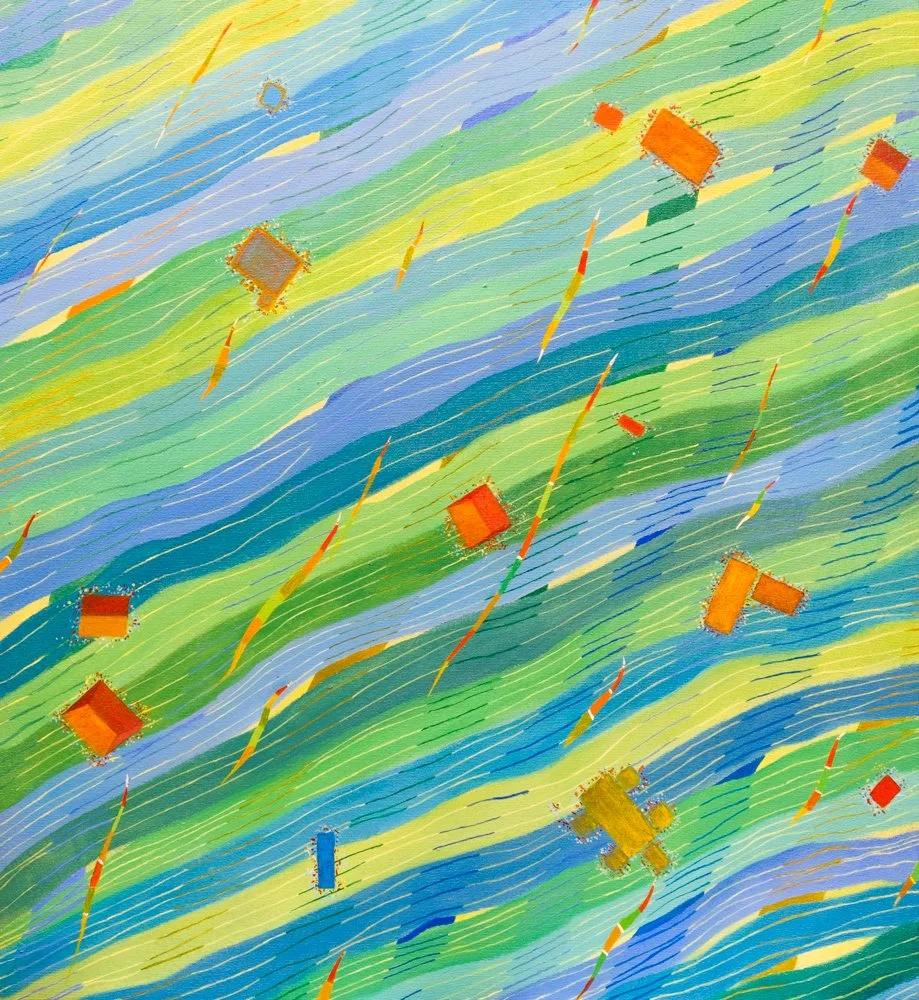
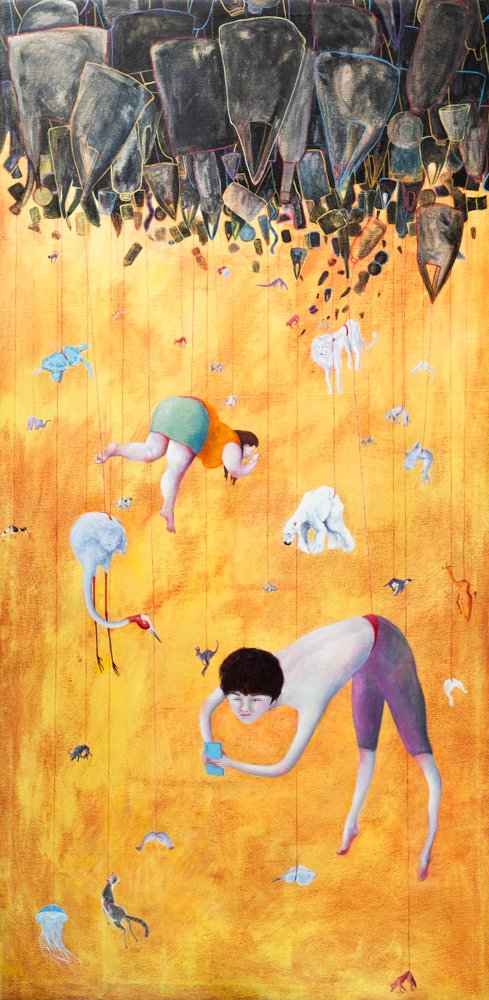
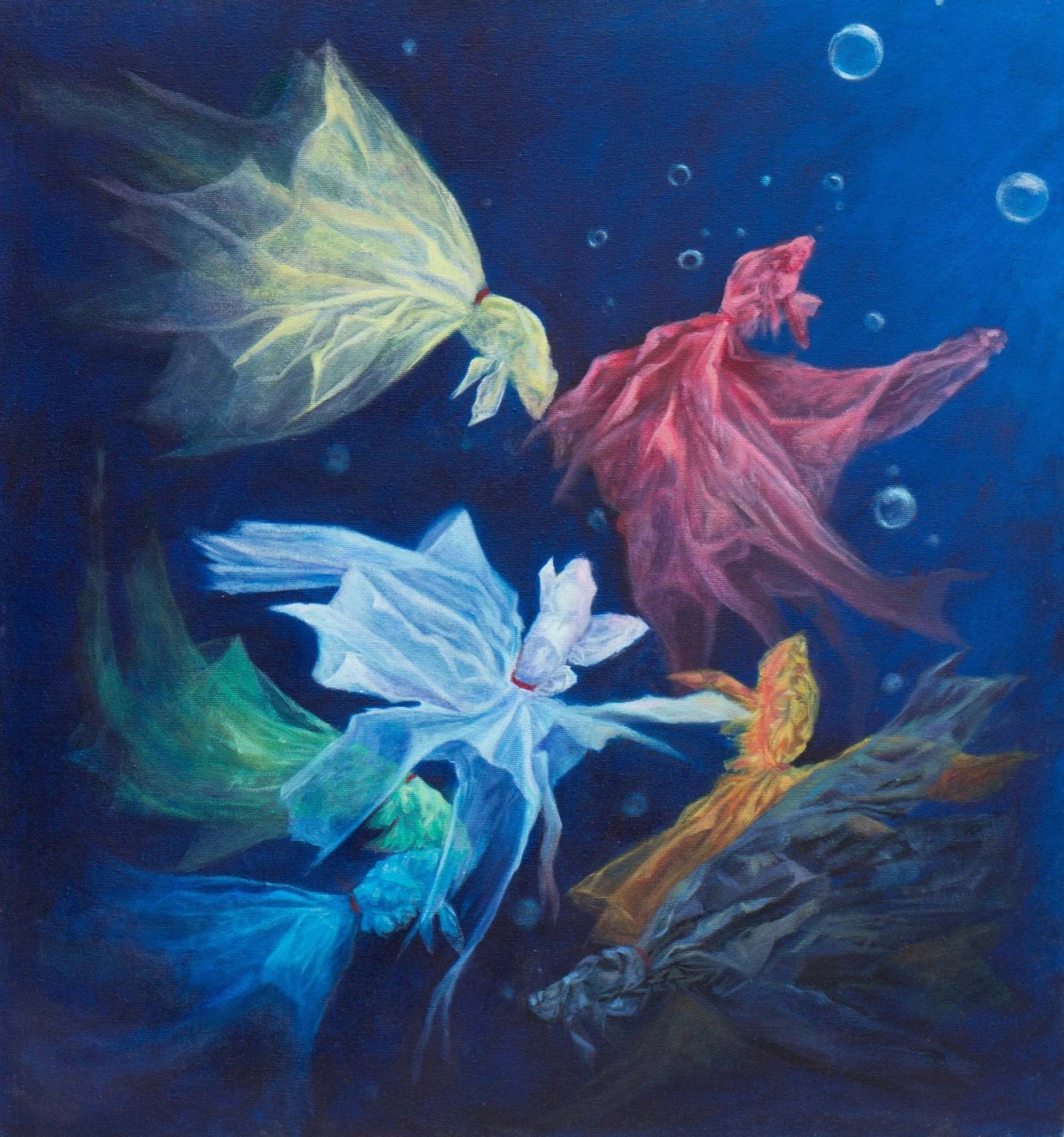
Our world’s plasticity cannot be more pronounced in one of Kolab’s works titled “Collection,” in which reality and illusion conflate. From a distance, the painting seems to depict a shoal of colourful, semi-translucent fish gracefully swimming in the peaceful, deep blue water. At a closer look, however, they are actually plastic bags. In another work, “Float,” humans, as well as animals, birds, and marine lives, are tied to and suspended by a sheer amount of floating plastic bags filled with black gas blanketing the sky. The humans appear not bothered but instead occupied with their mobile devices.
Affected by personal experience and global phenomena, Kolab uses storytelling to paint a picture of a world where humans, animals, and nature are trapped and suffocated by plastic. The delightfully captivating yet illusive quality of Kolab’s paintings raises questions on do we want to live and get lost in this colourful plastic world? And to whom and how many generations we want to pass on this “heirloom”?
About artist:
Koeurm Kolab (b. 1987 in Battambang Province, Cambodia) graduated from Phare Ponleu Selpak’s School of Visual and Applied Arts in 2007 and Animation in 2010; graduated from Gerard Pivat School of Applied Art and Design in France in 2014. Currently she is a Graphic Design and Animation Teacher at Phare Ponleu Selpak. Her works explore humanity, social change and environment change. Recently, Kolab won Gold Prize from White Canvas Cambodia 2020, organized by Social Compass Cambodia. Her recently exhibitions include International Online Art Exhibition, Sanskar Bharti and Lalit Kala Akademy, New Delhi, India; White Canvas Cambodia, IRoHA, Phnom Penh, Cambodia (2020); Un Petit Marceau, Alliance Francaise, Siem Reap; Ansan International Environmental, Danwon Art Museum, Ansan, Korea (2019); and Cambodians of the Rice Fields, Millon, Paris, France (2018).